Air Defense

Sevom Khordad / 3rd Khordad air-defense system

Also known as
  • Sevom Khordad
  • 3rd Khordad
  • 3 Khordad
  • Khordad-3
  • Third of Khordad
  • Third Khordad

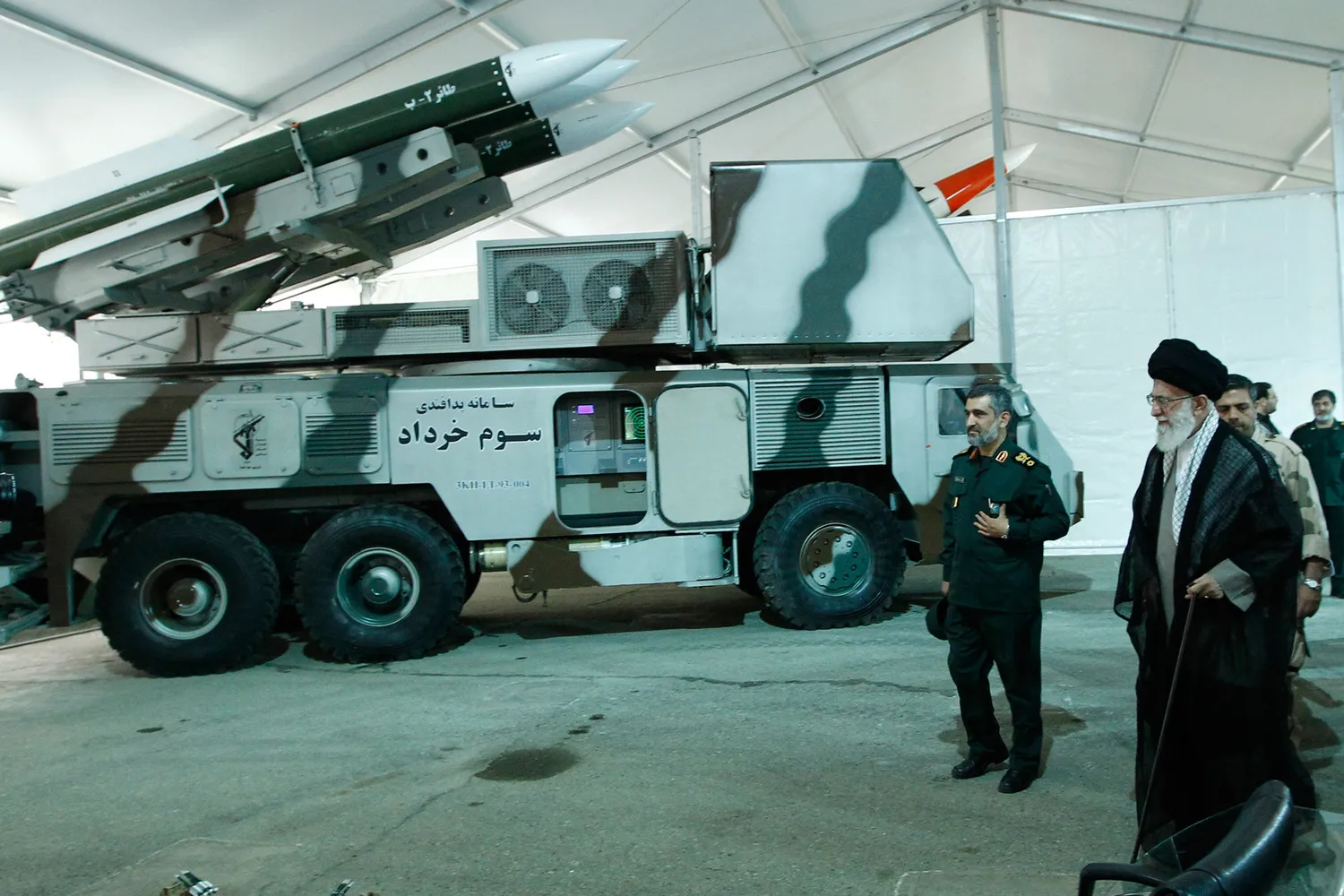
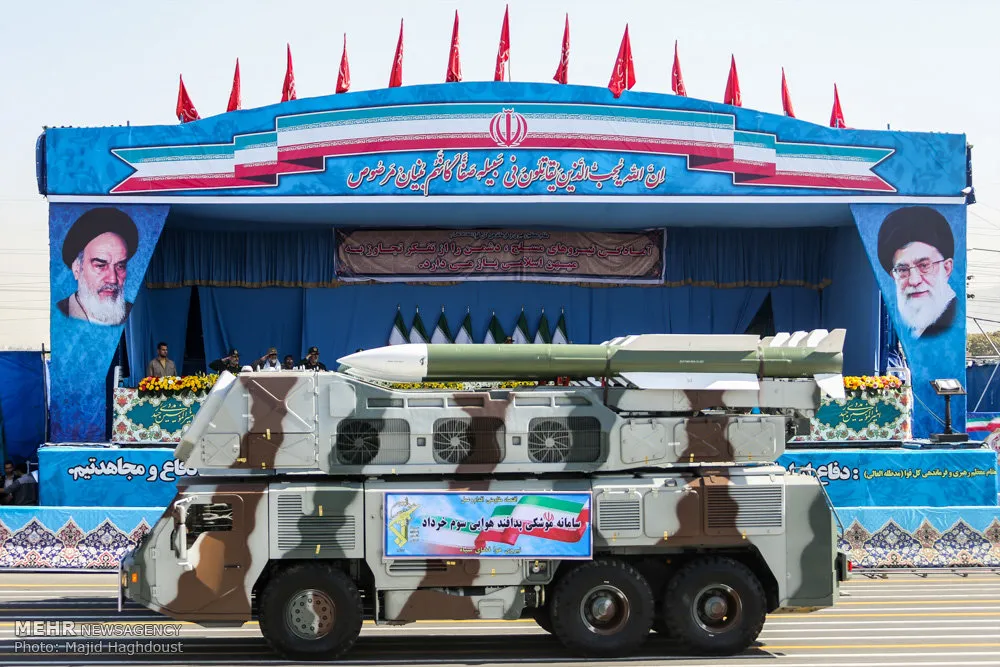
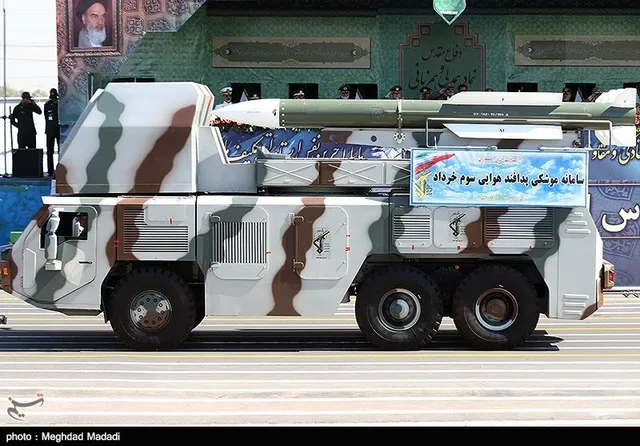
Sevom Khordad, also known as 3rd Khordad, is an Iranian road-mobile medium-range surface-to-air missile system built around a self-contained TELAR and phased-array radar. Its best-documented combat use is the June 2019 shootdown of a U.S. Navy BAMS-D/RQ-4A Global Hawk near the Strait of Hormuz; later 2026 reporting identified Third Khordad as a possible system in an F-15E shootdown claim, but that launcher attribution remained less certain.

Role in Conflicts

Side
Iran

In the 2020 United States-Iran Conflict catalog, Third Khordad is tied to the June 2019 prelude escalation by the confirmed Iranian shootdown of a U.S. Navy BAMS-D/RQ-4A Global Hawk near the Strait of Hormuz, where U.S. and Iranian accounts disputed the aircraft's location. Later reporting on Iran's April 2026 F-15E shootdown claim also identified Third Khordad as a possible Iranian surface-to-air system involved, but the exact launcher was not independently confirmed.
Profile / Specs

Specifications

Launcher architecture
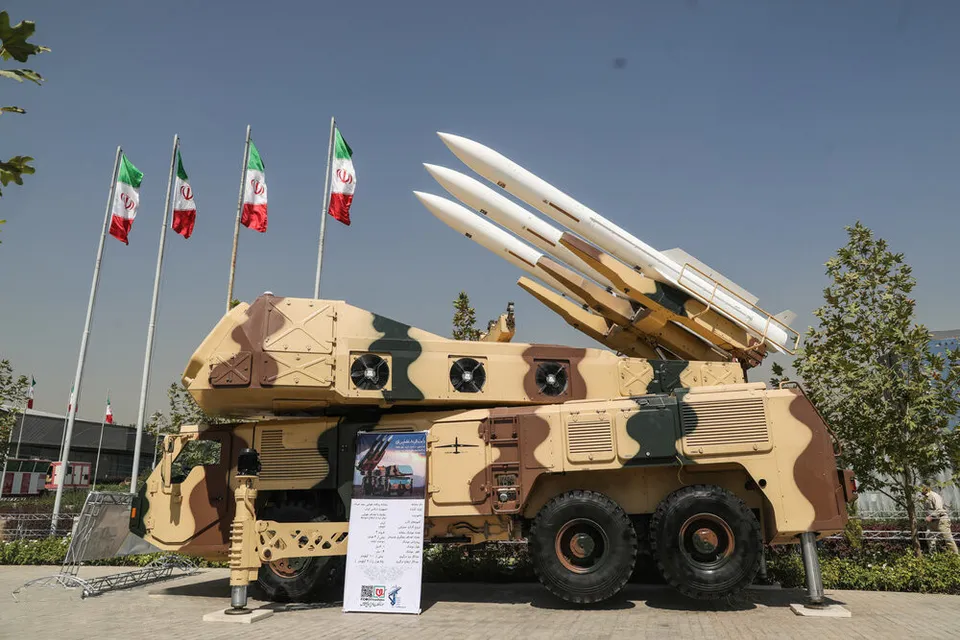
6x6 road-mobile TELAR with onboard X-band active phased-array fire-control radar; radarless TEL launchers can be coordinated by TELAR vehicles
Initial declared envelope
50 km range at May 2014 unveiling; later reporting places early engagement altitude around 24-27 km
Reported upgraded envelope
75-105 km in later Taer-2/Sayyad-family reporting; up to 200 km claimed for long-range Taer-3 / 3rd Khordad missile fits
Compatible interceptors
Taer-2 / Taer-2B family, Sayyad-2 / Sayyad-2C family, 9 Dey short-range boxed missiles, and later Taer-3 claims
Battalion architecture
Reported battalion configuration includes a Bashir 110 search radar, command control, four TELAR vehicles, and eight TEL vehicles
Bashir radar
Mobile phased-array search radar commonly reported with about 350 km detection range
Simultaneous engagements
One TELAR/fire unit is reported to engage four targets and guide eight missiles; battalion claims scale to 16 targets and 32 missiles
System Architecture

Sevom Khordad is best understood as a mobile air-defense battery rather than a single launcher truck. Public reporting separates the self-contained TELAR, radarless TEL launchers, Bashir search radar, and later interceptor fits.

Fire unit

A TELAR combines launcher rails and fire-control radar, allowing the vehicle to operate independently or coordinate radarless launchers.

Battalion layer

Reported battalion descriptions add Bashir search radar and command control around four TELARs and eight TELs.

Interceptor growth

Sources describe a progression from Taer-2-class missiles to Sayyad-family, 9 Dey, and claimed long-range Taer-3/3rd Khordad fits.

Variants

Sevom Khordad configuration names describe launcher, radar, and interceptor fits inside the same Iranian medium-range air-defense family.

VariantConfigurationDesignation notes
TELARSelf-contained launcher/radar vehicle

The standard launcher/radar vehicle carries three ready missiles and includes the fire-control radar needed for autonomous engagements.

Sources: DefaPress: Evolution of the 3rd Khordad system, Press TV: Eqtedar 1403 air-defense drills

TELRadarless launcher vehicle

Iranian reporting describes a radarless launcher paired with TELAR vehicles, with two TELs coordinated by each TELAR in a battery.

Sources: DefaPress: Evolution of the 3rd Khordad system

Bashir 110 battalion configurationBattalion search and command architecture

The reported battalion layout combines a Bashir 110 search radar, command control, four TELAR vehicles, and eight TEL vehicles.

Sources: DefaPress: Evolution of the 3rd Khordad system, Washington Institute: Major Iranian Air Defense Missile Systems, 2023

9 Dey box-launch configurationShort-range missile fit

The TELAR can reportedly carry eight 9 Dey short-range missiles instead of the usual three medium-range interceptors for lower-altitude targets.

Sources: Press TV: Eqtedar 1403 air-defense drills

Taer-3 / long-range missile configurationLong-range interceptor fit

Iranian and specialist reporting describe a later long-range missile fit with claimed reach up to 200 km, but public sources should be treated as claimed-performance reporting.

Sources: ISW News: Military Knowledge: Sevom Khordad Air Defense System, Washington Institute: Major Iranian Air Defense Missile Systems, 2023

Timeline

Sevom Khordad / 3rd Khordad air-defense system Key Events

  1. System unveiled at IRGC Aerospace Force exhibition

    Leader.ir reported the unveiling of the domestically designed 3rd Khordad air-defense system at an IRGC Aerospace Force exhibition, with a 50 km range and four-target/eight-missile claim.

    Sources: Leader.ir: IRGC Aerospace Force achievements exhibition

  2. Global Hawk shootdown brings combat confirmation

    Reporting on the U.S. Navy BAMS-D/RQ-4A loss identified Third Khordad as the Iranian system used in the Strait of Hormuz shootdown.

    Sources: Seapower: Global Hawk downed by Third of Khordad, U.S. Navy: CENTCOM statement on Iranian drone shootdown

  3. Shipboard firing configuration publicized

    Army Recognition reported Iranian imagery of a 3rd Khordad system on the IRGC Shahid Siavoshi vessel, described as able to lock and fire while the vessel was moving.

    Sources: Army Recognition: Naval 3rd Khordad test

  4. Long-range missile configuration displayed

    Specialist reporting described a later long-range missile for the Sevom Khordad family shown during Iran's September 2022 armed forces parade.

    Sources: ISW News: Military Knowledge: Sevom Khordad Air Defense System, Washington Institute: Major Iranian Air Defense Missile Systems, 2023

  5. Eqtedar 1403 drill use reported

    Press TV reported 3 Khordad participation in Eqtedar 1403 air-defense drills alongside Taer-2, Sayyad-2, and 9 Dey missile testing.

    Sources: Press TV: Eqtedar 1403 air-defense drills

Media
Related Weapon Systems
Iranian coastal surveillance radar sites, HF over-the-horizon 3D phased-array early-warning and coastal surveillance radar, Air DefenseAir DefenseIranian coastal surveillance radar sitesHF over-the-horizon 3D phased-array early-warning and coastal surveillance radarIranian coastal surveillance radar sites cover fixed early-warning and maritime-monitoring radars used around the Persian Gulf, Strait of Hormuz, and wider Iranian air-defense network. Public sources identify Ghadir/Qadir as a reported HF over-the-horizon 3D phased-array radar family, while CENTCOM's 2026 strike releases identify coastal radar sites at Goruk, Qeshm Island, and later Iranian coastal locations without publicly naming every radar model.
Bavar-373 air-defense system, Long-range surface-to-air missile system, Air DefenseAir DefenseBavar-373 air-defense systemLong-range surface-to-air missile systemBavar-373 is Iran's road-mobile long-range surface-to-air missile system, developed by the Aerospace Industries Organization after the S-300 procurement gap and fielded in 2019. Iranian sources later advertised Sayyad-4B and Bavar-373-II upgrades with longer claimed reach, while 2025-2026 conflict reporting treated the system as part of Iran's high-end air-defense layer under Israeli and U.S. suppression pressure rather than a publicly confirmed source of intercept kills.
Iranian integrated air-defense system, Integrated air-defense network, Air DefenseAir DefenseIranian integrated air-defense systemIntegrated air-defense networkThe Iranian integrated air-defense system is the national command, radar, and surface-to-air missile network used to defend Iranian airspace and strategic sites. It combines the Khatam al-Anbiya command structure, domestic systems such as Bavar-373 and Khordad-family SAMs, imported Russian S-300 batteries, and older Soviet or Russian equipment. Recent Israel-Iran and United States-Iran conflict reporting treats the network as a fielded but heavily pressured air-defense layer whose radars, command sites, and long-range batteries became major suppression targets.
Ghadr/Qadr Ballistic Missile, Medium-range ballistic missile, MunitionsMunitionsGhadr/Qadr Ballistic MissileMedium-range ballistic missileThe Ghadr/Qadr family is an Iranian road-mobile medium-range ballistic missile line derived from the Shahab-3, with open-source references using Ghadr, Qadr, Ghadr-1, Ghadr-110, Ghadr-H, Qadr-H, Qadr-F, Emad, and related labels unevenly across variants. CSIS and Iran Watch describe Ghadr-class missiles as deployed Iranian systems with roughly 1,600-1,950 km range and a payload near 750-800 kg, while Iranian state reporting directly connects Ghadr-H/Qadr-H/Kheibar, Qadr/Qader, Emad, and one source-limited Badr wording to long-range strikes in the 2025 Israel-Iran Conflict and 2026 Iran War.

Sources