Air Defense

Bavar-373 air-defense system

Also known as
  • Bavar 373
  • Bavar-373
  • Sayyad-4B Bavar-373 upgrade

Bavar-373 is Iran's road-mobile long-range surface-to-air missile system, developed by the Aerospace Industries Organization after the S-300 procurement gap and fielded in 2019. Iranian sources later advertised Sayyad-4B and Bavar-373-II upgrades with longer claimed reach, while 2025-2026 conflict reporting treated the system as part of Iran's high-end air-defense layer under Israeli and U.S. suppression pressure rather than a publicly confirmed source of intercept kills.

Role in Conflicts

Side
Iran

During Operation Rising Lion, specialist aviation reporting said Israeli strikes against Iranian air-defense facilities targeted SAM sites including Bavar-373, S-300, and 3rd Khordad systems; FPRI separately assessed that Israeli air superiority and suppression kept visible Iranian SAM activity limited, so the row supports Bavar-373 as a targeted/fielded air-defense layer rather than a confirmed interceptor success.

Role details
Side
Iran
Role in conflict
Long-range surface-to-air defense

During the 2026 Operation Epic Fury phase, Business Insider described Bavar-373 as part of Iran's higher-end layered SAM network while reporting U.S. military assessments that those long-range air defenses had been degraded enough to stop being major planning factors.

Profile / Specs

Profile

Origin
Iran
Type
Long-range surface-to-air missile system
Service note
2019-present
Designer
Aerospace Industries Organization
Designed
2010-2019
Produced
2014-present

Specifications

Launcher type
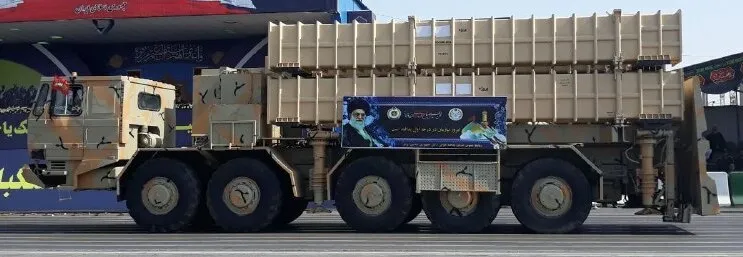
Road-mobile truck-mounted TELs; Bavar-373-II reporting describes more autonomous launcher vehicles
Missiles
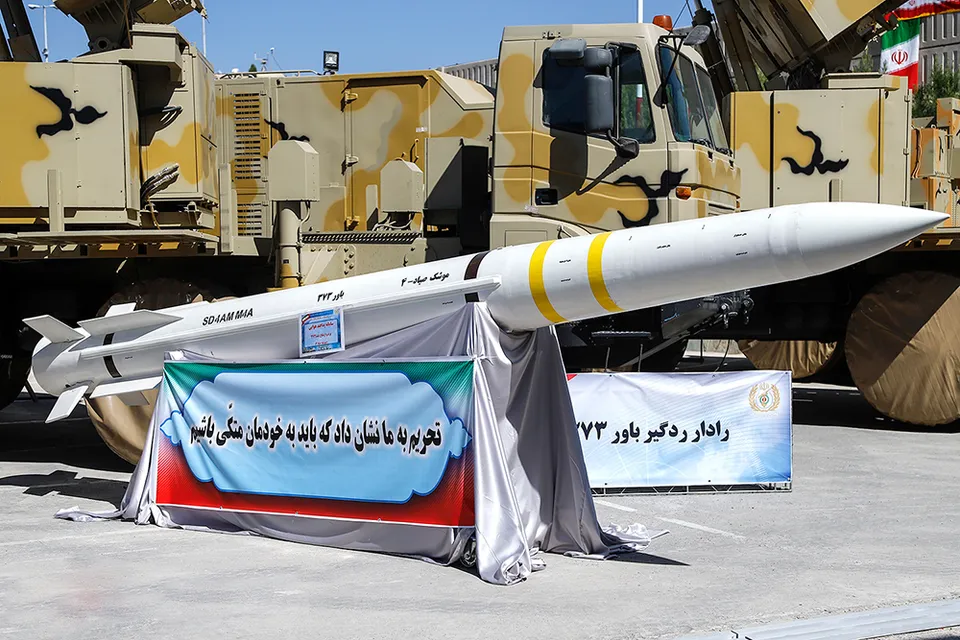
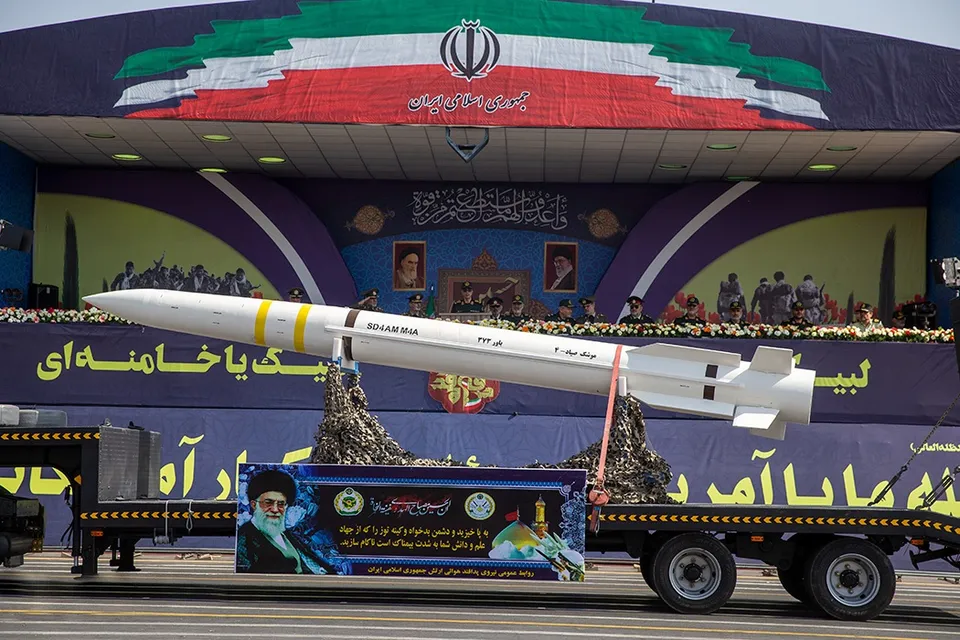
Sayyad-family interceptors, including Sayyad-4 and Sayyad-4B
Baseline claimed reach
Iran claimed roughly 250 km engagement range at 2019 service entry
Upgraded claimed detection range
Up to 450 km against stationary targets
Upgraded claimed engagement range
Up to 300 km with Sayyad-4B upgrade
Simultaneous engagements
Iranian and defense-reference reporting claims engagement of up to 6 targets
Battery elements
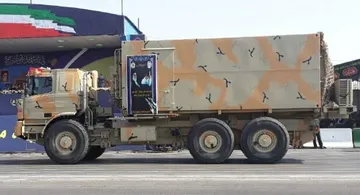
Launchers, detection radar, engagement radar, and fire-control elements in baseline public descriptions
Battery Architecture

Open-source descriptions present Bavar-373 as a distributed road-mobile SAM battery rather than a single vehicle. The later upgrade path centers on longer-range Sayyad-family missiles and launch vehicles with more onboard sensor and fire-control functions.

ElementDocumented functionSource-backed notes
Transporter-erector-launchersMissile launch vehiclesArmy Recognition and CSIS describe truck-mounted launchers carrying Sayyad-family interceptors as the visible battery firing element.
Detection and engagement radarsSearch, tracking, and fire-control supportCSIS reported Iranian claims for target detection, tracking, and engagement, while later Iranian reporting advertised higher claimed range figures for upgraded versions.
Bavar-373-II vehiclesMore autonomous launcher configurationDefense reporting on the 2025 configuration described launch vehicles integrating radar, fire-control, and launcher functions to reduce battery dependency on separate vehicles.
Variants

Public reporting treats Bavar-373 as a family of road-mobile long-range SAM configurations built around Sayyad-family interceptors, with later Iranian claims centered on longer-range missiles and more autonomous launcher vehicles.

VariantConfigurationDesignation notes
Sayyad-4B upgrade2022 missile and range upgrade

Iranian reporting credited the Sayyad-4B update with extending claimed detection and engagement ranges compared with the original public claims.

Sources: Mehr: Iranian defense industry symbol of national self-reliance, Army Recognition: Bavar-373 air defense system

Bavar-373-II2025 autonomous TELAR-style configuration

Defense reporting described Bavar-373-II as a later configuration with more autonomous launch vehicles integrating radar, fire-control, and launcher functions.

Sources: Army Recognition: Bavar-373 air defense system

Timeline

Bavar-373 air-defense system Key Events

  1. Bavar-373 components shown publicly

    CSIS notes that Iran first unveiled parts of the Bavar-373 system in 2016 after earlier S-300 delivery delays pushed Tehran toward a domestic long-range SAM program.

  2. System enters Iranian service

    Iran displayed Bavar-373 and announced its entry into service with claims that the system could detect, track, and engage targets at long range.

  3. Sayyad-4B upgrade advertised

    Iranian reporting described an upgraded Bavar-373 with Sayyad-4B missiles and longer claimed detection and engagement figures.

  4. Bavar-373-II reported

    Defense reporting described a Bavar-373-II configuration built around more autonomous launch vehicles and updated battery architecture.

  5. Israel-Iran air war stresses Iranian SAMs

    FPRI's review of the June 2025 air and missile-defense fight identified Bavar-373 among Iran's promoted indigenous SAM systems while emphasizing limited visible Iranian SAM effectiveness under Israeli air superiority.

  6. U.S. reporting describes degraded high-end air defenses

    Business Insider reported U.S. military assessments that Iran's higher-end systems, including Bavar-373 within the layered SAM network, were no longer major planning factors during Operation Epic Fury.

Media
Related Weapon Systems
Sevom Khordad / 3rd Khordad air-defense system, Medium-range surface-to-air missile system, Air DefenseAir DefenseSevom Khordad / 3rd Khordad air-defense systemMedium-range surface-to-air missile systemSevom Khordad, also known as 3rd Khordad, is an Iranian road-mobile medium-range surface-to-air missile system built around a self-contained TELAR and phased-array radar. Its best-documented combat use is the June 2019 shootdown of a U.S. Navy BAMS-D/RQ-4A Global Hawk near the Strait of Hormuz; later 2026 reporting identified Third Khordad as a possible system in an F-15E shootdown claim, but that launcher attribution remained less certain.
Iranian integrated air-defense system, Integrated air-defense network, Air DefenseAir DefenseIranian integrated air-defense systemIntegrated air-defense networkThe Iranian integrated air-defense system is the national command, radar, and surface-to-air missile network used to defend Iranian airspace and strategic sites. It combines the Khatam al-Anbiya command structure, domestic systems such as Bavar-373 and Khordad-family SAMs, imported Russian S-300 batteries, and older Soviet or Russian equipment. Recent Israel-Iran and United States-Iran conflict reporting treats the network as a fielded but heavily pressured air-defense layer whose radars, command sites, and long-range batteries became major suppression targets.

Sources