Munitions

Ghadr/Qadr Ballistic Missile

Also known as
  • Ghadr
  • Qadr
  • Ghadr-1
  • Qadr-1
  • Ghadr-110
  • Qadr-110
  • Ghadr-101
  • Ghadr-H
  • Qadr-H
  • Qadr-F
  • Qadr-S
  • Emad
  • Emad-1
  • Badr (Press TV reporting)
  • Kheibar (Ghadr-H/Qadr-H naming in Iranian reporting)

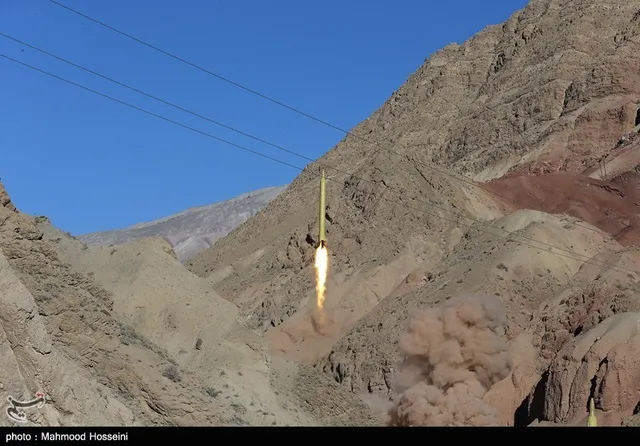
The Ghadr/Qadr family is an Iranian road-mobile medium-range ballistic missile line derived from the Shahab-3, with open-source references using Ghadr, Qadr, Ghadr-1, Ghadr-110, Ghadr-H, Qadr-H, Qadr-F, Emad, and related labels unevenly across variants. CSIS and Iran Watch describe Ghadr-class missiles as deployed Iranian systems with roughly 1,600-1,950 km range and a payload near 750-800 kg, while Iranian state reporting directly connects Ghadr-H/Qadr-H/Kheibar, Qadr/Qader, Emad, and one source-limited Badr wording to long-range strikes in the 2025 Israel-Iran Conflict and 2026 Iran War.

Role in Conflicts

Side
Iran

Iranian state and state-aligned reporting said the IRGC fired Ghadr-H/Qadr-H/Kheibar missiles during the 21st wave of Operation True Promise III against Israel on June 23, 2025; ISNA also reported Emad and Qadr missiles in that wave, while Press TV earlier reported Emad among medium-range missiles used during the operation. The Badr and Kheibar Shekan wording is treated as separate source-limited reporting rather than confirmed Ghadr/Qadr-family designation evidence.

Role details
Side
Iran

Iranian state and IRGC-linked reporting said Emad and Qadr missiles were used in Operation True Promise 4 waves during the 2026 Iran War, including March 24 strikes on Eilat, Dimona, northern Tel Aviv, and U.S. bases and an April 2 wave against central Israeli areas.

Profile / Specs

Profile

Origin
Iran
Type
Medium-range ballistic missile
Service note
Entered Iranian service in the late 2000s; documented in 2025 and 2026 Iran-Israel missile exchanges
Designer
Shahid Hemmat Industrial Group
Designed
2000s
Unit cost
Not publicly reported
Produced
2000s-present
Number built
Not publicly reported

Specifications

Range
Approximately 1,600-1,950 km for Ghadr/Qadr variants; Emad commonly reported around 1,700-1,800 km
Payload
Approximately 750-800 kg for Ghadr/Qadr estimates; Emad commonly listed around 750 kg
Basing
Road-mobile transporter erector launcher
Propulsion
Liquid propellant in CSIS, Iran Watch, DIA, and JINSA context; some Ghadr-110 descriptions report a liquid first stage and solid second stage
Guidance
Improved guidance reported for Ghadr; Emad is reported or claimed with a guided or maneuverable reentry vehicle
Accuracy
Open-source estimates range from roughly 300 m CEP for Ghadr to under/about 500 m for Emad; full Emad MaRV performance remains difficult to verify publicly
Reentry vehicle
Ghadr/Qadr references describe a baby-bottle or triconic-style reentry vehicle; Emad is reported as a finned steerable or maneuverable reentry-vehicle configuration
Length
Approximately 15.86-16.6 m
Diameter
Approximately 1.25-1.38 m
Launch weight
Approximately 19,000 kg
Status
Deployed with Iran
Designation notes
Ghadr-1, Qadr-1, Ghadr-110, and Qadr-110 appear in open sources as overlapping labels for Shahab-3-derived Ghadr variants; Ghadr-H, Qadr-H, Qadr-F, and Qadr-S are Iranian-reported Qadr family subvariants, and Emad is best described as an adjacent Shahab-3/Ghadr-derived system.
Designation Notes

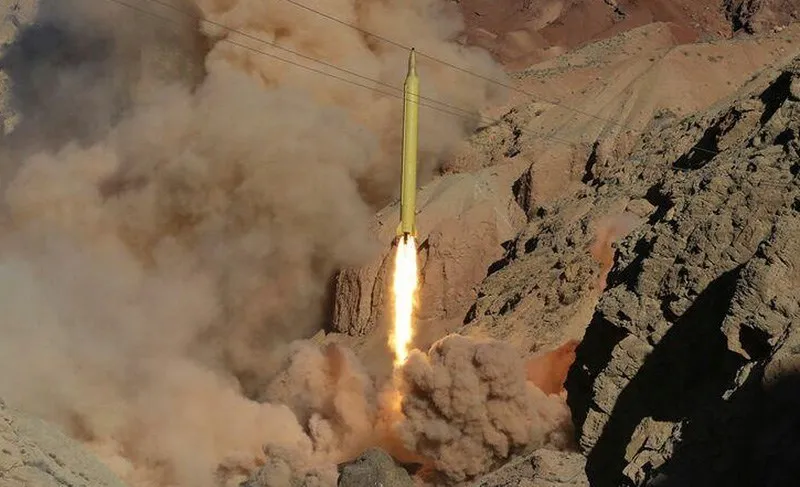
Emad is retained on this Ghadr/Qadr family page because the strongest technical sources treat it as a Shahab-series/Ghadr derivative or guided reentry-vehicle configuration rather than a clean-sheet missile. The family labels are not used consistently in public reporting, so the page keeps Emad, Ghadr, Qadr, Ghadr-H, Qadr-H, Kheibar, and the source-limited Badr wording discoverable while avoiding a separate unsourced conflict-use split. For broader context, see the Iranian ballistic missiles family page.

Family basis

CSIS and CRS connect Ghadr-1 and Emad-1 to Shahab-3-derived MRBM development.

Emad distinction

DIA describes Emad-1 as a Shahab-3 variant with a maneuverable reentry vehicle, while CSIS frames Emad as a reentry vehicle fitted to a Shahab-3 or Ghadr rocket.

Badr wording

Press TV used Badr in a June 2025 sentence about Iranian medium-range missiles, but the stronger technical lane supports Ghadr/Qadr, Ghadr-H/Qadr-H/Kheibar, and Emad labels rather than a separate Badr MRBM record.

Public limits

IISS and other open sources caution that detailed variant boundaries and performance claims remain difficult to verify from public evidence.

Variants

Open sources treat Ghadr, Ghadr-1, Qadr-1, Ghadr-110, and Qadr-110 as overlapping labels for Shahab-3-derived Iranian MRBMs; Ghadr-H, Qadr-H, Qadr-F, and Qadr-S appear mainly in Iranian reporting, and Emad is handled here as an adjacent Shahab-3/Ghadr-derived guided reentry-vehicle configuration unless split into a separate public record.

VariantConfigurationDesignation notes
Ghadr-1 / Qadr-1Early Shahab-3-derived designation

Iran Watch says an upgraded Shahab-3 tested in August 2004 was later designated Ghadr-1, and that Iran displayed a Ghadr-1/Qadr-1 in September 2007.

Sources: Iran's Missile Milestones

Ghadr-110 / Qadr-110Alternate Ghadr-1 designation

CSIS describes Ghadr-1 as an improved Shahab-3A also referred to as Ghadr-101 and Ghadr-110.

Sources: Emad, Ghadr (Shahab-3 Variants)

Ghadr-H / Qadr-HQadr family range variant

Iran Press describes Qadr-H as a liquid-fuel Qadr variant with a roughly 1,650-1,700 km range; Tasnim reported Qadr-H launches in March 2016 exercises, and Press TV later used the Ghadr-H spelling for the multiwarhead Kheibar-class missile in June 2025.

Sources: Qadr missile; symbol of achieving new missile capabilities, IRGC Test-Fires Different Types of Qadr Ballistic Missiles, Press TV Ghadr-H 2025

Qadr-FLonger-range Qadr family variant

Iran Press describes Qadr-F as a liquid-fuel Qadr variant with a roughly 1,948-2,000 km range; Tasnim reported Qadr-F launches in March 2016 exercises.

Sources: Qadr missile; symbol of achieving new missile capabilities, IRGC Test-Fires Different Types of Qadr Ballistic Missiles

Qadr-SPoorly documented Qadr family variant

Iran Press says little information has been released about Qadr-S, but gives a reported range of about 1,350 km.

Sources: Qadr missile; symbol of achieving new missile capabilities

EmadShahab-3/Ghadr-derived adjacent variant

CSIS treats Emad alongside Ghadr as a Shahab-3 variant and describes it as a re-entry vehicle fitted to a Shahab-3 or Ghadr rocket rather than a completely new missile.

Sources: Emad, Ghadr (Shahab-3 Variants)

Carrier Vehicles

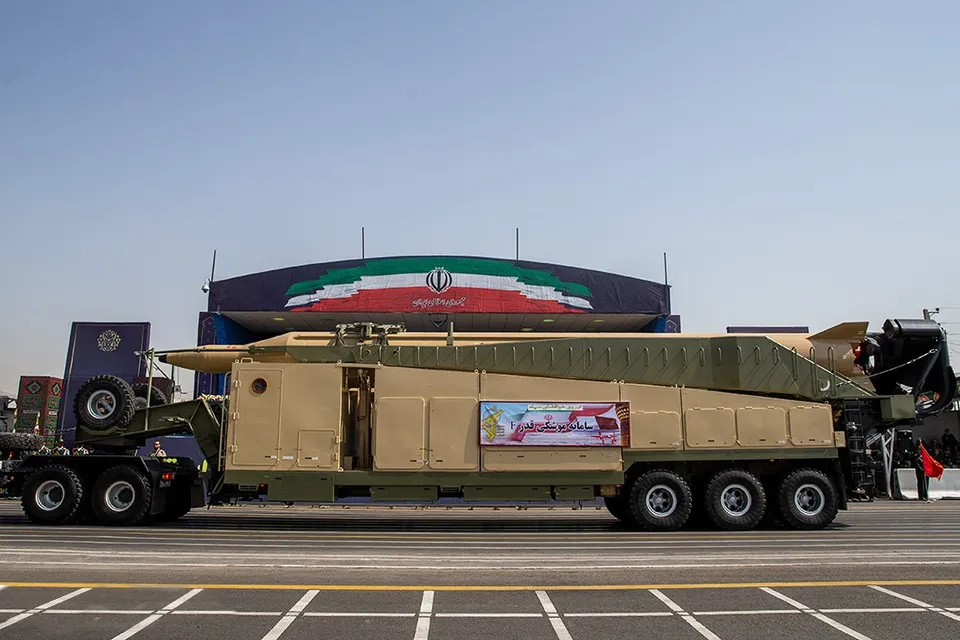
CSIS includes a caption identifying a military truck carrying a long-range Ghadr-1 missile.

CarrierCarrier typeCarriage evidence
Military Truck, Military logistics truck and tactical wheeled vehicle, Support EquipmentMilitary TruckMilitary truck

The caption on the CSIS Ghadr page identifies a military truck carrying a long-range Ghadr-1 missile.

Sources: CSIS Ghadr truck caption

Timeline

Ghadr/Qadr Ballistic Missile Key Events

  1. Upgraded Shahab-3 later designated Ghadr-1

    Iran Watch says Iran tested an upgraded Shahab-3 with a larger fuel tank and modified reentry vehicle that was later designated Ghadr-1.

    Sources: Iran's Missile Milestones

  2. Ghadr-1 / Qadr-1 publicly displayed

    Iran Watch reports that Iran displayed a Ghadr-1, also written Qadr-1, during a military parade and claimed a 1,800 km range.

    Sources: Iran's Missile Milestones

  3. Emad announced and tested

    CSIS reports Iran announced a test of the Emad, treated by analysts as a Shahab-3/Ghadr-based missile with a guided reentry vehicle.

    Sources: Emad, Ghadr (Shahab-3 Variants)

  4. Qadr-H and Qadr-F launched in exercises

    Tasnim reported that IRGC forces launched Qadr-H and Qadr-F ballistic missiles from northern Iran during missile exercises.

    Sources: IRGC Test-Fires Different Types of Qadr Ballistic Missiles

  5. Ghadr-H/Qadr-H/Kheibar reported fired at Israel

    Iranian state reporting said the IRGC fired multiwarhead Kheibar missiles, identified with Ghadr-H and Qadr-H wording, during the 21st wave of Operation True Promise III.

    Sources: Press TV Ghadr-H 2025, IRNA Kheibar Qadr-H 2025, Iran Launches Multiwarhead Kheibar Missiles at Israeli Regime

  6. Emad and Qadr reported in Operation True Promise 4

    Mehr and Tasnim reported IRGC statements saying Emad and Qadr missiles were used in 2026 Operation True Promise 4 waves against Israeli and U.S.-linked targets.

    Sources: Mehr True Promise 4 Wave 78, Tasnim True Promise 4 Wave 89

Media
Related Weapon Systems
Shahab series ballistic missiles, Iranian short- and medium-range ballistic missile family, MunitionsMunitionsShahab series ballistic missilesIranian short- and medium-range ballistic missile familyThe Shahab series is Iran's older liquid-fuel ballistic-missile line, spanning Scud-derived Shahab-1 and Shahab-2 short-range missiles and the No-Dong-derived Shahab-3 medium-range missile. CSIS and IISS describe Shahab-1 as a Scud-B copy with roughly 300 km class range, Shahab-2 as Iran's Scud-C line with roughly 500 km range, and Shahab-3 as the road-mobile MRBM that entered Iranian service in 2003 and became the basis for later Ghadr/Qadr and Emad variants.
Iranian coastal surveillance radar sites, HF over-the-horizon 3D phased-array early-warning and coastal surveillance radar, Air DefenseAir DefenseIranian coastal surveillance radar sitesHF over-the-horizon 3D phased-array early-warning and coastal surveillance radarIranian coastal surveillance radar sites cover fixed early-warning and maritime-monitoring radars used around the Persian Gulf, Strait of Hormuz, and wider Iranian air-defense network. Public sources identify Ghadir/Qadir as a reported HF over-the-horizon 3D phased-array radar family, while CENTCOM's 2026 strike releases identify coastal radar sites at Goruk, Qeshm Island, and later Iranian coastal locations without publicly naming every radar model.

Sources