Munitions

Haj Qasem

Also known as
  • Haj Qassem
  • Hajj Qassem
  • Martyr Hajj Qassem
  • Shahid Haj Qasem
  • Haj Qasem Soleimani
  • Haj Qassem Soleimani
  • Qassem missile

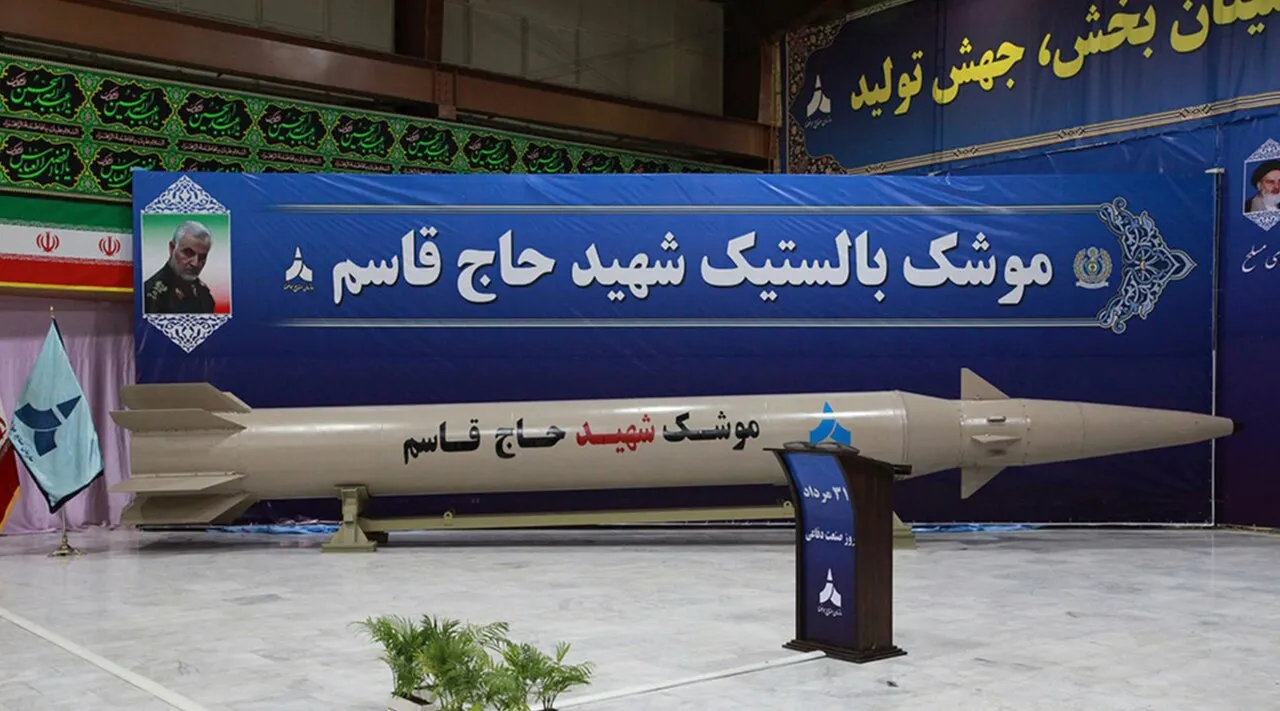
Haj Qasem is an Iranian solid-fuel medium-range ballistic missile in the extended Fateh/Zolfaghar design line, named for Qassem Soleimani and reported at roughly 1,400 km range with a 500 kg class payload. Iran displayed the missile in 2020, later introduced the Qassem Basir derivative, and state-linked reporting tied Haj Qasem to Iranian strike waves in the 2025 Israel-Iran Conflict and 2026 Iran War.

Role in Conflicts

Side
Iran

Tehran Times, citing IRGC Public Relations, reported that Iran fired Haj Qasem missiles in the 59th wave of Operation True Promise 4 on March 17, 2026, against Israeli positions and U.S. regional bases.

Profile / Specs

Profile

Origin
Iran
Type
Medium-range ballistic missile
Service note
2020-present
Designer
Iranian defense industry / IRGC Aerospace Force context
Designed
Unveiled in August 2020
Produced
2020-present
Developed from
Fateh/Zolfaghar solid-fuel ballistic-missile family

Specifications

Class
Medium-range ballistic missile
Range
1,400 km reported for Haj Qasem; 1,200 km reported for Qassem Basir derivative
Payload
500 kg class payload reported by Iran Watch and Mehr
Propulsion
Solid fuel
Basing
Road-mobile transporter erector launcher context
Launch weight
About 7 tons reported by Mehr
Length
About 11 m reported by Mehr
Status
Deployed in Iran Watch's January 2026 missile table
Guidance
Public details vary; Qassem Basir is reported with enhanced guidance, while Haj Qasem is described as a precision solid-fuel ballistic missile in Iranian reporting
Design And Sourcing Notes

Haj Qasem is best treated as a named Iranian MRBM in the extended Fateh/Zolfaghar branch rather than as a fully transparent Western-documented program. Iran Watch gives the clearest compact public data row, while Iran Primer and CSIS support the family context and the 2020 public reveal. Iranian state-linked outlets provide the direct conflict-use claims, so the conflict rows preserve that attribution instead of treating damage or interception claims as independently confirmed.

Family context

Fateh-type design principles, longer range than Zolfaghar and Dezful, and solid-fuel launch readiness are the strongest cross-source themes.

Derivative

Qassem Basir is reported by Mehr and Iran Watch as an improved Haj Qasem derivative with a shorter claimed range and enhanced guidance.

Evidence limit

Public sources directly name Haj Qasem in Iranian strike-wave reporting, but independent battle-damage attribution to specific missile models remains limited.
Variants

Open-source references describe Haj Qasem as a longer-range solid-fuel missile using Fateh-type design principles, with Qassem Basir later presented by Iran as an improved derivative.

VariantConfigurationDesignation notes
Fateh-110 / Fateh-family ballistic missile, Short-range ballistic missile, ArtilleryFateh-110 / Fateh-family ballistic missileFateh family baseline

The Iran Primer describes Haj Qasem as using the same basic design principles as Fateh-type systems but with much longer range.

Sources: Iran Primer ballistic missile program

Zolfaghar Ballistic Missile, Short-range ballistic missile, ArtilleryZolfaghar Ballistic MissileIntermediate family branch

Iran Primer and CSIS family context place Zolfaghar, Dezful, and Haj Qasem in the extended solid-fuel Fateh-family line.

Sources: Iran Primer ballistic missile program, CSIS Hajj-Qassem tag

Qassem BasirImproved derivative

Mehr News said Qassem Basir is an upgraded Haj Qassem missile with a claimed 1,200 km range and improved guidance and maneuverability.

Sources: Mehr Qassem Basir explainer

Timeline

Haj Qasem Key Events

  1. Displayed on National Defense Industry Day

    CSIS reported that Iranian officials revealed footage of the Martyr Hajj Qassem solid-fueled ballistic missile on August 20, 2020.

    Sources: CSIS Hajj-Qassem tag

  2. Qassem Basir derivative described

    Mehr News reported that Qassem Basir was an upgraded Haj Qassem missile and summarized Iranian claims about improved guidance, maneuverability, and a 1,200 km range.

    Sources: Mehr Qassem Basir explainer

  3. Reported in True Promise III coverage

    Press TV described Haj Qassem as deployed in recent operations during the 2025 Israel-Iran Conflict and tied it to Iranian attacks on military and economic infrastructure.

    Sources: Press TV True Promise III missile list

  4. Reported first combat use in 2026 war

    Tehran Times reported that the IRGC fired Haj Qasem missiles in the 59th wave of Operation True Promise 4 during the 2026 Iran War.

    Sources: Tehran Times Haj Qasem 2026 strike report

Media
Related Weapon Systems
Ghadr/Qadr Ballistic Missile, Medium-range ballistic missile, MunitionsMunitionsGhadr/Qadr Ballistic MissileMedium-range ballistic missileThe Ghadr/Qadr family is an Iranian road-mobile medium-range ballistic missile line derived from the Shahab-3, with open-source references using Ghadr, Qadr, Ghadr-1, Ghadr-110, Qadr-H, Qadr-F, Emad, and related labels unevenly across variants. CSIS and Iran Watch describe Ghadr-class missiles as deployed Iranian systems with roughly 1,600-1,950 km range and a payload near 750-800 kg, while Iranian state reporting directly connects Qadr-H/Kheibar, Qadr/Qader, and Emad missiles to long-range strikes in the 2025 Israel-Iran Conflict and 2026 Iran War.
Blue Sparrow, Air-launched ballistic target missile / air-to-surface ballistic munition, MunitionsMunitionsBlue SparrowAir-launched ballistic target missile / air-to-surface ballistic munitionBlue Sparrow is a Rafael-built Israeli air-launched ballistic target missile in the Sparrow family, originally used to simulate medium- and long-range ballistic threats for missile-defense testing. Open Source Munitions Portal records and reporting on debris in Iraq show Blue Sparrow-family components in later Israeli long-range air-to-surface strike activity, while public sources still treat exact derivative designations and warhead configurations cautiously.

Sources