Air Defense

2K12 Kub / Kvadrat / SA-6 Gainful

Also known as
  • 2K12 Kub
  • 2K12E Kvadrat
  • SA-6 Gainful
  • Kub
  • Kvadrat
  • 2K12M Kub-M
  • 2K12M1 Kub-M1
  • 2K12M2 Kub-M2
  • 2K12M3 Kub-M3
  • 2K12M4 Kub-M4

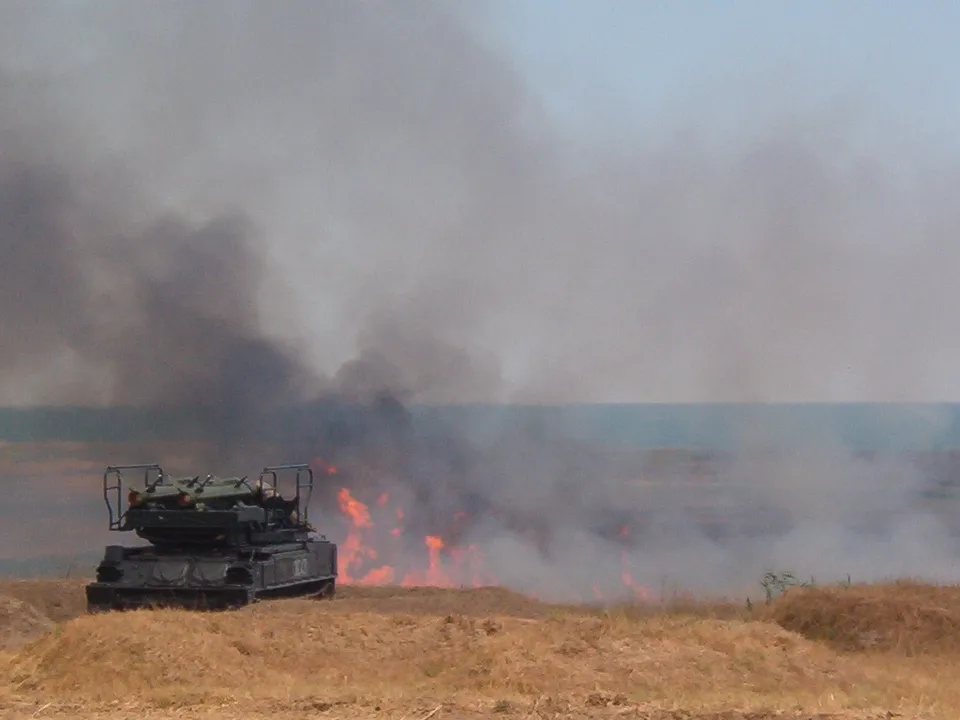
The 2K12 Kub, exported as Kvadrat and known to NATO as SA-6 Gainful, is a Soviet tracked medium-range surface-to-air missile system built around 3M9 missiles, 2P25 launch vehicles, and the 1S91 Straight Flush radar. Its conflict record spans the 1973 Yom Kippur War, where Egyptian and Syrian SA-6 batteries became a central air-defense problem for Israeli aviation, and later legacy use or transfer in Ukraine, Syria, Nagorno-Karabakh, Libya, and Yemen.

Role in Conflicts

Side
EgyptSyria

Egyptian and Syrian forces fielded Kub/SA-6 batteries during the October 1973 Yom Kippur War, where the system formed part of a dense ground-based air-defense network and was credited in museum and air-power studies with shooting down Israeli aircraft and complicating Israeli suppression efforts.

Ukraine received additional Kub/Kvadrat-family air-defense equipment during the full-scale phase of the Russia-Ukraine War: Slovak reporting listed Kub launchers, a Kub radar station, and 3M9 missiles; SIPRI records Czech and Polish second-hand Kvadrat system deliveries and Czech, Polish, and Slovak 3M9 missile transfers for Kvadrat; Ukrainian reporting in 2026 described adapted Kub systems on combat duty against Russian Shahed-type attack drones.

Role details

Syrian government air-defense forces were reported by Russia and international coverage as deploying 2K12 Kub/Kvadrat systems while responding to the 14 April 2018 U.S., British, and French missile strikes; the claimed interception results remained disputed by U.S. and independent assessments.

Role details

Armenian and Artsakh forces fielded Soviet-era 2K12 Kub/SA-6 systems as part of their air-defense network during the 2020 Nagorno-Karabakh war; open-source loss documentation recorded 1S91 radar vehicles destroyed by Azerbaijani TB2s and loitering munitions, plus one captured 1S91 component.

Houthi-aligned forces used an SA-6/Kub-family surface-to-air missile in June 2019 to shoot down a U.S. MQ-9 over Yemen, according to U.S. Central Command; CSIS identifies the related Houthi Fater-1 display as a 3M9/SA-6-derived missile tied to Yemen's earlier Kub/Kvadrat inventory.

Role details
Profile / Specs

Profile

Origin
Soviet Union
Type
Tracked medium-range surface-to-air missile system
Service note
Cold War system in continuing service with several operators
Designer
Tikhomirov NIIP and Vympel design organizations
Designed
1958-1967 development period
Produced
Mid-1960s to early 1980s for main Soviet production
Number built
More than 600 batteries reported by WeaponSystems.net

Specifications

Missile
3M9 Kub surface-to-air missile
Launcher
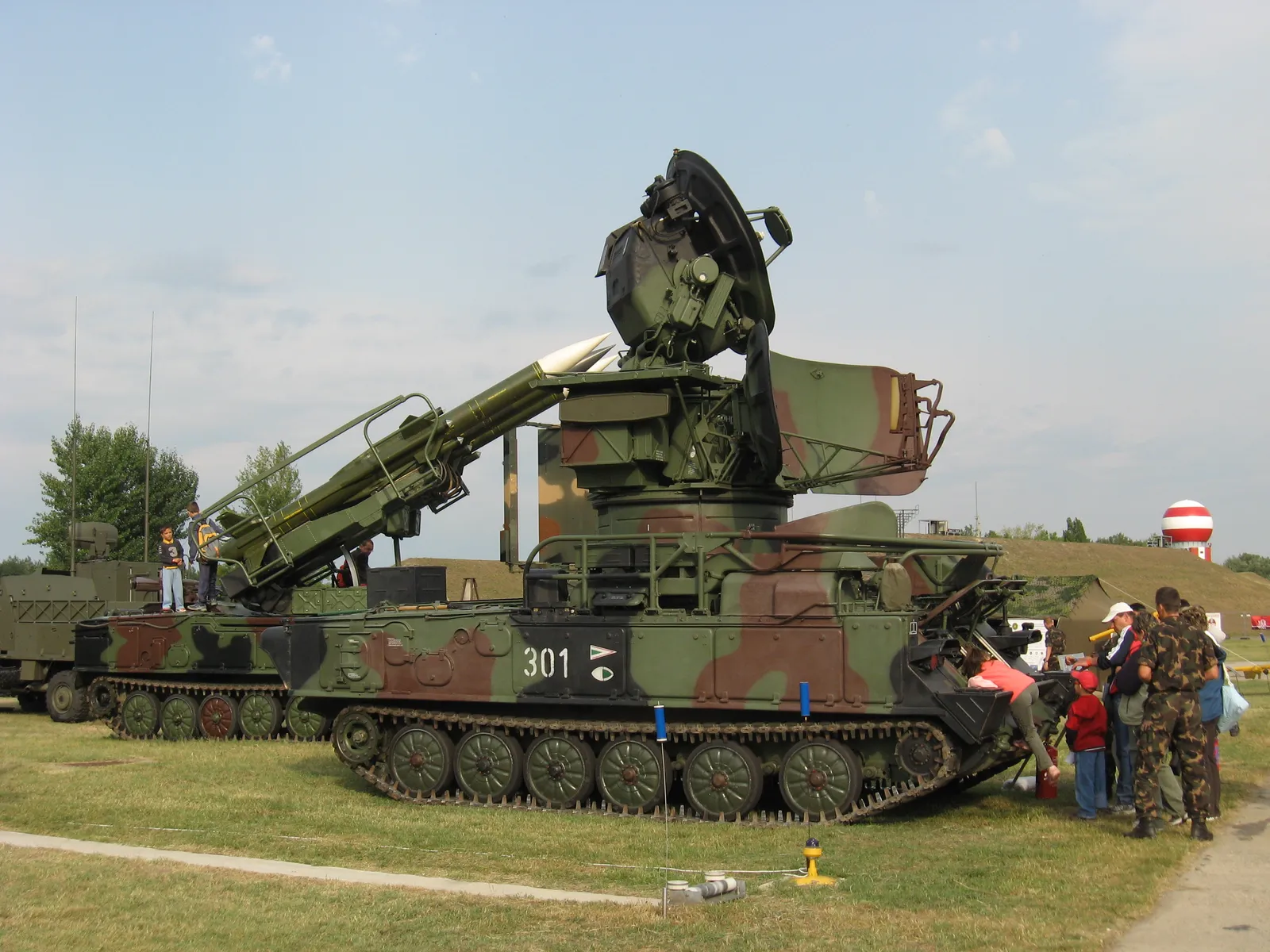
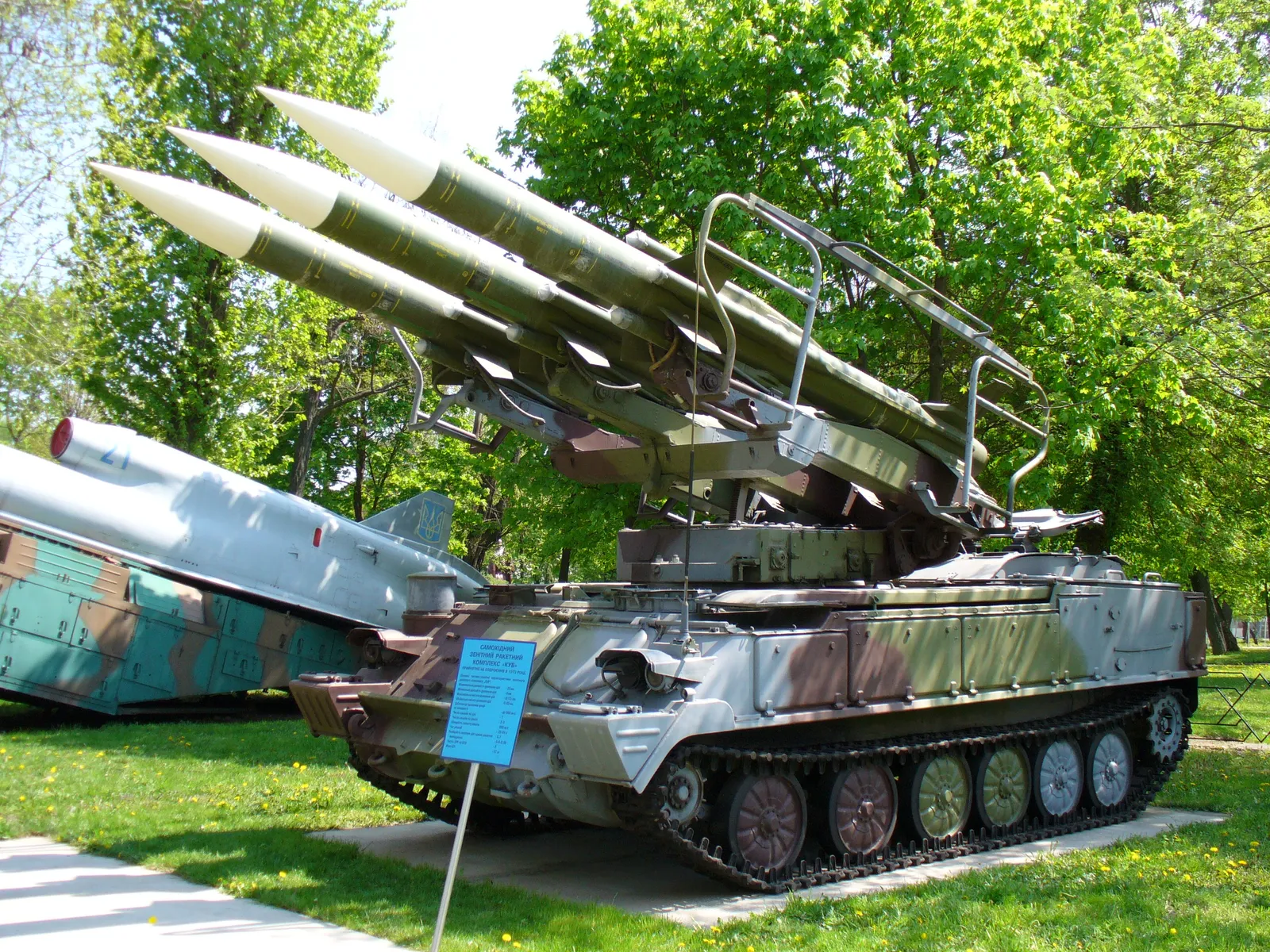
2P25 tracked transporter-erector-launcher carrying three ready missiles
Radar
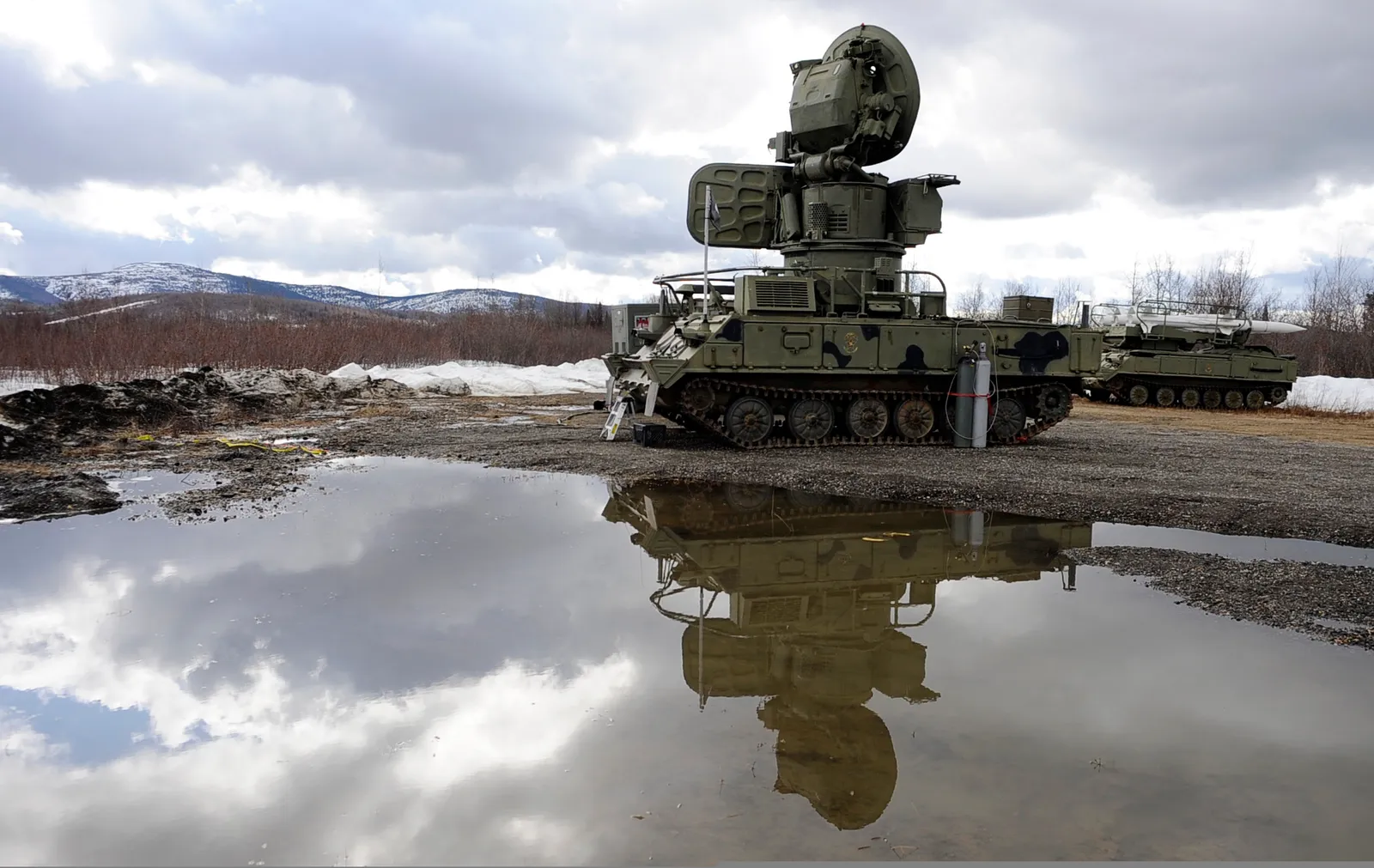
1S91 Straight Flush search, tracking, and fire-control radar vehicle
Battery composition
Czech MoD data describes one 1S91 radar vehicle, four 2P25 launchers, and two transport/supply vehicles in a battery.
Maximum effective range
About 23 km for the Czech MoD 2K12 M2 Kub data sheet
Engagement altitude
Czech MoD data lists about 100 m to 7,000 m for 2K12 M2 Kub; other variant references list different M3 figures.
Guidance
Semi-active radar homing with radar illumination
Warhead
High-explosive fragmentation warhead, about 59 kg
Missile speed
About Mach 2.8
Missile weight
About 600 kg
Reload
About 10 minutes from transport vehicle to launcher in the Czech MoD data sheet
Optical channel
Television optical sighting channel reported with up to 25 km camera range on the Czech MoD 2K12 M2 data sheet
System Architecture And Modernization

The Kub family is best understood as a battery-level air-defense system: the 1S91 Straight Flush/SURN radar vehicle searches, tracks, illuminates, and guides; the 2P25 launch vehicles carry the ready 3M9 missiles; and transport vehicles handle reloads. Later modernization programs focused less on the basic tracked layout and more on radar electronics, command links, optical channels, identification equipment, and missile compatibility.

Battery chain

Czech MoD data describes one 1S91 radar vehicle, four launchers, and two transport/supply vehicles, with two missiles assignable against one target.

Radar and optical control

The system uses radar search, tracking, illumination, and missile guidance, with a television optical channel documented for jamming-resistant operation.

Modernization focus

RETIA modernization material describes upgraded SURN radar/control vehicles, 2P25 launcher integration, new electronics, NATO-compatible command links, and missile-replacement options.

Sources: 2K12 M2 KUB - NATO code: SA-6 GAINFUL; 2K12 Kub; SURN CZ modernization of 2K12 KUB.
Variants

Kub/Kvadrat variant names usually describe system-level modernization or export configurations. The 3M9 missile, 2P25 launcher, and 1S91 Straight Flush/SURN radar are component records rather than same-family variants of the parent system.

VariantConfigurationDesignation notes
2K12 KubBaseline Soviet system

Open technical references place the original Kub system in service in 1967 with the 3M9 missile, 2P25 launch vehicle, and 1S91 radar/control vehicle.

Sources: 2K12 Kub, SA-6 Gainful - GlobalSecurity

2K12E KvadratExport configuration

WeaponSystems.net and GlobalSecurity identify Kvadrat as the export designation used for Kub-family systems supplied outside the Soviet Union.

Sources: 2K12 Kub, SA-6 Gainful - GlobalSecurity

2K12M1 Kub-M1Early modernization

GlobalSecurity lists Kub-M1 as a 1973 modernization step in the Kub family.

Sources: SA-6 Gainful - GlobalSecurity

2K12M2 Kub-M2Documented service designation

The Czech Ministry of Defence data sheet identifies its system as 2K12 M2 KUB and gives official figures for the missile, radar, launcher, and battery arrangement.

Sources: 2K12 M2 KUB - NATO code: SA-6 GAINFUL

2K12M3 Kub-M3Later Soviet modernization

GlobalSecurity lists Kub-M3 as a 1976 modernization, and the National Defence University of Ukraine describes a Kub-M3 exhibit with updated range, altitude, and reaction-time figures.

Sources: SA-6 Gainful - GlobalSecurity, Kub-M3 - National Defence University of Ukraine

2K12M4 Kub-M4Kub/Buk transition configuration

GlobalSecurity describes Kub-M4 as a 1978 step connected with the early Buk system rather than as a separate cataloged weapon page here.

Sources: SA-6 Gainful - GlobalSecurity

Carried And Launched Missiles

Kub batteries use the 3M9 missile family as the ready missiles carried on the tracked launch vehicles.

Carried itemItem typeCarriage evidence
3M9 surface-to-air missile, Ramjet-powered surface-to-air missile carried and launched by the 2K12 Kub / SA-6 system, Munitions3M9 surface-to-air missileSurface-to-air missile

Weaponsystems.net identifies the 3M9 as the Kub missile and describes each 2P25 launch vehicle as carrying three ready missiles.

Sources: 2K12 Kub

Launch Vehicles

The parent Kub system combines radar/control equipment with tracked firing vehicles rather than operating as a single self-contained launcher.

Compatible itemItem typeCompatibility evidence
2P25 launch vehicle, Tracked transporter-erector-launcher for three 3M9 missiles, Air Defense2P25 launch vehicleTracked launch vehicle

Weaponsystems.net describes the 2P25 as the Kub launch vehicle, while RETIA modernization material identifies 2P25/SPU launchers as part of the Kub firing chain alongside the SURN radar vehicle.

Sources: 2K12 Kub, SURN CZ modernization of 2K12 KUB

Timeline

2K12 Kub / Kvadrat / SA-6 Gainful Key Events

  1. Kub development begins

    Open technical references place Kub development in the 1958 to mid-1960s period as a mobile medium-range air-defense system for Soviet ground forces.

    Sources: 2K12 Kub

  2. Baseline Kub enters service

    WeaponSystems.net and GlobalSecurity place the original Kub system in service in 1967 with 3M9 missiles and tracked launch vehicles.

    Sources: 2K12 Kub, SA-6 Gainful - GlobalSecurity

  3. Combat debut and Kub-M1 modernization

    The Polish Aviation Museum identifies the Yom Kippur War as the Kub combat debut, while GlobalSecurity lists Kub-M1 as a 1973 modernization step.

    Sources: 1S91M1-2 SURN station - Polish Aviation Museum, SA-6 Gainful - GlobalSecurity

  4. Kub-M3 modernization

    GlobalSecurity and the National Defence University of Ukraine identify Kub-M3 as a later 1970s modernization with different range, altitude, and reaction-time figures from earlier Kub data.

    Sources: SA-6 Gainful - GlobalSecurity, Kub-M3 - National Defence University of Ukraine

  5. Kub-M4 transition toward Buk

    GlobalSecurity describes Kub-M4 as a 1978 configuration connected with the emerging 9K37 Buk family.

    Sources: SA-6 Gainful - GlobalSecurity

  6. Kub/Kvadrat systems and missiles supplied to Ukraine

    Slovakia approved Kub launchers, a Kub radar station, and 3M9 missiles for Ukraine; Czech reporting said Prague was supplying two 2K12 Kub systems with missiles, and SIPRI records second-hand Kvadrat systems and 3M9 missile transfers to Ukraine from Czechia, Poland, and Slovakia.

    Sources: Vláda rozhodla: Slovensko daruje stíhačky MiG-29 Ukrajine, Czech Republic supplies Ukraine with two Kub air defence systems, SIPRI Arms Transfers Database - Ukraine Kvadrat and 3M9 transfers

Media

2K12 Kub / Kvadrat / SA-6 Gainful Videos

Related Weapon Systems
3M9 surface-to-air missile, Ramjet-powered surface-to-air missile carried and launched by the 2K12 Kub / SA-6 system, MunitionsMunitions3M9 surface-to-air missileRamjet-powered surface-to-air missile carried and launched by the 2K12 Kub / SA-6 systemThe 3M9 surface-to-air missile is the Soviet semi-active radar-homing missile family carried by the 2K12 Kub / Kvadrat / SA-6 Gainful air-defense system. Sourced records identify its ramjet propulsion, 3M9 KUB designation, 2P25 launcher compatibility, and 1S91 radar-guided engagement chain, while transfer reporting directly documents 3M9ME and 3M9M3E missiles supplied or pledged for Ukrainian Kub-M2 launchers during the 2014 Russia-Ukraine War.
2K11 Krug / SA-4 Ganef, Tracked medium-range surface-to-air missile system, Air DefenseAir Defense2K11 Krug / SA-4 GanefTracked medium-range surface-to-air missile systemThe 2K11 Krug, NATO reporting name SA-4 Ganef, is a Soviet tracked medium-range surface-to-air missile system built around 2P24 launchers, 3M8-series missiles, and separate acquisition and guidance radars. Successive Krug-A, Krug-M, and Krug-M1 updates reduced the system's dead zone and improved parts of its engagement envelope. In the Nagorno-Karabakh conflict record, public evidence documents Armenian and Artsakh Krug equipment as legacy air defense and later as damaged, captured, or seized materiel rather than confirmed missile firings.
R-17 Scud-B ballistic missile, Short-range ballistic missile, MunitionsMunitionsR-17 Scud-B ballistic missileShort-range ballistic missileThe R-17 Elbrus, known to NATO as the SS-1C Scud-B, is a Soviet road-mobile, liquid-fueled short-range ballistic missile built for deep strikes with conventional, chemical, or nuclear payloads. Its combat record spans Egyptian launches in 1973, Iranian and Iraqi city strikes in the 1980-1988 war, Libyan missile attempts in 1986 and 2011, South Yemeni strikes in 1994, Armenian strikes on Ganja in 2020, and Houthi-aligned use of inherited Yemeni stocks, illustrating the lasting political and civilian risk of older inaccurate ballistic missiles.
S-125 Neva/Pechora / SA-3 Goa, Short- to medium-range surface-to-air missile system, Air DefenseAir DefenseS-125 Neva/Pechora / SA-3 GoaShort- to medium-range surface-to-air missile systemThe S-125 Neva/Pechora, known to NATO as SA-3 Goa, is a Soviet command-guided surface-to-air missile system built to cover lower-altitude targets than earlier S-75 batteries. The family combines 5V24/V-600 or 5V27/V-601 missiles, SNR-125 Low Blow engagement radar, and twin- or four-rail launchers, with later Pechora upgrades adding mobile chassis, digital electronics, and optical tracking. Cataloged use spans Egyptian and Iraqi air-defense service, Yugoslav S-125 combat in Operation Allied Force, Syrian and Houthi-aligned legacy sites, Azerbaijani Pechora-2TM use, Ukrainian Newa-SC service, and Indian Pechora employment during Operation Sindoor.
S-75 Dvina / SA-2 Guideline, High-altitude surface-to-air missile system, Air DefenseAir DefenseS-75 Dvina / SA-2 GuidelineHigh-altitude surface-to-air missile systemThe S-75 Dvina, known to NATO as the SA-2 Guideline, is a Soviet command-guided surface-to-air missile system built around V-750/V-755 missiles, single-rail launchers, Spoon Rest acquisition radar, and Fan Song guidance radar. It became a defining Cold War high-altitude air-defense system in Vietnam and Arab-Israeli wars, where fixed SAM sites shaped strike planning and suppression tactics. In Yemen, surviving S-75 missile stocks reappeared less as intact air-defense batteries than as source missiles for Houthi-aligned Qaher and Muhit strike conversions.
3M8 anti-aircraft guided missile, Soviet ramjet-powered surface-to-air missile carried and launched by the 2K11 Krug system, MunitionsMunitions3M8 anti-aircraft guided missileSoviet ramjet-powered surface-to-air missile carried and launched by the 2K11 Krug systemThe 3M8 is the large Soviet surface-to-air missile built for the 2K11 Krug / SA-4 Ganef tracked air-defense system. It combined four solid-fuel launch boosters with a kerosene ramjet sustainer, a heavy fragmentation warhead, and command-guidance integration with Krug radars and launchers. In the Nagorno-Karabakh conflict record, direct public evidence is limited to captured 3M8 missiles documented with abandoned Armenian Krug equipment after the 2023 Azerbaijani offensive.

Sources