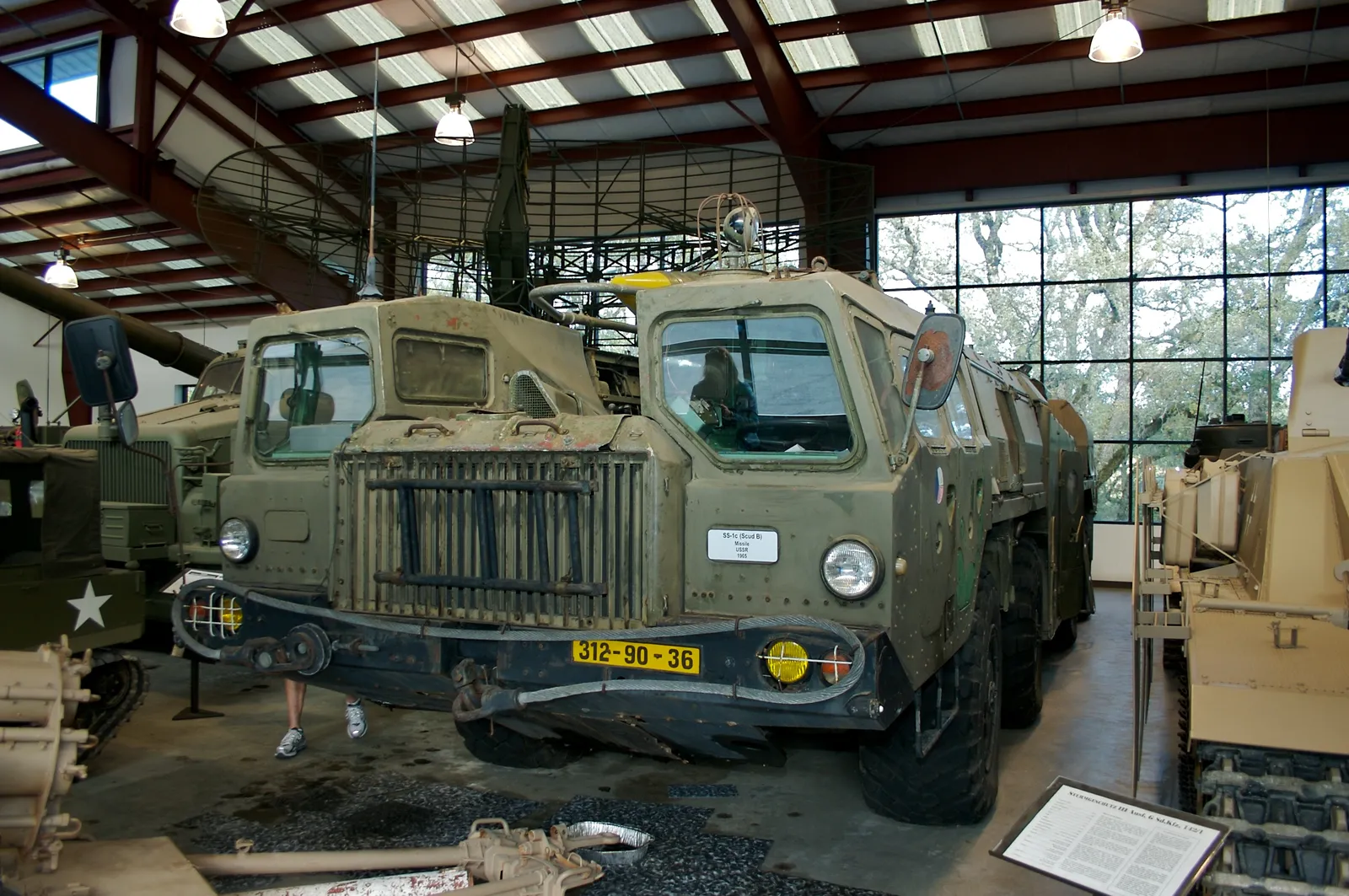

2014 Yemen Civil War: used by Houthi-aligned forces for cross-border ballistic-missile attacks from Yemen, including reported Burkan-1 launches toward Taif, the disputed Jeddah-Mecca area, Zuqar Island, and the King Fahd Air Base area.
Role detailsMunitions
Burkan-1 ballistic missile
Also known as
- Borkan-1
- Borkan 1
- Burqan-1
- Burqan 1
- Volcano-1
- Volcano 1
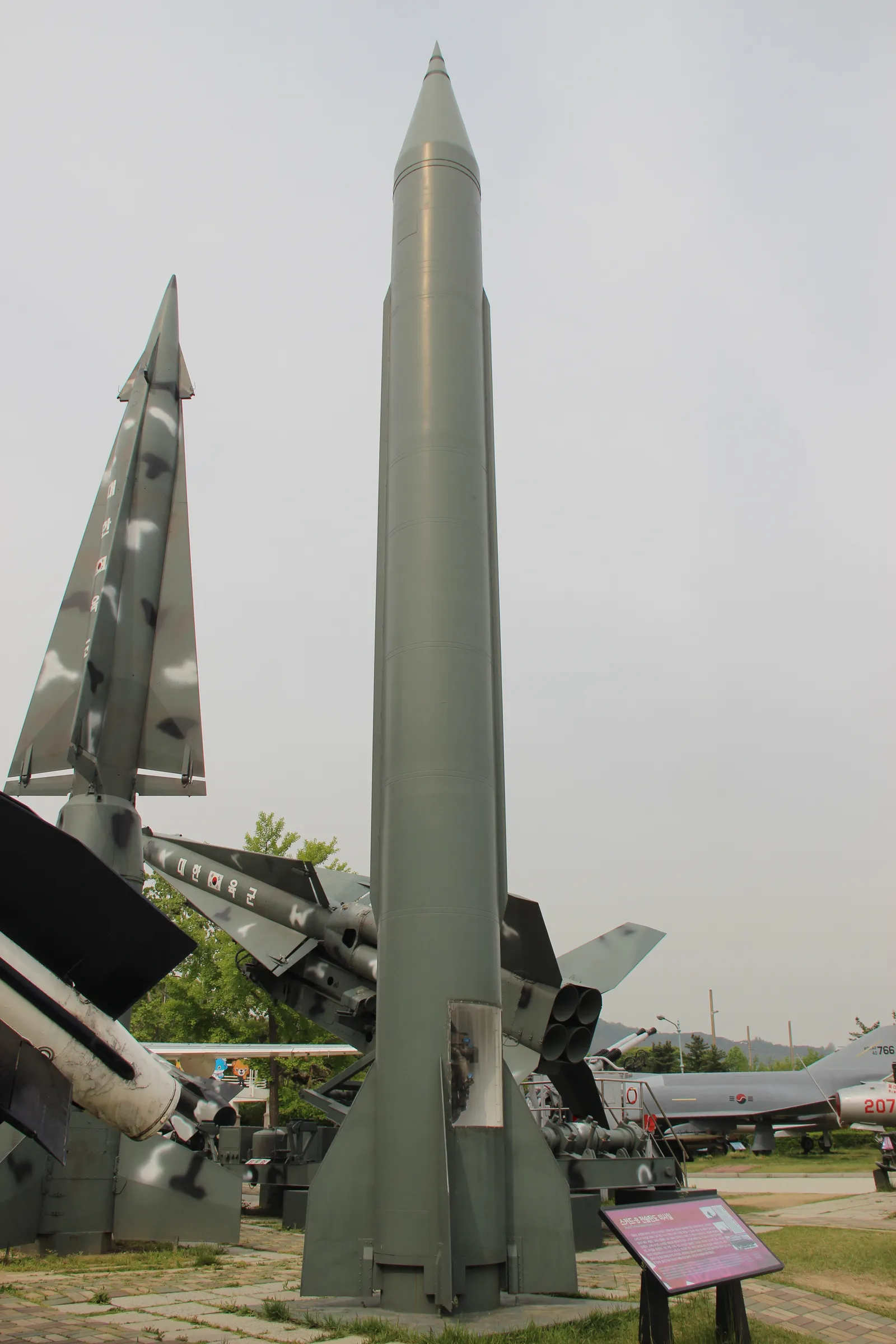
Burkan-1 is the Houthi designation for a locally upgraded Scud-family ballistic missile, likely derived from the Shahab-1/Scud-B line, that Houthi-aligned forces unveiled in 2016 and used for cross-border strikes from Yemen toward Saudi and coalition targets.
Role in Conflicts
Design Notes
Burkan-1 sits at the early point of the Houthi Burkan sequence: sources describe a locally upgraded Scud-family missile before the better-documented Qiam-derived Burkan-2H appeared in 2017.
Designation
CSIS identifies the missile as Burkan-1 or Volcano-1; open sources also use Borkan-1 and Burqan-1 spellings.
Lineage
CSIS assesses Burkan-1 as likely modified from Iran's Shahab-1, while Arms Control Wonk compared the displayed missile to an extended-range Scud.
Later family context
The UN Panel later tied Borkan-2H remnants to Qiam-1 design features, so Burkan-1 should not be collapsed into the later Qiam-derived missile without that distinction.
Profile / Specs
Profile
- Origin
- Yemen
- Built by
- Houthi movement
- Type
- Short-range ballistic missile
- Service note
- 2016-present
- Designer
- Houthi missile program
- Designed
- 2016
- Unit cost
- Not publicly established
- Produced
- 2016-present
- Number built
- Not publicly established
- Developed from
- Shahab-1 / Scud-family ballistic missile
Specifications
- Class
- Short-range ballistic missile
- Range
- About 800 km
- Length
- 12.5 m
- Diameter
- 0.88 m
- Launch weight
- About 7,250 kg
- Warhead
- About 500 kg high-explosive payload
- Propulsion
- Single-stage liquid-fueled rocket
- Launch platform
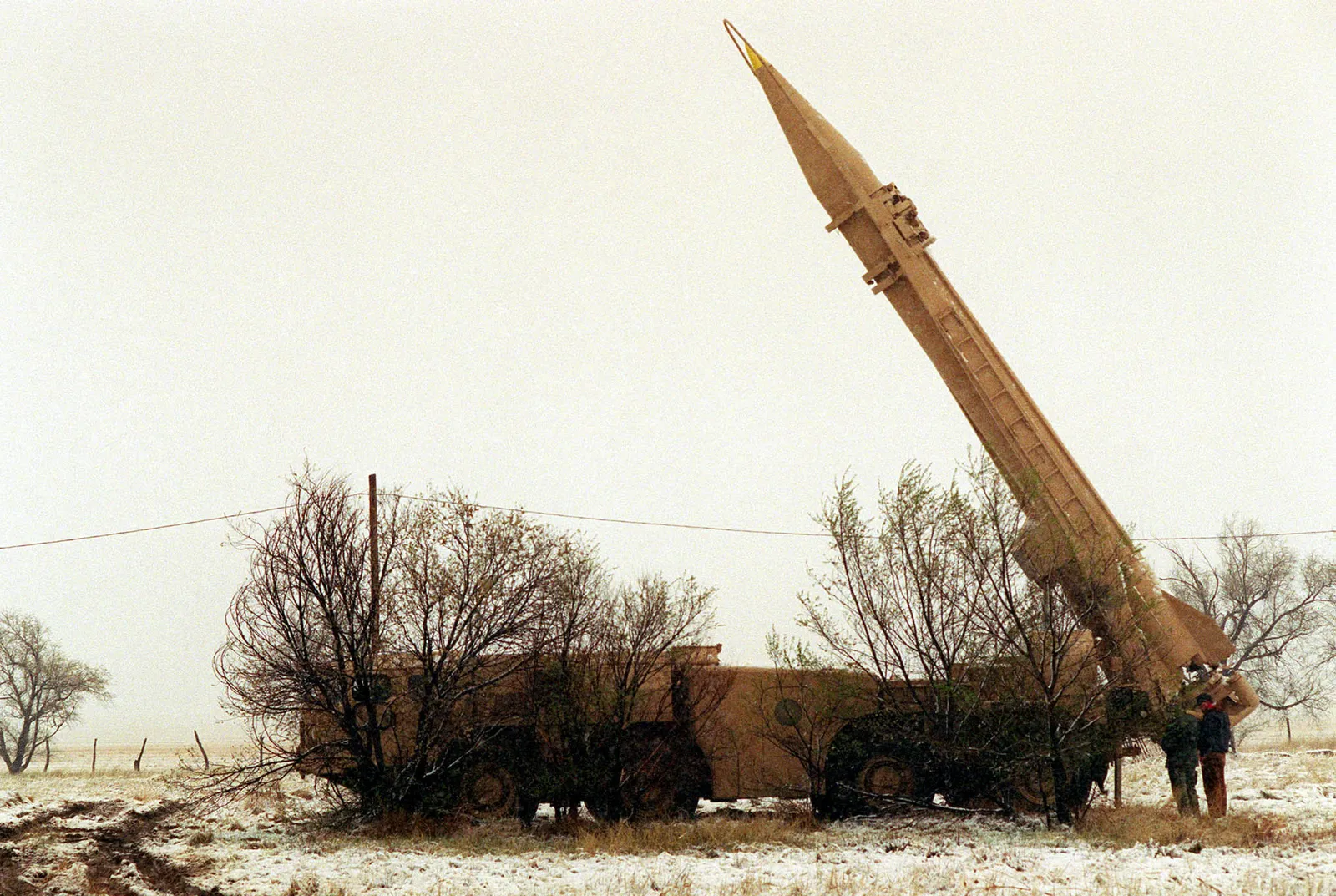
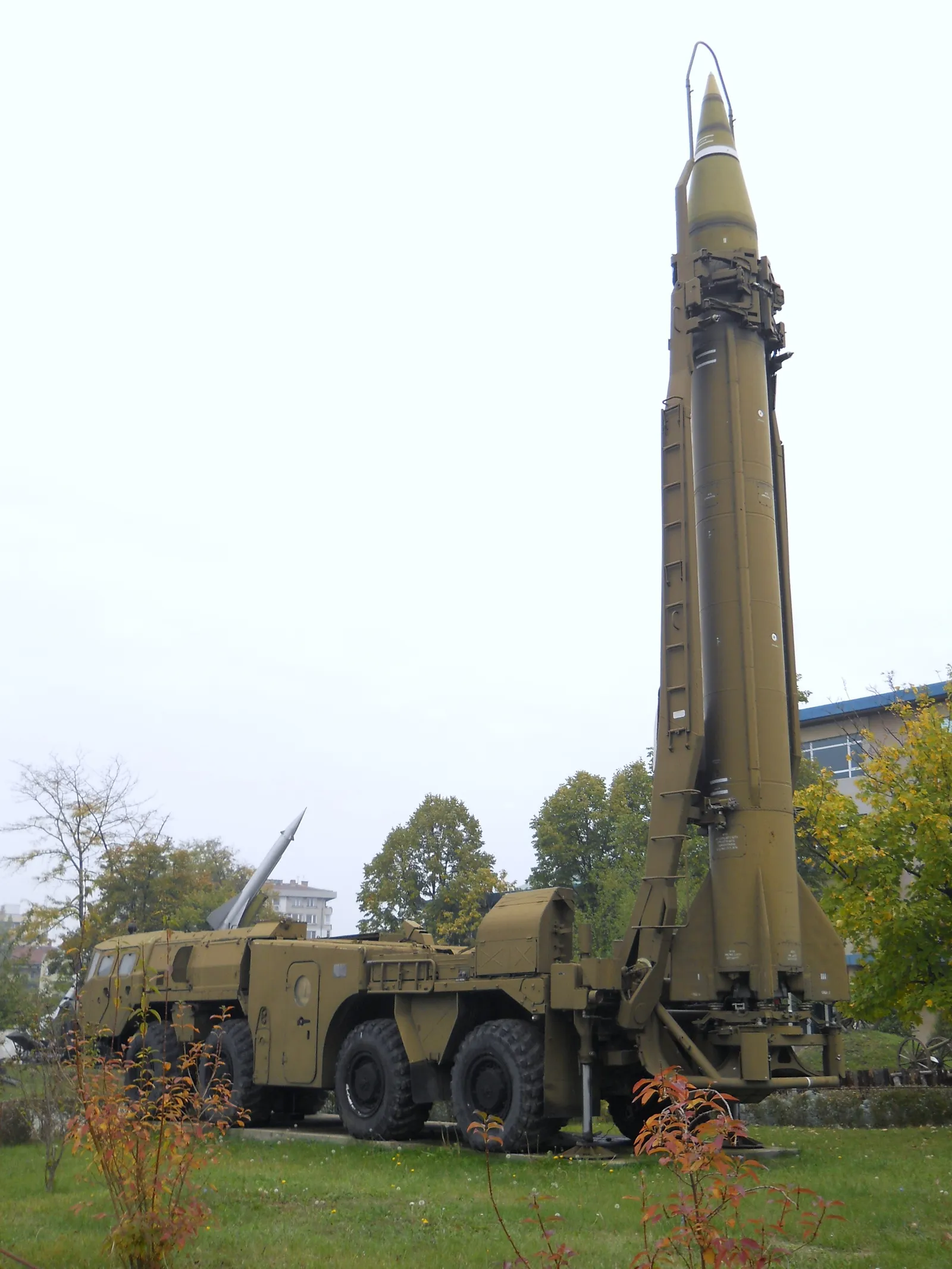
- Road-mobile transporter-erector-launcher
- Guidance
- Inertial guidance
Variants
Open sources use Burkan-1, Borkan-1, Burqan-1, and Volcano-1 for the same Houthi missile, while later Burkan designations moved toward Qiam-derived extended-range configurations.
| Variant | Configuration | Designation notes |
|---|---|---|
 | Later Qiam-derived Houthi ballistic missile | CSIS describes Burkan-2H as the upgraded Houthi Burkan missile line that followed earlier Burkan-1 launches and introduced Qiam-family features. Sources: The Missile War in Yemen |
| Later extended-range Burkan missile | Burkan-3 continued the Houthi Burkan designation sequence after Burkan-1 and Burkan-2H, with later sources treating it as a longer-range Qiam-derived system. Sources: The Missile War in Yemen |
 | Adjacent Iranian missile lineage | UN and CSIS reporting connect later Borkan/Burkan-family extended-range missiles to Qiam-derived design features, while Burkan-1 itself is usually treated as an earlier Shahab-1 or Scud-derived upgrade. Sources: UN Panel of Experts on Yemen S/2018/594, The Missile War in Yemen |
Launch Vehicles
Burkan-1 is described as a likely modified Shahab-1 / Scud-family missile, and the Shahab-1 and Scud-B launch chain is documented on the MAZ-543P TEL.
| Launcher | Launcher type | Launch evidence |
|---|---|---|
 | Transporter-erector-launcher | CSIS identifies Shahab-1 as launched from the MAZ-543P TEL, which supports the launcher context for the Burkan-1 lineage. Sources: Shahab-1 (Scud B-Variant), R-17 Elbrus (SS-1 Scud-B) |
Timeline
Burkan-1 ballistic missile Key Events
First Burkan-1 launch
CSIS says the Houthis fired a new Scud variant for the first time in September 2016, dubbing it Burkan-1 / Volcano-1 and targeting a Saudi air base in Taif.
Sources: The Missile War in Yemen
Disputed Jeddah-Mecca-area launch
Human Rights Watch reported that Houthi forces acknowledged firing a Burkan-1 into Saudi Arabia, while Saudi and Houthi accounts disputed whether the target was Mecca or King Abdulaziz International Airport near Jeddah.
Sources: Yemen: Houthi Strike on Saudi Airport Likely War Crime
Strike on Zuqar Island
The same CSIS report says one Burkan-1 hit the Saudi-UAE military base on Zuqar Island in the Red Sea, killing about 80 coalition soldiers.
Sources: The Missile War in Yemen
Intercept near Mecca
CSIS reported Saudi Arabia intercepting a Burkan-1 launched from northern Yemen near the Mecca area, while Houthi-Saleh sources said King Fahd Air Base was the intended target.
Sources: Saudi Arabia Intercepts Yemeni Missile Near Mecca
Related Weapon Systems





Sources
Saudi Arabia Intercepts Yemeni Missile Near MeccaPublisher: Center for Strategic and International Studies | Note: Supports 2014 Yemen Civil War: CSIS reported on July 27, 2017 that a Burkan-1 launched from northern Yemen was intercepted near Mecca. | Accessed: 2026-07-04The Missile War in YemenPublisher: Center for Strategic and International Studies | Note: Supports 2014 Yemen Civil War use and background: CSIS says the Houthis first fired Burkan-1 in September 2016 at Taif, later struck Zuqar Island in January 2017, and assessed the missile as a likely modified Shahab-1 with about 800 km range, 12.5 m length, 0.88 m diameter, and about 7,250 kg mass. | Accessed: 2026-07-04Shahab-1 (Scud B-Variant)Publisher: Missile Threat, Center for Strategic and International Studies | Note: Supports Burkan-1 lineage context: CSIS identifies Shahab-1 as a Scud-B variant launched from the Soviet/Russian MAZ-543P transporter-erector-launcher. | Accessed: 2026-07-04R-17 Elbrus (SS-1 Scud-B)Publisher: Missile Defense Advocacy Alliance | Note: Supports Burkan-1 lineage context: MDAA identifies the Scud-B as a mobile truck TEL-launched system. | Accessed: 2026-07-04Countering Iran's Missile Proliferation in YemenPublisher: The Washington Institute for Near East Policy | Note: Supports 2014 Yemen Civil War: used by the Houthis, who fired the first locally upgraded Scud variant, Burkan-1, at the Jeddah-Taif-Mecca axis on three occasions. | Accessed: 2026-07-04Houthi Missiles: The Iran Connection; Scuds Are Not Dead YetPublisher: Breaking Defense | Note: Supports 2014 Yemen Civil War: used by the Yemeni Houthi Ministry of Defense, which unveiled the Burkan-1 in 2016 and described it as a locally upgraded Scud variant with 12.5 m length, 8 tons mass, 800 km range, and a 500 kg payload. | Accessed: 2026-07-04Yemen: Houthi Strike on Saudi Airport Likely War CrimePublisher: Human Rights Watch | Note: Supports 2014 Yemen Civil War: HRW reported that Houthi forces acknowledged an October 2016 Burkan-1 launch into Saudi Arabia while Saudi and Houthi accounts disputed whether the target was Mecca or King Abdulaziz International Airport near Jeddah. | Accessed: 2026-07-04UN Panel of Experts on Yemen S/2018/594Publisher: United Nations Security Council | Note: Supports background and manufacturer context for the later Burkan/Qiam lineage: the Panel found Borkan-2H remnants consistent with Iranian Qiam-1 design and assessed that extended-range missile technology reached Houthi-Saleh forces after the arms embargo. | Accessed: 2026-07-04Yemen's Burkan-1 MissilePublisher: Arms Control Wonk | Note: Supports Burkan-1 background: Jeffrey Lewis compared the displayed missile to an extended-range Scud / Scud-D. | Accessed: 2026-07-04SS-1c Scud B ballistic missile.jpgPublisher: Wikimedia Commons | Note: Image provenance and CC BY-SA 3.0 licensing for the primary Scud-family missile image used to illustrate Burkan-1's lineage. | Accessed: 2026-07-04Scud Launcher.jpgPublisher: Wikimedia Commons | Note: Image provenance and public-domain licensing for a Scud launcher image used to illustrate Burkan-1's road-mobile launch class. | Accessed: 2026-07-04Scud missile on TEL vehicle, National Museum of Military History, Bulgaria.jpgPublisher: Wikimedia Commons | Note: Image provenance and CC BY-SA 2.0 licensing for a Scud missile on TEL used as a family-relevant launcher reference image. | Accessed: 2026-07-04Scud-B Tactical Ballistic Missile (USSR) (17395114199).jpgPublisher: Wikimedia Commons | Note: Image provenance and CC0 licensing for a Scud-B reference image used to support family-level illustration of Burkan-1. | Accessed: 2026-07-04