- Side
- Coalition forces

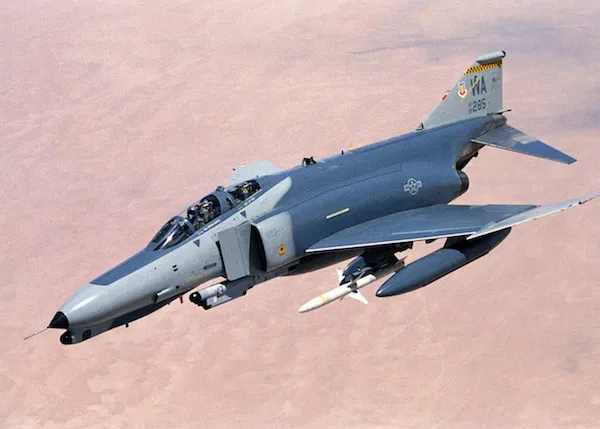
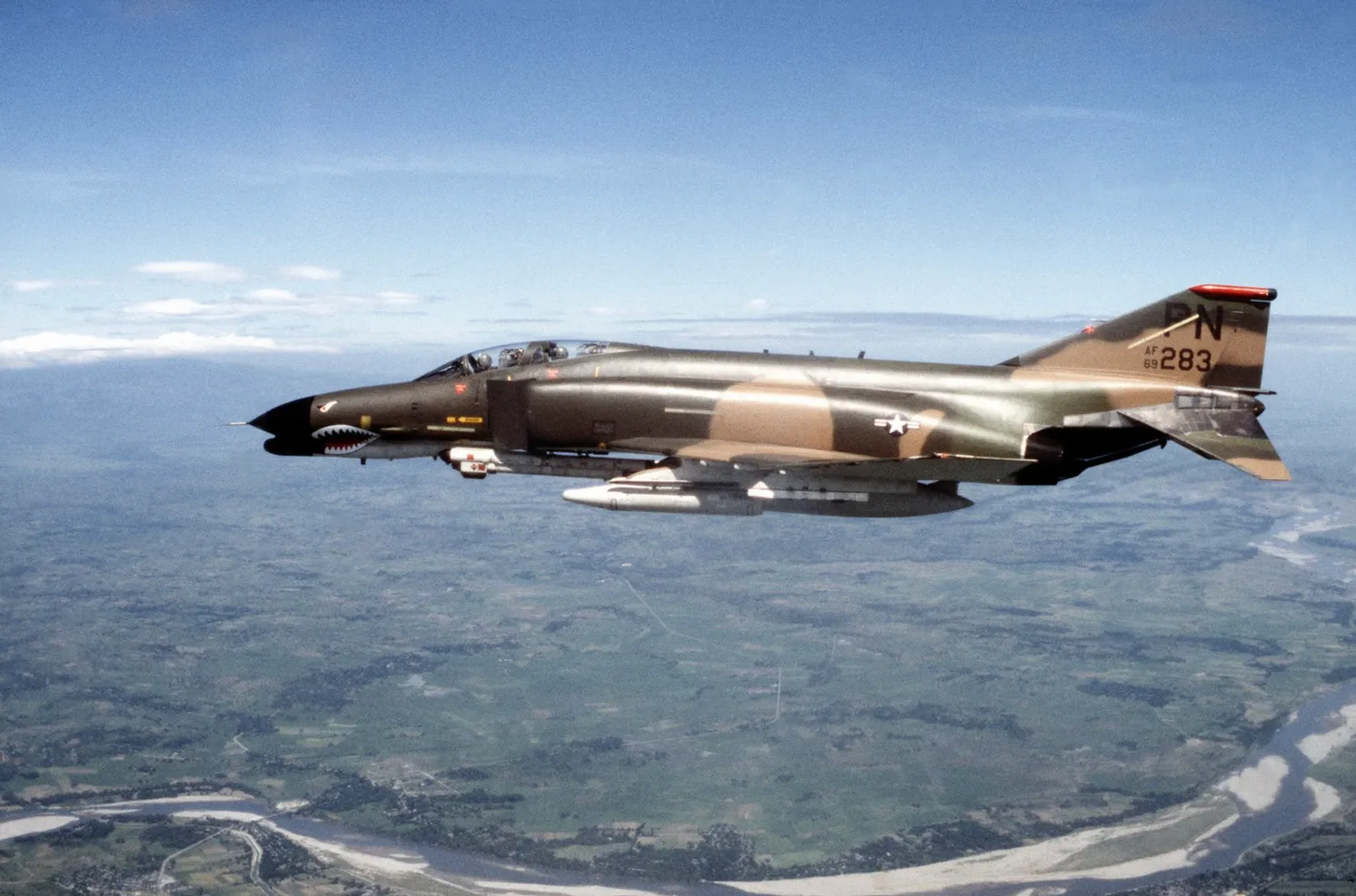
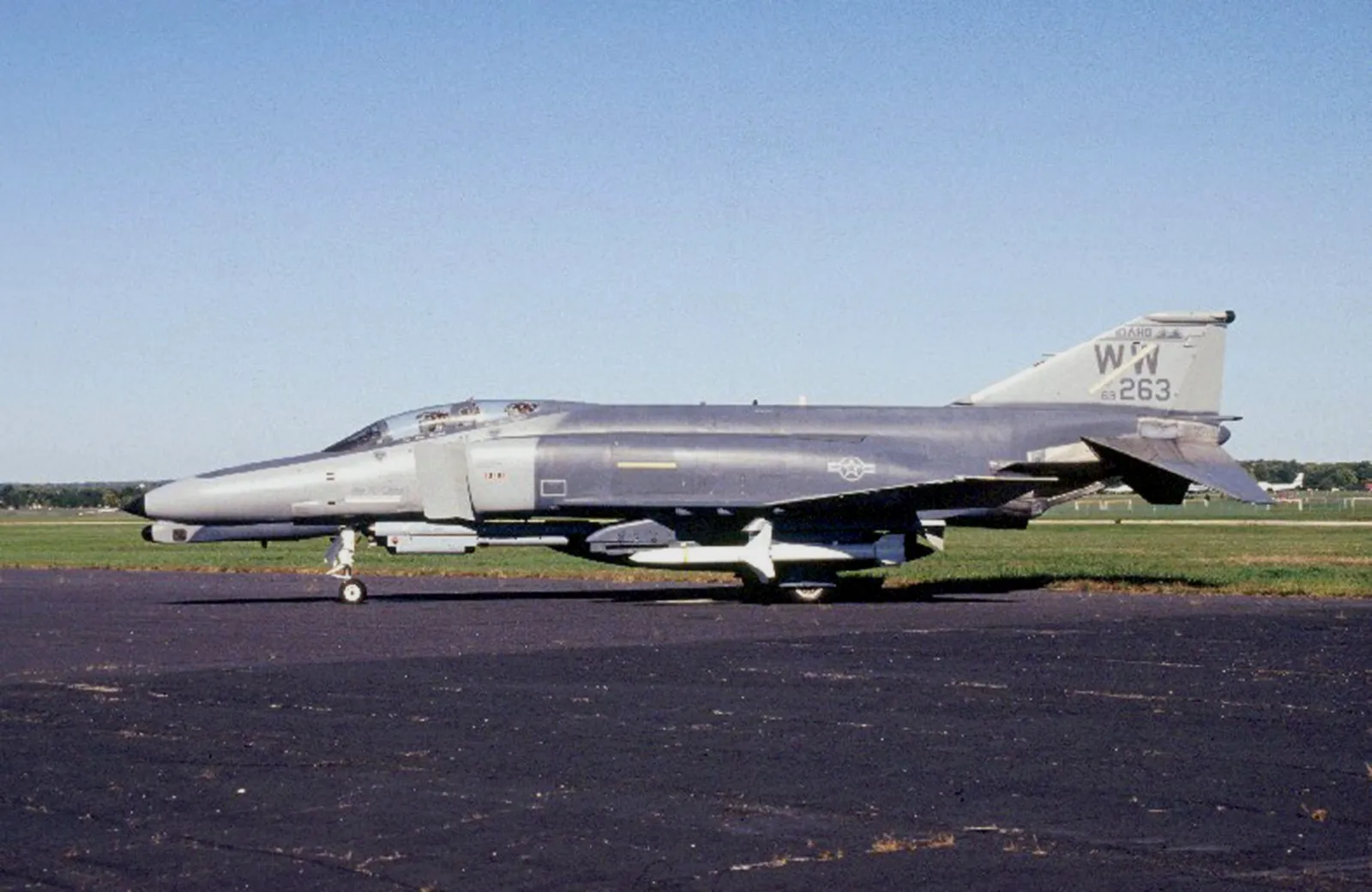
U.S. Air Force F-4G Wild Weasels flew coalition suppression-of-enemy-air-defenses missions in Operation Desert Storm, firing AGM-88 HARM missiles at Iraqi air-defense radar sites and escorting strike aircraft.
Role detailsThe F-4G Wild Weasel was a McDonnell Douglas conversion of the F-4E Phantom II built for the U.S. Air Force suppression-of-enemy-air-defenses mission. During Operation Desert Storm, F-4G crews used electronic-warfare equipment and AGM-88 HARM missiles to locate, suppress, and attack Iraqi radar-guided air defenses for coalition strike packages.
U.S. Air Force F-4G Wild Weasels flew coalition suppression-of-enemy-air-defenses missions in Operation Desert Storm, firing AGM-88 HARM missiles at Iraqi air-defense radar sites and escorting strike aircraft.
Role detailsThe F-4G kept the Phantom II's two-seat crew arrangement but replaced the F-4E cannon installation with electronic-warfare equipment for finding and attacking radar-guided air-defense threats.
A pilot flew the aircraft while an Electronic Warfare Officer helped navigate, communicate, and coordinate attacks on SAM sites.
The AN/APR-47 installation occupied the space formerly used by the F-4E cannon and supported the radar-hunting mission.
F-4Gs worked ahead of or alongside strike packages, using HARM missiles and threat-radar cues to suppress Iraqi surface-to-air missile sites.
The USAF F-4G was the Phantom II Wild Weasel V/Advanced Wild Weasel conversion of the F-4E airframe.
| Variant | Configuration | Designation notes |
|---|---|---|
 | Parent airframe | The F-4G conversion used the F-4E airframe and removed the internal gun installation to carry Wild Weasel radar attack and warning equipment. Sources: Planting the Seeds of SEAD: The Wild Weasel in Vietnam, McDonnell Douglas F-4G Wild Weasel | National Museum of the U.S. Air Force |
| YF-4G | Prototype designation | The YF-4G designation was applied to the prototype development aircraft before F-4G production conversions entered service. Sources: McDonnell F-4G Phantom II |
The National Museum of the U.S. Air Force identifies the F-4G's armament options as anti-radiation and tactical air-to-surface missiles, with air-to-air missiles retained for self-protection.
| Carried item | Item type | Carriage evidence |
|---|---|---|
 | Anti-radiation missile | The museum's technical notes list AGM-45 Shrike among the F-4G's possible anti-radar missile loads. Sources: McDonnell Douglas F-4G Wild Weasel | National Museum of the U.S. Air Force |
 | Anti-radiation missile | The F-4G carried AGM-88A/B/C HARM missiles for the Wild Weasel mission, and U.S. Air Force histories document HARM launches by F-4Gs during Desert Storm. Sources: McDonnell Douglas F-4G Wild Weasel | National Museum of the U.S. Air Force, USAF Manned Aircraft Combat Losses Since 1990, Misawa Air Base Newcomers Guide - 35th Fighter Wing History |
 | Air-to-surface missile | The museum's technical notes list AGM-65 Maverick among the F-4G's possible missile armament. Sources: McDonnell Douglas F-4G Wild Weasel | National Museum of the U.S. Air Force |
The F-4G could work with other Wild Weasels or act as a hunter aircraft directing fighter-bombers against SAM sites.
| Compatible item | Item type | Compatibility evidence |
|---|---|---|
 | Multirole fighter | The museum fact sheet says F-4G Wild Weasels worked with other F-4Gs or directed fighter-bombers such as the F-16 against SAM sites. Sources: McDonnell Douglas F-4G Wild Weasel | National Museum of the U.S. Air Force |
The National Museum of the U.S. Air Force records 1975 as the F-4G Wild Weasel's first-flight year.
Sources: McDonnell Douglas F-4G Wild Weasel | National Museum of the U.S. Air Force
A U.S. Air Force 35th Fighter Wing history says the first F-4G reached George Air Force Base in April 1978 as the wing helped test and train crews for the new SAM-hunter configuration.
Sources: Misawa Air Base Newcomers Guide - 35th Fighter Wing History
F-4G Wild Weasels preceded the first coalition strike packages into Iraqi target areas and launched AGM-88 HARM missiles against Iraqi air-defense radar sites.
Sources: Misawa Air Base Newcomers Guide - 35th Fighter Wing History
The National Museum of the U.S. Air Force records 1996 as the F-4G Wild Weasel retirement year.
Sources: McDonnell Douglas F-4G Wild Weasel | National Museum of the U.S. Air Force