- Side
- United States and South Vietnam


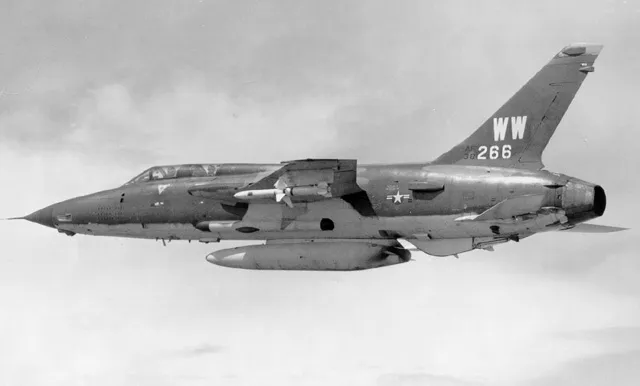
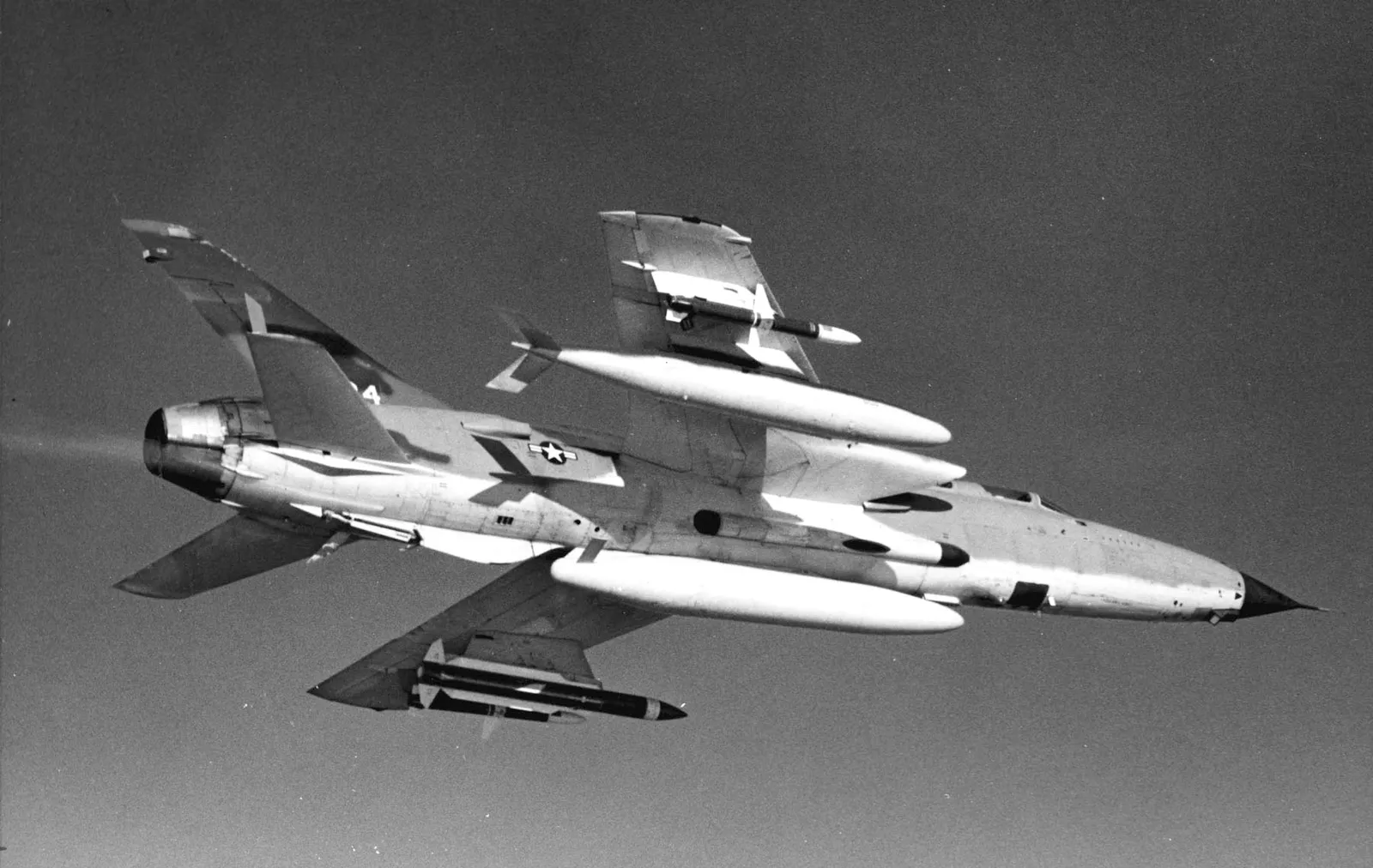
U.S. Wild Weasel aircraft used AGM-45 Shrike anti-radiation missiles for radar and SAM-site suppression in Vietnam, including extensive preemptive Shrike launches during 1972 operations.
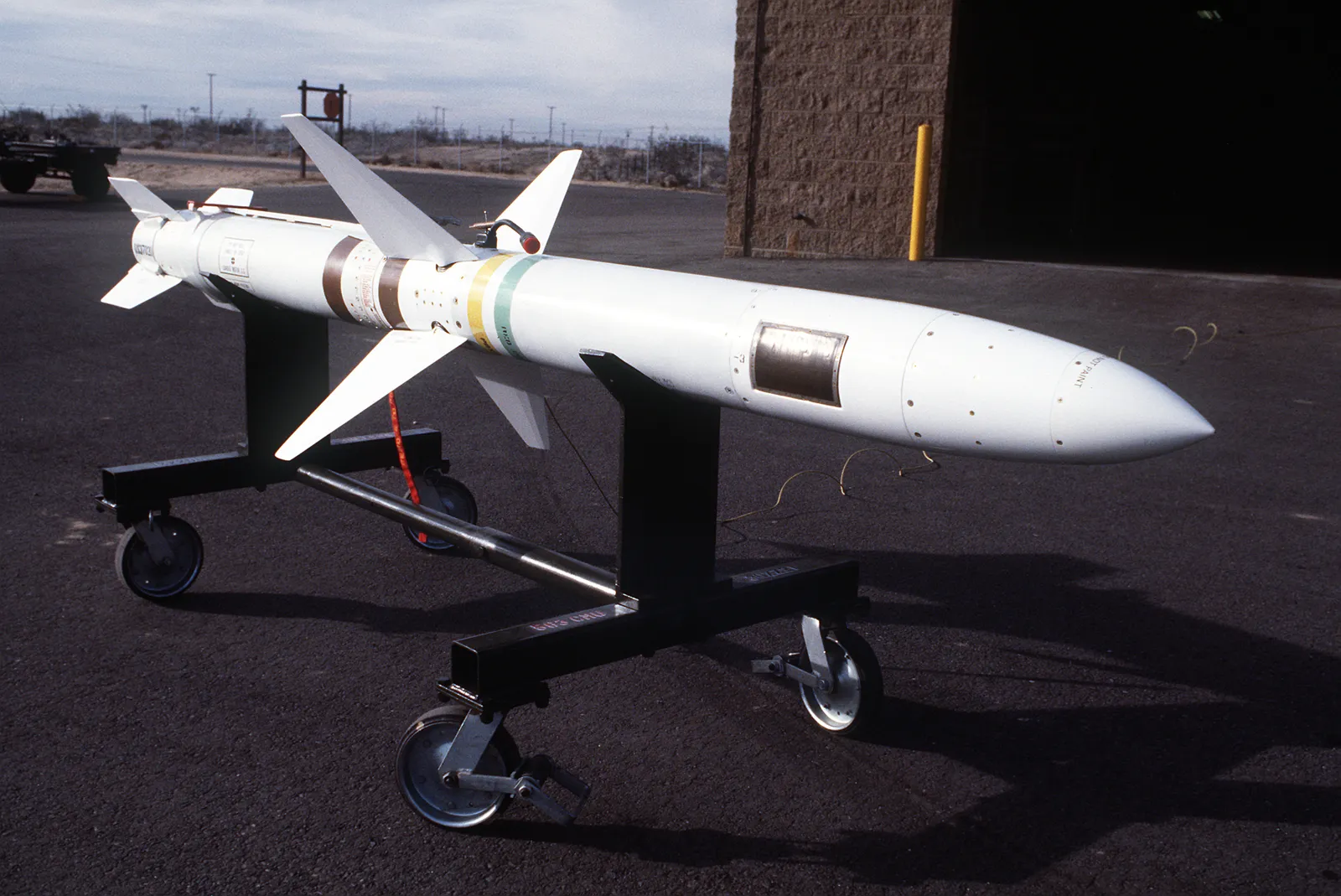
The AGM-45 Shrike was a U.S. air-launched anti-radiation missile adapted from the AIM-7 Sparrow to home on hostile radar emissions. It gave Wild Weasel and naval strike crews an early radar-suppression weapon, but its fixed-frequency seekers, narrow field of view, and lack of target memory meant crews had to plan around specific emitters and radar shutdown tactics.
U.S. Wild Weasel aircraft used AGM-45 Shrike anti-radiation missiles for radar and SAM-site suppression in Vietnam, including extensive preemptive Shrike launches during 1972 operations.
Israeli aircraft launched AGM-45 Shrike missiles against Arab SA-2 and SA-3 radar defenses during the 1973 war; the direct-source record supports use but keeps effectiveness claims limited.
RAF Vulcan Black Buck anti-radar missions used U.S.-supplied AGM-45 Shrike missiles against Argentine radar and air-defense targets near Port Stanley.
Gulf War munitions data and later Forecast International reporting document U.S. AGM-45 Shrike expenditure against Iraqi air-defense targets during Desert Storm.
Role detailsForecast International reports U.S. Navy AGM-45 employment during the 1986 U.S. strikes against Libya, within the catalog's broader 1981 U.S.-Libya confrontation record.
Shrike designations combined A/B missile bodies with seeker sections tuned to radar bands; ATM designations identified inert training rounds.
| Variant | Configuration | Designation notes |
|---|---|---|
| ASM-N-10 | Original development designation | Naval Weapons Center development began under the ASM-N-10 designation before the June 1963 redesignation to AGM-45A. Sources: AGM-45 Shrike | Designation-Systems |
| AGM-45A | Initial production missile | The initial Shrike missile used Rocketdyne MK 39 or some Aerojet MK 53 motors and could carry MK 5, MK 86, or WAU-8/B blast-fragmentation warheads. Sources: AGM-45 Shrike | Designation-Systems |
| ATM-45A | Training round | Training missile with the AGM-45A motor and seeker but an inert warhead section. Sources: AGM-45 Shrike | Designation-Systems |
| AGM-45B | Improved motor and warhead missile | Early-1970s variant with a modified warhead and Aerojet MK 78 dual-thrust motor, increasing maximum lofted range to about 40 km / 25 miles. Sources: AGM-45 Shrike | Designation-Systems |
| ATM-45B | Training round | Inert training variant of the AGM-45B. Sources: AGM-45 Shrike | Designation-Systems |
| AGM-45A/B seeker subvariants | Radar-band tuned seeker sections | Specialist designation data lists produced seeker families including -1, -2, -3, -3A, -3B, -4, -6, -7, -9, -9A, and -10, while noting that -5 and -8 were not produced. Sources: AGM-45 Shrike | Designation-Systems |
Shrike was integrated across U.S. and allied strike or defense-suppression aircraft, with platform-specific evidence strongest for these cataloged aircraft.
| Carrier | Carrier type | Carriage evidence |
|---|---|---|
 | Electronic warfare fighter aircraft | The F-4G Wild Weasel fact sheet lists AGM-45 Shrike among the aircraft's armament options. Sources: McDonnell Douglas F-4G Wild Weasel | National Museum of the United States Air Force |
 | Carrier-based attack aircraft | The Skyhawk ordnance page lists AGM-45 Shrike among the A-4's smart weapons and names A-4C/E/F/K/L/M/N and TA-4F/J/K as Shrike-capable variants. |
 | Israeli multirole fighter | Forecast International reports that Israel mounted AGM-45 Shrike missiles on F-4 and Kfir aircraft. Sources: AGM-45 Shrike - Archived 10/2001 | Forecast International |
Naval Weapons Center began Shrike development by combining a new anti-radiation seeker with a modified AIM-7 Sparrow III missile body.
Sources: Caps, Missile, Training, Air-to-Ground, Anti-Radiation, ATM-45A-1 Shrike | National Air and Space Museum, AGM-45 Shrike | Designation-Systems
The ASM-N-10 was redesignated AGM-45A in June 1963, with large-scale production of the initial model beginning at Texas Instruments and Sperry Rand/Univac.
Sources: AGM-45 Shrike | Designation-Systems
Shrike entered U.S. Navy service in 1965.
Sources: Caps, Missile, Training, Air-to-Ground, Anti-Radiation, ATM-45A-1 Shrike | National Air and Space Museum
The U.S. Air Force adopted Shrike in 1966 as Wild Weasel defense-suppression aircraft moved beyond rockets and bombs against radar-guided SAM sites.
Sources: Caps, Missile, Training, Air-to-Ground, Anti-Radiation, ATM-45A-1 Shrike | National Air and Space Museum, Planting the Seeds of SEAD: The Wild Weasel in Vietnam
Air University history records extensive U.S. AGM-45 employment between April and October 1972, including preemptive launches intended to suppress SAM radar operation.
Sources: Planting the Seeds of SEAD: The Wild Weasel in Vietnam
Production ended around 1982, the same year RAF Vulcans used U.S.-supplied Shrike missiles during Black Buck anti-radar missions in the Falklands War.
Sources: AGM-45 Shrike | Designation-Systems, The Most Daring Raid? Operation Black Buck and the Falklands Conflict
The Shrike left U.S. inventory in 1992 after replacement by later anti-radiation missiles including AGM-88 HARM.
Sources: AGM-45 Shrike Anti-Radar Missile | National Museum of the United States Air Force, Caps, Missile, Training, Air-to-Ground, Anti-Radiation, ATM-45A-1 Shrike | National Air and Space Museum