Munitions

ALARM anti-radiation missile

Also known as
  • ALARM
  • Air Launched Anti-Radiation Missile
  • Air-Launched Anti-Radiation Missile
  • Air Launched Anti-Radar Missile
  • MBDA ALARM

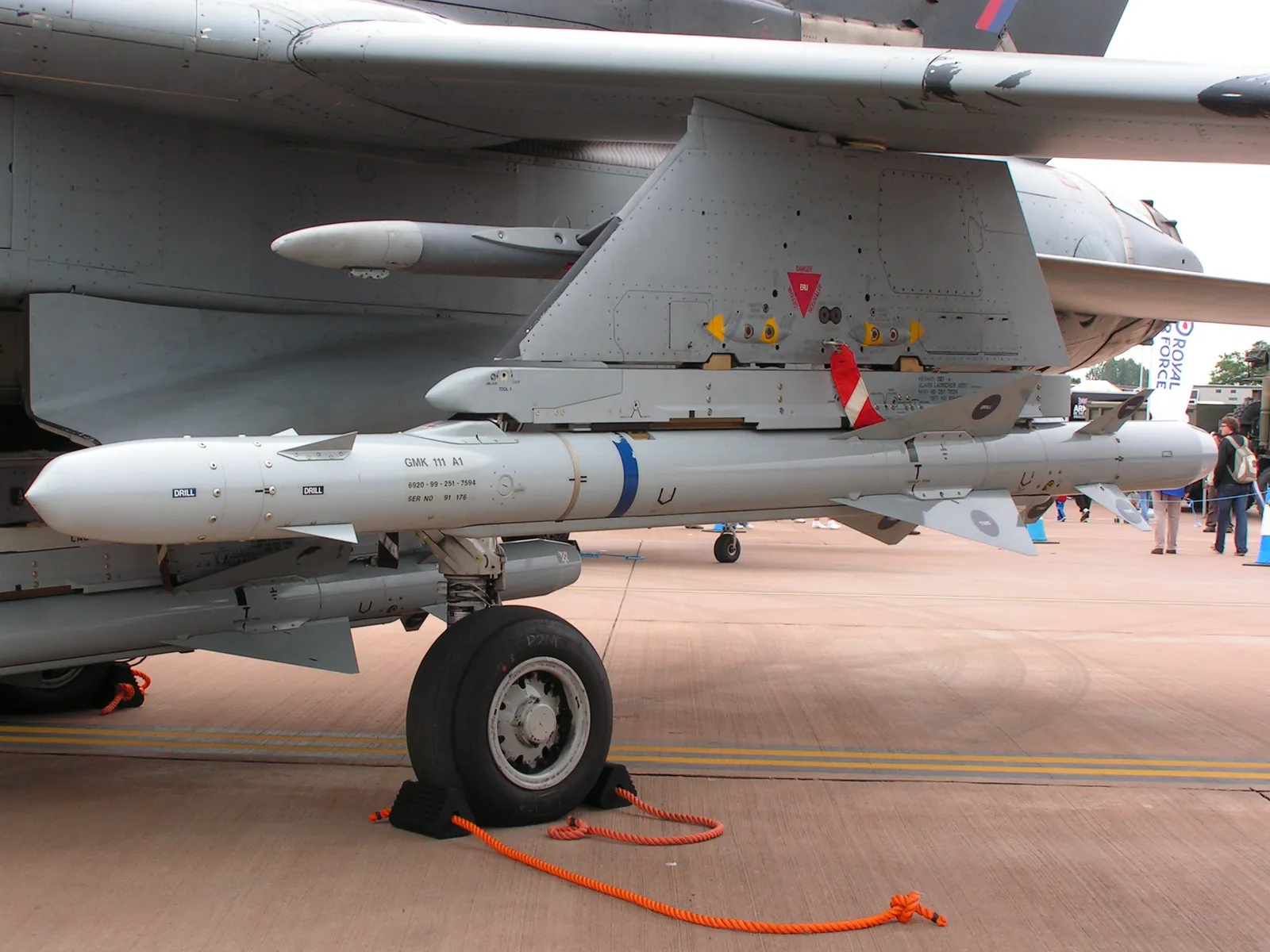
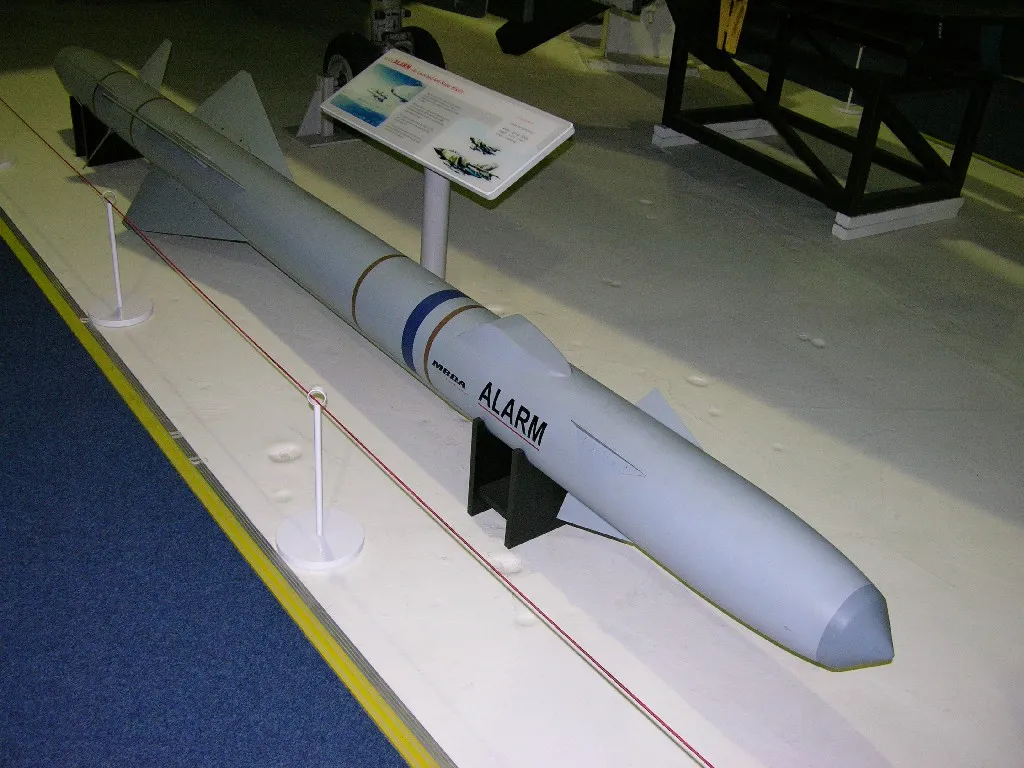
ALARM is a British air-launched anti-radiation missile built for suppression of enemy air defenses, using pre-planned navigation, passive radar-emission sensing, and direct or parachute-loiter attack modes. RAF Tornados fired it in the 1990 Gulf War, Kosovo, and the 2003 Iraq War, while the Yemen record identifies later Royal Saudi Air Force use as a UK-supplied munition without proving a specific radar-kill engagement.

Role in Conflicts

Profile / Specs

Profile

Origin
United Kingdom
Type
Air-launched anti-radiation missile
Service note
Entered RAF service around 1990-1991; retired by the UK in 2013 but retained in Royal Saudi Air Force service during the Yemen campaign
Designer
British Aerospace Dynamics Group / Marconi Space and Defence Systems
Designed
RAF defence-suppression requirement issued in 1977; ALARM selected for UK development in July 1983
Produced
Late 1980s onward

Specifications

Guidance
Onboard navigation to a planned target area with passive radar-emission sensing and terminal homing
Launch platform
RAF Tornado GR1/GR4 and Royal Saudi Air Force Tornado aircraft are the best-documented launch platforms
Operating modes
Corridor Suppression and Target of Known Location; TKL could use direct, loiter, or dual profiles
Loiter profile
Climbs to roughly 40,000 ft / 12-13 km and descends under parachute while searching for radar emissions
Length
About 4.24 m
Diameter
About 230 mm
Wingspan
About 0.73 m
Launch weight
About 268 kg
Range
Often cited around 93 km
Speed
Often cited around 2,450 km/h
Warhead
Proximity-fuzed high-explosive fragmentation warhead
Propulsion
Two-stage solid-fuel rocket motor
Design and Operating Modes

ALARM was designed around pre-planned SEAD rather than a dedicated emitter-location aircraft. RAF writing describes target data being loaded before launch, with Tornado GR4 crew able to update parameters before firing.

Corridor Suppression

Missiles were programmed around a corridor through suspected surface-to-air missile defenses, then searched for threat radars along and beside that route.

Direct Attack

In Target of Known Location mode, ALARM climbed and searched for the target radar during descent; if no emissions were received, it fell toward the programmed coordinates.

Parachute Loiter

The missile could deploy a parachute over a target area, descend while listening for emissions, then cut the parachute and home when a radar came back on.
Carrier Aircraft

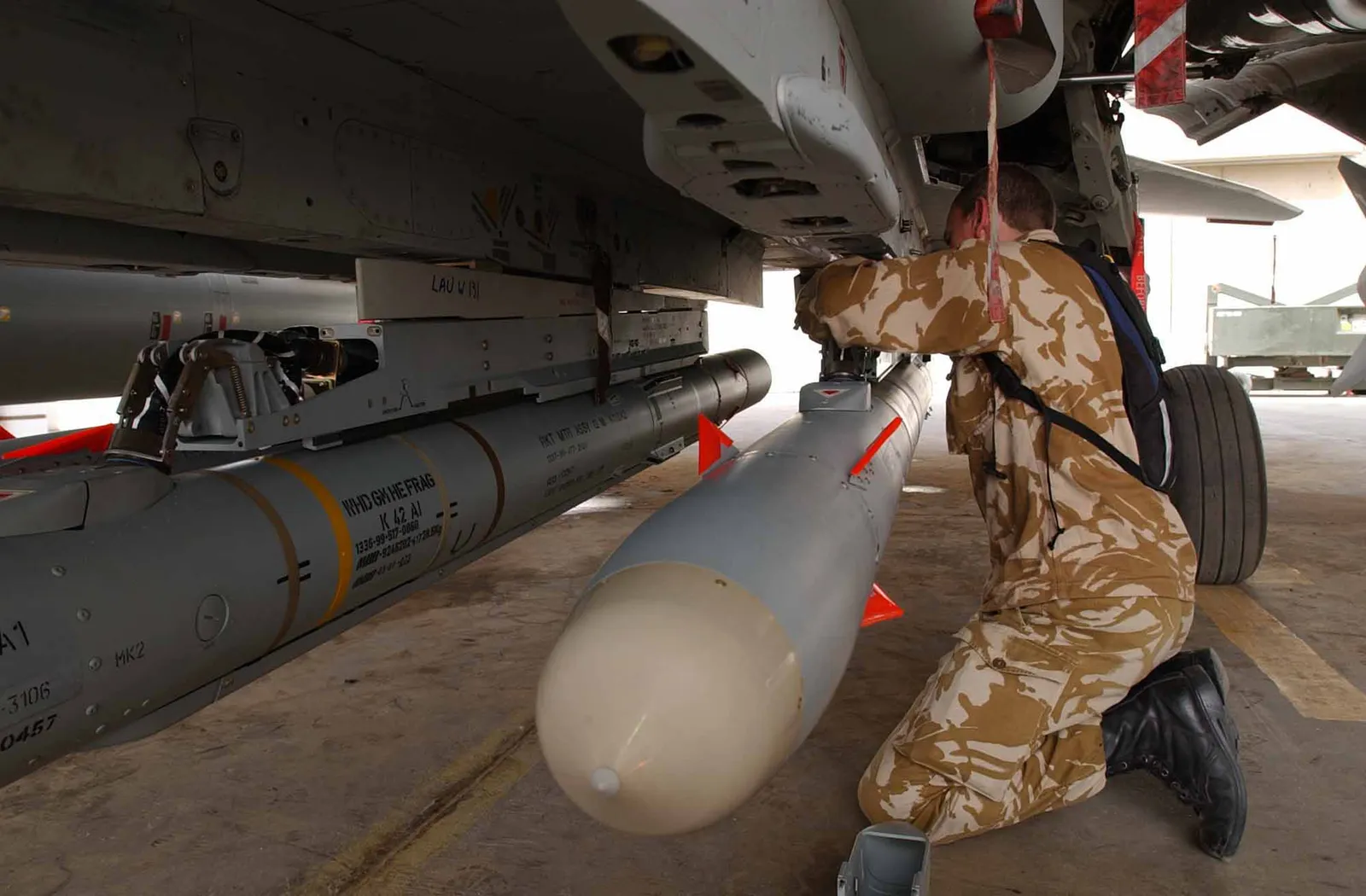
ALARM was fielded as an air-launched missile for strike aircraft that could load and release it on SEAD missions.

CarrierCarrier typeCarriage evidence
Panavia Tornado, Twin-engine variable-sweep wing multirole strike aircraft, Aircraft & UAVsPanavia TornadoStrike aircraft

Royal Air Force documentation identifies the Tornado GR4 as the primary launch platform for ALARM, and museum material shows Tornado carriage as part of the weapon's standard employment.

Sources: Suppression of Enemy Air Defences

Timeline

ALARM anti-radiation missile Key Events

  1. RAF defence-suppression requirement issued

    RAF air-power writing traces ALARM to AST 1228, a 1977 requirement for a defence-suppression weapon that could support Tornado strike operations without a specialist emitter-location aircraft.

  2. UK selects ALARM over HARM

    Hansard recorded the July 1983 decision to proceed with British Aerospace Dynamics Group's ALARM proposal, with Marconi Space and Defence Systems named as a major seeker-head subcontractor.

  3. Combat debut in the Gulf War

    Imperial War Museums and RAF air-power sources describe ALARM entering service during the 1991 Gulf War, when RAF Tornado GR1 aircraft fired more than 120 missiles.

  4. RAF retirement

    RAF Museum material records ALARM's withdrawal from RAF service in 2013, after which public reporting still identified Saudi Arabia as an operator.

Media
Related Weapon Systems
Nightfall, Ground-launched tactical ballistic missile, ArtilleryArtilleryNightfallGround-launched tactical ballistic missileNightfall is a UK Ministry of Defence project for a road-mobile, ground-launched tactical ballistic missile intended to give Ukraine a lower-cost long-range strike option against fixed military targets. Official material describes a more-than-500 km missile carrying a roughly 200 kg conventional high-explosive warhead, designed for rapid salvo launch, withdrawal within minutes, and operation in heavy electronic-warfare conditions; parliamentary answers place first Ukrainian deliveries after testing, starting in late 2027.
Anti-aircraft missiles, Ship-launched surface-to-air missile, MunitionsMunitionsAnti-aircraft missilesShip-launched surface-to-air missileShip-launched surface-to-air missiles documented in the Choe Hyon destroyer's air-defense fit. CSIS identifies the destroyer's air-defense system as Russian Pantsir-M and reports anti-aircraft missile launches during the 28 April 2025 test activity, while Naval News separately notes an unspecified forward VLS-launched SAM and a Pantsir-M-style close-in weapon system with short-range missiles. The exact North Korean missile designation remains publicly unconfirmed.

Sources