Munitions

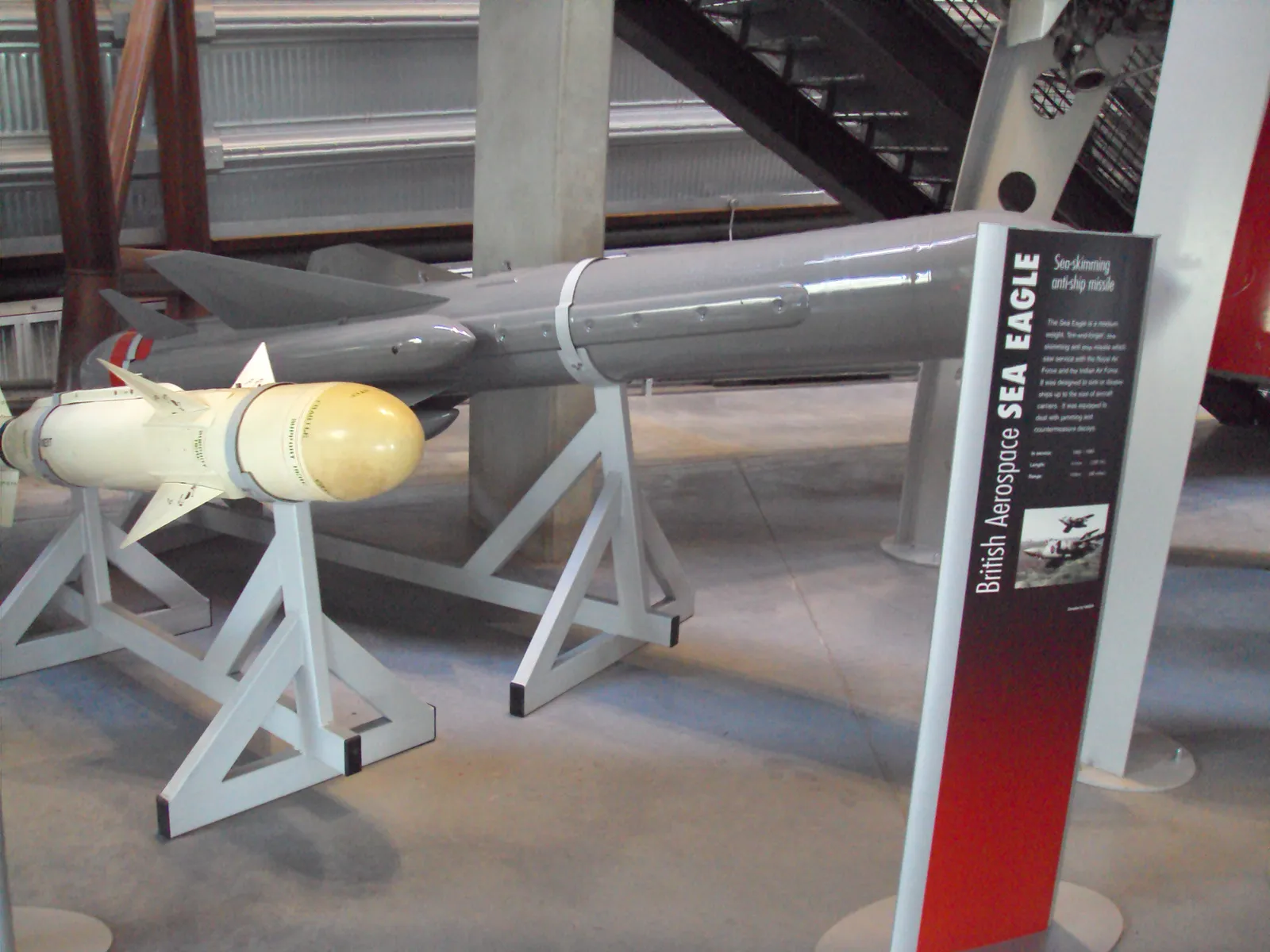
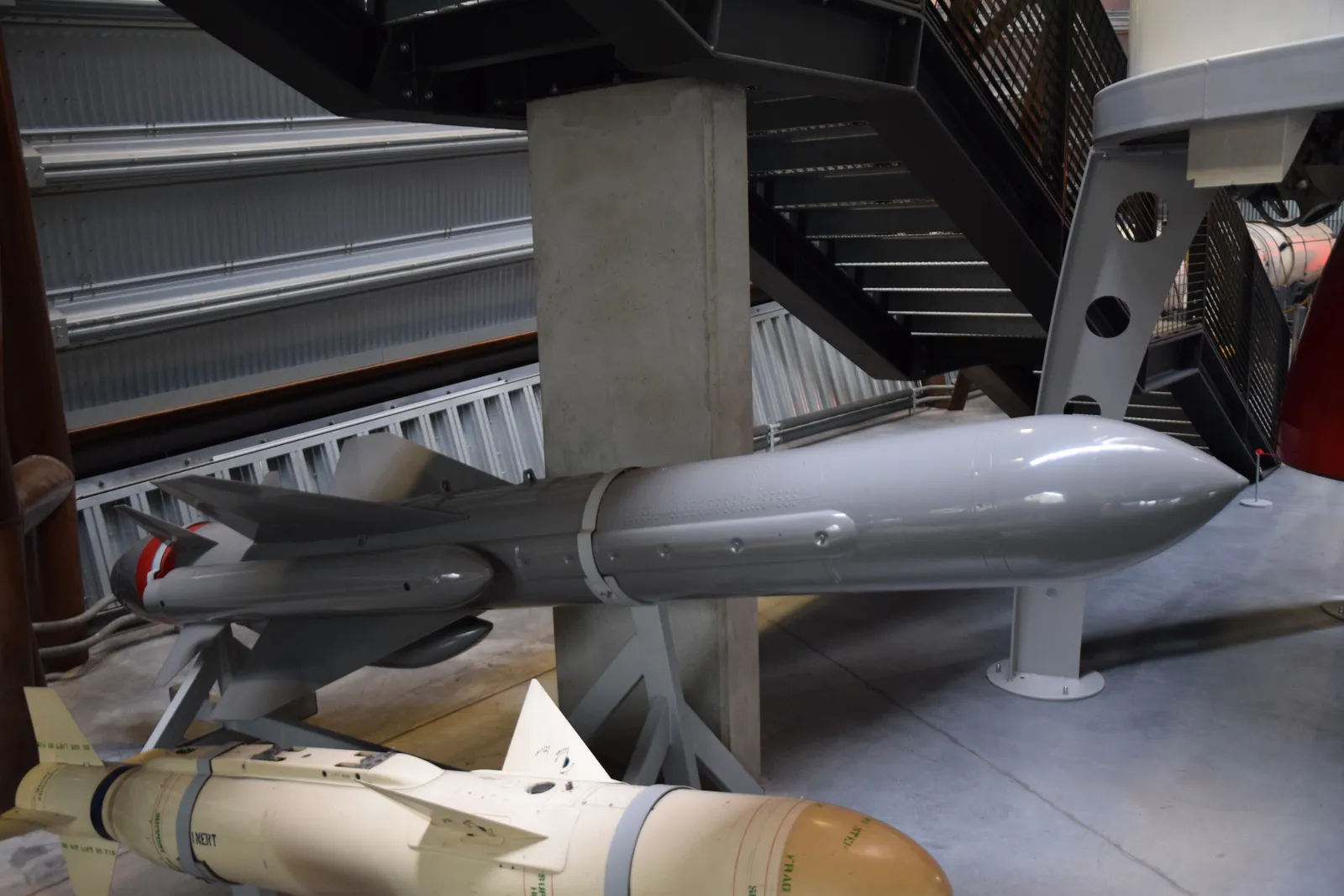
Sea Eagle anti-ship missile

Also known as
  • BAe Sea Eagle
  • Sea Eagle P.3T
  • P.3T Sea Eagle
  • P.5T
  • Sea Eagle SL
  • Golden Eagle

Sea Eagle was a British medium-range, sea-skimming anti-ship missile built around autonomous over-the-horizon attack after air launch. RAF Museum and Forecast International sources tie the weapon to BAe Dynamics, Buccaneer and Tornado service, active-radar terminal homing, and later life-extension work under Matra BAe Dynamics.

Profile / Specs

Profile

Origin
United Kingdom
Built by
BAe Dynamics
Type
Air-launched anti-ship missile
Service note
Designed in the late 1970s, used by UK forces from the mid-1980s into 2000, and later sustained through export-service life-extension work
Designer
BAe Dynamics
Designed
Research initiated around 1976; flight testing began around 1979-1980
Produced
Initial serial production began around 1983; Forecast International reported production had concluded by 2002
Number built
Forecast International reported approximately 523 Sea Eagles completed or in production by the end of 1992
Developed from
MARTEL / AJ.168 anti-ship missile lineage

Specifications

Role
Medium-range stand-off anti-surface-ship missile
Launch platforms
RAF Museum lists Buccaneer and Tornado; Forecast International also lists Buccaneer, Sea Harrier, Tornado, Hawk trials, and helicopter or ship-launch integration work
Guidance
Inertial navigation with active-radar terminal homing
Flight profile
Sea-skimming autonomous flight after launch
Engine
Microturbo TRI 60 turbojet
Range and speed
Forecast International lists P.3T effective and maximum range at about 100 km and speed around 1,129 km/h
Warhead
Forecast International describes a high-explosive warhead lineage from MARTEL and notes Sea Eagle warhead development by the Royal Armament Research and Development Establishment
Dimensions
Forecast International lists P.3T length around 450 cm, diameter around 40 cm, weight around 830 kg, and wingspan around 130 cm
UK service status
RAF Museum lists 1984-2000 as the in-use window; Hansard states the UK withdrawal decision was taken in April 1999
Variants

Forecast International treats Sea Eagle as the P.3T air-launched member of the wider MARTEL/Sea Eagle family, with ship-launched and land-attack derivatives proposed but not adopted as the standard RAF/Royal Navy weapon.

VariantConfigurationDesignation notes
P.3T Sea EagleAir-launched anti-ship missile

The P.3T was the production Sea Eagle configuration, formally designated Sea Eagle by British Aerospace in January 1980 after UK development funding.

Sources: MARTEL and Sea Eagle Missile Forecast

P.5TShip-launched Sea Eagle proposal

British Aerospace developed the P.5T with launch boxes and booster rockets for shipboard use; Forecast International reports that Harpoon was selected instead for the 1984 Royal Navy ship-launched missile decision.

Sources: MARTEL and Sea Eagle Missile Forecast, Hansard Sea Eagle Ship-Launched Debate

Golden EagleLand-attack derivative proposal

Golden Eagle was offered for the UK's CASOM requirement as an evolutionary stand-off weapon based on Sea Eagle, with different seeker and warhead concepts for hardened land targets.

Sources: MARTEL and Sea Eagle Missile Forecast

Launch Platforms

Sea Eagle was cataloged as an air-launched missile, so platform links are limited to existing catalog aircraft or helicopters with direct source support on this page.

LauncherLauncher typeLaunch evidence
Buccaneer S2, Strike aircraft, Aircraft & UAVsBuccaneer S2Strike aircraft

The RAF Museum identifies Buccaneer carriage, and Forecast International lists RAF Buccaneer aircraft among Sea Eagle launch platforms.

Sources: BAe Sea Eagle RAF Museum, MARTEL and Sea Eagle Missile Forecast

Panavia Tornado, Twin-engine variable-sweep wing multirole strike aircraft, Aircraft & UAVsPanavia TornadoStrike aircraft

RAF Museum and Forecast International sources both identify Tornado aircraft in Sea Eagle carriage or service context.

Sources: BAe Sea Eagle RAF Museum, MARTEL and Sea Eagle Missile Forecast

BAE Hawk, Advanced jet trainer and light attack aircraft family, Aircraft & UAVsBAE HawkTrial aircraft

Forecast International reports that Sea Eagle had been fitted to the Hawk, distinguishing this as trial or integration context rather than documented conflict use.

Sources: MARTEL and Sea Eagle Missile Forecast

Sea King, Multi-role maritime helicopter, Aircraft & UAVsSea KingMaritime helicopter integration

Forecast International reported Sea Eagle integration with the Sea King helicopter, using the same source-backed platform relationship without assigning conflict use to the missile.

Sources: MARTEL and Sea Eagle Missile Forecast

Timeline

Sea Eagle anti-ship missile Key Events

  1. Research initiated

    Forecast International's Sea Eagle timetable places research initiation in 1976, with engineering development in 1977 and flight testing around 1979-1980.

  2. RAF Museum service window begins

    The RAF Museum collection record gives Sea Eagle's date in use as 1984-2000 and identifies British Aerospace and MBDA as maker names.

  3. Matra BAe Dynamics life-extension work

    Forecast International reported that the UK government contracted Matra BAe Dynamics in 1996 to begin a Sea Eagle service-life-extension program.

  4. UK withdrawal decision

    A 2001 Hansard answer stated that the decision to withdraw Sea Eagle from service was taken in April 1999 after the Strategic Defence Review judged the air-launched anti-surface requirement had diminished.

Media

Sea Eagle anti-ship missile Images

Related Weapon Systems
Evolved Sea Sparrow Missile, Ship self-defense missile, MunitionsMunitionsEvolved Sea Sparrow MissileShip self-defense missileThe Evolved Sea Sparrow Missile is a NATO-cooperative ship self-defense missile family built by Raytheon for surface combatants and carrier self-defense. U.S. Navy, RTX, and NATO Seasparrow sources describe it as a medium-range guided weapon for anti-ship cruise missiles, aircraft, drones, and maneuvering surface threats; documented combat use includes USS Mason's 2016 Yemen self-defense engagement and Red Sea crisis firings against Houthi threats.

Sources