- Side
- United Kingdom

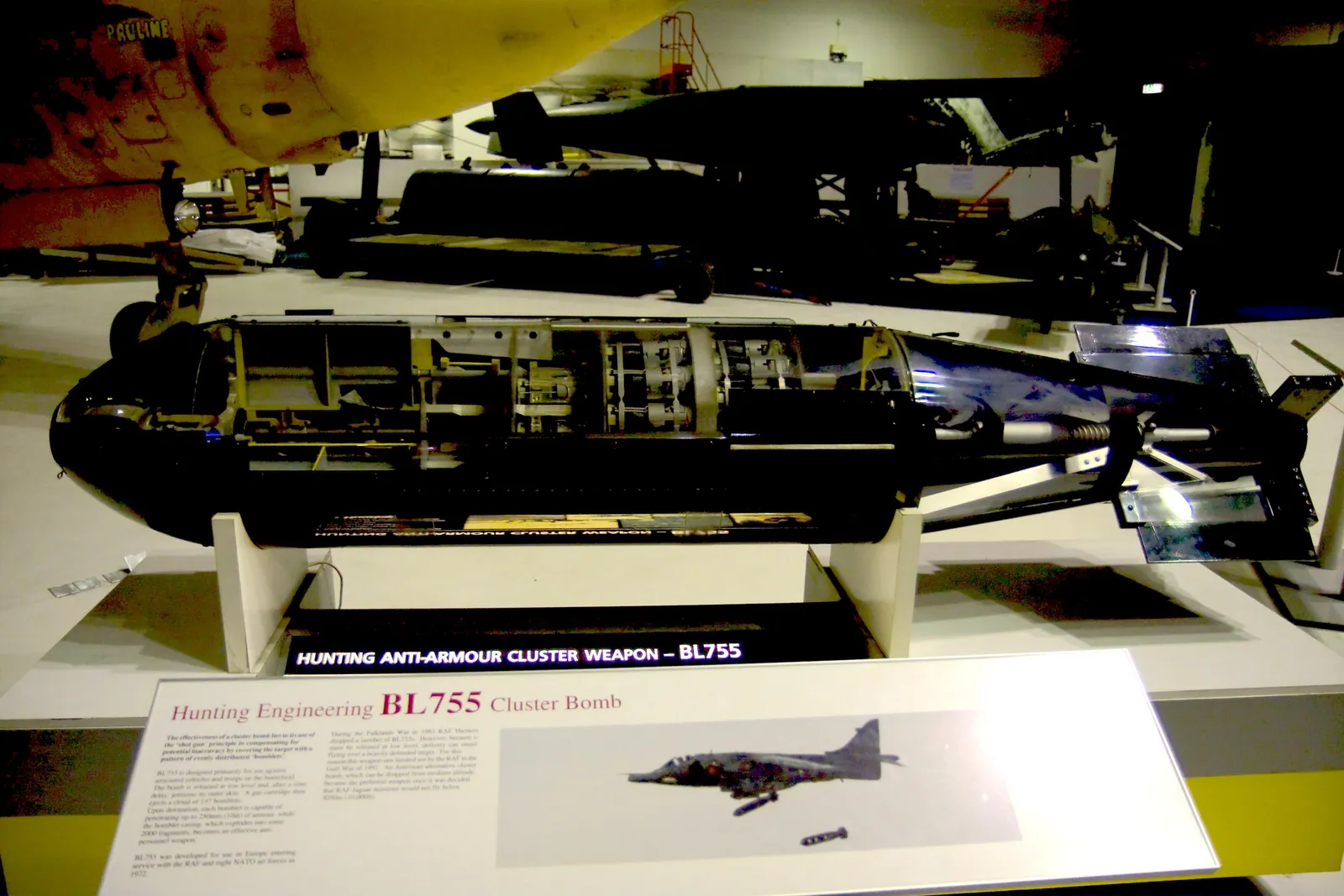
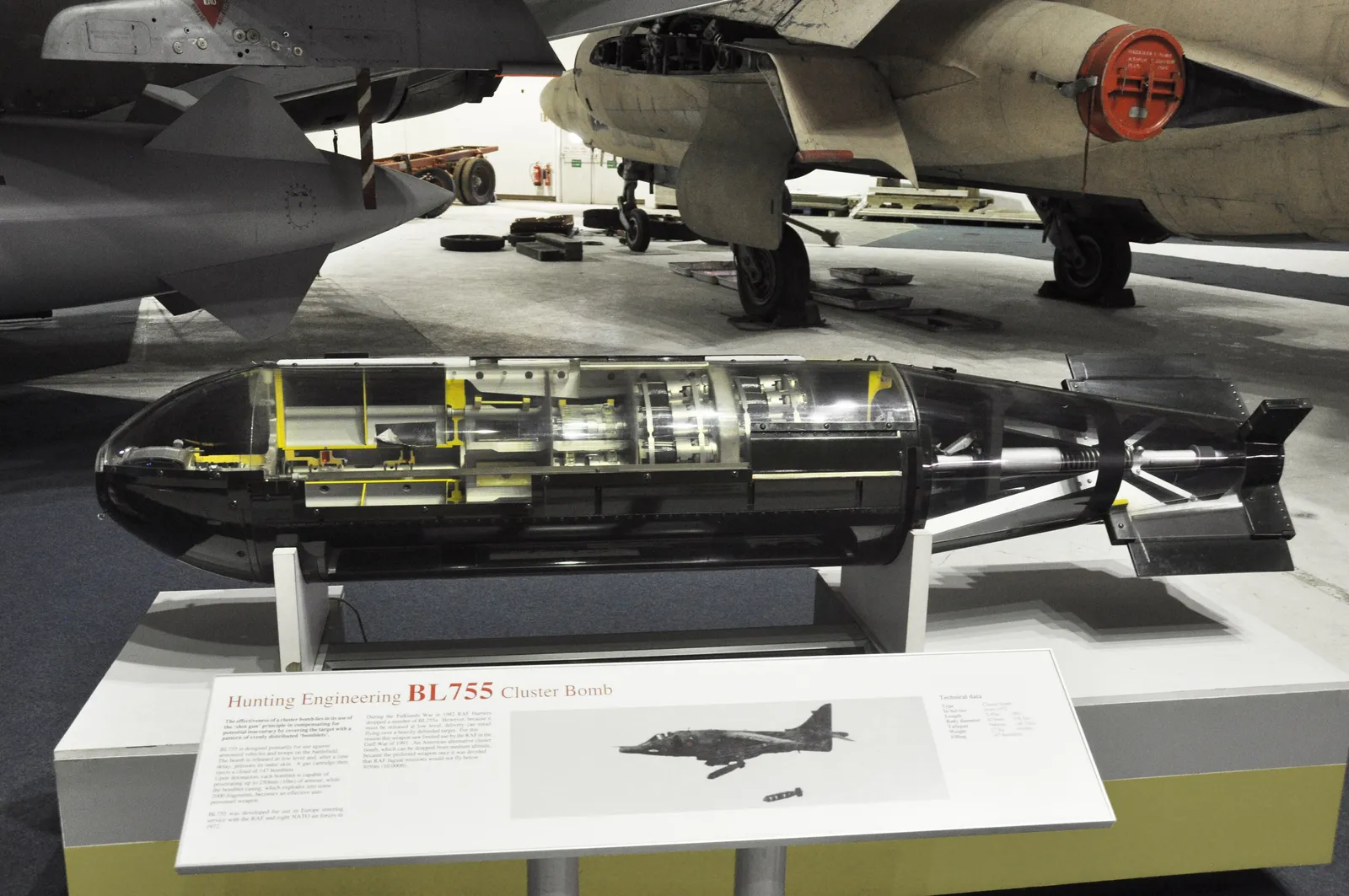
RAF Museum material identifies BL755 as carried by RAF Harrier GR.3s during the Falklands Conflict and describes the display example as the type used against fuel dumps, aircraft on the ground, and infantry positions.
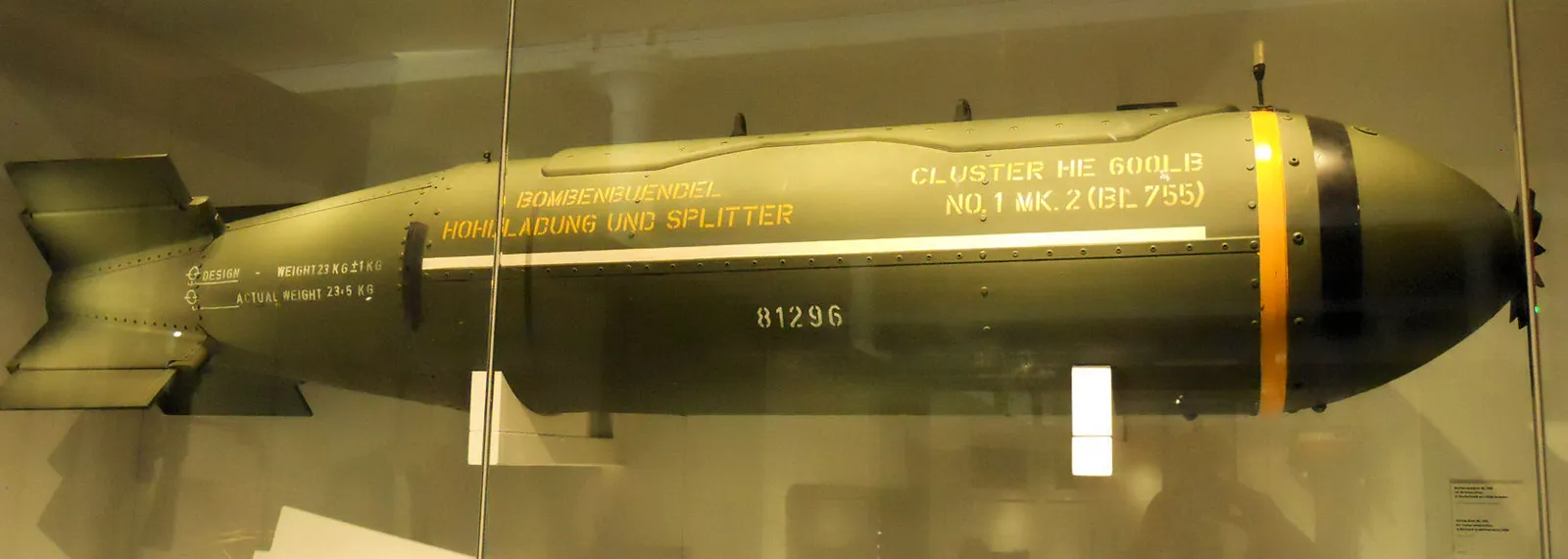
The BL-755 is a British air-dropped anti-armor cluster bomb developed for very-low-level attacks against armored formations and built around a 600 lb dispenser carrying 147 bomblets. The family later included parachute-retarded bomblets and the radar-altimeter RBL755 variant, with direct conflict-use sourcing for British use in the Falklands, Gulf War and Kosovo, and Saudi-led coalition use in Yemen.
RAF Museum material identifies BL755 as carried by RAF Harrier GR.3s during the Falklands Conflict and describes the display example as the type used against fuel dumps, aircraft on the ground, and infantry positions.
A declassified RAF Jaguar mission report records eight CBU BL755 weapons expended on 31 January 1991 against a ZSU-23-4 and truck target, with the detachment commander describing it as the first BL755 use of that sortie set.
Role detailsBritish sources record RAF BL755/RBL755 use in Operation Allied Force, with a parliamentary report stating that the RAF dropped 531 BL755 cluster bombs and Human Rights Watch identifying RAF Harrier GR7 RBL755 drops from 6 April 1999.
Saudi-led coalition forces used UK-manufactured BL-755 cluster munitions in Yemen, with Amnesty documenting a recovered bomb near Al Khadra in Hajjah governorate and Saudi officials later acknowledging limited coalition use.
Role detailsThe BL755 family evolved around the same dispenser concept: a low-level aircraft overflight released a 600 lb body whose frangible side petals opened to scatter 147 bomblets. Later changes focused on bomblet orientation and release height rather than turning the weapon into a guided munition.
RAF Historical Society material ties BL755 to SR(A)1197, a requirement for a very-low-level anti-armor weapon that avoided older pop-up or dive attack profiles.
The No. 2 Mk 1 bomblet replaced the stabilising coronet with a mini-parachute to improve the shaped-charge strike angle against heavier armor.
The RBL755 conversion added a Motorola radar altimeter so the dispenser could delay opening until close to the ground during medium-altitude release.
The public designations distinguish the baseline low-level dispenser, the improved bomblet configuration, and the radar-altimeter RBL755 release variant.
| Variant | Configuration | Designation notes |
|---|---|---|
| BL755 | Baseline low-level dispenser | RAF Historical Society material identifies the initial in-service weapon as BL755 No. 1 Mk 4, with a 600 lb body, frangible side petals, SAFU, and 147 gas-ejected armor-piercing bomblets. Sources: ROYAL AIR FORCE HISTORICAL SOCIETY JOURNAL 45 (RAF Museum) |
| IBL755 | Improved bomblet configuration | Cluster Munition Monitor stockpile material lists IBL755 No. 2 Mk. 1, while the RAF Historical Society account describes the No. 2 Mk 1 parachute-retarded bomblet change made to improve shaped-charge strike angle against heavier armor. Sources: ROYAL AIR FORCE HISTORICAL SOCIETY JOURNAL 45 (RAF Museum), Cluster Munition Monitor Stockpile Destruction Factsheet |
| RBL755 | Radar-altimeter release variant | RAF Historical Society and Human Rights Watch material describe RBL755 as a BL755 modification with a radar altimeter for medium-altitude release, later used in Operation Allied Force. Sources: ROYAL AIR FORCE HISTORICAL SOCIETY JOURNAL 45 (RAF Museum), Appendix A: Descriptions of Cluster Bomb Types |
RAF Historical Society material identifies Harrier GR3, Jaguar GR1 and Buccaneer S2 as RAF aircraft that entered service with BL755 in 1973, while Tornado material documents later BL755 carriage in the Tornado GR1 attack role.
| Carrier | Carrier type | Carriage evidence |
|---|---|---|
 | Strike aircraft | The RAF Historical Society paper identifies the Buccaneer S2 as one of the RAF aircraft that entered service with BL755 in 1973. Sources: ROYAL AIR FORCE HISTORICAL SOCIETY JOURNAL 45 (RAF Museum) |
 | Strike aircraft | The RAF Historical Society paper identifies the Harrier GR3 as one of the RAF aircraft that entered service with BL755 in 1973. Sources: ROYAL AIR FORCE HISTORICAL SOCIETY JOURNAL 45 (RAF Museum) |
 | Strike aircraft | RAF Historical Society material identifies the Jaguar GR1 as one of the RAF aircraft that entered service with BL755 in 1973; declassified Gulf War mission reports also document RAF Jaguar BL755 release on 31 January 1991. Sources: ROYAL AIR FORCE HISTORICAL SOCIETY JOURNAL 45 (RAF Museum), Selected Tornado and Jaguar Mission Reports for the Period 16th January to 23rd February 1991 |
 | Strike aircraft | The RAF Historical Society Tornado paper says the Tornado GR1 was initially declared using the BL755 cluster bomb in the attack role. Sources: THE BIRTH OF TORNADO | RAF Museum |
RAF Historical Society material states that BL755 entered service in its initial form with the Harrier GR3, Jaguar GR1 and Buccaneer S2 in 1973.
Sources: ROYAL AIR FORCE HISTORICAL SOCIETY JOURNAL 45 (RAF Museum)
RAF Museum material identifies BL755 as a cluster bomb carried by RAF Harrier GR.3s during the Falklands Conflict.
Sources: RAF Museum BL755 Falklands Display Guide
A declassified RAF Jaguar report records eight CBU BL755 weapons expended against a ZSU-23-4 and truck target during the Gulf War.
Sources: Selected Tornado and Jaguar Mission Reports for the Period 16th January to 23rd February 1991
Human Rights Watch reported that RAF Harrier GR7s began dropping RBL755 cluster bombs in Operation Allied Force on 6 April 1999.
Sources: Ticking Time Bombs: NATO's Use of Cluster Munitions in Yugoslavia
RAF Historical Society and UK Ministry of Defence material place BL755 withdrawal in the period after the United Kingdom accepted the 2007 Oslo cluster-munition principles.
Sources: ROYAL AIR FORCE HISTORICAL SOCIETY JOURNAL 45 (RAF Museum), UK Ministry of Defence Annual Report and Accounts 2007-08