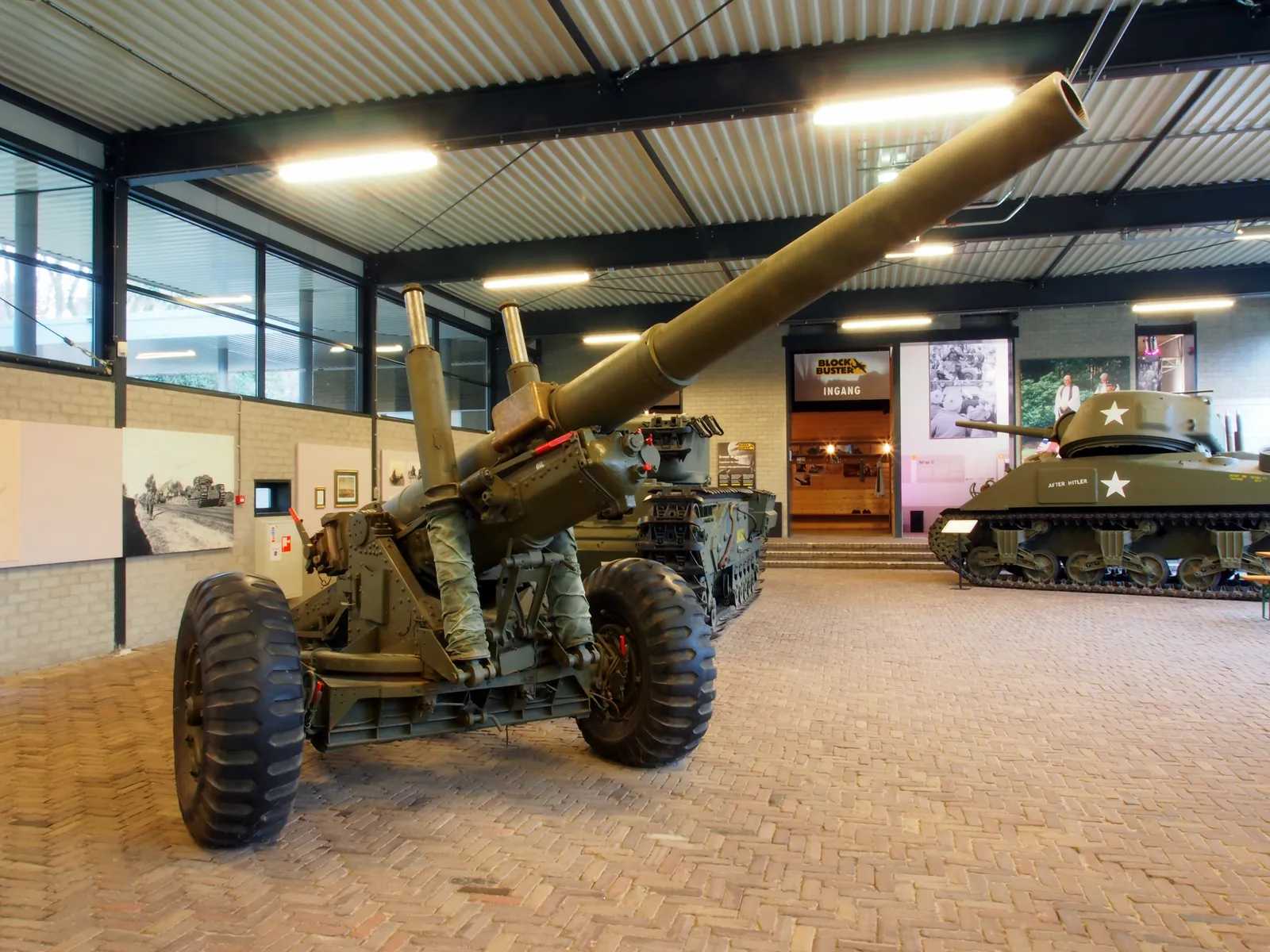
Australian War Memorial records the 5.5-inch gun in Second World War service with British and Canadian forces across the later Western Desert campaign, the Italian campaign, and the European theatre; it also notes 21st Army Group firing more than 2.6 million rounds from D-Day to VE Day.
Artillery
140mm BL 5.5-inch gun
Also known as
- BL 5.5-inch gun
- BL 5.5-inch medium gun
- 5.5 inch Ordnance BL Medium Gun
- Ordnance BL 5.5 inch
- 140 mm BL 5.5-inch
- G2 140mm
- SADF G2
The 140mm BL 5.5-inch gun was a British towed medium artillery piece built around a split-trail carriage, separate-loading ammunition, and a 10-person detachment. British units received the gun in 1941, Australian War Memorial and Royal Artillery sources place its first operational service in May 1942, and the type served with British and Commonwealth forces in North Africa, Italy, and northwest Europe before later South African G2 use in the Border War.
Role in Conflicts
Imperial War Museums catalogues a 1965 British Army official photograph of men from 170 (Imjin) Medium Battery, Royal Artillery operating a BL 5.5-inch Medium Gun at Pejuri near the Indonesian border in Sarawak, and associates the item with the Indonesian Confrontation.
- Side
- South Africa

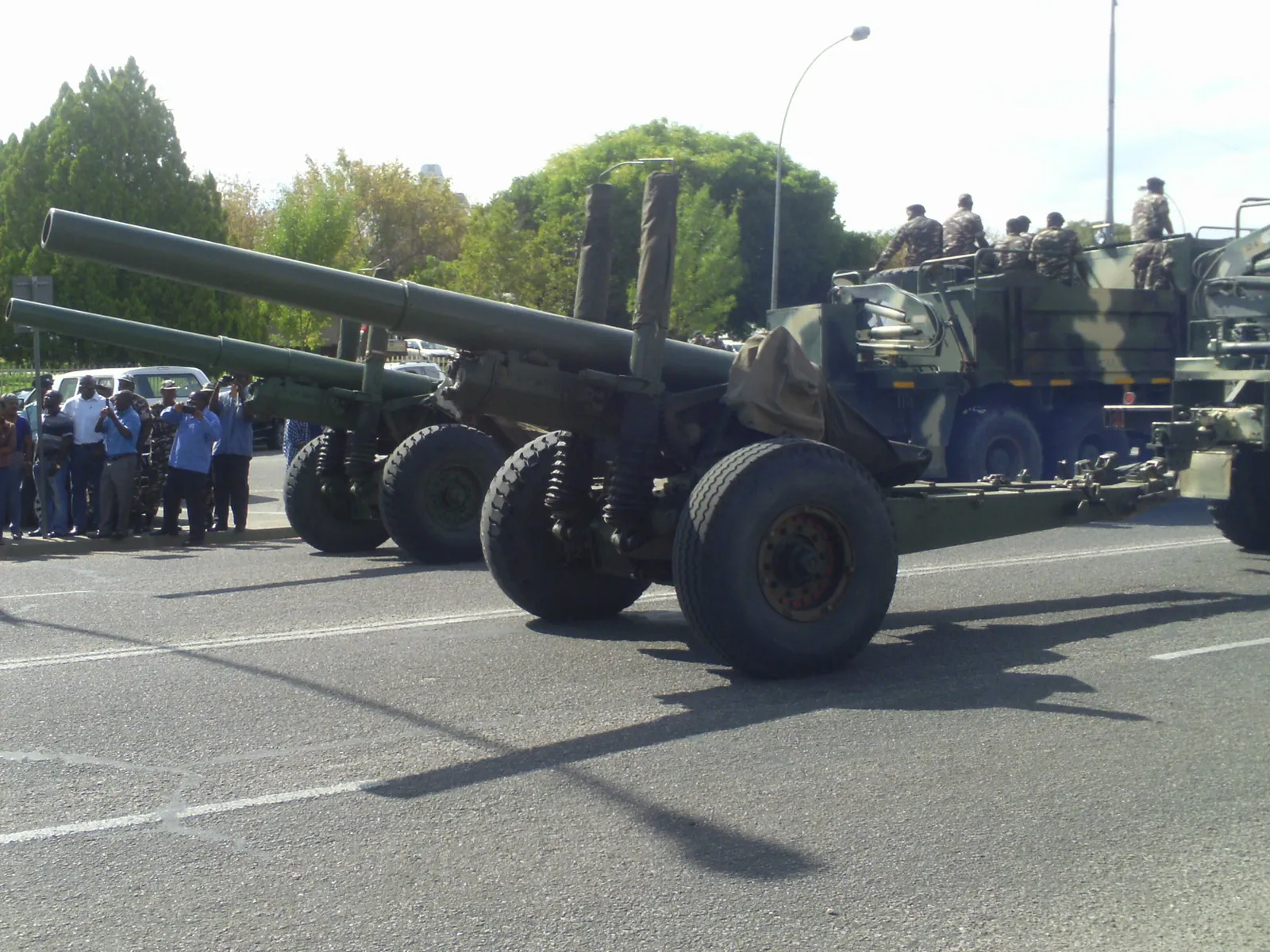
South African Military History Society material on South African artillery in action says three 5.5-inch G2 guns deployed during Operation Savannah and that two fired during the November 10, 1975 FNLA-Zairian attack north of Luanda; it also describes S and R Batteries using 5.5-inch / 140 mm G2 guns during Operation Askari.
Profile / Specs
Profile
- Origin
- United Kingdom
- Built by
- Royal Ordnance
- Type
- Towed medium gun-howitzer
- Service note
- Specified in 1939, issued to British units in 1941, and used from the Second World War into late Cold War service
- Designer
- British ordnance design program for Royal Artillery medium batteries
- Designed
- January 1939 operational requirement; first British unit issue in 1941
- Produced
- 1941-1945
- Number built
- About 5,000 reported in published secondary references
Specifications
- Caliber
- 5.5 inch / 140 mm
- Crew
- 10
- Weight
- 13,646 lb / 6,190 kg in action
- Carriage
- Two-wheel split-trail carriage; no limber or gun shield
- Ammunition
- Separate-loading shells with bagged charges
- Shell weights
- 100 lb high-explosive shell and lighter 80 lb high-explosive shell; AWM gives average weights as 45.4 kg and 37.2 kg / 82 lb
- Maximum range
- About 16,000-16,200 yd with 100 lb shell; about 18,000-18,100 yd with lighter 80/82 lb shell
- Muzzle velocity
- 1,675 ft/s with 100 lb HE; 1,950 ft/s with lighter 80 lb HE
- Rate of fire
- About 2 rounds per minute
- Elevation
- -5 degrees to +45 degrees
- Traverse
- 30 degrees left and 30 degrees right
- Breech
- Modified Welin interrupted-screw breech with Asbury operating mechanism
- Recoil
- Hydropneumatic recoil system
- Towing vehicles
- AEC Matador in Second World War service; later AEC Militant and Leyland Martian in British service
Design And Ammunition
The BL 5.5-inch gun paired a 140 mm ordnance with a two-wheel split-trail carriage and separate-loading bagged charges. AWM describes the weapon's modified Welin breech and Asbury operating mechanism, while Royal Artillery 1939-45 identifies the Mk 3 service gun, Mk 1 and Mk 2 carriages, hydropneumatic recoil, and the 30-degree traverse to each side.
Primary HE shell weights
100 lb shell and lighter 80 lb shell, with museum summaries often rounding the lighter projectile to 82 lb / 37.2 kg.
AWM gives average shell weights of 37.2 kg and 45.4 kg; Royal Artillery 1939-45 and the ammunition manual use 80 lb and 100 lb shell designations.
Range band
About 16,000 yd with the 100 lb shell and 18,000 yd with the lighter 80/82 lb shell.
AWM and Royal Artillery 1939-45 give similar ranges; the lighter shell used a dedicated super charge.
Mobility context
Towed by medium artillery tractors rather than manhandled in tactical movement.
Weaponsystems.net identifies AEC Matador, AEC Militant, and Leyland Martian towing vehicles.
The ammunition manual also documents smoke, coloured smoke, flare, incendiary, and chemical carrier-shell categories for field-branch artillery, but the weapon page treats high-explosive ammunition as the supported service baseline unless a source documents issue or combat use of another nature.
Source labels used here: Australian War Memorial 5.5 inch Ordnance BL Medium Gun; Royal Artillery 1939-45 5.5 inch Medium Gun; Field Branch Artillery Ammunition Manual; Weaponsystems.net 140mm BL 5.5-inch gun.
Variants
Open references treat the BL 5.5-inch family as minor gun and carriage marks rather than separate battlefield systems.
| Variant | Configuration | Designation notes |
|---|---|---|
| Gun Mk 3 | Original wartime gun mark | Royal Artillery 1939-45 identifies Mk 3 as the service gun, while Weaponsystems.net lists it as the original production model introduced in 1941. Sources: Royal Artillery 1939-45 5.5 inch Medium Gun, Weaponsystems.net 140mm BL 5.5-inch gun |
| Gun Mk 4 | Postwar gun mark | Royal Artillery 1939-45 and Weaponsystems.net describe Gun Mk 4 as a 1948 update with a changed shot-seating angle in the chamber. Sources: Royal Artillery 1939-45 5.5 inch Medium Gun, Weaponsystems.net 140mm BL 5.5-inch gun |
| Carriage Mark 1 | Riveted split-trail carriage | The original carriage mark used riveted construction. Sources: Royal Artillery 1939-45 5.5 inch Medium Gun, Weaponsystems.net 140mm BL 5.5-inch gun |
| Carriage Mark 2 | Welded split-trail carriage | The later carriage mark retained the split-trail layout but used welded construction. Sources: Royal Artillery 1939-45 5.5 inch Medium Gun, Weaponsystems.net 140mm BL 5.5-inch gun |
| G2 | South African service designation | Weaponsystems.net identifies G2 as the South African local name for the BL 5.5-inch gun. |
Timeline
140mm BL 5.5-inch gun Key Events
British medium-gun requirement issued
Royal Artillery 1939-45 says the operational requirement appeared in January 1939 after studies of replacements for older 6-inch guns and 6-inch 26 cwt howitzers.
Sources: Royal Artillery 1939-45 5.5 inch Medium Gun, Weaponsystems.net 140mm BL 5.5-inch gun
BL 5.5-inch gun introduced
Weaponsystems.net lists 1941 as the introduction year for the BL 5.5-inch gun and the Gun Mk 3 production model.
Sources: Weaponsystems.net 140mm BL 5.5-inch gun
Wartime service begins
Australian War Memorial says the gun entered service in May 1942 and saw extensive Second World War service with British and Canadian forces.
Sources: Australian War Memorial 5.5 inch Ordnance BL Medium Gun
Lighter shell improves range
Royal Artillery 1939-45 says the standard high-explosive shell changed from 100 lb to 80 lb in 1943; the ammunition manual identifies the super charge as for the 80 lb shell only.
Sources: Royal Artillery 1939-45 5.5 inch Medium Gun, Field Branch Artillery Ammunition Manual
G2 guns fire in Operation Savannah
South African Military History Society material says three 5.5-inch G2 guns deployed during Operation Savannah and that two fired north of Luanda on November 10, 1975.
Sources: SAMHS First In Last Out Artillery Talk, SADF Military Operations PDF
Media
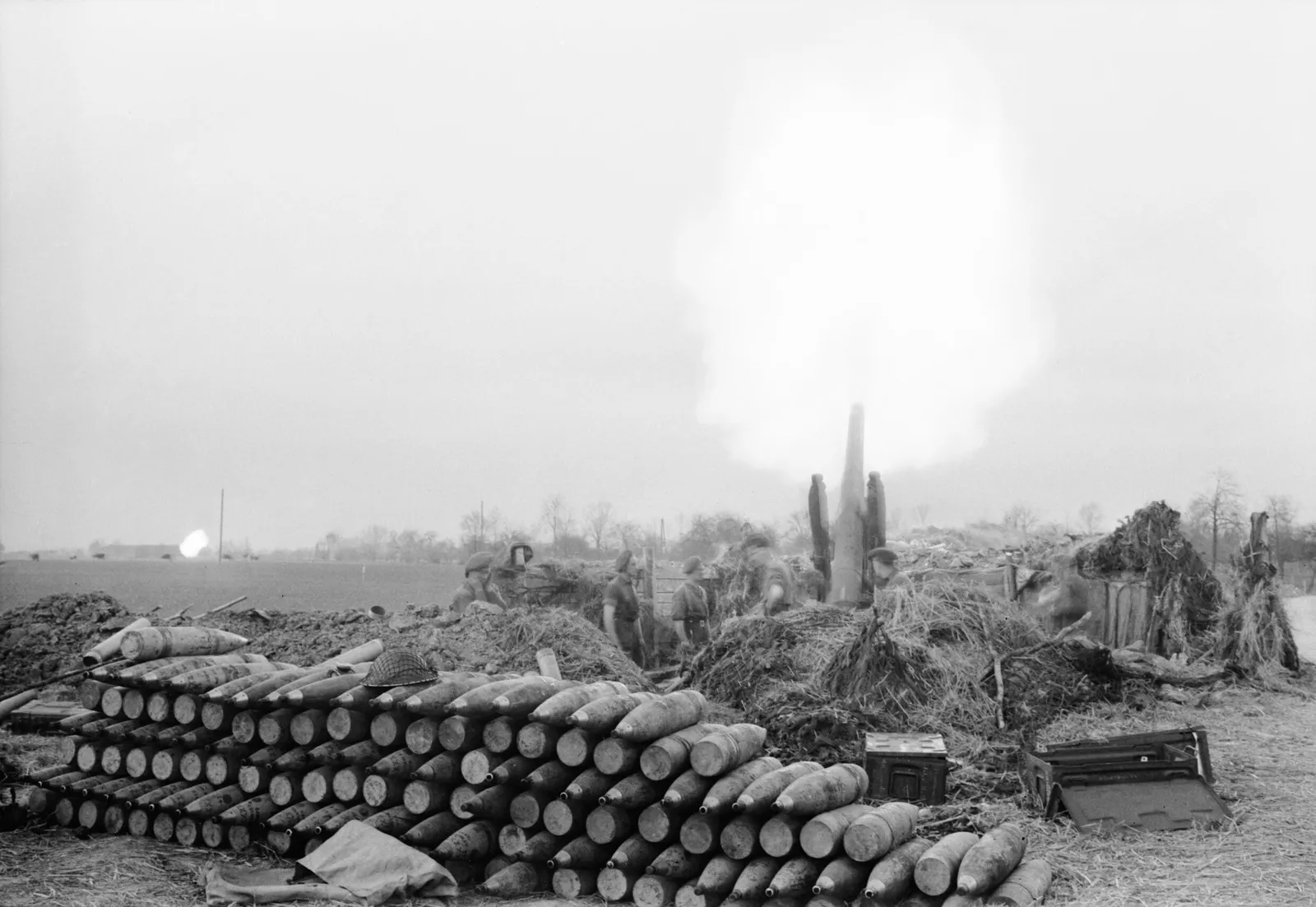
Related Weapon Systems


Sources
Australian War Memorial 5.5 inch Ordnance BL Medium GunPublisher: Australian War Memorial | Note: Supports United Kingdom place made, 1944 example date, breech and carriage description, May 1942 service entry, Second World War service with British and Canadian forces, 21st Army Group firing context, crew, traverse, shell weights, and range values. | Accessed: 2026-07-13Royal Artillery 1939-45 5.5 inch Medium GunPublisher: The Royal Artillery 1939-45 | Note: Supports the January 1939 operational requirement, first action in May 1942, Mk 3 and Mk 4 gun marks, Mk 1 and Mk 2 carriage construction, crew positions, weight, recoil, elevation, traverse, muzzle velocity, range, and ammunition notes. | Accessed: 2026-07-13Field Branch Artillery Ammunition ManualPublisher: Bulletpicker | Note: Reproduced field-branch artillery ammunition manual supporting 5.5-inch gun cartridge types, 100 lb and 80 lb shell designations, and the super charge marked for the 80 lb shell only. | Accessed: 2026-07-13IWM Indonesian Confrontation BL 5.5-inch Medium GunPublisher: Imperial War Museums | Note: Supports Indonesian Confrontation 1962-1966 direct conflict-use context by cataloguing men of 170 (Imjin) Medium Battery, Royal Artillery operating a BL 5.5-inch Medium Gun at Pejuri near the Indonesian border in Sarawak in 1965. | Accessed: 2026-07-13SAMHS First In Last Out Artillery TalkPublisher: South African Military History Society | Note: Supports 1966 South African Border War direct conflict-use context by describing 5.5-inch G2 deployment and firing during Operation Savannah and later G2 use during Operation Askari. | Accessed: 2026-07-13Weaponsystems.net 140mm BL 5.5-inch gunPublisher: Weaponsystems.net | Note: Supports technical specifications, 1941 introduction, 1944 shell update, gun and carriage marks, towing vehicles, and 1966 South African Border War direct-use context by identifying G2 as the South African service name and stating that South African forces used the BL 5.5-inch gun during the Bush War. | Accessed: 2026-07-13SADF Military Operations PDFPublisher: Parabat Veterans Organisation | Note: Supports 1966 South African Border War direct conflict-use context by describing Operation Savannah as a SADF Angola intervention in the Border War and listing G2 batteries in SADF orders of battle. | Accessed: 2026-07-13Wikimedia Commons BL 5.5 inch Medium Gun imagePublisher: Wikimedia Commons | Note: Supports image provenance for the primary gallery image, an Alf van Beem photograph dedicated under CC0. | Accessed: 2026-07-13Wikimedia Commons Rhine Crossing 5.5-inch Guns ImagePublisher: Wikimedia Commons | Note: Supports image provenance for the gallery image of 5.5-inch guns firing in support of the Rhine crossing on March 24, 1945; Commons identifies the photograph as UK Government public domain. | Accessed: 2026-07-13Wikimedia Commons Namibian Army G2 Artillery ImagePublisher: Wikimedia Commons | Note: Supports image provenance for the gallery image of a Namibian Army towed G2 artillery piece, licensed under CC BY-SA 3.0. | Accessed: 2026-07-13Wikimedia Commons BL 5.5 inch Medium Gun categoryPublisher: Wikimedia Commons | Note: Supports alternate designations, United Kingdom origin context, service-entry metadata, and additional image discovery for the BL 5.5-inch medium gun category. | Accessed: 2026-07-13