Artillery

D-74 122 mm field gun

Also known as
  • 122 mm D-74
  • 122mm D-74
  • D-74 field gun
  • 52-P-472
  • 122-mm gun D-74
  • 122-мм пушка Д-74
  • Type 60 122 mm gun

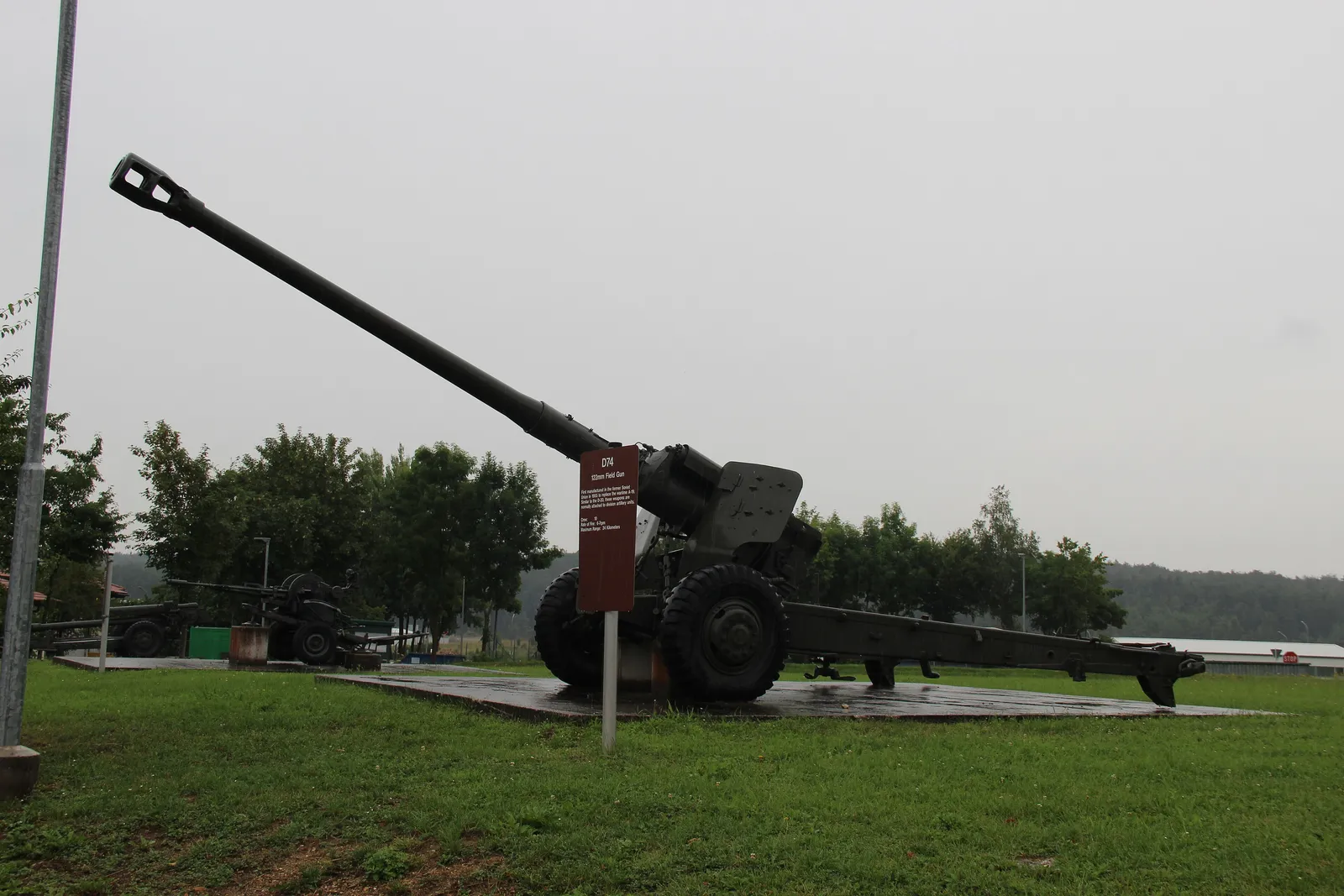
The D-74 is a Soviet 122 mm towed field gun from the F. F. Petrov design lineage at No. 9 Uralmashzavod. It paired a long 52/53-caliber barrel with a split-trail carriage shared with the D-20, offered more range than common 122 mm howitzers, and was exported or copied as the Chinese Type 60 before documented appearances with North Vietnamese, Syrian, and Russian forces.

Role in Conflicts

Side
North Vietnam and Viet Cong

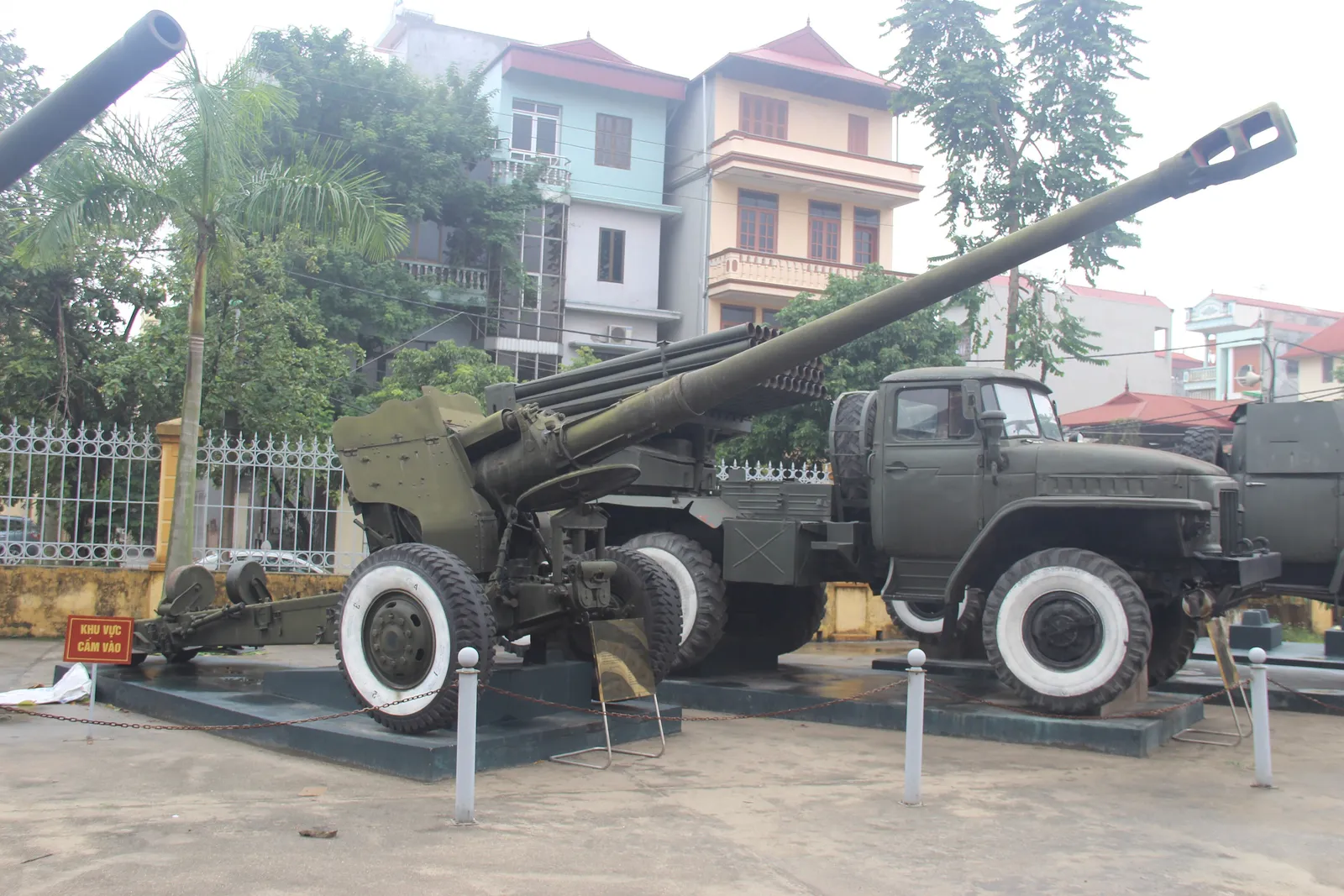
North Vietnamese forces used the D-74 as a long-range towed gun in independent artillery regiments, giving them a 24 km-class ground artillery piece during the Vietnam War.

Profile / Specs

Profile

Origin
Soviet Union
Type
122 mm towed field gun
Service note
Early Cold War Soviet design with later export and conflict appearances
Designer
F. F. Petrov design bureau
Designed
Late 1940s development period
Produced
1955 onward
Developed from
A-19 122 mm field gun replacement requirement

Specifications

Caliber
122 mm
Crew
7-10
Combat weight
About 5.5-5.62 t
Barrel length
6.45 m; about L/53
Maximum range
23.9-24 km with standard rounds
Muzzle velocity
About 885 m/s
Rate of fire
About 6-7 rounds per minute maximum
Ammunition
Separate-loading 122 mm ammunition with variable charges; not compatible with D-30 ammunition
Projectile types
High-explosive fragmentation, armor-piercing, smoke, and illumination projectiles are described in open references
Carriage
Two-wheel split-trail carriage with gun shield
Elevation and traverse
-5 degrees to +45 degrees elevation; about 58 degrees total traverse on carriage, with pedestal-assisted full-circle repositioning after emplacement
Towing vehicle
Typically a 6x6 truck such as the Ural-375D
Design Notes

The useful way to read the D-74 is as a long-barrel 122 mm gun on a carriage shared with the D-20, not as a standard D-30-family howitzer. Its range advantage came with distinct ammunition and a comparatively limited Soviet service life.

Ammunition

WeaponSystems.net describes the D-74 as firing separate-loading 122 mm ammunition that is incompatible with D-30 ammunition.

Carriage

The gun used a two-wheel split-trail carriage with shield protection and a central firing pedestal for rapid full-circle traverse after emplacement.

Range class

Open references place standard maximum range around 23.9 to 24 km, which explains the weapon's long-range artillery role despite its age.
Variants

Open references treat the Soviet D-74 as the baseline gun, with Chinese Type 60 and North Korean production following the same 122 mm D-74 pattern rather than a large Soviet variant family.

VariantConfigurationDesignation notes
Type 60Chinese production model

WeaponSystems.net and ODIN identify Type 60 as the Chinese production version of the Soviet D-74 / 122 mm towed gun.

Sources: 122mm D-74 - WeaponSystems.net, ODIN Type 60 Chinese 122mm Towed Gun

North Korean production D-74North Korean-built or held model

WeaponSystems.net lists North Korean production, and Ukraine-war reporting links Russia's 2024 D-74 appearances to possible North Korean supplies or ammunition.

Sources: 122mm D-74 - WeaponSystems.net, Business Insider Russia D-74 in Ukraine

Related Artillery Family

The D-74 belongs to the postwar Soviet long-range gun replacement lane around the older A-19 and the contemporary D-20 carriage family.

Compatible itemItem typeCompatibility evidence
A-19 122 mm field gun, 122 mm towed corps gun, ArtilleryA-19 122 mm field gunPredecessor 122 mm corps gun

WeaponSystems.net describes the D-74 as a late-1940s Soviet design intended to replace the Second World War-era A-19 field gun, although the 130 mm M-46 ultimately became the longer-lived Soviet long-range gun.

Sources: 122mm D-74 - WeaponSystems.net

D-20, 152 mm towed gun-howitzer, ArtilleryD-20Contemporary 152 mm gun-howitzer on a shared carriage

WeaponSystems.net states that the D-74 uses the same split-trail carriage as the 152 mm D-20, with the D-74 distinguished by its longer and thinner 122 mm ordnance.

Sources: 122mm D-74 - WeaponSystems.net

M-46, 130 mm towed field gun, ArtilleryM-46Parallel 130 mm long-range field gun

WeaponSystems.net describes the M-46 as the other Soviet long-range gun developed to replace older A-19-class weapons, with the M-46 outlasting the D-74 because of its greater range and heavier ammunition.

Sources: 122mm D-74 - WeaponSystems.net

Timeline

D-74 122 mm field gun Key Events

  1. Postwar development period begins

    WeaponSystems.net places D-74 development in 1947-1950 under the F. F. Petrov design bureau as a Soviet replacement candidate for older 122 mm guns.

    Sources: 122mm D-74 - WeaponSystems.net

  2. Production begins

    Open reference data places D-74 production from 1955, with the gun entering Soviet service in the mid-1950s before broad export and Asian production.

    Sources: 122mm D-74 - WeaponSystems.net, D-74 122 mm field gun - Wikipedia

  3. Vietnam War service context

    HistoryNet describes the D-74 as a 24 km-class weapon used by North Vietnamese independent artillery regiments during the Vietnam War.

    Sources: HistoryNet North Vietnam D-74

  4. D-74s captured near Khanasir

    Bellingcat reported two 122 mm D-74 field guns among heavy weapons captured by Islamic State fighters from Syrian government and allied positions near Khanasir in eastern Aleppo.

    Sources: Bellingcat Khanasir Captured Weapons

  5. Russian use filmed in Donetsk region

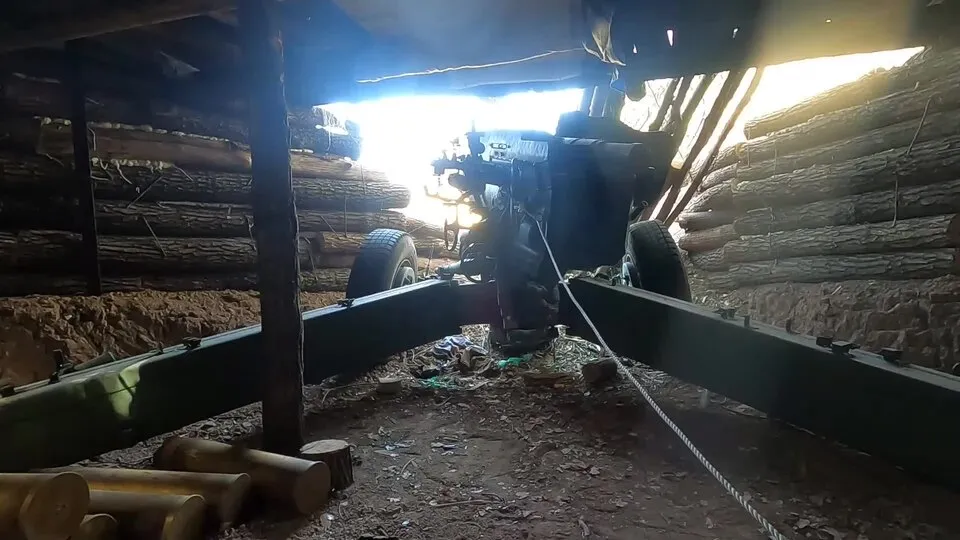
    Russian Ministry of Defence footage republished and analyzed by media showed D-74 crews firing in the South Donetsk / Vuhledar direction during the full-scale Russia-Ukraine War.

    Sources: Wikimedia Commons D-74 firing video, Business Insider Russia D-74 in Ukraine, UNITED24 Russia Deploys D-74

  6. Russian D-74 loss reported

    UNITED24 reported that Oryx had visually confirmed a Russian D-74 122 mm gun loss in Ukraine, adding loss evidence to the earlier firing footage.

    Sources: UNITED24 Russian D-74 Loss

Media
Related Weapon Systems
152 mm D-1 gun-howitzer, Towed 152 mm howitzer, ArtilleryArtillery152 mm D-1 gun-howitzerTowed 152 mm howitzerThe 152 mm D-1 gun-howitzer is a Soviet towed heavy howitzer that put a short 152.4 mm ordnance on a lighter split-trail carriage. Its modern record is mostly residual-use evidence: Russia drew D-1 guns from stocks during the full-scale phase of the 2014 Russia-Ukraine War, while open loss records tie the same World War II-era system to Armenian/Artsakh equipment in 2020 Nagorno-Karabakh and Syrian government artillery losses in the 2011 Syrian Civil War.
152 mm ML-20, 152 mm towed gun-howitzer, ArtilleryArtillery152 mm ML-20152 mm towed gun-howitzerThe 152 mm ML-20 is a Soviet heavy towed gun-howitzer designed at Plant No. 172 in Motovilikha under F. F. Petrov and adopted in 1937. It combined a 152.4 mm barrel, split-trail carriage, large muzzle brake, separate-loading ammunition, and a 17.2 km high-explosive range in a weapon built for corps and army artillery. Its modern catalog relevance comes from residual stock use: Ukrainian reporting in October 2025 documented Russian forces towing and losing an ML-20 in Donetsk region during the 2014 Russia-Ukraine War.

Sources