- Side
- Ukraine

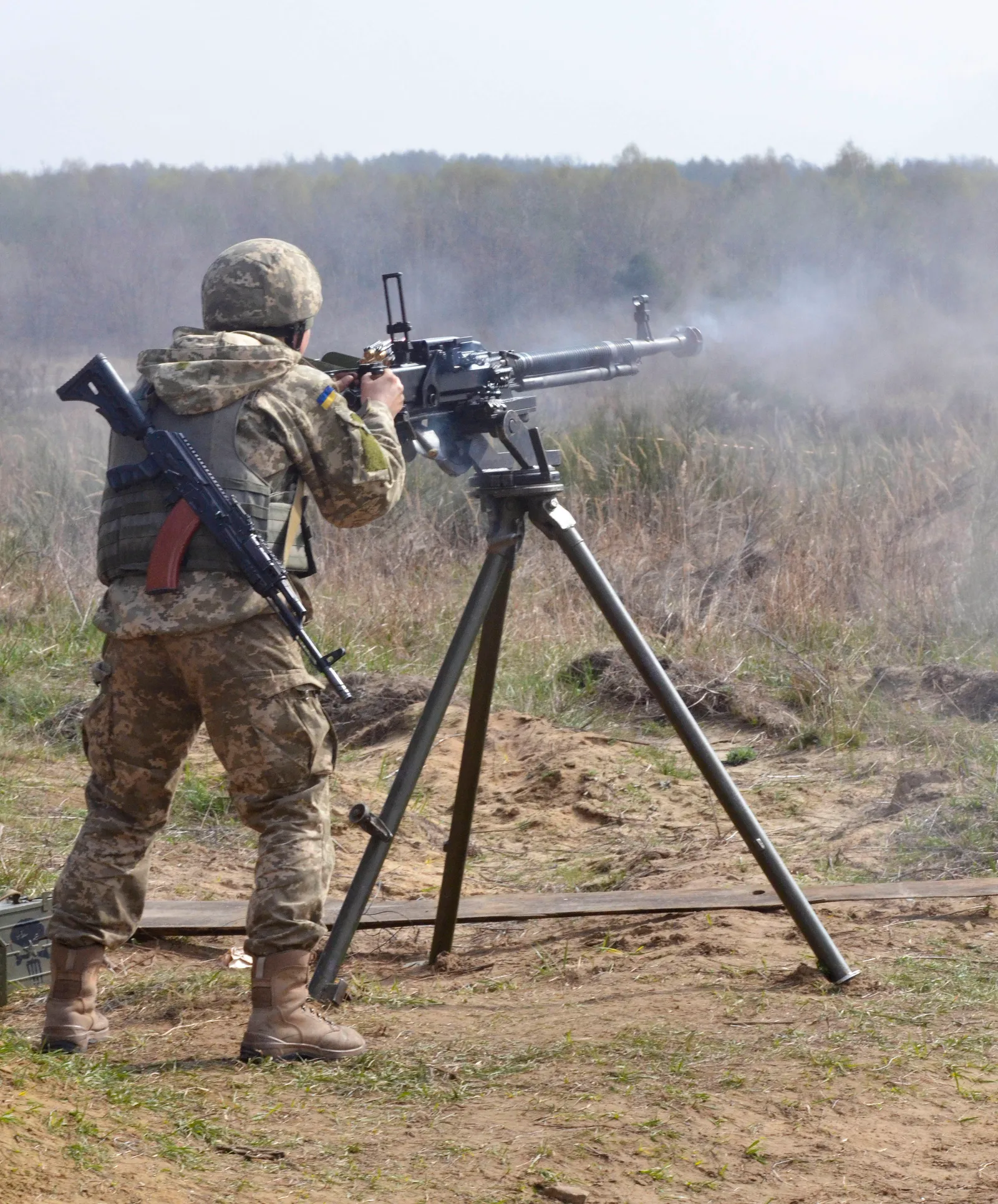
Used by Ukrainian forces as a crew-served heavy machine gun, including adapted infantry-support guns from the Donbas fighting and mobile air-defense teams pairing DShKs with searchlights against Russian Shahed-type drones.
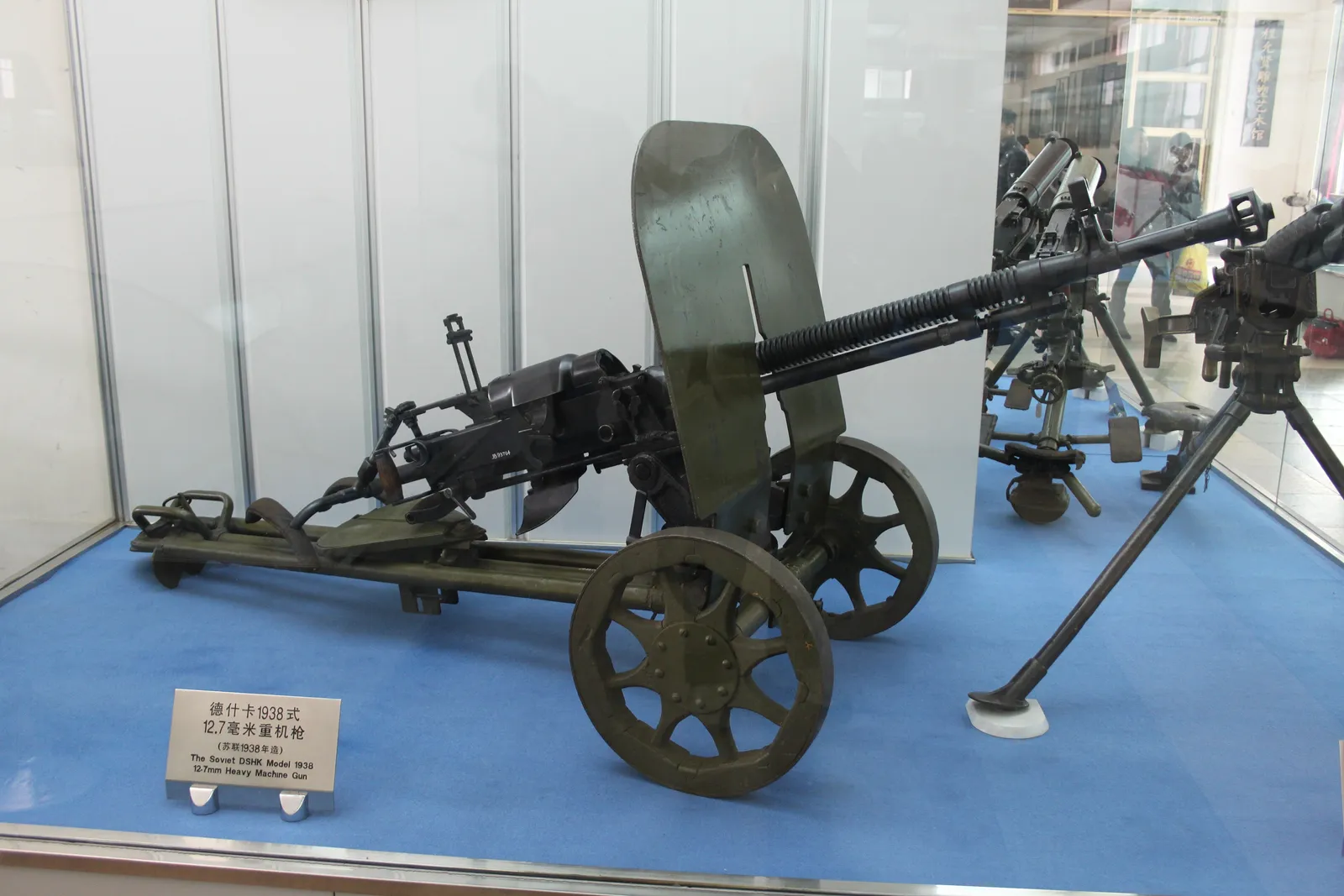
Role detailsThe DShK is a Soviet 12.7 mm heavy machine gun designed by Vasily Degtyaryov and refined with Georgy Shpagin's belt-feed system. Built for anti-aircraft, anti-vehicle, and infantry support roles, the DShK/DShKM family spans Vietnam War helicopter defense, Soviet-Afghan War ambushes, modern technicals, and Ukrainian mobile counter-UAV teams using vintage heavy machine guns against slow Russian drones.
Used by Ukrainian forces as a crew-served heavy machine gun, including adapted infantry-support guns from the Donbas fighting and mobile air-defense teams pairing DShKs with searchlights against Russian Shahed-type drones.
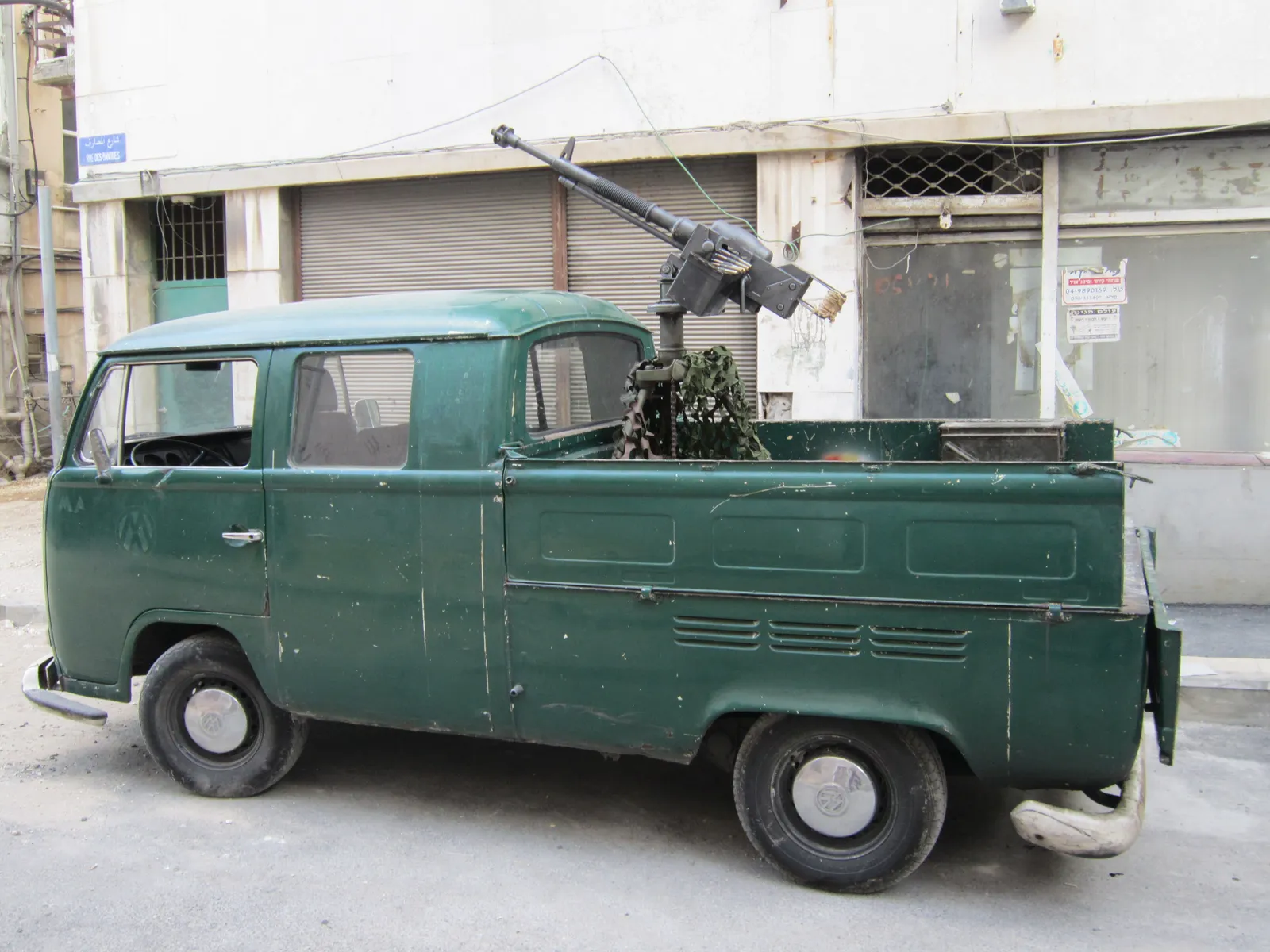
Role detailsCNN analysis of photos and videos from the 2023 Israel-Hamas War showed Hamas used a Soviet-designed DShK mounted on a pickup during the October 7 attack on Israel.
Role detailsDocumented among the 12.7 mm machine guns used by warring parties in Taiz, with separate reporting of DShK-pattern heavy machine guns in maritime arms shipments assessed as destined for Houthi forces.
Role detailsUsed by ISWAP and Boko Haram-aligned insurgent forces on gun trucks in northeast Nigeria, with Nigerian troops recovering DShK heavy machine guns and DShK-pattern variants from insurgents in Borno operations.
In the 2014 Second Libyan Civil War, a Novact image caption describes a fighter firing at ISIS positions in Sirte with a homemade rifle outfitted with a DShK machine gun barrel.
In the 2012 Mali War, Long War Journal reported Ansar Dine and allied jihadists capturing DShK machine guns in attacks on Malian positions, showing the weapon in active use by armed groups.
In the 2023 Sudan War, Human Rights Watch documented RSF and allied militia attacks in West Darfur and noted civilians describing DShK gunfire, indicating the weapon's use in the fighting.
In the 2014 War Against the Islamic State, Amnesty International reported DShK-pattern heavy machine guns in use by all parties to the conflicts across Iraq and Syria, including IS.
Role detailsIn the 2001 War in Afghanistan, Long War Journal reported Taliban fighters employing a DShK machine gun to pin down an Afghan and Coalition patrol in Uruzgan province.
Role detailsIn the 2013 War in Iraq, Amnesty International reported DShK and DShKM heavy machine guns among the weapons in use by armed groups across Iraq, including Islamic State-aligned forces.
Amnesty International reported DShK and DShKM heavy machine guns in use by all parties to the conflicts across Iraq and Syria, supporting 2011 Syrian Civil War coverage across government, opposition, Kurdish-led coalition partner, and Islamic State or jihadist forces.
Role detailsDuring the 1955 Vietnam War, Viet Cong and North Vietnamese units used Soviet DShKM guns and Chinese Type 54 copies as 12.7 mm anti-aircraft weapons against U.S. helicopters and landing zones.
In the 1979 Soviet-Afghan War, mujahideen forces fielded DShK heavy machine guns in ambush positions and raids, while Chinese Type 54 and DShKM-family guns also appeared in rebel anti-aircraft use against Soviet aircraft.
The DShK family matters because the same 12.7x108 mm gun moved between ground, vehicle, and anti-aircraft roles. Later DShKM-pattern guns simplified feeding, used metallic-link belts, and remained adaptable enough for truck mounts, wheeled anti-aircraft positions, and modern Ukrainian infantry-support conversions.
| Feature | Documented detail | Why it matters |
|---|---|---|
| Feed system | DShK-38 used Shpagin's belt-feed redesign; the 38/46 or DShKM pattern used a shuttle-type feeder. | Feed changes separate the wartime DShK-38 from the postwar DShKM family. |
| Ammunition | The family fires 12.7x108 mm ammunition from metallic-link belts. | The cartridge gives the gun anti-aircraft, anti-vehicle, and long-range suppression roles. |
| Mounting | Sources document tripod, wheeled, vehicle, pickup, and improvised infantry-support use. | Mount flexibility explains its persistence on technicals, defensive positions, and mobile counter-UAV teams. |
DShK-family records usually group the wartime DShK-38, the postwar DShK 38/46 or DShKM modernization, and foreign copies such as China's Type 54.
| Variant | Configuration | Designation notes |
|---|---|---|
 | Postwar modernization | The Model 38/46, also known as DShKM, replaced the earlier rotary feeder with a shuttle-type feed and made other non-interchangeable changes. Sources: Red Fifty: The Soviet 12.7 mm DShK Heavy Machine Gun, DShK-1938/46 Heavy Machine Gun |
| Type 54 | Chinese Model 38/46 copy | Defense Intelligence Agency material cited by American Rifleman identifies the Chinese Type 54 as a PRC-produced Model 38/46 heavy machine gun. Sources: Red Fifty: The Soviet 12.7 mm DShK Heavy Machine Gun |
The DShK is documented as a 12.7x108 mm heavy machine gun.
| Ammunition | Ammunition type | Firing evidence |
|---|---|---|
 | Cartridge family | The DShK source identifies the weapon as 12.7x108 mm, and Yugoimport's 12.7x10⁸ ammunition line names DShK-compatible systems. Sources: DShK-1938/46 Heavy Machine Gun, Yugoimport DShK ammunition PDF |
WeaponSystems says some BTR-152 vehicles were fitted with a 12.7 mm DShKM heavy machine gun.
| Carrier | Carrier type | Carriage evidence |
|---|---|---|
 | Armored personnel carrier | WeaponSystems says some BTR-152 vehicles were fitted with a 12.7 mm DShKM heavy machine gun as main armament. Sources: DShK - Weaponsystems.net, BTR-152 |
The Shpagin belt-feed redesign gave the Degtyaryov heavy machine gun the DShK-38 designation and moved it into Soviet service before World War II.
Sources: Red Fifty: The Soviet 12.7 mm DShK Heavy Machine Gun
The DShK 38/46 or DShKM modernization became the postwar pattern and is the form represented by many later Soviet and foreign-service guns.
Sources: DShK-1938/46 Heavy Machine Gun, Red Fifty: The Soviet 12.7 mm DShK Heavy Machine Gun
Viet Cong and North Vietnamese units began receiving DShKM and Chinese Type 54 guns, adding heavier 12.7 mm fire to anti-aircraft sections during the Vietnam War.
Sources: Red Fifty: The Soviet 12.7 mm DShK Heavy Machine Gun
The Foreign Military Studies Office tactical study records mujahideen DShK heavy machine guns positioned on high ground in an Afghanistan convoy ambush.
Sources: The Other Side of the Mountain
After Russia's initial 2014 invasion and Donbas trench fighting, Ukrainian forces converted inherited DShK guns into lower-profile infantry support weapons.
Sources: Ukrainian DShK as Infantry Support Weapon
CNN analysis identified a Soviet-designed DShK mounted on a pickup among Hamas weapons imagery from the October 7 attack on Israel.
Sources: CNN on Hamas's improvised arsenal