Infantry Weapons

DShKM heavy machine gun

Also known as
  • DShKM
  • DShK-M
  • DShK 38/46
  • DShK 1938/46
  • DShK-1938/46
  • Model 38/46
  • Dushka

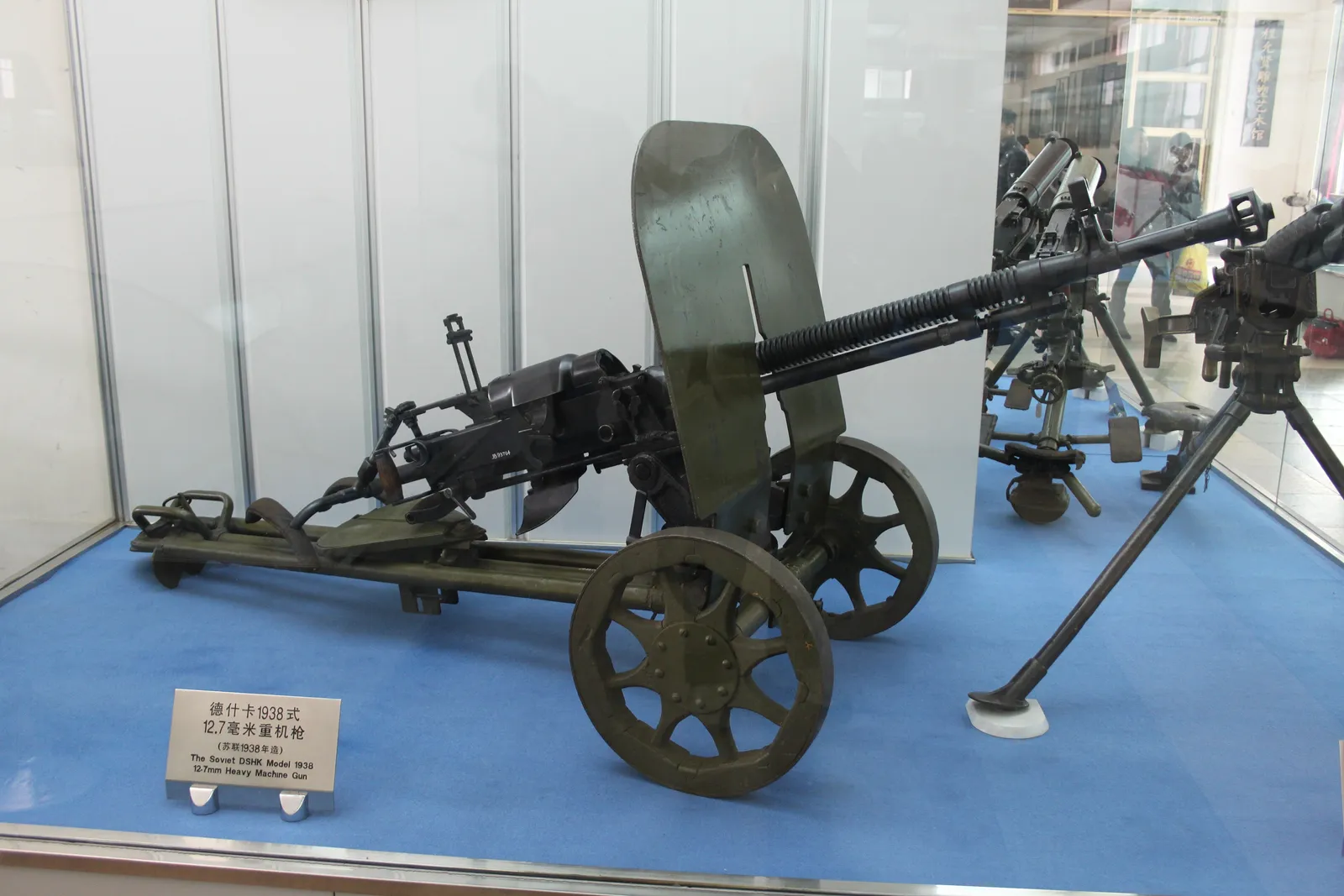
The DShKM is the Soviet postwar Model 38/46 modernization of the DShK 12.7 mm heavy machine gun, retaining the DShK family's anti-aircraft, infantry-support, and vehicle-mount roles while replacing the earlier feed system. Sources document the DShK-1938/46 in Vietnam War anti-aircraft use, DShK-M capture and employment in the Soviet-Afghan War, DShK-M use by Ukrainian defenders, and DShK/DShKM variants in Islamic State's Iraq-and-Syria arsenal.

Role in Conflicts

Side
North Vietnam and Viet Cong

The U.S. Air Force museum identifies the DShK-1938/46 as a Southeast Asia War Gallery weapon used by communist forces against low-flying aircraft, while American Rifleman describes DShK-family guns in Viet Cong and North Vietnamese helicopter ambushes.

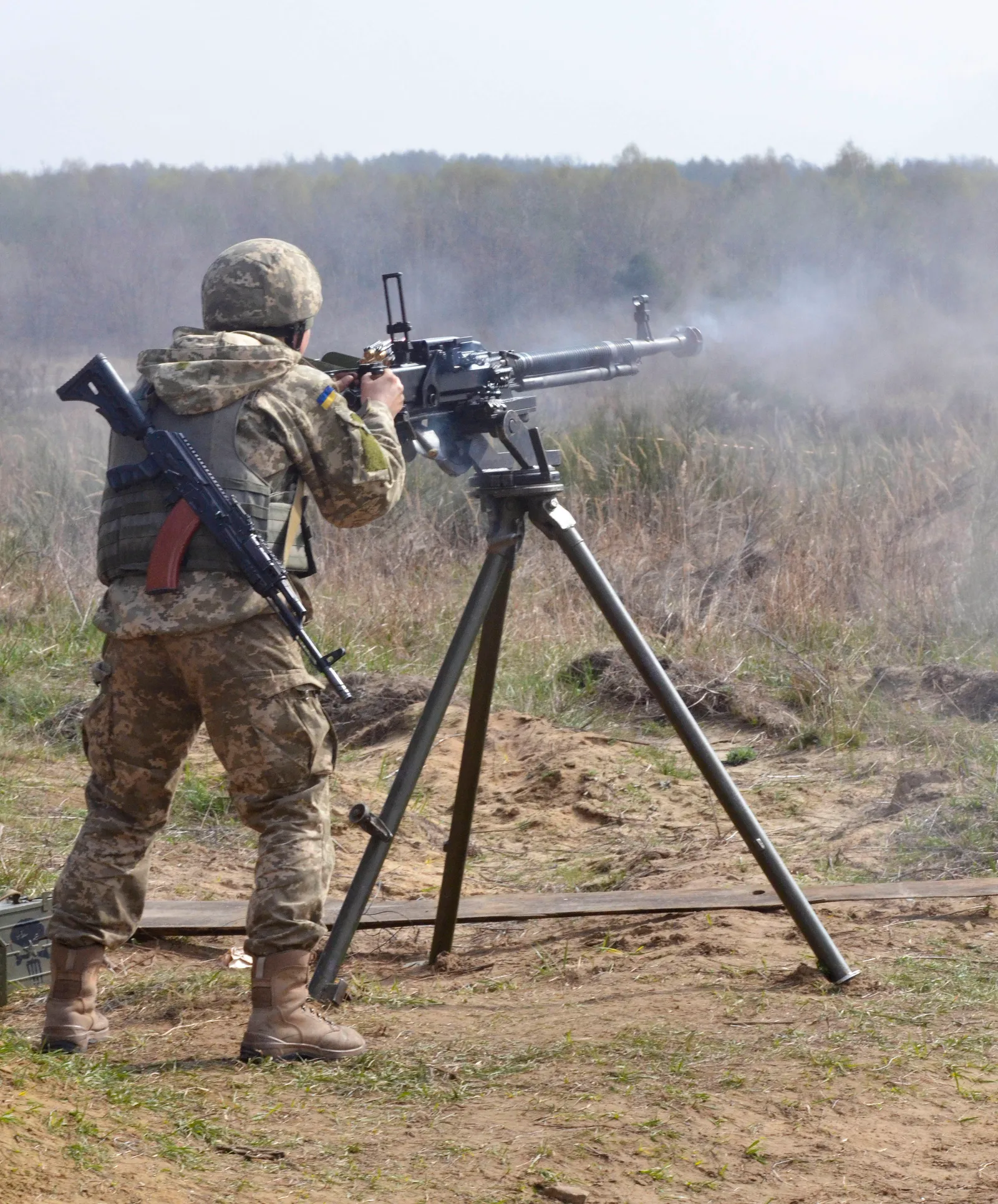
Ukraine's International Legion described DShK-M machine guns as weapons used by defenders in fighting across Donetsk, Kharkiv, and Belgorod regions; Business Insider separately reported Ukrainian mobile air-defense teams using DShK heavy machine guns with searchlights against Russian Shahed drones.

Role details
Profile / Specs

Profile

Origin
Soviet Union
Type
12.7 mm heavy machine gun
Service note
Post-World War II 12.7 mm heavy machine gun modernization
Designer
Vasily Degtyaryov and Georgy Shpagin, for the DShK family
Designed
1940s
Produced
1946 onward
Developed from
DShK-38 heavy machine gun
Developed into
Type 54 and other DShK-pattern derivatives

Specifications

Caliber
12.7x108 mm
Operation
Gas-operated, air-cooled, automatic-only heavy machine gun firing from an open bolt
Feed
50-round metallic-link belt with DShKM slider-type belt-feed unit
Rate of fire
About 600 rounds per minute
Maximum effective range
About 1,100 yards
Muzzle velocity
About 860 m/s
Gun weight
About 34-35.7 kg unloaded, depending on variant and source
Barrel length
1,070 mm
Mounting
Tripod, vehicle, and anti-aircraft mounts
Feed System And Mounting

The Model 38/46/DShKM modernization is best separated from the wartime DShK-38 by its feed system rather than by caliber or broad role. Sources describe the family as a 12.7x108 mm gas-operated, belt-fed heavy machine gun used on ground, vehicle, and anti-aircraft mounts.

Designation

Model 38/46 and DShKM refer to the postwar improved DShK-family gun.

Feed change

The 38/46 pattern replaced the earlier rotary-feed arrangement with a simplified shuttle or slider-type belt-feed system.

Mounting role

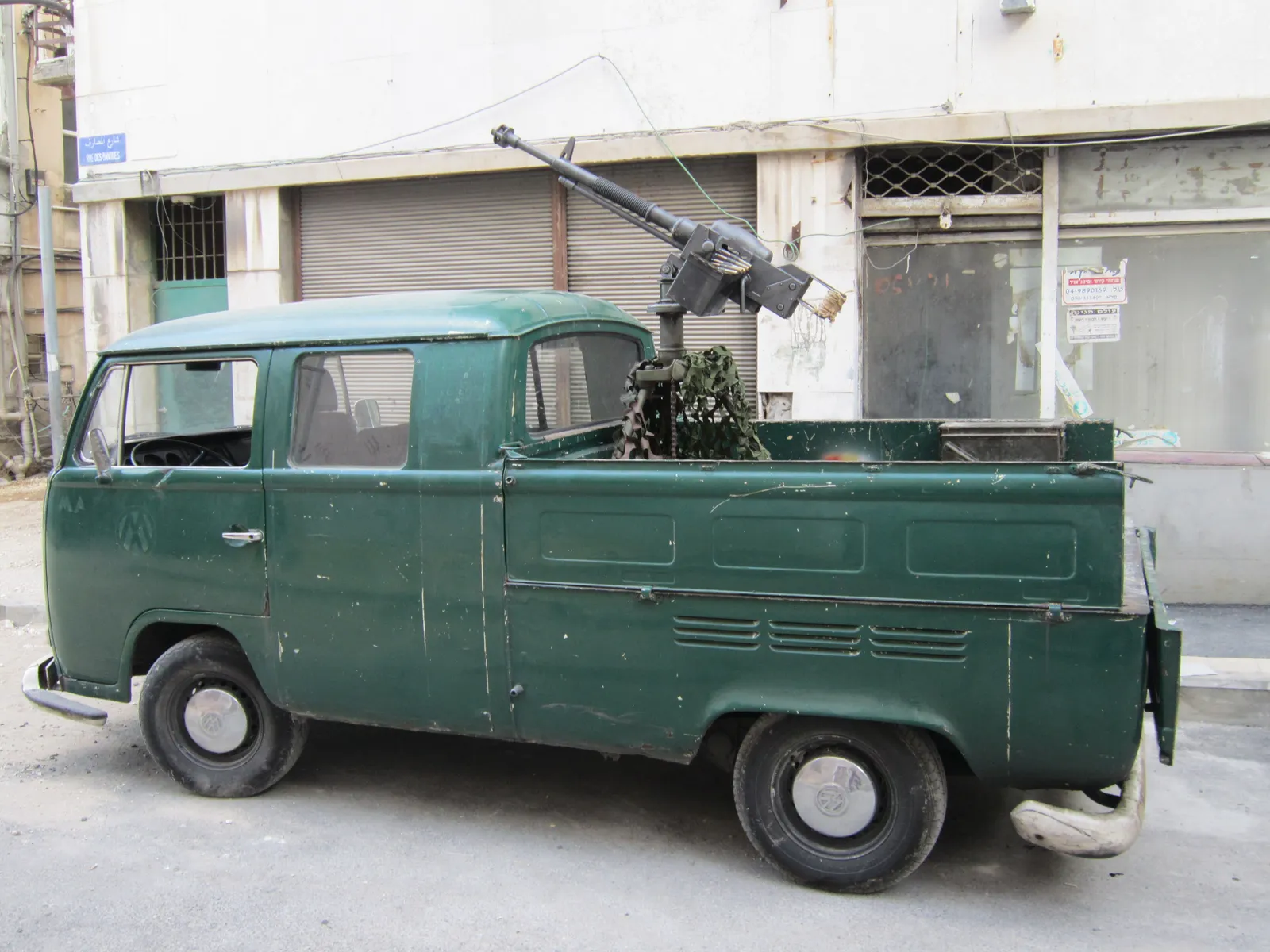
The same 12.7 mm gun family appears on tripod, wheeled, vehicle, and anti-aircraft mounts, including improvised vehicle installations.
Variants

This entry treats DShKM as the postwar Model 38/46 branch of the wider DShK family, with the wartime DShK-38 and later DShK-pattern copies separated below.

VariantConfigurationDesignation notes
DShK, 12.7 mm heavy machine gun, Infantry WeaponsDShK-38Original 1938 family weapon

The original DShK-38 used the earlier rotary feed arrangement; the postwar Model 38/46/DShKM replaced it with a more conventional shuttle or slider-type feed.

Sources: Red Fifty: The Soviet 12.7 mm DShK Heavy Machine Gun, Modern Firearms DShK and DShKM 12.7

Type 54Chinese DShKM-pattern copy

American Rifleman identifies the Chinese Type 54 as a Model 38/46-pattern heavy machine gun, and Small Arms Survey lists it among DShK close derivatives.

Sources: Red Fifty: The Soviet 12.7 mm DShK Heavy Machine Gun, Small Arms Survey DShK Identification Sheet

MGD-12.7Iranian DShK-pattern derivative

Small Arms Survey lists MGD-12.7 among close DShK derivatives in its identification sheet.

Sources: Small Arms Survey DShK Identification Sheet

Ammunition Fired

DShKM is a 12.7x108 mm heavy machine gun, and Yugoimport lists DShK, DShKM, NSVT, and related systems as compatible with its 12.7 mm x 108 DShK ammunition line.

AmmunitionAmmunition typeFiring evidence
12.7x108mm cartridge, 12.7 mm heavy machine-gun cartridge, Munitions12.7x108mm cartridgeCartridge family

The DShKM fires the Soviet 12.7x108 mm cartridge; Yugoimport's ammunition sheet identifies DShK and DShKM among compatible systems.

Sources: DShK-1938/46 Heavy Machine Gun, Yugoimport DShK ammunition PDF

Carrier Platforms

WeaponSystems.net documents DShKM fittings on Soviet wheeled armored personnel carrier families, including occasional BTR-40 and BTR-152 installations.

CarrierCarrier typeCarriage evidence
BTR-40M armored personnel carrier, Wheeled armored personnel carrier, Armored VehiclesBTR-40M armored personnel carrierWheeled armored personnel carrier

Weaponsystems.net notes that the BTR-40 family could occasionally be fitted with a 12.7 mm DShKM heavy machine gun.

Sources: BTR-40 | Weaponsystems.net

BTR-152M armored personnel carrier, 6x6 wheeled armored personnel carrier, Armored VehiclesBTR-152M armored personnel carrierWheeled armored personnel carrier

WeaponSystems.net says some BTR-152 vehicles were fitted with a 12.7 mm DShKM heavy machine gun as main armament.

Sources: DShK - Weaponsystems.net, BTR-152 | WeaponSystems.net

Timeline

DShKM heavy machine gun Key Events

  1. DShK-38 adopted

    Modern Firearms traces the DShK-38 to Shpagin's belt-feed conversion of Degtyarov's earlier DK heavy machine gun.

  2. Model 38/46 modernization

    The Model 38/46, also known as DShKM, introduced the postwar feed-system modernization that separates it from the earlier DShK-38.

  3. Documented in Islamic State arsenal

    Amnesty International's 2015 arms report listed DShK and DShKM variants among the heavy machine guns in Islamic State's Iraq-and-Syria arsenal.

Media
Related Weapon Systems
PKM/PK, 7.62 mm general-purpose machine gun, Infantry WeaponsInfantry WeaponsPKM/PK7.62 mm general-purpose machine gunThe PK and lighter PKM are Soviet-designed, belt-fed 7.62x54R general-purpose machine guns used from bipods, tripods, vehicles, remote weapon stations, and improvised mounts. Their low weight for the class, non-disintegrating belt feed, quick-change barrel concept, and wide licensed-production base make the family a recurring infantry fire-support weapon in recent conflicts, with documented rows here covering Ukraine, Yemen, Syria, Iraq, Mali, Lake Chad, Gaza, Afghanistan, and Turkey's conflict with the PKK.
W85 heavy machine gun, 12.7 mm heavy machine gun, Infantry WeaponsInfantry WeaponsW85 heavy machine gun12.7 mm heavy machine gunThe W85 is a Chinese 12.7x108 mm heavy machine gun associated with Norinco export channels and the QJC-88 vehicle-mounted variant. It is lighter than many older DShK-pattern heavy machine guns and can be used from tripod, pintle, vehicle, or improvised pickup mounts. Conflict reporting documents W85-family guns with ISWAP-linked forces in Nigeria, Ukrainian mobile anti-drone teams, YPG/SDF improvised armor in Syria, Iraqi PMU militias, and Wagner-linked imagery from Mali, while sources caution that export paths and quantities are often unclear.
RPK/RPK-74, Squad automatic weapon / light machine gun, Infantry WeaponsInfantry WeaponsRPK/RPK-74Squad automatic weapon / light machine gunThe RPK and RPK-74 are Kalashnikov-pattern squad automatic weapons that extend the AK family with a longer, heavier barrel, bipod, and higher-capacity magazines for infantry fire support. The 7.62 x 39 mm RPK paralleled the AKM, while the 5.45 x 39 mm RPK-74 followed the AK-74; Conflict Armament Research later documented both RPK and RPK-74 examples in Ukraine, and Amnesty International listed both types among Islamic State machine guns in Iraq and Syria.
BTR-MDM Rakushka, Airborne amphibious tracked armored personnel carrier, Armored VehiclesArmored VehiclesBTR-MDM RakushkaAirborne amphibious tracked armored personnel carrierThe BTR-MDM Rakushka is the Russian Rakushka-M airborne amphibious tracked armored personnel carrier, with this entry also covering the earlier BTR-MD Rakushka designation because public sources treat it as the direct predecessor in the same family. It carries a small crew plus an airborne assault party, ammunition, fuel, spares, or casualties, and has been visually documented among Russian equipment destroyed, damaged, abandoned, and captured during the full-scale phase of the 2014 Russia-Ukraine War.

Sources