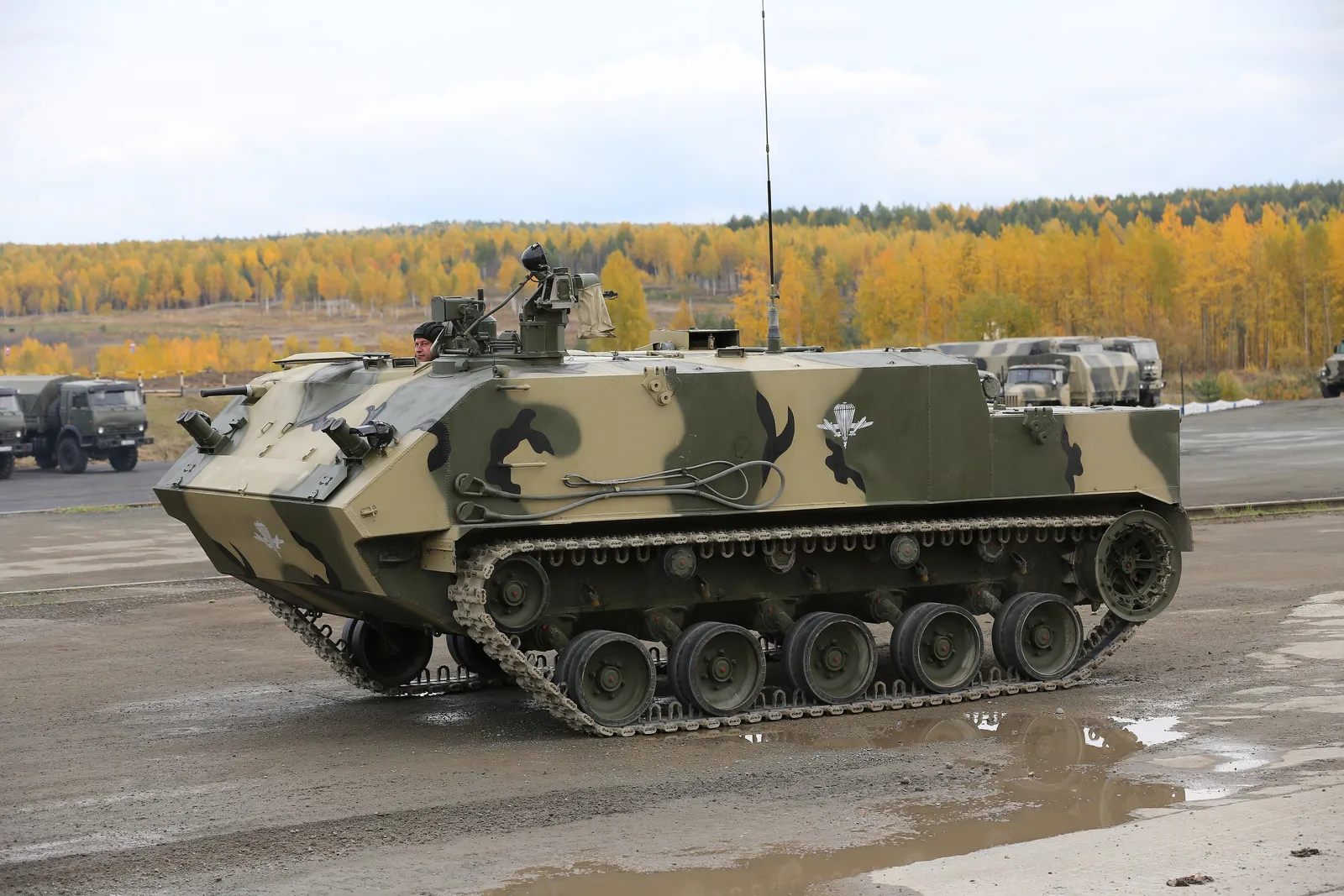


Russian airborne forces have fielded the BTR-MDM in the full-scale invasion of Ukraine; Oryx visually documents destroyed, damaged, abandoned, and captured BTR-MDM Rakushka vehicles, while July 2023 reporting placed Russian BTR-MDMs in battlefield incidents near Staromaiorske in Donetsk Oblast and in Luhansk Oblast.
Role detailsArmored Vehicles
BTR-MDM Rakushka
Also known as
- BTR-MDM
- Rakushka
- Rakushka-M
- BTR-MD Rakushka
- BTR-MD
- Object 955
- Ob'yekt 955
- Shell-M
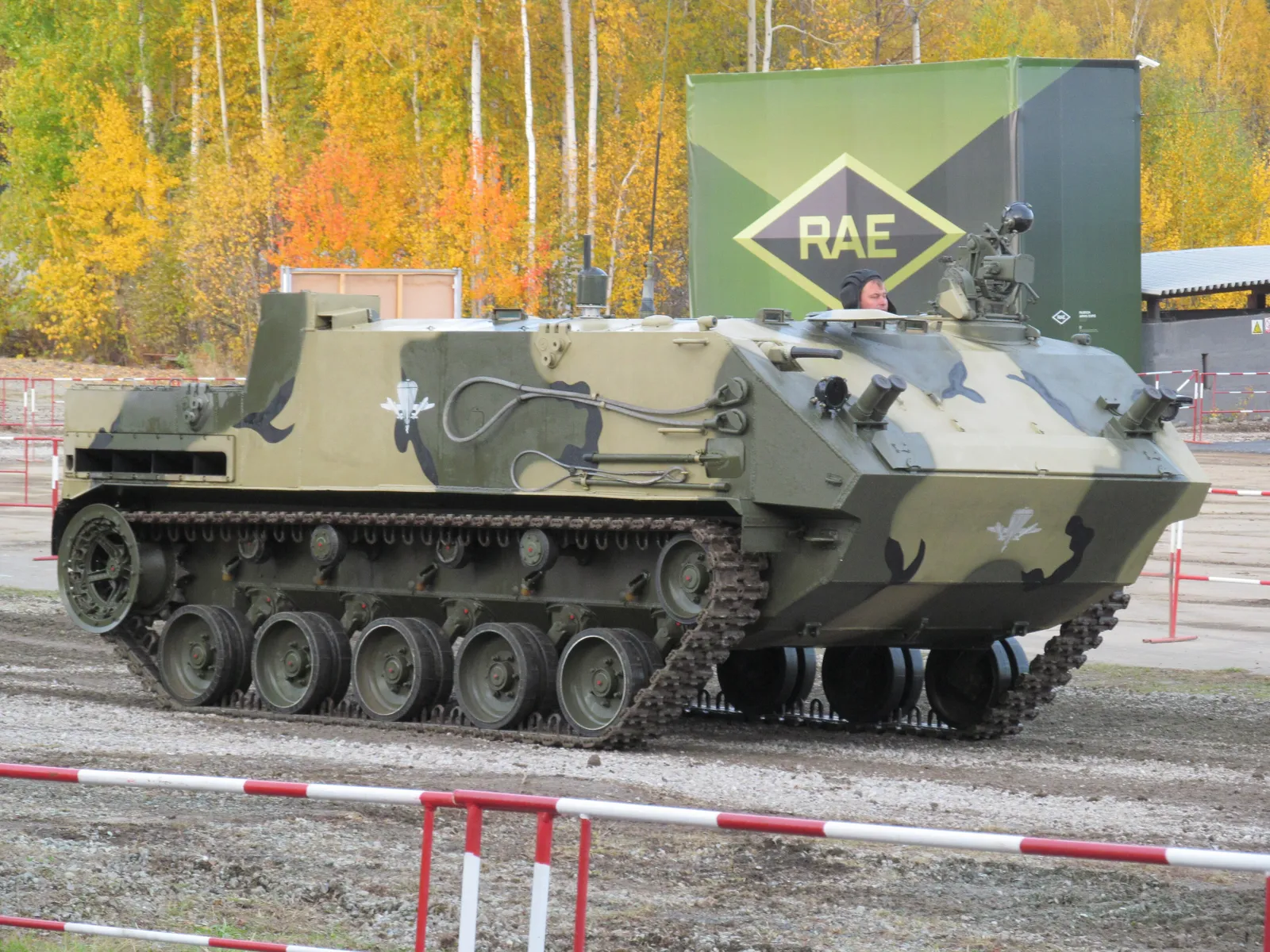
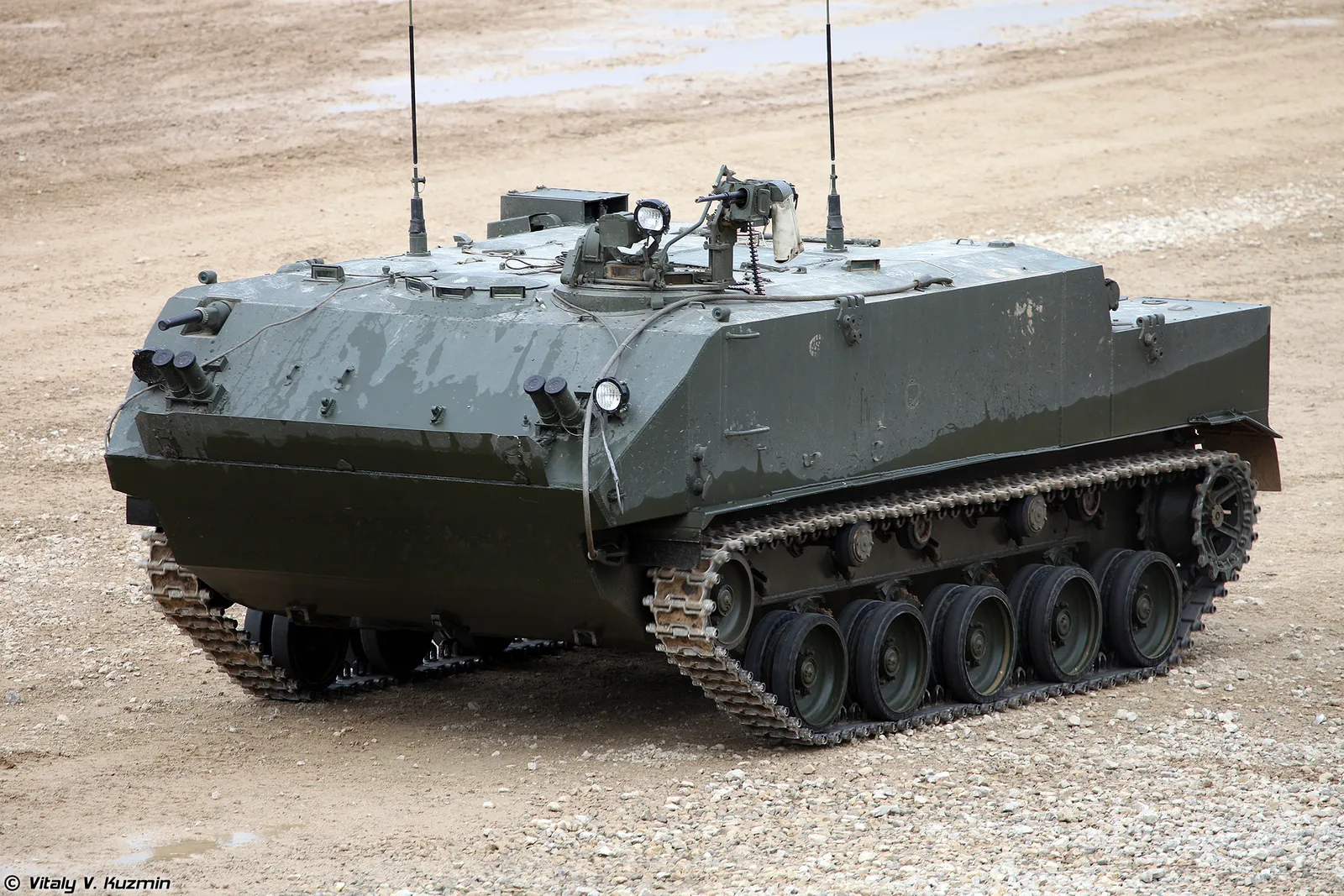
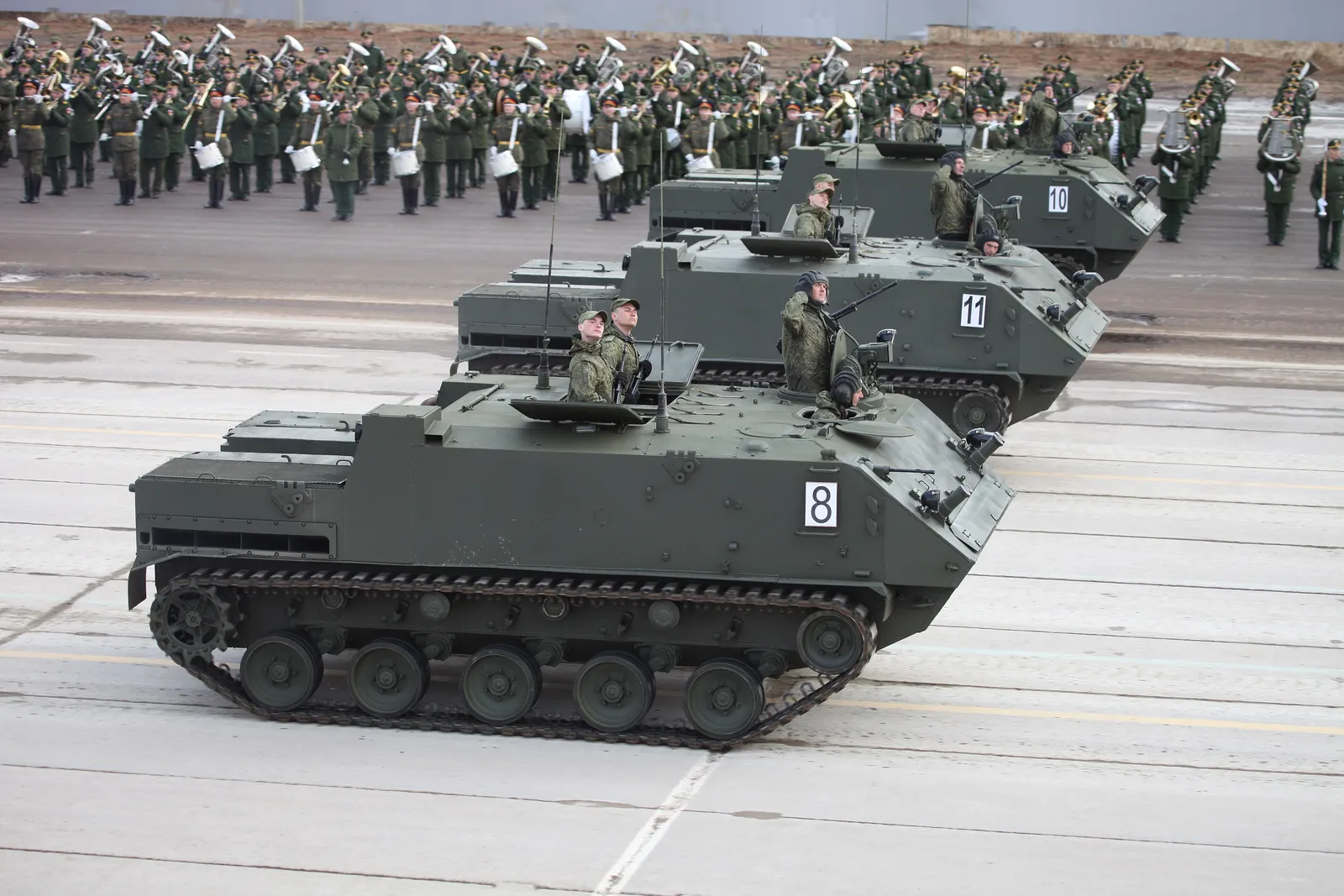
The BTR-MDM Rakushka is the Russian Rakushka-M airborne amphibious tracked armored personnel carrier, with this entry also covering the earlier BTR-MD Rakushka designation because public sources treat it as the direct predecessor in the same family. It carries a small crew plus an airborne assault party, ammunition, fuel, spares, or casualties, and has been visually documented among Russian equipment destroyed, damaged, abandoned, and captured during the full-scale phase of the 2014 Russia-Ukraine War.
Role in Conflicts
Profile / Specs
Profile
- Origin
- Russia
- Type
- Airborne amphibious tracked armored personnel carrier
- Service note
- Post-Cold War; entered Russian airborne-service production in the 2010s
- Designer
- BTR-MD lineage from Volgograd Tractor Plant / VgTZ; BTR-MDM modernization associated with Kurganmashzavod / Concern Tractor Plants
- Designed
- BTR-MDM unveiled in 2013 after BTR-MD development work in the late 2000s
- Produced
- 2015-present for BTR-MDM production deliveries
- Developed from
- BTR-MD Rakushka and BMD-4M airborne vehicle chassis/common components
Specifications
- Crew and passengers
- Two crew plus up to 13 assault troops according to Rostec and Army Recognition
- Armament
- Remote weapon station with 7.62 mm or 12.7 mm machine gun, plus a forward 7.62 mm machine gun in Army Recognition's description
- Combat weight
- About 13,200 kg
- Dimensions
- Length 6.1 m; width 3.1 m; height 2.5 m
- Engine
- UTD-29 multi-fuel diesel rated at about 500 hp
- Mobility
- 70 km/h maximum road speed and 500 km road range; Rostec lists 45-50 km/h mean speed on dry earth roads
- Amphibious drive
- Two rear water jets after raising a trim vane; Army Recognition lists full amphibious capability
- Protection
- All-welded aluminum armor against small-arms fire and shell splinters, with smoke grenade dischargers on the front hull
- Suspension
- Adjustable hydro-pneumatic suspension with ground clearance between 130 mm and 530 mm
Variants
Public sources distinguish the earlier BTR-MD Rakushka from the BTR-MDM/Rakushka-M modernization mainly by chassis, powerpack, suspension, and BMD-4M-family commonality.
| Variant | Configuration | Designation notes |
|---|---|---|
| BTR-MD Rakushka | Earlier BTR-D successor | The earlier BTR-MD was a turretless airborne transport vehicle in the BMD-3/BMD airborne line, and Object 955 attribution is strongest for this predecessor designation; the BTR-MDM is described as the improved follow-on using BMD-4M-family components. Sources: Army Recognition BTR-MDM, GlobalSecurity BTR-MD Rakushka |
| Rakushka-M wartime delivery fit | 2024 protected delivery configuration | Rostec describes 2024 Rakushka-M deliveries with local drone-control suppression equipment, top-attack protection kits, Nakidka thermal/radio signature reduction kits, and driver night-vision devices. Sources: Rostec Rakushka-M delivery |
Related Airborne Chassis And Derivatives
The Rakushka sits in the same modern Russian airborne armored-vehicle family as the BMD-4M, trading the IFV turret for transport, cargo, casualty-evacuation, and support capacity; its chassis also underpins specialized airborne command vehicles.
| Compatible item | Item type | Compatibility evidence |
|---|---|---|
 | Airborne infantry fighting vehicle family | Army Recognition says the BTR-MDM uses the same powerpack and suspension as the BMD-4M, while GlobalSecurity describes it as a tracked APC based on the BMD-4M chassis. Sources: Army Recognition BTR-MDM, GlobalSecurity BTR-MD Rakushka |
 | Earlier airborne APC family | GlobalSecurity frames Rakushka as the replacement workhorse for older BTR-D airborne APCs, with greater internal capacity for troops, cargo, ammunition, fuel, or casualties. Sources: GlobalSecurity BTR-MD Rakushka |
 | Air-defense reconnaissance and command derivative | GlobalSecurity describes the MRU-D automated air-defense control system as a BTR-MDM-chassis vehicle for airborne forces, matching the cataloged 9S932-2 Barnaul-T profile. Sources: GlobalSecurity BTR-MD Rakushka |
Airborne Transport Role
The BTR-MDM is not an infantry fighting vehicle in the BMD-4M sense. It keeps the light amphibious, air-droppable tracked chassis concept but removes the heavy turret so VDV units can move personnel, ammunition, spare parts, fuel, lubricants, or casualties under armor.
Transport load
Rostec describes a two-person crew and space for an assault party of up to 13 people.
Protection tradeoff
Army Recognition describes all-welded aluminum armor intended against small-arms fire and shell splinters, reflecting the weight limits of an airborne amphibious carrier.
Wartime adaptation
Rostec's 2024 delivery note adds drone-control suppression, top-attack protection, Nakidka signature reduction, and night-vision equipment to the Rakushka-M fit.
Sources: Rostec Rakushka-M delivery; Army Recognition BTR-MDM.
Timeline
BTR-MDM Rakushka Key Events
BTR-MDM displayed at Russia Arms Expo
Army Recognition and Commons media identify the BTR-MDM Rakushka-M at the 2013 Russia Arms Expo in Nizhny Tagil.
Sources: Army Recognition BTR-MDM, Commons Russia Arms Expo image
First production batch delivered
Army Recognition reports that Russian airborne troops in the Western Military District received an initial production batch of 12 BTR-MDM vehicles in March 2015.
Sources: Army Recognition BTR-MDM
Full-scale Ukraine-war loss record begins
Oryx's visual loss list for the Russian invasion of Ukraine later recorded dozens of BTR-MDM Rakushka vehicles destroyed, damaged, abandoned, or captured.
Sources: Oryx Russian equipment losses
Staromaiorske destruction reported
Army Recognition reported Ukrainian Marines destroying a Russian BTR-MDM with artillery fire near Staromaiorske, Donetsk Oblast.
Sources: Army Recognition Staromaiorske BTR-MDM
Luhansk mine incident reported
Defense Express reported a Russian BTR-MDM moving toward Ukrainian positions in Luhansk Oblast before detonating on a landmine.
Sources: Defense Express Luhansk BTR-MDM Mine Incident
Rostec announces protected Rakushka-M batch
Rostec said High-Precision Systems delivered a new Rakushka-M BTR-MDM batch with drone-suppression, top-attack protection, Nakidka signature-reduction kits, and driver night-vision devices.
Sources: Rostec Rakushka-M delivery
Media
Related Weapon Systems


Sources
Rostec Rakushka-M deliveryPublisher: Rostec State Corporation | Note: Supports the 2024 Rakushka-M delivery, High-Precision Systems context, drone/top-attack/Nakidka wartime equipment, crew and passenger capacity, transport role, and road-speed claims. | Accessed: 2026-07-06Army Recognition BTR-MDMPublisher: Army Recognition | Note: Supports BTR-MDM identity, 2013 public display, March 2015 initial production delivery, BMD-4M chassis/powerpack commonality, armament, protection, amphibious equipment, dimensions, weight, mobility, and BTR-MD/BTR-MDM distinction. | Accessed: 2026-07-06GlobalSecurity BTR-MD RakushkaPublisher: GlobalSecurity.org | Note: Supports BTR-MD/BTR-MDM lineage, BTR-D replacement context, transport and casualty-evacuation role, BMD-4M chassis basis, and airborne amphibious design context. | Accessed: 2026-07-06Oryx Russian equipment lossesPublisher: Oryx | Note: Supports 2014 Russia-Ukraine War direct conflict-use/loss context by visually documenting Russian BTR-MDM Rakushka vehicles destroyed, damaged, abandoned, and captured during the full-scale invasion. | Accessed: 2026-07-06Army Recognition Staromaiorske BTR-MDMPublisher: Army Recognition | Note: Supports 2014 Russia-Ukraine War direct conflict-use by reporting a Russian BTR-MDM destroyed by Ukrainian artillery fire near Staromaiorske, Donetsk Oblast, in July 2023. | Accessed: 2026-07-06Defense Express Luhansk BTR-MDM Mine IncidentPublisher: Defense Express | Note: Supports 2014 Russia-Ukraine War direct conflict-use by reporting a Russian BTR-MDM used in an approach toward Ukrainian positions and destroyed by a landmine in Luhansk Oblast. | Accessed: 2026-07-06Commons Russia Arms Expo imagePublisher: Wikimedia Commons | Note: Supports image provenance for a BTR-MDM Rakushka-M photograph from Russia Arms Expo 2013, credited to Vitaly V. Kuzmin and licensed CC BY-SA 4.0. | Accessed: 2026-07-06Commons BTR-MDM RAE 2013 imagePublisher: Wikimedia Commons | Note: Supports gallery image provenance for a BTR-MDM photograph from RAE-2013 under CC BY-SA 3.0. | Accessed: 2026-07-06Commons Army 2016 BTR-MDM imagePublisher: Wikimedia Commons | Note: Supports gallery image provenance for a 2016 BTR-MDM armored personnel carrier photograph by Vitaly V. Kuzmin, licensed CC BY-SA 4.0 with VRT permission noted. | Accessed: 2026-07-06Commons BTR-MDM 2016 imagePublisher: Wikimedia Commons | Note: Supports gallery image provenance for an April 2016 BTR-MDM photograph by Vitaly V. Kuzmin, licensed CC BY-SA 3.0. | Accessed: 2026-07-06