Artillery

OTO Melara Mod 56

Also known as
  • Model 56
  • 105/14 Mod 56
  • Obice 105/14 mod. 56
  • 105 mm Model 56
  • 105mm Model 56
  • M56 howitzer
  • OTO Melara M56
  • M56 105 mm howitzer
  • L5 Pack Howitzer
  • 105mm pack howitzer
  • 105 mm L5 Pack Howitzer

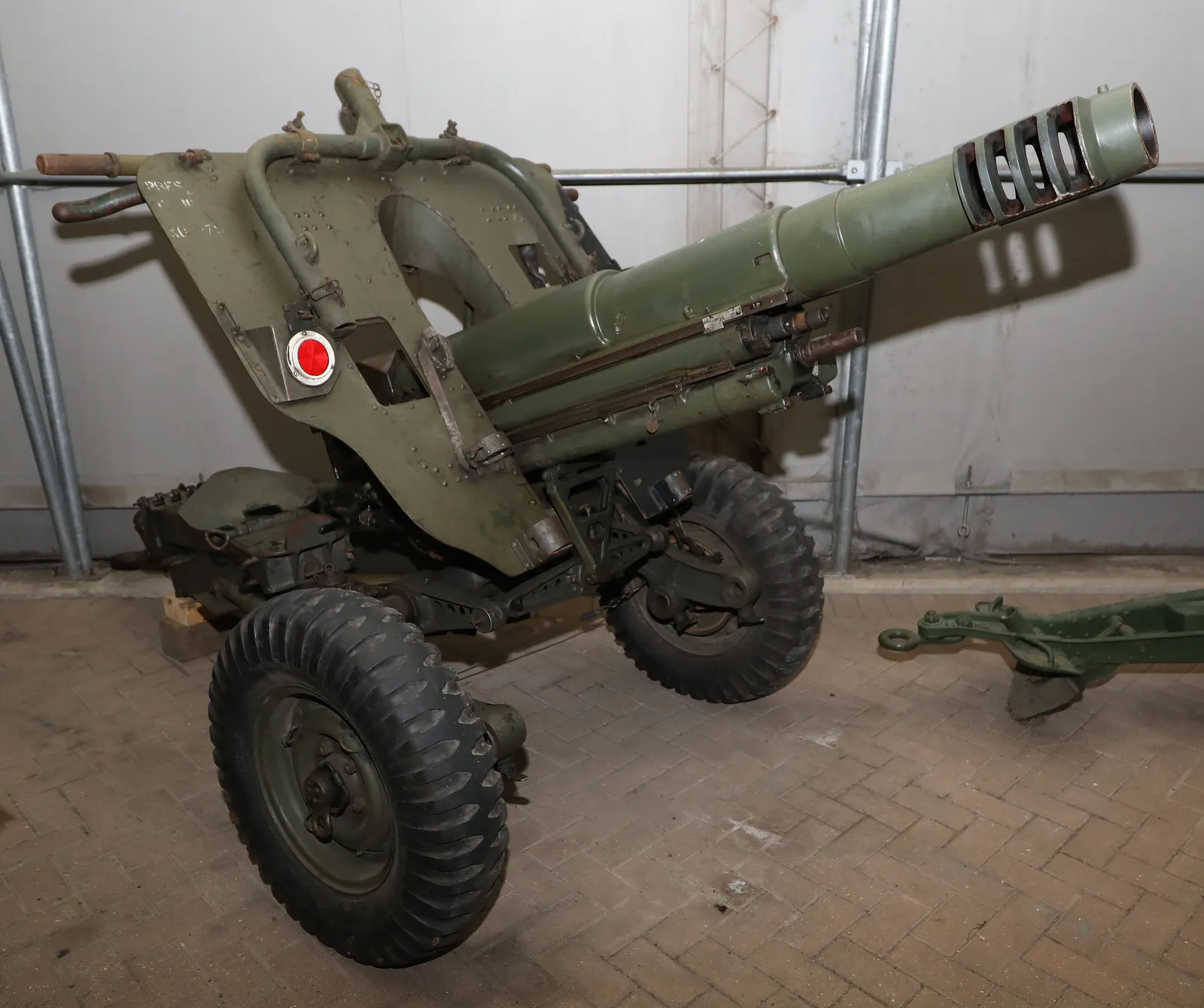
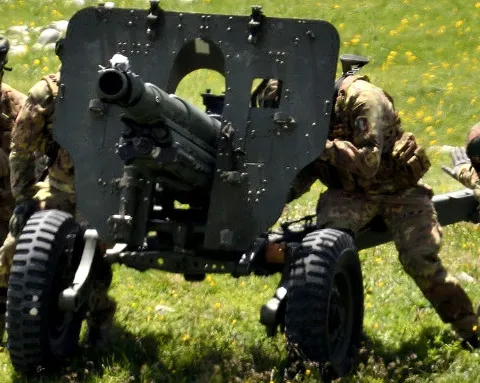
The OTO Melara Mod 56 is an Italian 105 mm pack howitzer built for light, mountain, and airborne artillery. It breaks down into packable loads, fires standard 105 mm ammunition, and became widely exported under designations including the British/Commonwealth L5; documented conflict use ranges from Vietnam, Borneo, and the Falklands to Spanish-supplied guns in Ukraine and captured or improvised Boko Haram systems in Nigeria.

Role in Conflicts

Side
United States and South Vietnam

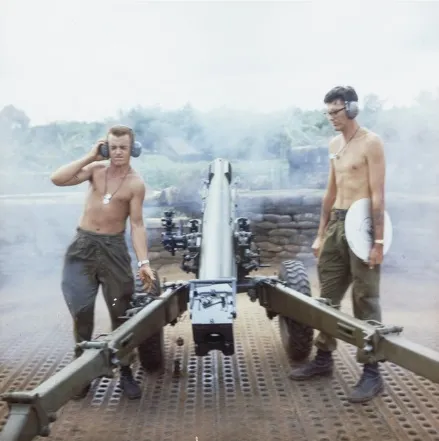
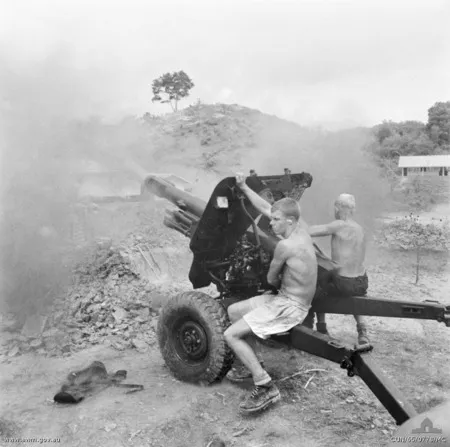
Australian War Memorial and New Zealand government records document Commonwealth artillery crews firing 105 mm L5 pack howitzers at Nui Dat in South Vietnam.

Argentine forces used L5/Mod 56 pack howitzers during the Falklands War; museum and airborne-forces references describe captured Argentine examples from the 1982 campaign.

Design Notes

The Mod 56 combined pack-howitzer mobility with standard 105 mm artillery duties, which explains its use by mountain, airborne, jungle, and expeditionary units.

Pack mobility

Forecast International describes the gun as dismantling into 11 components for draft-animal transport, while Commonwealth museum sources describe a 12-load service breakdown.

Sources: 105/14 Model 56 105 mm Pack Howitzer - Archived 5/2004; L5 pack howitzer 105mm - Norfolk Tank Museum; 105MM L5 PACK Howitzer - Royal Canadian Artillery Museum.

Ammunition

The Spanish Army lists shrapnel, smoke, and illuminating shells, and Forecast International ties the weapon to U.S./NATO-pattern 105 mm M1 semi-fixed ammunition.

Sources: OTO Melara Mod 56 Towed Howitzer 105/14; 105/14 Model 56 105 mm Pack Howitzer - Archived 5/2004.

Service naming

Italian sources use the 105/14 Mod 56 name, while British, Canadian, Australian, and New Zealand records commonly use L5 Pack Howitzer.

Sources: Obice 105/14 mod. 56 Parte quarta; 105mm Pack Howitzer - Airborne Assault Museum; Members of 101 Battery firing a 105mm L5 pack howitzer; 161 Battery at Nui Dat - Film.

Documented conflict spread

Direct rows on this page cover Commonwealth use in Borneo and Vietnam, Argentine use in the Falklands, Ukrainian use after Spanish transfer, and Boko Haram/ISWAP-related capture or improvised use in Nigeria.

Conflict rows are limited to sources that identify this weapon or L5/Mod 56 designation in the named conflict.
Profile / Specs

Profile

Origin
Italy
Built by
OTO Melara
Type
105 mm towed pack howitzer
Service note
1957-present service
Designer
OTO Melara
Designed
1953
Unit cost
Reported at $219,000 in a 10-unit buy (2003 USD); open-market trading was also reported at about $68,000
Produced
1957 onward
Number built
2,586 (reported in 2003)

Specifications

Caliber
105 mm
Configuration
Towed pack howitzer with split-trail carriage
Weight
1.33 tonnes
Crew
6-7 depending on service source
Maximum range
10.5 km typical L5 reference; Spanish Army lists 14 km
Maximum rate of fire
6 rounds per minute
Ammunition
105 mm semi-fixed ammunition, including high-explosive, smoke, illuminating, and other service shell types
Mobility
Can be broken down into pack-animal loads; museum sources describe 11-12 loads
Variants

Available sources identify service designations rather than a broad production-variant family: 105/14 Mod 56 in Italian and Spanish use, L5 Pack Howitzer in British and Commonwealth use, and L10 ordnance terminology in British-service references.

VariantConfigurationDesignation notes
105/14 Mod 56Italian and Spanish 105/14 service designation

Italian Alpini museum records describe Italian Army adoption as obice da 105/14 mod. 56, and the Spanish Army lists the equipment as OTO Melara Mod 56 Towed Howitzer 105/14.

Sources: Obice 105/14 mod. 56 Parte quarta, OTO Melara Mod 56 Towed Howitzer 105/14

L5 Pack HowitzerBritish and Commonwealth service designation

Airborne Assault identifies the Italian-built Model 56 as adopted by the British Army as the L5 Pack Howitzer; Canadian and Australian records use the same L5 designation.

Sources: 105mm Pack Howitzer - Airborne Assault Museum, 105MM L5 PACK Howitzer - Royal Canadian Artillery Museum, Unidentified Australian soldiers with 105 mm L5 Pack Howitzer

L10 ordnanceBritish-service barrel/ordnance designation

Airborne Assault's Falklands reference describes the Argentine example as an L5 pack howitzer with L10 ordnance.

Sources: 105mm Pack Howitzer - Airborne Assault Museum

Compatible Ammunition

The Mod 56 was built for standard 105 mm artillery ammunition, and archived reporting ties it to the M1 semi-fixed family.

AmmunitionAmmunition typeFiring evidence
Cartridge, 105 mm, High-Explosive, M1, 105 mm semi-fixed high-explosive artillery cartridge for 105 mm howitzers, MunitionsCartridge, 105 mm, High-Explosive, M1105 mm HE cartridge

Forecast International described the Mod 56 as using US/NATO-pattern 105 mm M1 semi-fixed ammunition, which matches the cataloged M1 HE cartridge family.

Sources: 105/14 Model 56 105 mm Pack Howitzer - Archived 5/2004

Timeline

OTO Melara Mod 56 Key Events

  1. Development begins

    Forecast International traced the Mod 56 program back to 1953 development work, reflecting the start of the postwar Italian pack-howitzer program.

    Sources: 105/14 Model 56 105 mm Pack Howitzer - Archived 5/2004

  2. Italian Army service

    The Mod 56 entered Italian Army service in 1957 as a light pack howitzer for mountain and airborne units.

    Sources: Obice 105/14 mod. 56 Parte quarta

  3. Fired in Borneo

    Australian War Memorial imagery documents British soldiers firing an L5 pack howitzer at Indonesian positions during the Indonesian Confrontation.

    Sources: 105mm L5 Pack Howitzer firing during Indonesian Confrontation

  4. Australian L5 use in Vietnam

    Australian War Memorial records document 101 Field Battery using the L5 pack howitzer in South Vietnam.

    Sources: Members of 101 Battery firing a 105mm L5 pack howitzer

  5. Argentine Falklands use

    Airborne Assault and museum references describe Argentine L5/Mod 56 pack howitzers captured during or after the Falklands campaign.

    Sources: 105mm Pack Howitzer - Airborne Assault Museum, L5 pack howitzer 105mm - Norfolk Tank Museum

  6. Widespread export footprint documented

    Forecast International reported 2,586 guns built and noted that the design had been fielded far beyond Italy by that point.

    Sources: 105/14 Model 56 105 mm Pack Howitzer - Archived 5/2004

  7. Nigeria footage and seizure reporting

    HumAngle reported Boko Haram video showing a Mod 56 converted for mobile artillery use and later arms-seizure reporting in northeast Nigeria.

    Sources: Boko Haram Video Shows Shoot-Down Of Nigerian Air Force Jet, Killed Pilots, Arms Seizures, Destruction Shadow Nigeria's War Against Terror Groups In Northeast

  8. Ukrainian combat use documented

    Oryx listed six Spanish-delivered Mod 56 howitzers, while Defense Express, Militarnyi, and The Armourers Bench reported Ukrainian battlefield use in Donbas and Avdiivka-area fighting.

    Sources: OTO Melara 105 mm Howitzer Was Seen in Action in Ukraine, Guns N' Gazpacho: Spanish Military Aid To Ukraine, Militarnyi Mod 56 Donbas, Armourers Bench Mod 56 Ukraine

  9. Continued Ukraine use reported

    Army Recognition reported a Ukrainian-released image showing a Spanish-provided OTO Melara Model 56 still in use against Russian positions.

    Sources: Army Recognition Mod 56 2024

  10. Museum walkthrough published

    The Australian Armour and Artillery Museum published a close look at its ex-Australian Army L5 pack howitzer, highlighting the Mod 56 family's Commonwealth service history.

    Sources: The Hero of Long Tan: OTO-Melara Mod 56 105mm Pack Howitzer!

Media
Related Weapon Systems
L118 Light Gun, 105 mm towed light howitzer, ArtilleryArtilleryL118 Light Gun105 mm towed light howitzerThe L118 Light Gun is a British 105 mm towed howitzer built for airborne, commando, and light-force artillery. It can be towed by a medium-weight vehicle or carried underslung by a Chinook helicopter, and BAE Systems says its 105 mm ammunition family includes HE, illumination, target-marking, smoke, and propelling-charge options. This family record also covers the L119 branch, the NATO/M1-ammunition variant supplied to Ukraine, while the U.S. M119 derivative has its own linked entry.
Centauro B1, 8x8 wheeled tank destroyer, Armored VehiclesArmored VehiclesCentauro B18x8 wheeled tank destroyerThe Centauro B1 is an Italian 8x8 wheeled tank destroyer built for cavalry reconnaissance, rapid road movement, and direct-fire support rather than main-battle-tank protection. Developed by the IVECO-Fiat and OTO Melara consortium, it combines an OTO Melara 105 mm/52 rifled gun, a four-person crew, long road range, and a comparatively light wheeled chassis; documented conflict use includes Italian UNOSOM II fighting in Somalia, coalition employment in Iraq, and Ukrainian service where crews have added anti-drone protection and used the gun from closed firing positions.
M119, 105 mm lightweight towed howitzer, ArtilleryArtilleryM119105 mm lightweight towed howitzerThe M119 is the U.S. 105 mm lightweight towed howitzer derived from the British L119 light gun and built around air-mobile infantry fire support. The M119A3 variant adds digital fire control, self-location, and communications upgrades while retaining a light carriage that can be moved by trucks, cargo aircraft, or helicopter. U.S. Army sources place the type in Gulf War, Iraq War, and Afghanistan service, and Ukrainian forces later received American 105 mm howitzers during the 2014 Russia-Ukraine War.
Craft-produced firearm, Locally fabricated small arm, Infantry WeaponsInfantry WeaponsCraft-produced firearmLocally fabricated small armCraft-produced firearms in Nigeria are locally fabricated small arms made outside formal industrial production, ranging from muzzle-loading Dane guns and break-action shotguns to self-loading pistols, sub-machine guns, and AK- or G3-style rifle copies. Small Arms Survey documented craft-produced weapons in a Boko Haram cache captured in 2018, and UNIDIR reports their wider use by community-security actors in northeast Nigeria during the 2009 Boko Haram Insurgency.

Sources