- Side
- Coalition forces

An official U.S. Army equipment summary says the M119 was first used in Operation Desert Shield and Operation Desert Storm in 1991, placing its initial combat use with coalition forces during the Gulf War.
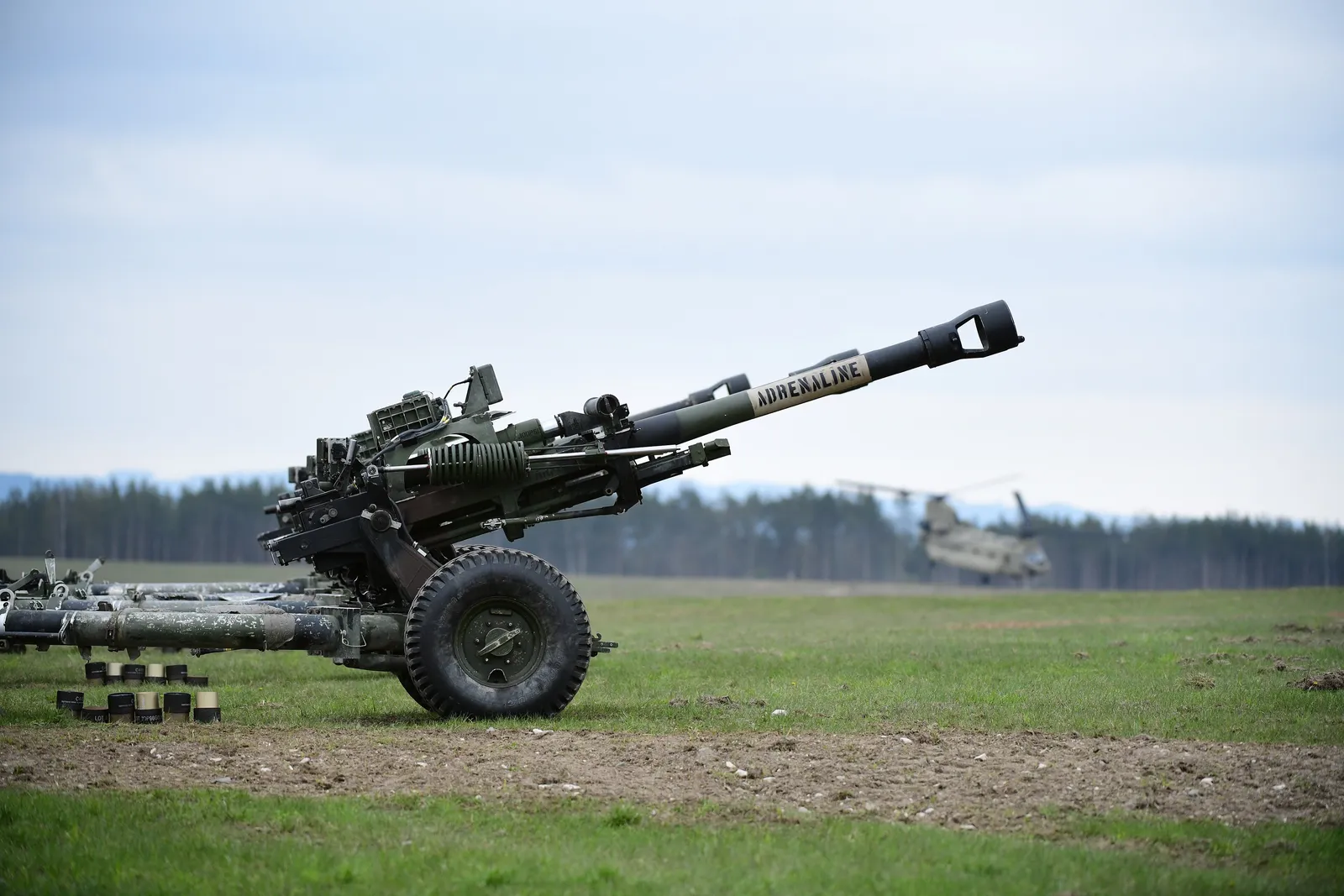
Role detailsThe M119 is the U.S. 105 mm lightweight towed howitzer derived from the British L119 light gun and built around air-mobile infantry fire support. The M119A3 variant adds digital fire control, self-location, and communications upgrades while retaining a light carriage that can be moved by trucks, cargo aircraft, or helicopter. U.S. Army sources place the type in Gulf War, Iraq War, and Afghanistan service, and Ukrainian forces later received American 105 mm howitzers during the 2014 Russia-Ukraine War.
An official U.S. Army equipment summary says the M119 was first used in Operation Desert Shield and Operation Desert Storm in 1991, placing its initial combat use with coalition forces during the Gulf War.
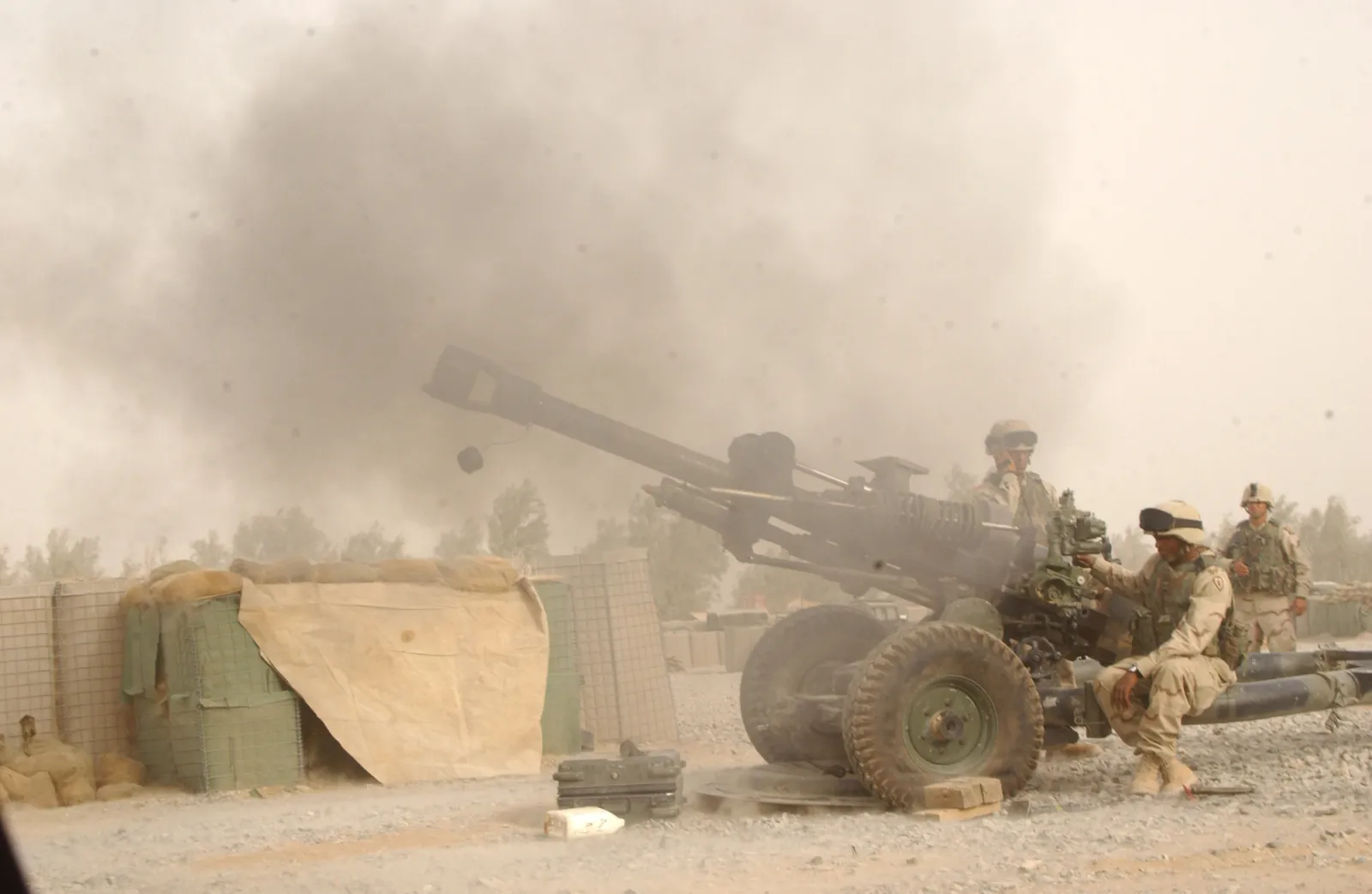
Role detailsU.S. Army reporting says the M119 saw extensive use in Operation Iraqi Freedom, including high-angle and high-charge fire missions in austere combat conditions.
Role detailsUkrainian forces received U.S.-supplied 105 mm howitzers during 2022 security-assistance packages; defense reporting identified Ukrainian training on the supplied American M119A3 variant.
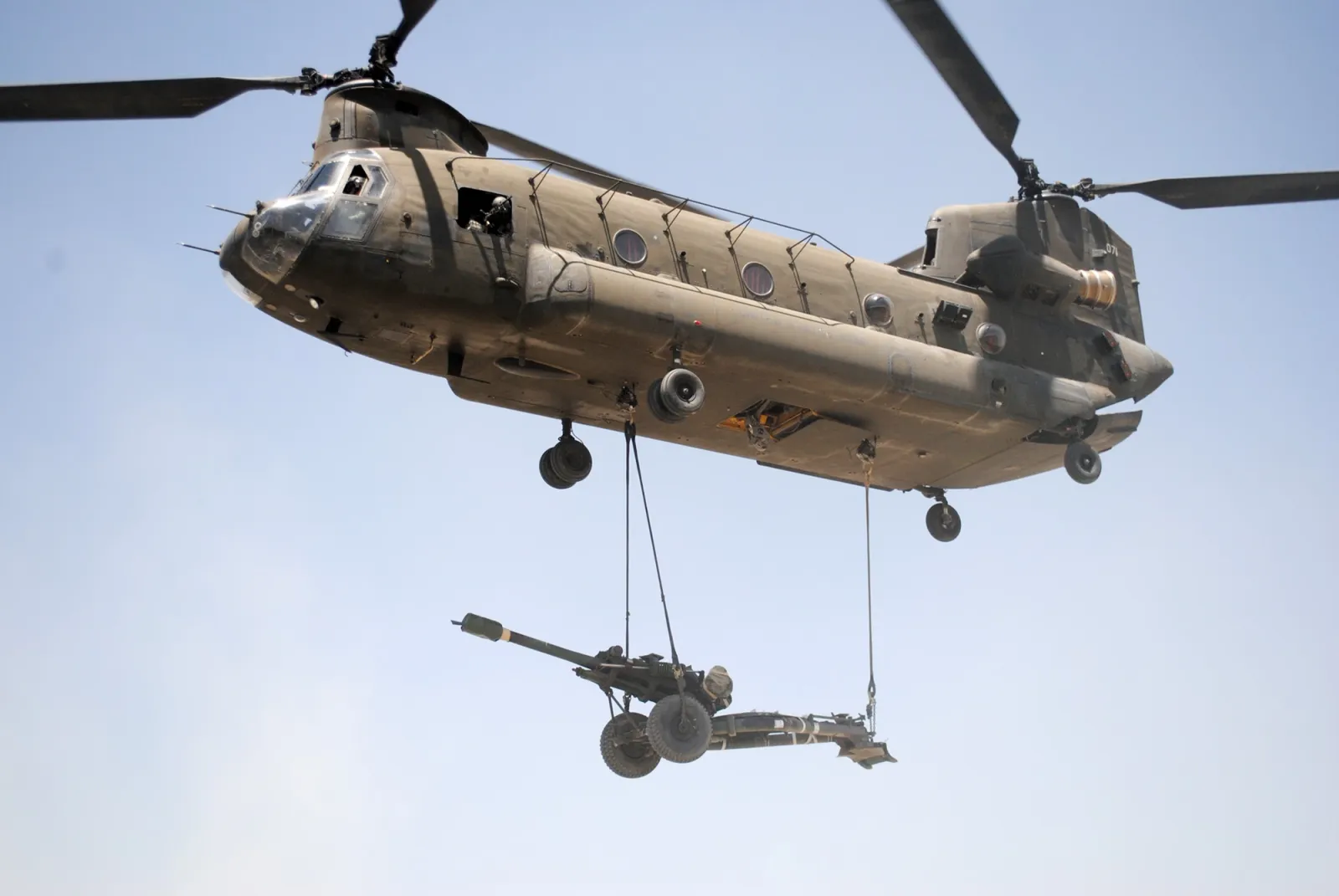
Role detailsU.S. Army M119A3 crews deployed to northeast Afghanistan in 2014, where the howitzers supported counter-fire, observed fires, smoke, and illumination missions; earlier M119 guns were also airlifted by CH-47 to a Khowst province mountain outpost for artillery support.
Role detailsArmy sources use the M119 page as a family-level designation rather than separate public records for every U.S. A-series update. The A1, A2, and A3 names therefore stay as search aliases and are summarized here.
| Designation | Documented change | Catalog treatment |
|---|---|---|
| M119A1 | Fire-control and maintenance-system update. | Covered by this M119 family record. |
| M119A2 | Updated sights. | Covered by this M119 family record. |
| M119A3 | Digital fire-control system with internal navigation/self-location capability integrated onto existing M119A2 guns. | Covered by this M119 family record and emphasized in the specifications and conflict-use notes. |
Sources: RIA Self-Guided Tour: L119 105 MM Light Gun; Fort Bragg first to receive upgraded M119 howitzers.
The M119's catalog role is shaped by portability rather than heavy-caliber reach. Army sources describe a 105 mm howitzer light enough for helicopter sling-load, air-drop, and tactical truck movement, with the A3 update adding self-location and digital fire-control tools for faster occupation and displacement.
| Design feature | Reader takeaway | Source-backed context |
|---|---|---|
| Light carriage | Supports airborne and air-assault artillery missions. | Army product and Rock Island Arsenal material describe helicopter, aircraft, and HMMWV movement options. |
| 105 mm ammunition | Trades projectile size for a lighter weapon and ammunition set. | Army material lists high-explosive, illuminating, smoke, and long-range ammunition classes for the system. |
| M119A3 digital package | Shortens setup and firing-data workflow for dispersed crews. | Fort Bragg fielding coverage describes GPS-aided inertial navigation and digital fire-control integration. |
Sources: M119A3 Howitzer (105mm); RIA Self-Guided Tour: L119 105 MM Light Gun; Fort Bragg first to receive upgraded M119 howitzers.
U.S. Army sources treat the M119 as an American adaptation of the British L119 light gun; the linked family row points readers to the broader British light-gun lineage.
| Variant | Configuration | Designation notes |
|---|---|---|
 | British light-gun family | The M119 is based on the British L119 branch of the L118 light-gun family and was revised by Rock Island Arsenal for U.S. service. |
The M119 page is a firing-weapon record. Public Army sources identify the howitzer as a 105 mm system and identify at least one cataloged illumination cartridge as an M119-series round.
| Ammunition | Ammunition type | Firing evidence |
|---|---|---|
 | 105 mm illumination cartridge | Army PEO Ammunition portfolio material identifies the M314A3 visible-light cartridge as a 105 mm M119-series howitzer round. Sources: PEO Ammunition Portfolio Book 2017 |
The U.S. Army leased 14 British L119 light guns for evaluation before adapting the design.
Sources: RIA Self-Guided Tour: L119 105 MM Light Gun
Rock Island Arsenal revised the L119 into the M119 lightweight towed howitzer for U.S. requirements.
Sources: RIA Self-Guided Tour: L119 105 MM Light Gun
The Army equipment summary identifies Operation Desert Shield and Operation Desert Storm as the M119's first combat use.
Sources: Army 250th Birthday Parade Equipment
Rock Island Arsenal manufactured M119 and M119A1 howitzers from 1991 through 1997.
Sources: RIA Self-Guided Tour: L119 105 MM Light Gun
Fort Bragg artillerymen became the Army's first unit to receive digitized M119A3 howitzers.
Sources: Fort Bragg first to receive upgraded M119 howitzers
U.S. Army reporting identified Alpha Battery crews as the first M119A3 operators in Afghanistan, using the guns for fire support and force protection.
Sources: Strike's "Top Guns" fire the first M119A3 in Afghanistan
The Department of Defense announced an assistance package with 16 105 mm howitzers and 36,000 105 mm rounds for Ukraine.
Sources: Senior Defense Official Holds a Background Briefing