- Side
- Ukraine

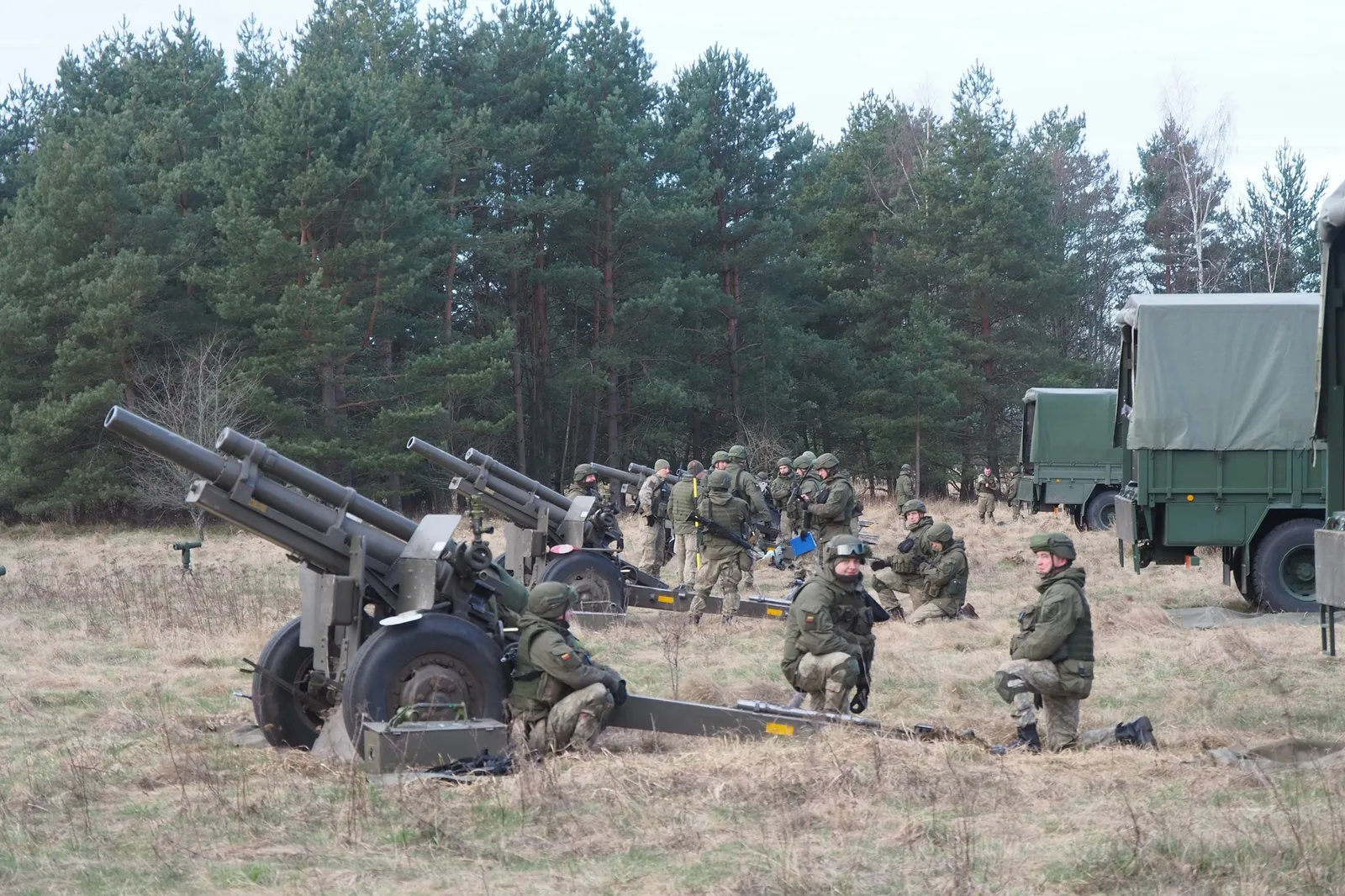
Ukrainian forces received Lithuanian-supplied M101A1 105 mm towed howitzers in 2022 and were documented firing them against Russian forces later that year.
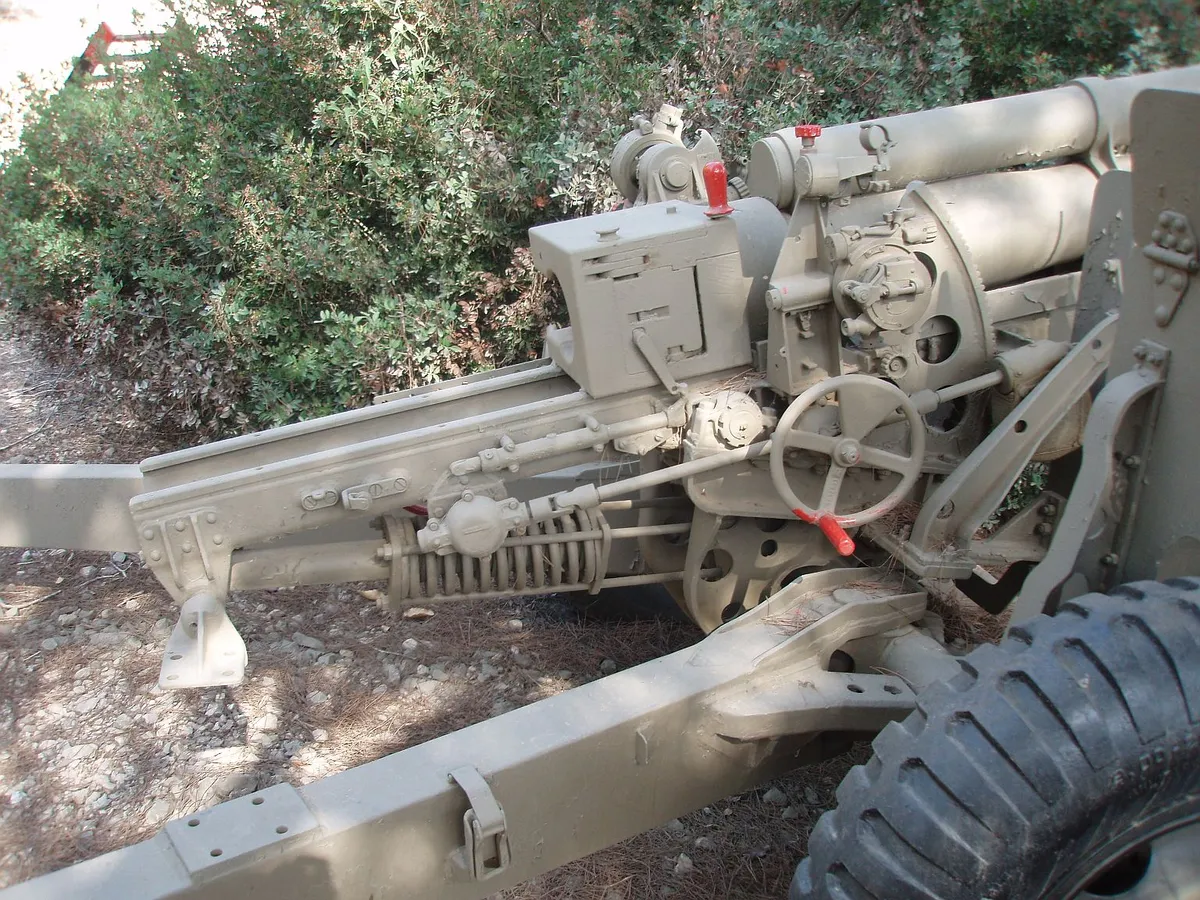
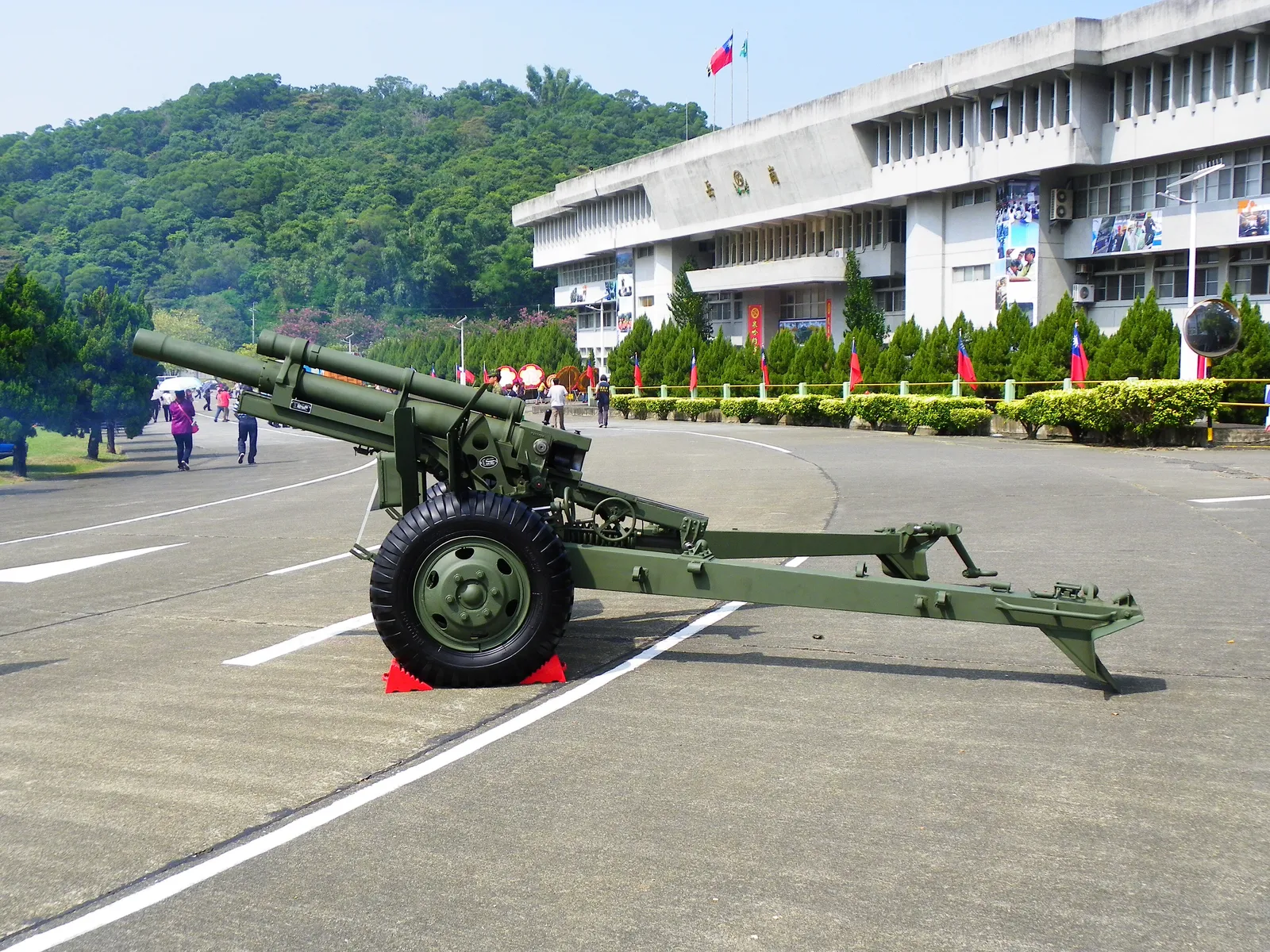
Role detailsThe M101 is a U.S.-origin 105 mm towed field howitzer descended from the wartime M2A1, produced at Rock Island Arsenal and exported widely after U.S. service. Its split-trail carriage, semi-fixed 105 mm ammunition family, and later 33-caliber modernization packages kept the gun useful from 1955 Vietnam War fire bases to Philippine urban direct-fire missions and Lithuanian-donated M101A1 guns in Ukrainian service.
Ukrainian forces received Lithuanian-supplied M101A1 105 mm towed howitzers in 2022 and were documented firing them against Russian forces later that year.
Role detailsPhilippine Army M101 105 mm howitzers were reported in direct-fire use against Islamic militants during the 2017 Battle of Marawi, where gunners used 105 mm guns to penetrate reinforced concrete positions.
U.S. Army sources describe the M101/M101A1 as the Army's main light artillery system heading into the 1955 Vietnam War and state that the M101 was last used in combat by the U.S. Army during that war.
U.S. Army history treats the wartime M2A1, postwar M101, and later M101A1 labels as one closely related 105 mm howitzer family rather than separate unrelated weapons.
| Variant | Configuration | Designation notes |
|---|---|---|
| M2A1 | World War II and early postwar designation | The U.S. Army Rock Island article describes the M2A1 as first produced in 1940 and later renamed M101 after World War II. |
| M2A2 | Postwar cannon/carriage configuration | Ultra Defense describes the M101A1 configuration as using a 105 mm M2A2 howitzer cannon on an M2-series carriage and recoil mechanism. Sources: M101/M101A1 105 mm Howitzer |
| M101A1 | 1962 redesignation and long-service export label | Army Historical Foundation history states that the M2A1 was redesignated M101A1 in 1962, while later Ukraine and Philippines sources use M101A1/M101 for donated or active-service guns. Sources: M102 105mm Howitzer, Ukraine army uses old M101A1 105mm howitzers donated by Lithuania to shell Russian troops, Philippine artillery soldiers still training with American WWII-era M101 105mm towed howitzer |
| M101/33 | 33-caliber modernization package | Yugoimport markets an M101/M2A1 upgrade that replaces the original short barrel with a 33-caliber barrel, adds a double-baffle muzzle brake, and raises range with extended-range 105 mm ammunition. Sources: Upgrade of 105 mm M101/M2A1 Howitzer, 105mm M101/33 |
Ultra Defense Corp describes the M101 family as firing standard 105 mm ammunition, including HE, smoke, WP, chemical, practice, and drill cartridge types.
| Ammunition | Ammunition type | Firing evidence |
|---|---|---|
 | 105 mm high-explosive cartridge | Ultra Defense lists HE M1 shells among ammunition used by the M101 family, matching the cataloged 105 mm M1 high-explosive cartridge record. Sources: M101/M101A1 105 mm Howitzer |
 | 105 mm smoke and white-phosphorus cartridge | Ultra Defense lists WP M60 and FS M60 smoke shells in the M101 ammunition set, and Army ammunition data sheets identify M2A1/M2A2 M101/M101A1 cannon families with M60-series smoke ammunition. Sources: M101/M101A1 105 mm Howitzer, TM 43-0001-28 Army Ammunition Data Sheets |
 | 105 mm illuminating cartridge | Army ammunition data sheets list M314-family illuminating cartridges with M2A2/M101/M101A1 105 mm howitzers among compatible firing weapons. |
The designation history and ammunition set are best read together: several sources use M2A1, M101, and M101A1 for the same U.S. 105 mm howitzer lineage, while ammunition records describe the semi-fixed 105 mm cartridges that kept the family useful across many operators.
M2A1 was the wartime designation. U.S. Army history says the weapon was renamed M101 after World War II, while Army Historical Foundation history records M101A1 as the 1962 designation.
Rock Island Arsenal manufactured key recoil and carriage assemblies, and Army Historical Foundation history records 10,200 Rock Island-produced M2A1s by 1953.
U.S. Army Rock Island history describes the M101 as exported to 70 additional operators, and Ultra Defense describes at least 67 purchasing countries.
The U.S. Army retired the M101 by 1989 during the M119 transition, but the same Army history notes limited U.S. avalanche-control use after military retirement.
Yugoimport's M101/M2A1 package replaces the original barrel with a 33-caliber tube, adds a double-baffle muzzle brake, and retains the basic howitzer structure and recoil system.
Ultra Defense lists HE, HEAT, smoke, WP, chemical, practice, and drill ammunition categories for the M101 family, including M1 HE and M60-series smoke shells.
This supports compatibility context for cataloged 105 mm cartridge records without implying independent conflict-use evidence for every cartridge.
Sources: RIA Self-Guided Tour: M2A1 105 MM Towed Howitzer; M102 105mm Howitzer; M101/M101A1 105 mm Howitzer; Upgrade of 105 mm M101/M2A1 Howitzer.
U.S. Army Rock Island history states that the M2A1 was first produced in 1940 and that Rock Island Arsenal manufactured the weapon's recoil mechanism and carriage.
Sources: RIA Self-Guided Tour: M2A1 105 MM Towed Howitzer
The Army Historical Foundation records 10,200 Rock Island-produced M2A1 howitzers by the time production ended in 1953.
Sources: M102 105mm Howitzer
Army Historical Foundation history states that the M2A1 was redesignated M101A1 in 1962 as the older light howitzer entered the Vietnam era.
Sources: M102 105mm Howitzer
U.S. Army Rock Island history states that the United States retired its M101 inventory by 1989 as the M119 105 mm howitzer entered service, while some guns remained in limited avalanche-control use.
Sources: RIA Self-Guided Tour: M2A1 105 MM Towed Howitzer
2017 Battle of Marawi studies describe Philippine gunners using 105 mm guns in direct fire against reinforced urban positions during the battle.
Sources: The 2017 Battle of Marawi: Small Team Lessons Learned for the Close Fight
Lithuania's Ministry of National Defence said at the Ramstein-format donor meeting that Lithuanian 105 mm howitzers were on the way to Ukraine.
Sources: We cannot afford pauses, Ukraine needs a continuous supply of arms
Lithuania's Ministry of National Defence reported that its military aid to Ukraine included 18 units of 105 mm howitzers.
Sources: Annual Lithuania contribution to Ukraine fight for freedom