Artillery

105 mm field guns

Also known as
  • 105mm field guns
  • 105 mm guns
  • 105mm guns
  • 105 mm direct-fire artillery
  • 105mm artillery

The 105 mm field guns entry covers the model-unspecified 105 mm artillery used by Philippine government forces during the 2017 Battle of Marawi. Reliable Marawi studies describe Filipino gunners employing 105 mm guns in direct fire against reinforced concrete positions, an improvised urban fire-support role that helped infantry assaults when shoulder-fired breaching options were limited.

Role in Conflicts

Side
Philippine government forces

Philippine government forces used 105 mm field guns in direct fire during the 2017 Battle of Marawi, including repeated engagements against thick concrete walls to support infantry building-clearance operations.

Urban Direct-Fire Adaptation

Marawi's 105 mm guns were used less like distant battery artillery and more like urban assault support. Australian Army studies describe Filipino gunners firing directly into thick concrete walls, with infantry platoon commanders liaising with gun crews rather than calling for indirect fire. A Jane's report excerpted by Small Wars Journal adds that AFP personnel re-roled 105 mm artillery guns for building-to-building and street-to-street fighting, including improvised sighting methods for targets at short range.

Confirmed conflict role

Direct fire against reinforced urban positions during the 2017 Battle of Marawi.

Identification limit

The strongest Marawi sources identify 105 mm guns or field guns, not a public exact gun model.

Representative context

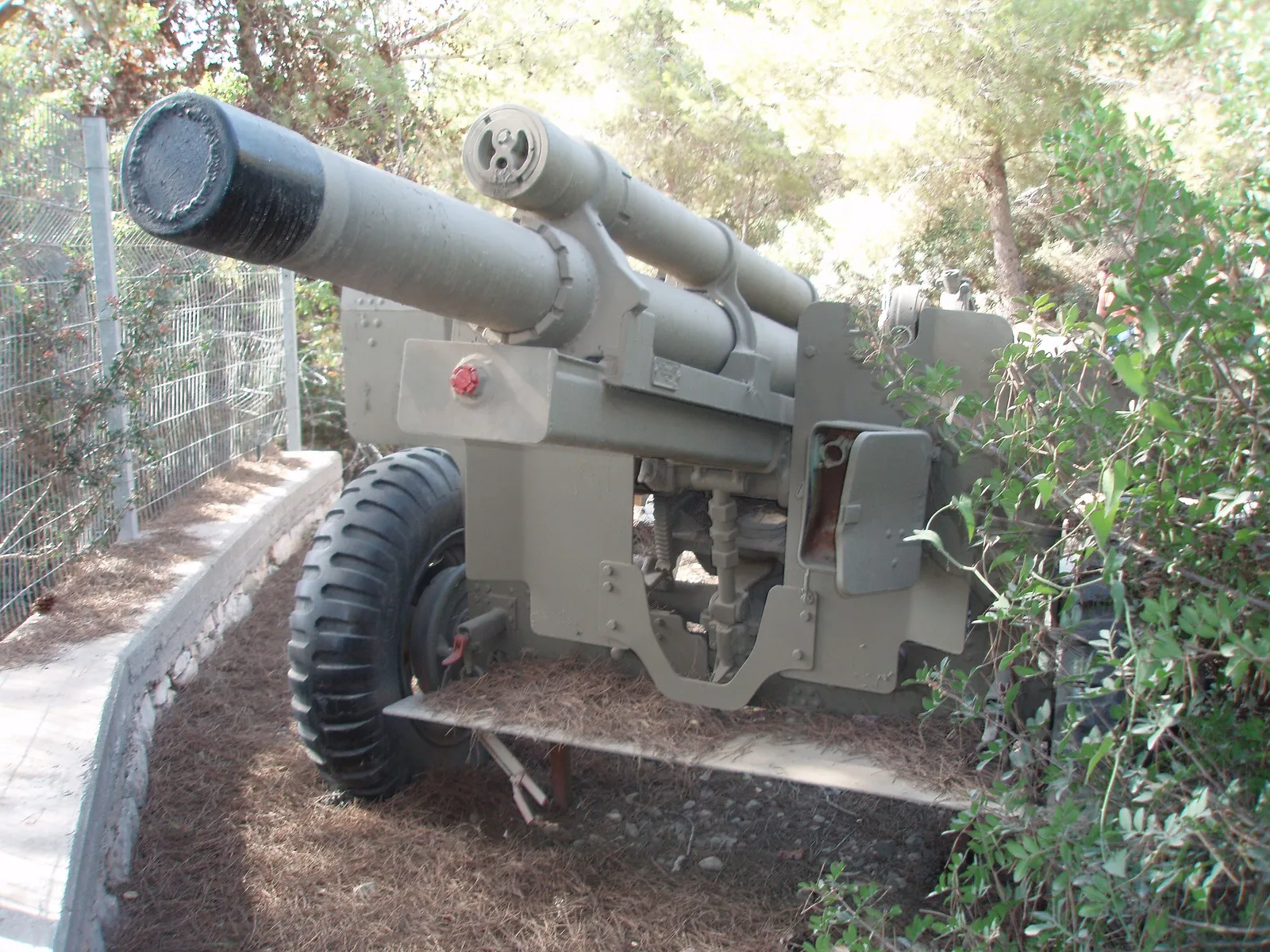
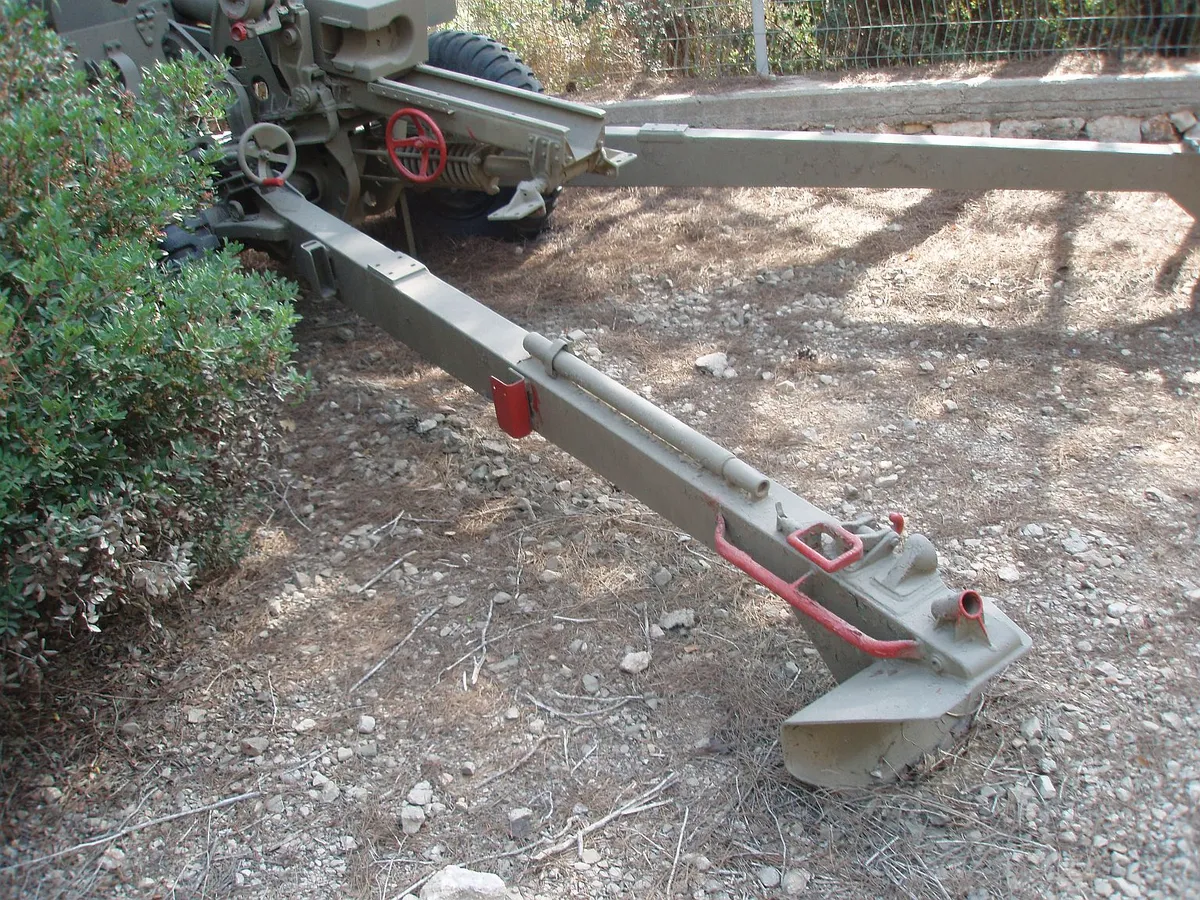
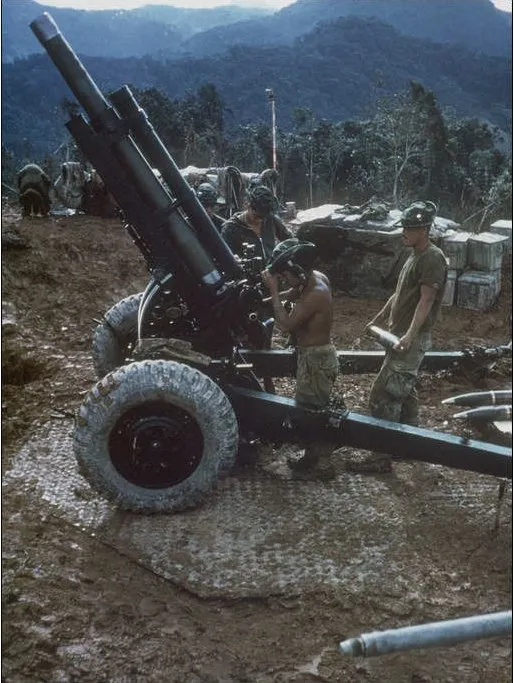
M101-family images and specifications explain a common 105 mm light-howitzer baseline, but they do not prove the Marawi weapon model.

Sources: The 2017 Battle of Marawi: Lessons for Developing Urban Capabilities; The 2017 Battle of Marawi: Small Team Lessons Learned for the Close Fight; Battle of Marawi Pushed Philippines Troops to Novel Equipment Usage; Urban Warfare Case Study #8: 2017 Battle of Marawi.

Profile / Specs

Profile

Origin
Multiple origins; exact Marawi gun model not publicly identified in the cited sources
Type
105 mm towed field gun / howitzer class
Service note
Modern Marawi use documented in 2017; representative 105 mm light howitzer families date from World War II through modern service
Designer
Varies by model; representative M101 lineage developed by U.S. Army ordnance organizations
Designed
Varies by model; representative M101/M2A1 lineage traces to interwar U.S. 105 mm howitzer development
Unit cost
Varies by model and refurbishment state
Produced
Varies by model; representative M101-family production ran from 1940 to 1953 in U.S. service
Number built
Not applicable to the model-unspecified Marawi class entry

Specifications

Reported Marawi identification
105 mm field guns / 105 mm guns used by Filipino gunners; exact model not specified in the cited Marawi sources
Caliber
105 mm
Firing role in Marawi
Direct fire against thick concrete walls and urban strongpoints
Weapon class
Towed field gun or light howitzer class, capable of direct fire depending on emplacement and sighting
Representative M101 range
11,270 m maximum firing range with standard high-explosive ammunition
Representative M101 weight
2,260 kg
Representative M101 ammunition
105x372R semi-fixed ammunition
Variants

The Marawi sources identify 105 mm guns or field guns but do not publicly name the exact model. The M101/M2A1/M101A1 row is representative designation context only, not a model identification for the Marawi weapons.

VariantConfigurationDesignation notes
M101 105 mm Howitzer, 105 mm towed field howitzer, ArtilleryM101 / M101A1Representative U.S. 105 mm light howitzer family

U.S. Army and specialist sources describe the M2A1/M101/M101A1 designation chain and 105 mm light-howitzer specifications; Marawi-specific sources reviewed for this entry identify 105 mm guns, not this exact model.

Sources: RIA Self-Guided Tour: M2A1 105 MM Towed Howitzer, M101/M101A1 105 mm Howitzer, The 2017 Battle of Marawi: Small Team Lessons Learned for the Close Fight

Compatible Ammunition

Army ammunition tables list the M60 series as a standard 105 mm smoke WP cartridge family for howitzer use.

AmmunitionAmmunition typeFiring evidence
Cartridge, 105 mm, Smoke, WP, M60, 105 mm white-phosphorus smoke artillery cartridge, MunitionsCartridge, 105 mm, Smoke, WP, M60105 mm smoke WP cartridge

U.S. Army ammunition data sheets describe the M60 series as a 105 mm smoke, WP cartridge family, and Army rigging tables list it among standard 105 mm howitzer ammunition.

Sources: TM 43-0001-28 Army Ammunition Data Sheets, FM 4-20.153 Ammunition Rigging Table

Media
Related Weapon Systems
.30-Caliber Machine Gun, Crew-served medium machine gun, Infantry WeaponsInfantry Weapons.30-Caliber Machine GunCrew-served medium machine gunThe .30-caliber machine gun entry covers model-unspecified crew-served automatic weapons recovered from IS-linked militant contexts in Mindanao. Philippine reporting documented one gun among weapons cleared from Marawi's former Main Battle Area after the 2017 Battle of Marawi, and a later Philippine Army-sourced report listed one .30 caliber machine gun recovered after a 2022 clash with Dawlah Islamiya-Maute Group members in Maguing, Lanao del Sur. The public sources did not identify whether either weapon was a Browning M1919-family gun or another .30-caliber pattern.
Mortars, Infantry and artillery mortar class, ArtilleryArtilleryMortarsInfantry and artillery mortar classMortars are short-barreled, high-angle indirect-fire weapons used by infantry, artillery units, and armed groups for close support, harassment, and attacks on positions behind cover. The catalog entry treats mortars as a broad weapon class because the direct conflict sources usually document mortar use without identifying exact calibers or models, including Philippine government support fires at Marawi, Hezbollah fire at Mount Dov, jihadist attacks in Mali and Sinai, FARC dissident improvised mortars in Colombia, 2023 Sudan War battlefield use, and Cambodia-accused cross-border fire.
Molotov cocktails, Hand-thrown improvised incendiary weapon, MunitionsMunitionsMolotov cocktailsHand-thrown improvised incendiary weaponMolotov cocktails are hand-thrown improvised incendiary weapons built around a breakable container and ignition source, but wartime examples range from ad hoc bottles to semi-standardized military incendiary grenades. The cataloged conflict record now spans U.S. Marine use during Fallujah house-clearing in the 2003 Iraq War, IS-aligned militant use against Philippine troops in Marawi, and Ukrainian volunteer production and distribution during the 2022 full-scale Russian invasion.

Sources