- Side
- South Africa

South African Defence Force units used the G5 in Angola and Namibia from 1986 to 1989, with Ditsong and DefenceWeb identifying Operation Alpha Centauri as its first operational deployment.
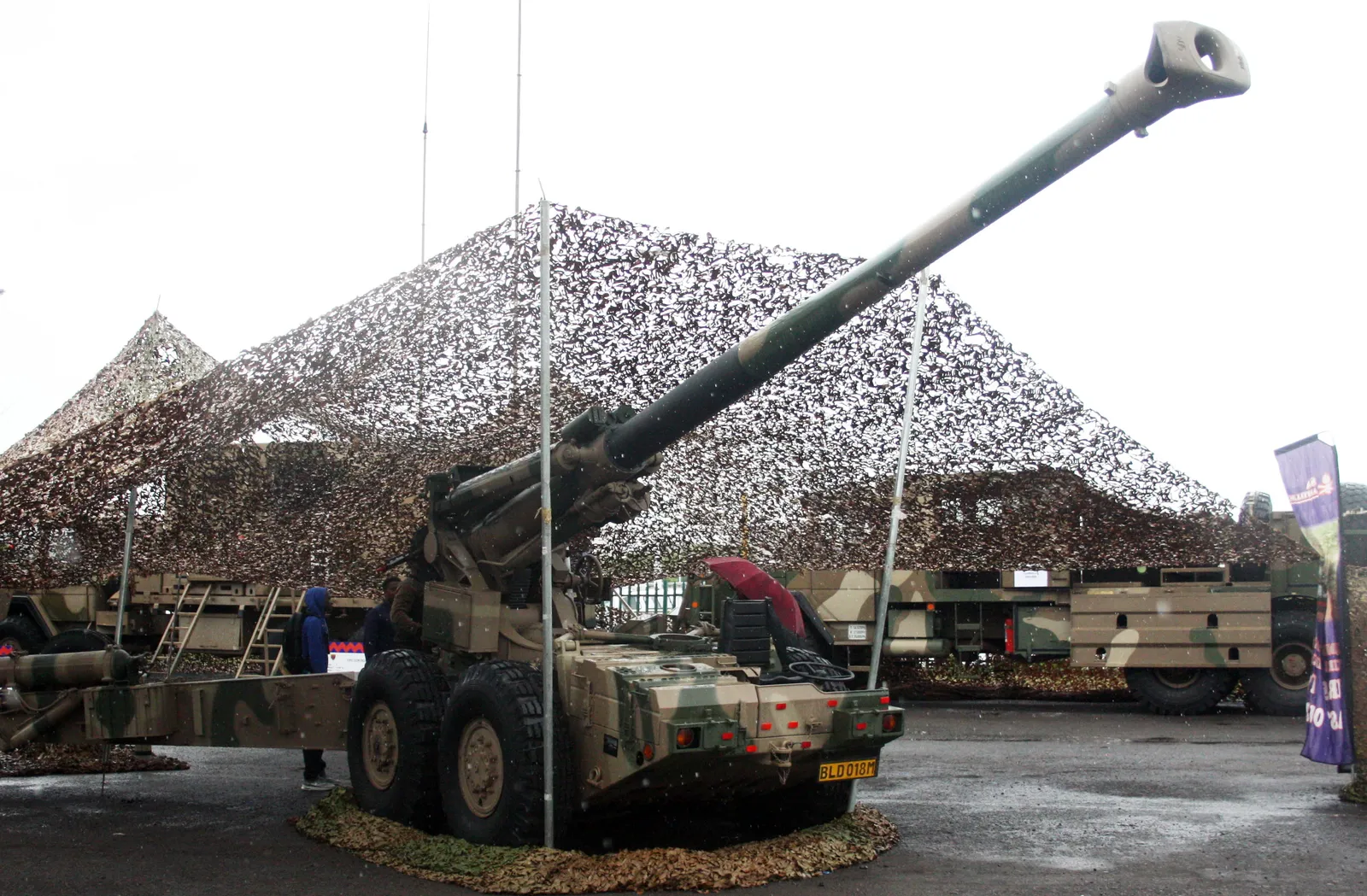
The G5 155 mm howitzer is a South African towed gun-howitzer developed from the GC-45 long-range artillery lineage for mobile indirect fire. Lyttelton Engineering Works designed the system and Denel Land Systems became the normalized manufacturer, with sources documenting South African Border War service, Iraqi G5 use in the Iran-Iraq War and Gulf War, and UAE G5 deployment to Yemen.
South African Defence Force units used the G5 in Angola and Namibia from 1986 to 1989, with Ditsong and DefenceWeb identifying Operation Alpha Centauri as its first operational deployment.
Contemporary reporting described Iraq's G5s as part of its long-range artillery arm during the Iran-Iraq War, while broader claims for Iranian G5 operation are less directly supported in the reviewed sources.
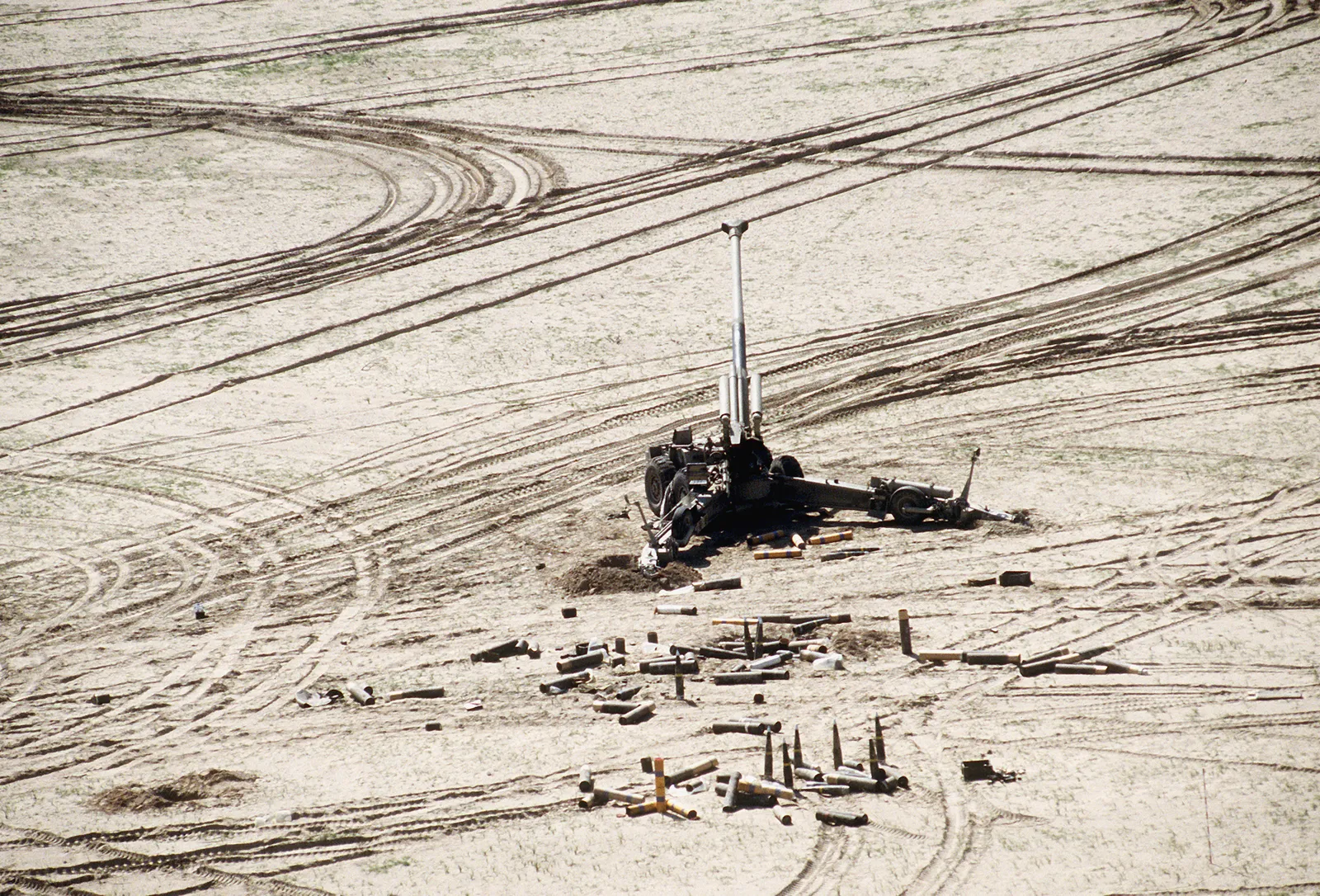
Iraq fielded South African G5 155 mm howitzers before and during the Gulf War; a U.S. Defense imagery record identifies an Iraqi G5 abandoned near the Arramaylan refinery during Operation Desert Storm.
Role detailsJanes reported in 2019 that the United Arab Emirates had deployed Denel G5 155 mm/45-caliber towed gun-howitzers to Yemen during the Saudi-led coalition intervention.
The G5 combined a long 155 mm barrel, split-trail carriage, auxiliary power, and extended-range ammunition to give South African artillery a mobile long-range gun-howitzer. Ditsong, DefenceWeb, and Forecast International trace the design path through the GC-45 lineage, South African modifications, and Denel production.
The auxiliary power unit moves the gun short distances and powers deployment tasks such as opening trails, lowering the firing platform, and operating powered handling systems.
Public sources place the 45-caliber G5 around 30 km with standard or ERFB ammunition, about 39-40 km with base-bleed projectiles, and up to 50 km with VLAP ammunition.
The G6 self-propelled howitzer and T5 Condor truck-mounted system are G5-related artillery developments, but this record keeps conflict-use claims tied to the towed G5/G5-series evidence.
G5 designations mix production marks, caliber upgrades, and truck-mounted developments. The towed 45-caliber G5 Mk III is the baseline record here; 52-caliber and Condor rows show later Denel development paths rather than separate conflict-use claims.
| Variant | Configuration | Designation notes |
|---|---|---|
| G5 Mk I / Mk II / Mk III / Mk IIIA | Towed 45-caliber production marks | Ditsong lists these as successive G5 marks, while Forecast International says Denel used Mark designations for product-improved G5 models. Sources: Ditsong G5 howitzer history, Forecast International G5 155mm Howitzer |
| G5-52 / G5-2000 | 52-caliber towed development | Forecast International describes the G5-52, formerly G5-2000, as a basic G5 carriage fitted with a 52-caliber barrel and Kentron WMS 205 weapon-management system. |
| T5 Condor | Truck-mounted G5 development | Forecast International describes the T5 Condor as a 45-caliber G5 mounted on a Tatra 8x8 truck chassis, with a T5-2000 Condor branch using the 52-caliber G5-52 ordnance. |
Ditsong says Armscor began G5 development in 1977, with Lyttelton Engineering Works designing the weapon and Denel Land Systems later identified as manufacturer.
Sources: Ditsong G5 howitzer history
Ditsong places the operational G5's combat testing and introduction in 1986, and DefenceWeb says the first battery deployed during Operation Alpha Centauri.
Sources: Ditsong G5 howitzer history, DefenceWeb G5 L45 fact file
Los Angeles Times reporting during the war described Iraq's G5 use and the gun's role in long-range artillery fire.
Sources: LA Times G5 Iran-Iraq War reporting
A Defense imagery record preserved on Wikimedia Commons identifies a South African-made G5 abandoned by Iraqi forces near the Arramaylan refinery during Operation Desert Storm.
Sources: Wikimedia Commons - Iraqi G5 howitzer in 1991
Forecast International's archived 2015 report listed the G5 production line as dormant while Denel continued marketing the system.
Sources: Forecast International G5 155mm Howitzer
Janes reported that the UAE had already deployed Denel G5 155 mm/45-caliber towed gun-howitzers to Yemen before confirming its lighter Chinese AH4 acquisition.
Sources: Janes UAE AH4 and G5 Yemen deployment