Aircraft & UAVs

Buccaneer S2

Also known as
  • Blackburn Buccaneer S.2
  • Hawker Siddeley Buccaneer S.2
  • Buccaneer S.2
  • Buccaneer S.2A
  • Buccaneer S.2B
  • Buccaneer S.2C
  • Buccaneer S.2D

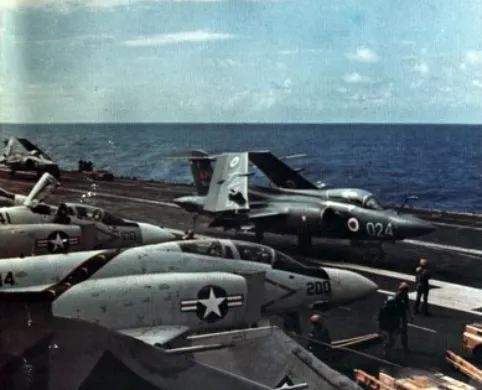
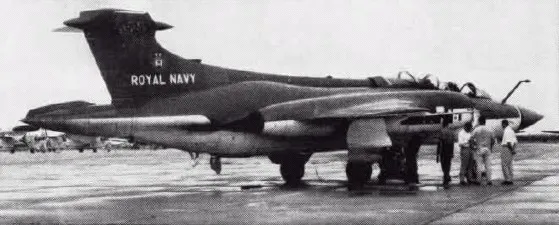
The Buccaneer S2 was the Spey-powered British low-level strike branch of Blackburn's carrier-borne Buccaneer family, built by Blackburn Aircraft and later Hawker Siddeley Aviation. RAF Buccaneer S2B aircraft gave Operation Granby a Pave Spike laser-designation capability in the 1990 Gulf War, while the wider S.2 line covered Royal Navy strike service, RAF maritime attack, reconnaissance, and carried munitions such as BL755.

Role in Conflicts

RAF Buccaneer S2B aircraft deployed during Operation Granby in the 1990 Gulf War, primarily using Pave Spike pods to designate targets for RAF Tornado and Jaguar strike aircraft; RAF Air Power Review material also documents some Buccaneer attack sorties.

Role details
RAF Weapon Fit And Gulf War Role

The RAF S.2B branch gave the Buccaneer a late-service precision role built around laser designation rather than a new airframe. Sources describe Buccaneers carrying Pave Spike pods in Operation Granby, marking targets for Tornado Paveway attacks, and using the broader S.2B weapons fit for maritime attack and strike tasks.

Pave Spike role

RAF Air Power Review material describes Buccaneers marking targets for Tornado Paveway laser-guided bombs during the 1991 Gulf War.

Sources: Operation Granby and the Dawn of Precision in the Royal Air Force; Selected Tornado and Jaguar Mission Reports for the Period 16th January to 23rd February 1991.

S.2B weapon load

BAE Systems Heritage gives the RAF S.2B a 16,000 lb weapon load, larger weapons bay, increased fuel capacity, and missile-capable strike fit.

Source: Blackburn Buccaneer - BAE Systems Heritage.

BL755 carriage

RAF Historical Society material identifies the Buccaneer S2 among RAF aircraft entering service with BL755 in 1973.

Source: ROYAL AIR FORCE HISTORICAL SOCIETY JOURNAL 45 (RAF Museum).
Profile / Specs

Specifications

Crew
2
Powerplant
2 × Rolls-Royce RB.168-1A Spey turbofans
Maximum speed
667 mph (1,073 km/h) at 20,000 ft
Range
2,300 miles (3,700 km)
Length
63 ft 5 in (19.33 m)
Wingspan
44 ft 0 in (13.41 m)
Loaded weight
62,000 lb (28,000 kg)
Weapon load
16,000 lb on RAF S.2B aircraft
Variants

The S.2 designation covers Spey-powered Buccaneers, with later suffixes marking RAF conversions and missile-capable upgrades rather than a separate clean-sheet aircraft.

VariantConfigurationDesignation notes
Buccaneer S.2Spey-powered Royal Navy strike variant

BAE Systems Heritage describes the S.2 as the Rolls-Royce Spey-powered development of the S.1.

Sources: Blackburn Buccaneer - BAE Systems Heritage

Buccaneer S.2ARAF conversion

BAE Systems Heritage lists the S.2A as reworked and slightly modified Royal Navy S.2 aircraft for RAF use.

Sources: Blackburn Buccaneer - BAE Systems Heritage

Buccaneer S.2BRAF strike and missile-capable variant

BAE Systems Heritage identifies new-build RAF S.2B aircraft with increased fuel, weapons-bay changes, a 16,000 lb weapon load, and anti-radar or anti-shipping missile capability.

Sources: Blackburn Buccaneer - BAE Systems Heritage

Buccaneer S.2CAvionics-upgraded S.2A standard

BAE Systems Heritage lists the S.2C as upgraded to S.2A standards with upgraded avionics.

Sources: Blackburn Buccaneer - BAE Systems Heritage

Buccaneer S.2DMartel-capable upgrade

BAE Systems Heritage lists the S.2D as upgraded to S.2B standard for Martel anti-radar systems with the bomb-door tank removed.

Sources: Blackburn Buccaneer - BAE Systems Heritage

Carried Munitions

RAF Historical Society material identifies Buccaneer S2 aircraft as one of the RAF platforms entering service with BL755 in 1973.

Carried itemItem typeCarriage evidence
BL-755 cluster bomb, Air-dropped anti-armor cluster bomb, MunitionsBL-755 cluster bombAir-dropped cluster bomb

The RAF Historical Society paper identifies the Buccaneer S2 as one of the RAF aircraft that entered service with BL755 in 1973.

Sources: ROYAL AIR FORCE HISTORICAL SOCIETY JOURNAL 45 (RAF Museum)

Timeline

Buccaneer S2 Key Events

  1. NA.39 prototype first flight

    The Blackburn NA.39 prototype flew at RAE Bedford, beginning the design line that became the Buccaneer.

    Sources: Blackburn Buccaneer - BAE Systems Heritage

  2. Spey-powered S.2 first flight

    The prototype Buccaneer S.2 made its first flight after the design was re-engineered around Rolls-Royce Spey engines.

    Sources: Blackburn Buccaneer - BAE Systems Heritage

  3. RAF orders the S.2

    In July 1968, the RAF ordered the Buccaneer S.2 after the intended F-111 replacement program was terminated.

    Sources: Hawker Siddeley Buccaneer S2B - RAF Museum

  4. First Buccaneer/Tornado cooperative strike

    During Operation Granby, Buccaneers with Pave Spike pods supported the first successful Buccaneer/Tornado cooperative precision strike against a Euphrates highway bridge.

    Sources: Operation Granby and the Dawn of Precision in the Royal Air Force

  5. RAF retirement

    In March 1994, the final RAF Buccaneers were retired.

    Sources: Blackburn Buccaneer - BAE Systems Heritage, Hawker Siddeley Buccaneer S2B - RAF Museum

Media
Related Weapon Systems
Standard Missile-2 (SM-2), Shipboard surface-to-air missile family, MunitionsMunitionsStandard Missile-2 (SM-2)Shipboard surface-to-air missile familyThe Standard Missile-2 (SM-2) is a Raytheon-built shipboard surface-to-air missile family used by U.S. and allied navies for fleet area air defense and ship self-defense. Aegis ships launch SM-2 from vertical launch systems, guide it by inertial navigation and mid-course commands, and use semi-active radar or infrared terminal homing in later medium-range blocks. U.S. Navy reporting documents USS Carney firing an SM-2 in October 2023 during Red Sea defense operations against Houthi missiles and drones.
Blackburn Beverley, Heavy military transport aircraft, Aircraft & UAVsAircraft & UAVsBlackburn BeverleyHeavy military transport aircraftThe Blackburn Beverley was a British piston-engined heavy military transport built at Brough for Royal Air Force Transport Command. Developed from the General Aircraft Universal Freighter line, it paired a box-section cargo hold, high wing, fixed undercarriage, clamshell loading doors, and tailboom troop accommodation for bulky freight, paratroop, and rough-strip logistics, including documented Commonwealth air-supply work in Borneo during the Indonesian Confrontation.
SPIKE anti-tank guided-missile family, Anti-tank guided missile family, Infantry WeaponsInfantry WeaponsSPIKE anti-tank guided-missile familyAnti-tank guided missile familyRafael's SPIKE family is a combat-proven electro-optical guided-missile line whose long-range NLOS branch is also known as Tamuz in Israeli service and Exactor in British service. The family spans infantry, vehicle, aircraft, and naval launchers, from compact short-range variants to Spike NLOS, which reaches 32 km from land or 50 km from the air and has documented use by Israeli, British, Azerbaijani, and U.S. forces.

Sources