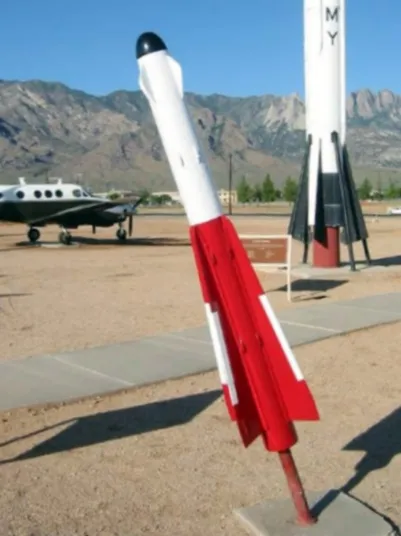
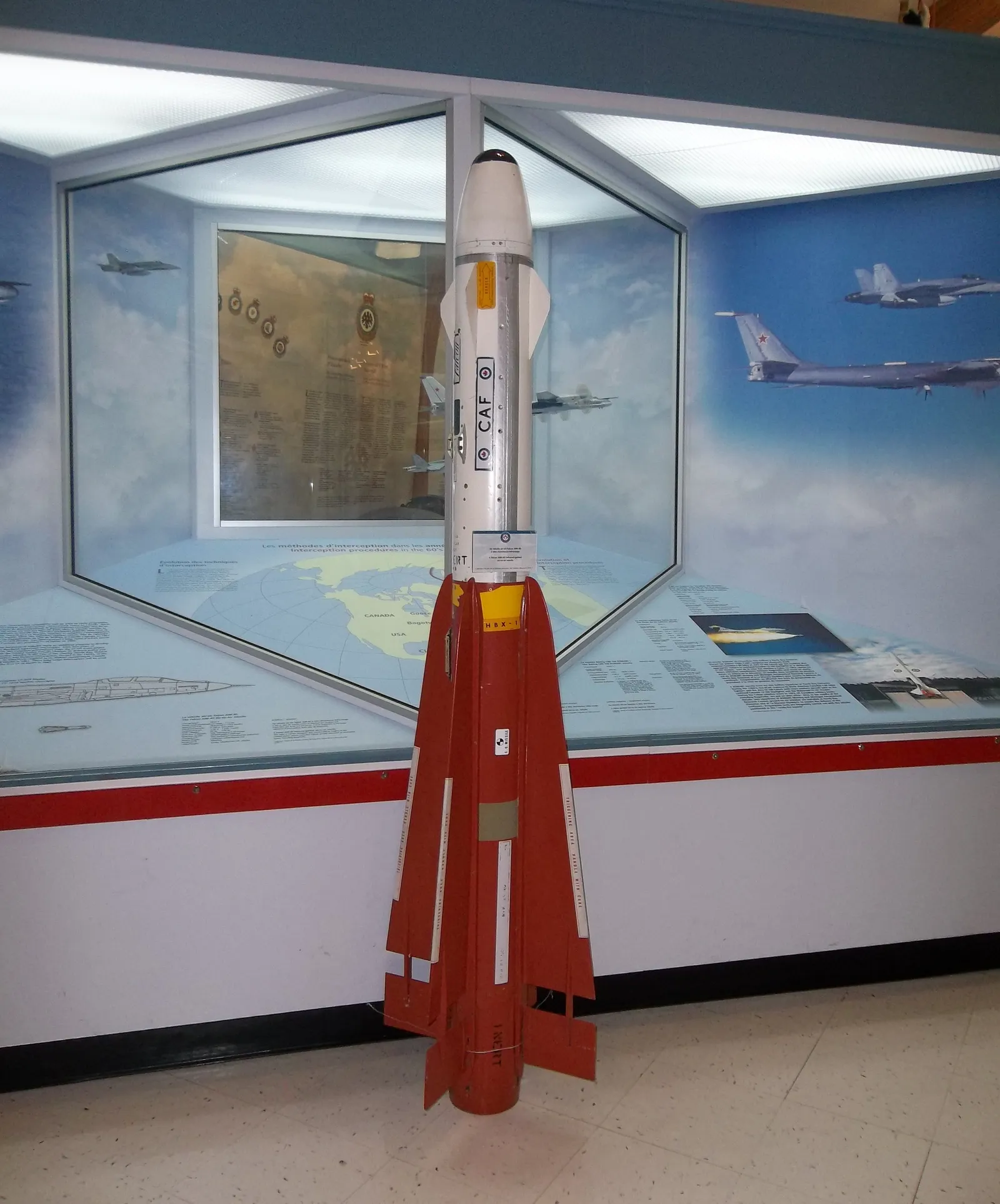
The AIM-4D Falcon was Hughes Aircraft's final operational infrared Falcon variant, combining the smaller GAR-2A/AIM-4C airframe with the improved Super Falcon seeker. USAF F-4D Phantom II crews used it during the 1955 Vietnam War, where seeker cooling, contact fuzing, and close-range engagement limits drove its replacement by AIM-9 Sidewinders.
USAF F-4D Phantom II crews used the AIM-4D Falcon over North Vietnam; Air Force combat history records AIM-4D MiG kills, while later analysis and Falcon references describe poor dogfight performance and replacement by AIM-9 Sidewinders.
1955 Vietnam War Service NotesShowHide
The AIM-4D reached combat through USAF F-4D Phantom II units, not as a general-purpose missile across every Phantom variant. Its 1955 Vietnam War record is useful because it shows the mismatch between an interceptor missile design and visual-range fighter combat.
Subject
Source-backed detail
Carrier aircraft
F-4D Phantom II units carried AIM-4D Falcons in Vietnam; a museum F-4E caption also documents AIM-4D carriage on the Phantom II family.
Combat limits
Falcon references identify seeker cooling delay, limited coolant, and the lack of a proximity fuze as major problems in close fighter engagements.
Replacement path
After poor combat performance, F-4D units shifted toward AIM-9 Sidewinder compatibility.
About 4,000 AIM-4D missiles, with additional AIM-4A/C rounds converted to AIM-4D standard.
Specifications
Guidance
Infrared homing
Length
79.5 in
Wingspan
20 in
Diameter
6.4 in
Weight
135 lb
Speed
Mach 3
Range
About 6 mi
Propulsion
Thiokol M58 solid-fuel rocket
Warhead
7.6 lb high explosive
Fuzing
Contact/direct-impact fuzing; no proximity fuze
VariantsShowHide
The AIM-4D was the GAR-2B after the Falcon family moved from GAR designations to AIM-4 designations; it used the smaller GAR-2A/AIM-4C airframe with the improved infrared seeker associated with later Super Falcon development.
Variant
Configuration
Designation notes
AIM-4A
Semi-active radar-homing Falcon
The GAR-1D/AIM-4A was the main original radar-guided Falcon production model.
USAF F-4D Phantom II units used AIM-4D Falcons over North Vietnam, where the missile's bomber-interceptor design assumptions proved poorly matched to close fighter engagements.
Sources: Adapting to Disruption: Aerial Combat over North Vietnam, Hughes AIM-4 Falcon | Designation-Systems.net
Withdrawal begins
Falcon references describe the AIM-4D being gradually withdrawn from use beginning in 1969 as F-4D units shifted toward AIM-9 Sidewinder compatibility.