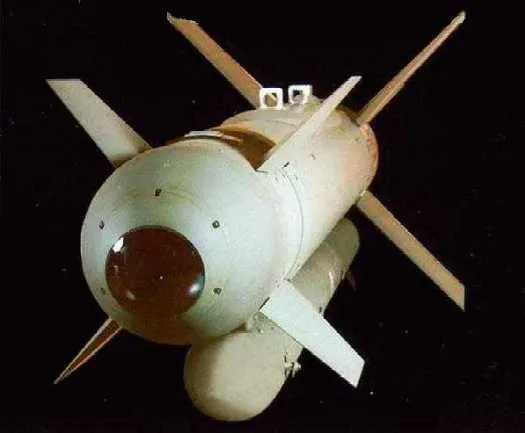

During January 1999 southern no-fly-zone enforcement, U.S. aircraft fired an AGM-130 at an Iraqi radar site while responding to threats against coalition aircraft.
Munitions
AGM-130
Also known as
- AGM-130 Missile
- AGM-130A
- AGM-130C
- AGM-130 Standoff Weapon System
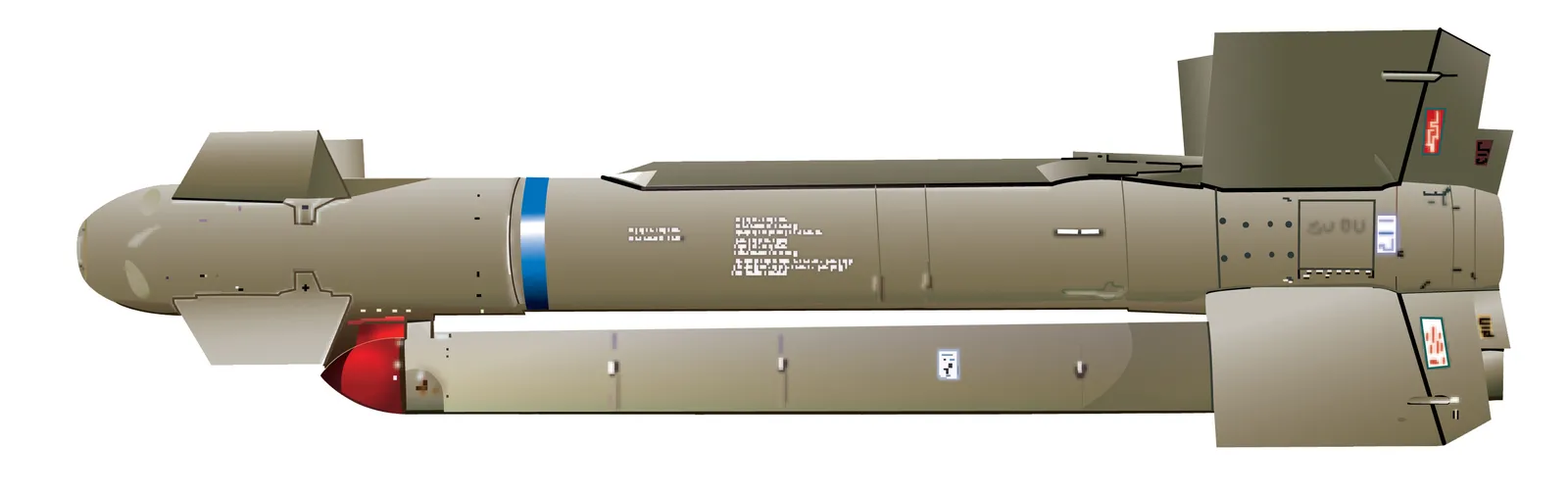
The AGM-130 was a U.S. powered air-to-surface standoff missile derived from the GBU-15 guided-bomb family and carried by the F-15E Strike Eagle. Air Force, DoD, and conflict-reporting sources document its television or imaging-infrared terminal guidance, two-way data link, GPS/INS midcourse upgrade, Mk 84 or BLU-109-class warheads, and combat use in Iraqi no-fly-zone enforcement, Operation Allied Force, and the 2003 Iraq War.
Role in Conflicts
- Side
- NATO

The DoD Kosovo after-action report says AGM-130s were employed from Air Force F-15E aircraft during Operation Allied Force, and Human Rights Watch identifies AGM-130 use in the April 1999 Grdelica railway bridge strike.
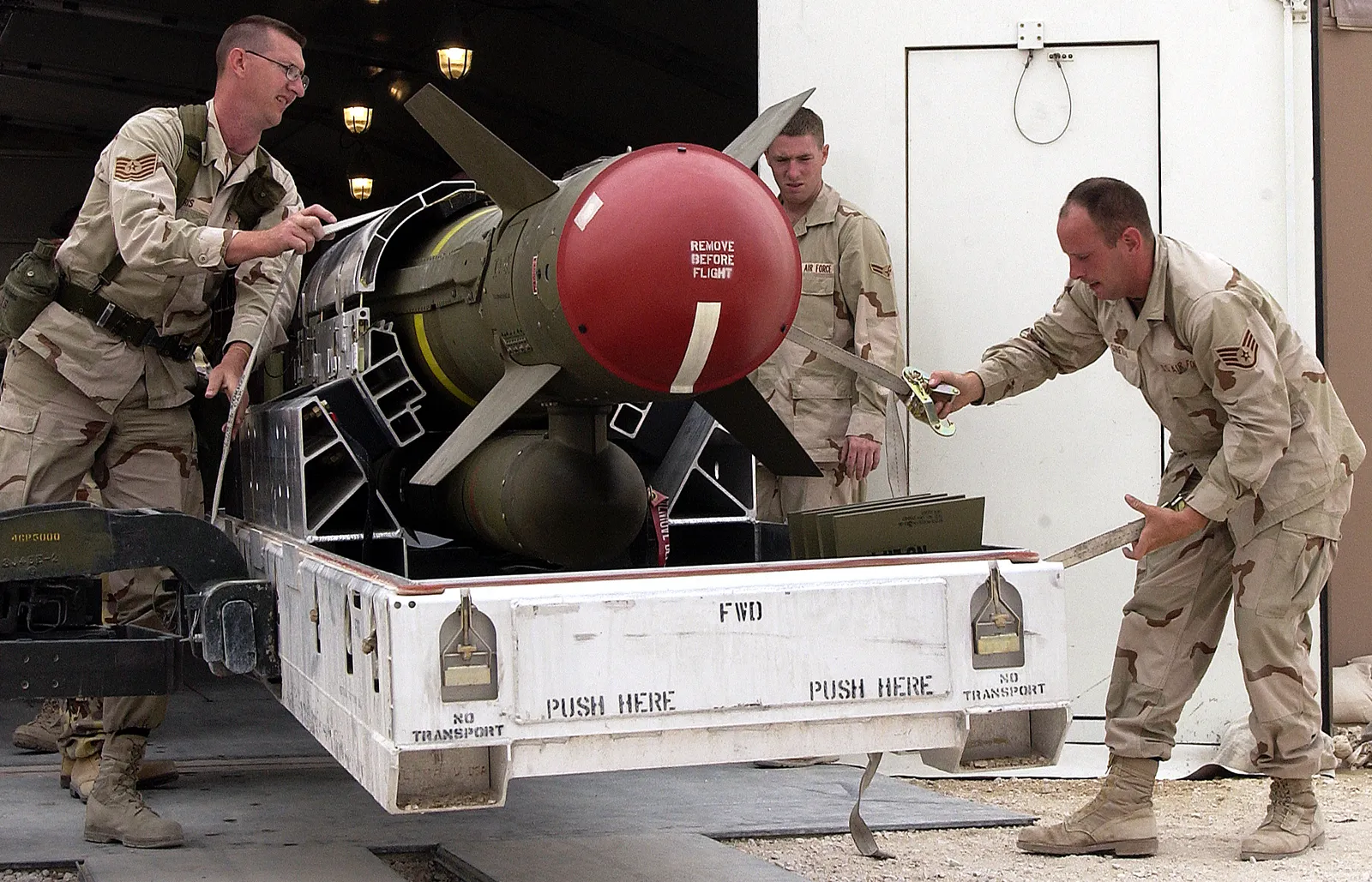
CENTAF's Operation Iraqi Freedom munitions accounting lists four AGM-130 guided munitions expended, and an Air Force photo caption documents AGM-130 missiles being moved to the flight line at a forward-deployed location supporting Operation Iraqi Freedom.
Profile / Specs
Profile
- Origin
- United States
- Built by
- Boeing North American
- Type
- Powered air-to-surface standoff missile
- Service note
- 1994-2013
- Designer
- Rockwell International
- Designed
- 1984
- Unit cost
- Approximately $450,000 per weapon
- Produced
- 1990-2000
- Number built
- Approximately 700 to 1,000 procured by the U.S. Air Force
- Developed from
- GBU-15 Guided Bomb Unit
Specifications
- Primary function
- Air-to-surface guided and powered bomb
- Launch weight
- 2,917 lb (1,312.65 kg)
- Length
- 12 ft 10.5 in (3.90 m)
- Diameter
- 18 in (45.72 cm)
- Wingspan
- 59 in (149.86 cm)
- Ceiling
- 30,000-plus ft (9,091 m)
- Guidance
- Television or imaging-infrared seeker with man-in-the-loop data link; upgraded weapons added autonomous GPS/INS
- Warhead options
- Mk 84 blast/fragmentation or BLU-109 penetrator
- Carrier aircraft
- F-15E
Variants
The AGM-130 family retained the modular GBU-15 guidance concept while adding a rocket propulsion section for longer standoff range.
| Variant | Configuration | Designation notes |
|---|---|---|
 | Unpowered glide-bomb family predecessor | Air Force and Designation-Systems sources describe the AGM-130 as a powered product improvement or derivative of the GBU-15 guided-bomb family. Sources: AGM-130 Missile Fact Sheet, Boeing AGM-130 Designation-Systems |
| AGM-130A | Mk 84 blast-fragmentation warhead version | Air Force and Designation-Systems sources identify the AGM-130A as the Mk 84-based variant of the powered GBU-15 derivative. Sources: AGM-130 Missile Fact Sheet, Boeing AGM-130 Designation-Systems |
| AGM-130C | BLU-109 penetrator warhead version | The Air Force fact sheet identifies the AGM-130C as the BLU-109 penetrator variant, while Designation-Systems describes AGM-130C subvariants with TV/CCD or imaging-infrared seekers. Sources: AGM-130 Missile Fact Sheet, Boeing AGM-130 Designation-Systems |
Carrier Aircraft
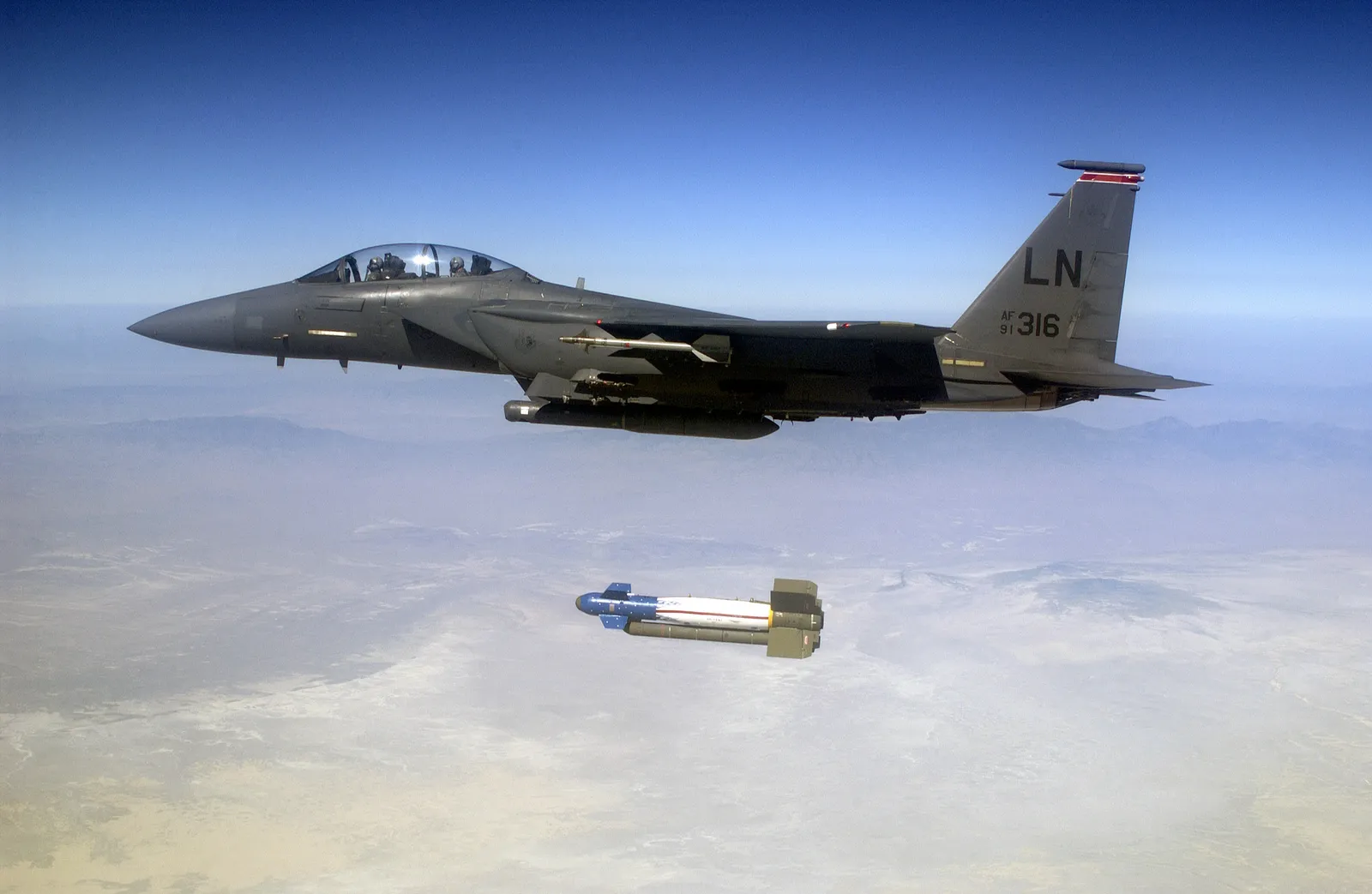
The Air Force identifies the F-15E Strike Eagle as the AGM-130 aircraft integration path.
| Carrier | Carrier type | Carriage evidence |
|---|---|---|
 | Strike fighter | The Air Force fact sheet says the AGM-130 was designed for use from the F-15E aircraft. Sources: AGM-130 Missile Fact Sheet |
Bomb Body Compatibility
AGM-130 variants used the modular GBU-15 guidance concept with different 2,000-pound-class warhead bodies.
| Compatible item | Item type | Compatibility evidence |
|---|---|---|
 | 2,000-pound general-purpose bomb body | Air Force and Designation-Systems sources identify the AGM-130A as the Mk 84 blast-fragmentation version. Sources: AGM-130 Missile Fact Sheet, Boeing AGM-130 Designation-Systems |
 | 2,000-pound penetrator warhead | Air Force and Designation-Systems sources identify the AGM-130C as the BLU-109 penetrator version. Sources: AGM-130 Missile Fact Sheet, Boeing AGM-130 Designation-Systems |
Timeline
AGM-130 Key Events
Development begins
The Air Force fact sheet says AGM-130 development began in 1984 as a product improvement to the GBU-15 guided glide bomb system.
Sources: AGM-130 Missile Fact Sheet
First unit operational
The Air Force fact sheet states that the first AGM-130 unit became operational in 1994.
Sources: AGM-130 Missile Fact Sheet
Boeing North American production contract
Forecast International records Boeing North American, Incorporated receiving a $31.3 million contract to provide 72 AGM-130s from government-furnished components.
Sources: Forecast International AGM-130
No-fly-zone AGM-130 strike
American Forces Press Service reporting through DVIDS records an AGM-130 fired at an Iraqi radar site during no-fly-zone enforcement, with the weapon missing and striking a residential area near Basra.
Sources: Pentagon Confirms Strike on Iraqi Neighborhood
Operation Allied Force bridge strike
Human Rights Watch identifies an AGM-130 launched by an F-15E as the weapon used in NATO's Grdelica railway bridge strike during Operation Allied Force.
Sources: Kosovo Civilian Deaths in the NATO Air Campaign
Retired from USAF inventory
Designation-Systems reports that the AGM-130 was retired from the U.S. Air Force inventory in 2013.
Sources: Boeing AGM-130 Designation-Systems
Related Weapon Systems


Sources
AGM-130 Missile Fact SheetPublisher: U.S. Air Force | Note: Supports AGM-130 mission, GBU-15-derived design, F-15E carriage, variants, seeker/data-link description, GPS/INS upgrade, first operational unit, Boeing contractor attribution, specifications, unit cost, and official image provenance. | Accessed: 2026-07-13Forecast International AGM-130Publisher: Forecast International | Note: Supports Rockwell/Boeing AGM-130 production context, Boeing's purchase of Rockwell defense interests, the 1997 Boeing North American AGM-130 contract, production status, approximate production totals, variants, and technical data. | Accessed: 2026-07-13Boeing AGM-130 Designation-SystemsPublisher: Directory of U.S. Military Rockets and Missiles | Note: Corroborates the AGM-130 as a Boeing/Rockwell powered derivative of the GBU-15, its 1984 development award, IOC timing, guidance options, range class, variants, procurement range, and retirement context. | Accessed: 2026-07-13Kosovo Operation Allied Force After-Action ReportPublisher: U.S. Department of Defense | Note: Supports AGM-130 employment from Air Force F-15E aircraft during the 1999 Kosovo War / Operation Allied Force and describes its guidance and data-link concept. | Accessed: 2026-07-13Kosovo Civilian Deaths in the NATO Air CampaignPublisher: Human Rights Watch via Refworld | Note: Directly supports AGM-130 use by an F-15E in NATO's Grdelica railway bridge strike during the 1999 Kosovo War / Operation Allied Force. | Accessed: 2026-07-13Operation Iraqi Freedom By the NumbersPublisher: U.S. Central Command Air Forces / Assessment and Analysis Division | Note: Directly supports AGM-130 guided munition expenditure during the 2003 Iraq War air campaign. | Accessed: 2026-07-13Missile on its wayPublisher: U.S. Air Force | Note: Directly supports AGM-130 missiles fielded by U.S. Air Force ammunition specialists at a forward-deployed location supporting the 2003 Iraq War and provides official image provenance. | Accessed: 2026-07-13Pentagon Confirms Strike on Iraqi NeighborhoodPublisher: DVIDS / American Forces Press Service | Note: Directly supports AGM-130 launch against an Iraqi radar site during 1991 Iraqi No-Fly-Zone Conflict enforcement. | Accessed: 2026-07-13AGM-130 drop Wikimedia CommonsPublisher: Wikimedia Commons | Note: Supports public-domain image provenance for an F-15E releasing an AGM-130 during Combat Hammer at the Utah Test and Training Range. | Accessed: 2026-07-13