- Side
- United States and South Vietnam


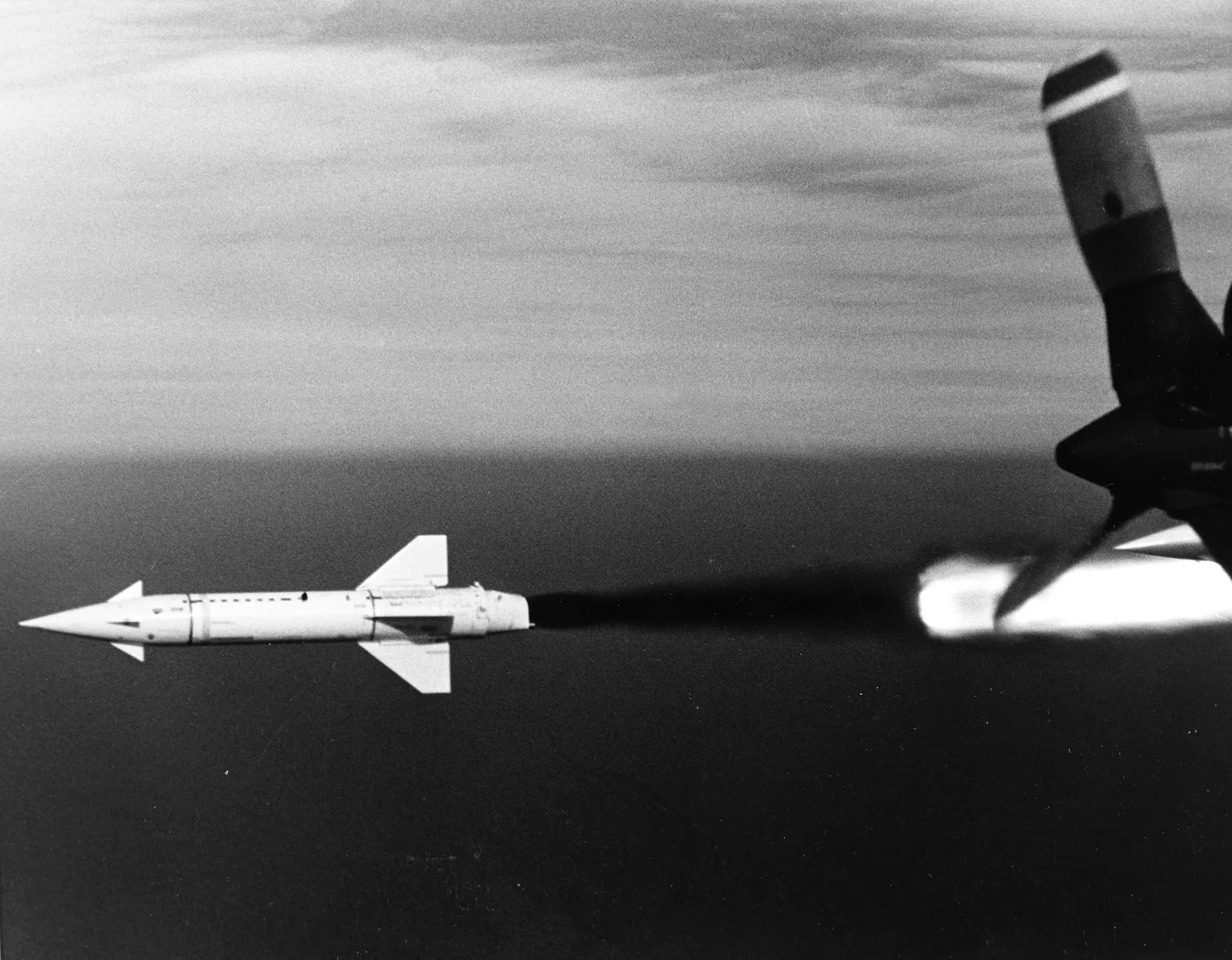
U.S. Air Force aircraft used AGM-12 Bullpup missiles in Vietnam bridge attacks, including the April 1965 Thanh Hoa Bridge strike and later F-4/F-105 carriage of AGM-12C missiles during the Southeast Asia War.
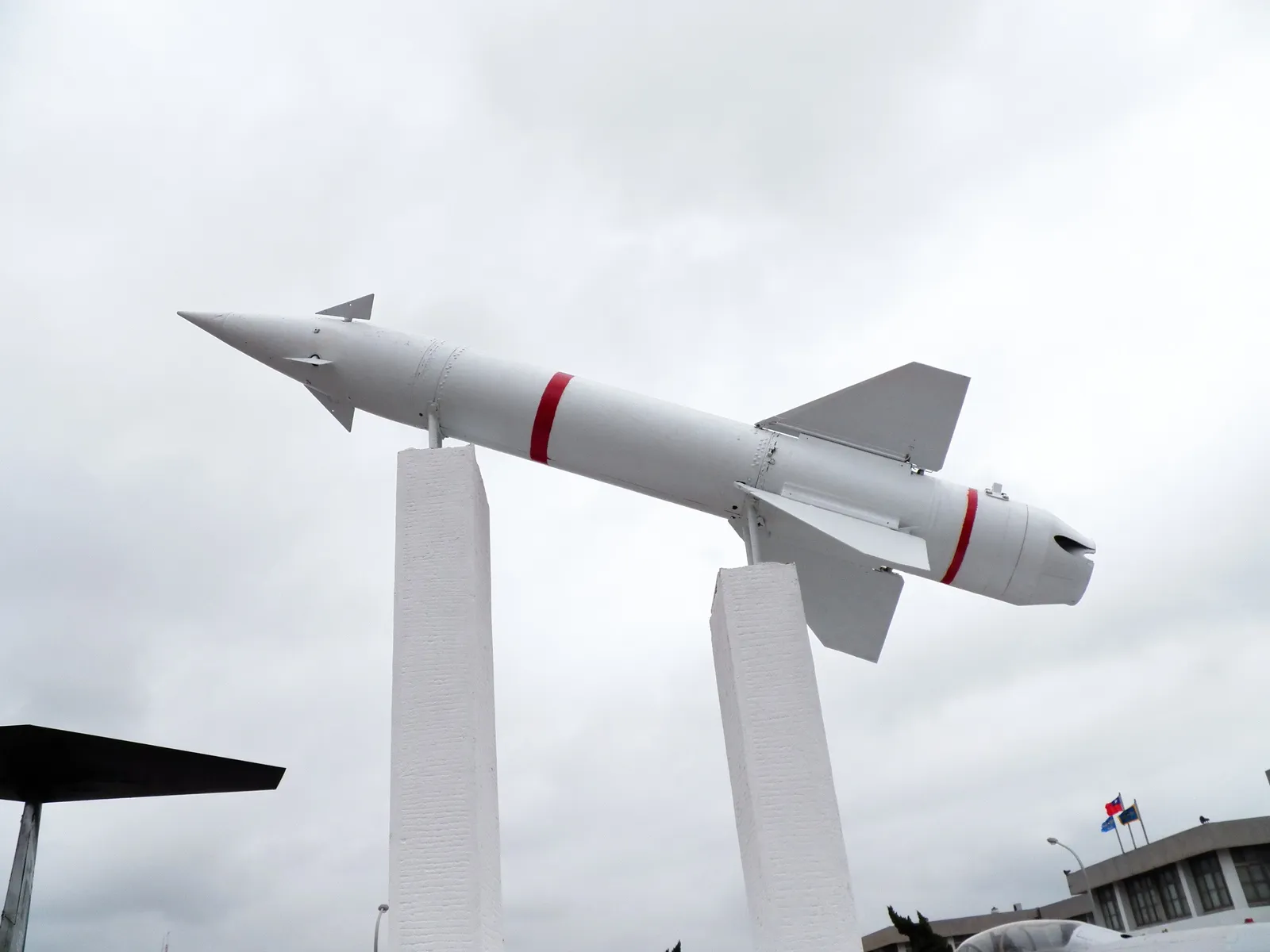
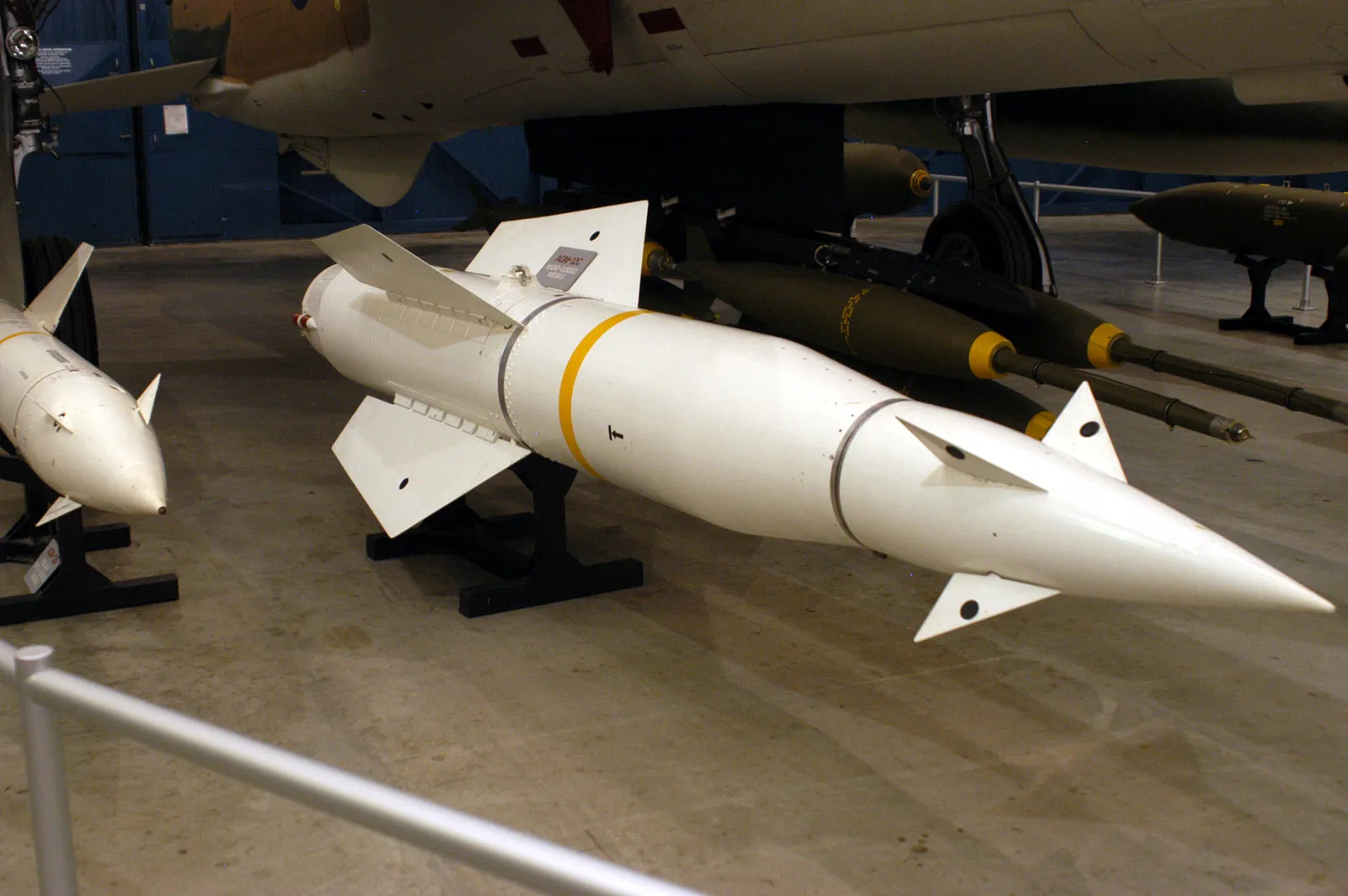
The Martin AGM-12 Bullpup was a U.S. radio-command-guided air-to-surface missile family developed in the 1950s for short-range strike. It entered Navy fleet service in 1959, expanded into larger Bullpup B/C and special-warhead variants, and saw documented Vietnam War use against bridge and infrastructure targets before later precision weapons displaced it.
U.S. Air Force aircraft used AGM-12 Bullpup missiles in Vietnam bridge attacks, including the April 1965 Thanh Hoa Bridge strike and later F-4/F-105 carriage of AGM-12C missiles during the Southeast Asia War.
Bullpup designations span Navy ASM-N-7 names, USAF GAM-83 names, and the unified AGM-12 series adopted in 1963; the family included 250-lb conventional, enlarged 1,000-lb, nuclear-option, cluster-warhead, and training forms.
| Variant | Configuration | Designation notes |
|---|---|---|
| ASM-N-7 / GAM-83 / AGM-12A | Original Bullpup production line | The original small Bullpup used a 250-lb-class warhead and manual radio-command guidance; 1963 redesignation mapped ASM-N-7 and GAM-83 into the AGM-12A designation. Sources: Martin AGM-12 Bullpup | Directory of U.S. Military Rockets and Missiles |
| ASM-N-7a / GAM-83A / AGM-12B | Bullpup A with liquid-fuel rocket motor | The improved Bullpup A replaced the original solid motor with a Thiokol LR58 liquid-fuel rocket motor while retaining the 250-lb warhead class. Sources: Martin AGM-12 Bullpup | Directory of U.S. Military Rockets and Missiles, Martin AGM-12B Bullpup A | National Museum of the United States Air Force |
| ASM-N-7b / AGM-12C | Bullpup B enlarged conventional missile | Bullpup B enlarged the missile body, wings, motor, and warhead to the 1,000-lb class; museum sources identify it as AGM-12C Bullpup B. Sources: Martin AGM-12 Bullpup | Directory of U.S. Military Rockets and Missiles, Martin Marietta AGM-12C Bullpup B | National Museum of the United States Air Force, Model, Missile, Bullpup B | National Air and Space Museum |
| GAM-83B / AGM-12D | Nuclear-option Bullpup derivative | The GAM-83B/AGM-12D was a Bullpup derivative with a larger body section and optional W-45 nuclear warhead. Sources: Martin AGM-12 Bullpup | Directory of U.S. Military Rockets and Missiles |
| AGM-12E | Cluster-warhead derivative | The AGM-12E was derived from the AGM-12C by replacing the unitary warhead with an anti-personnel cluster-bomb warhead and was produced in limited numbers. Sources: Martin AGM-12 Bullpup | Directory of U.S. Military Rockets and Missiles |
| ATM-12 | Training designation | The 1963 redesignation mapped TGAM-83 to ATM-12, and later converted AGM-12A/B/D missiles also received ATM-12 training designations. Sources: Martin AGM-12 Bullpup | Directory of U.S. Military Rockets and Missiles |
Bullpup carriage is documented across U.S. Navy and U.S. Air Force attack aircraft, with catalog links kept to source-backed public aircraft records.
| Carrier | Carrier type | Carriage evidence |
|---|---|---|
 | Carrier-based attack aircraft | The Skyhawk ordnance page lists AGM-12 Bullpup among the A-4's smart weapons and identifies Bullpup-capable A-4 variants. |
 | Fighter-bomber | The National Museum of the U.S. Air Force documents AGM-12B and AGM-12C Bullpup carriage on U.S. Air Force F-4 aircraft. Sources: Martin AGM-12B Bullpup A | National Museum of the United States Air Force, Martin Marietta AGM-12C Bullpup B | National Museum of the United States Air Force |
The Bullpup program began as a short-range air-to-ground missile requirement in 1953.
Sources: Martin AGM-12 Bullpup | Directory of U.S. Military Rockets and Missiles
Martin won the Bullpup competition in 1954 and moved the design into development.
Sources: Martin AGM-12 Bullpup | Directory of U.S. Military Rockets and Missiles
The Bullpup family entered U.S. Navy fleet service in 1959.
Sources: Martin AGM-12 Bullpup | Directory of U.S. Military Rockets and Missiles
The Bullpup family was redesignated as the AGM-12 series in 1963.
Sources: Martin AGM-12 Bullpup | Directory of U.S. Military Rockets and Missiles
Production of the Bullpup family ended in 1969.
Sources: Martin AGM-12 Bullpup | Directory of U.S. Military Rockets and Missiles
The last AGM-12C missiles were retired in the early 1980s.
Sources: Martin AGM-12 Bullpup | Directory of U.S. Military Rockets and Missiles