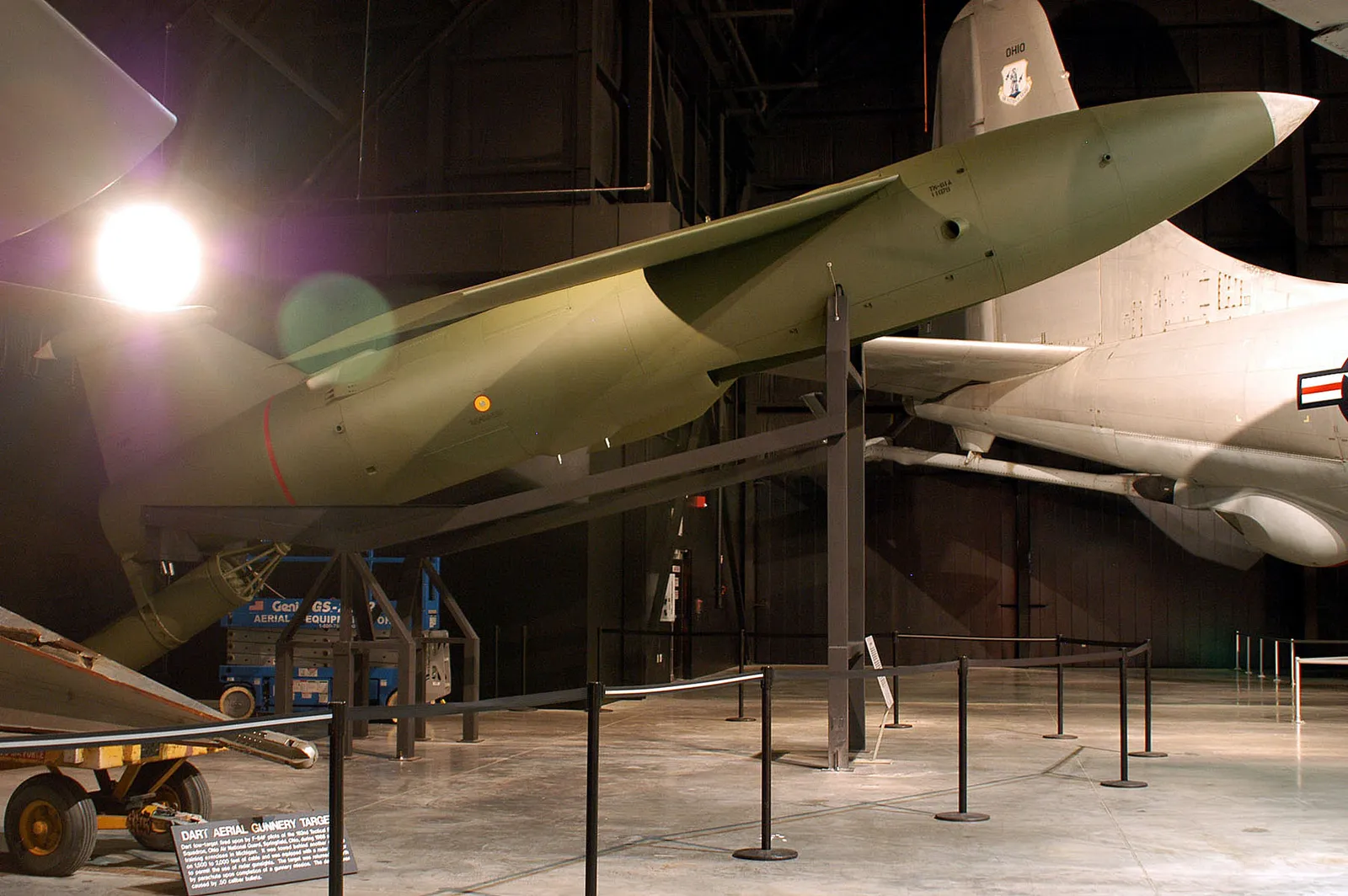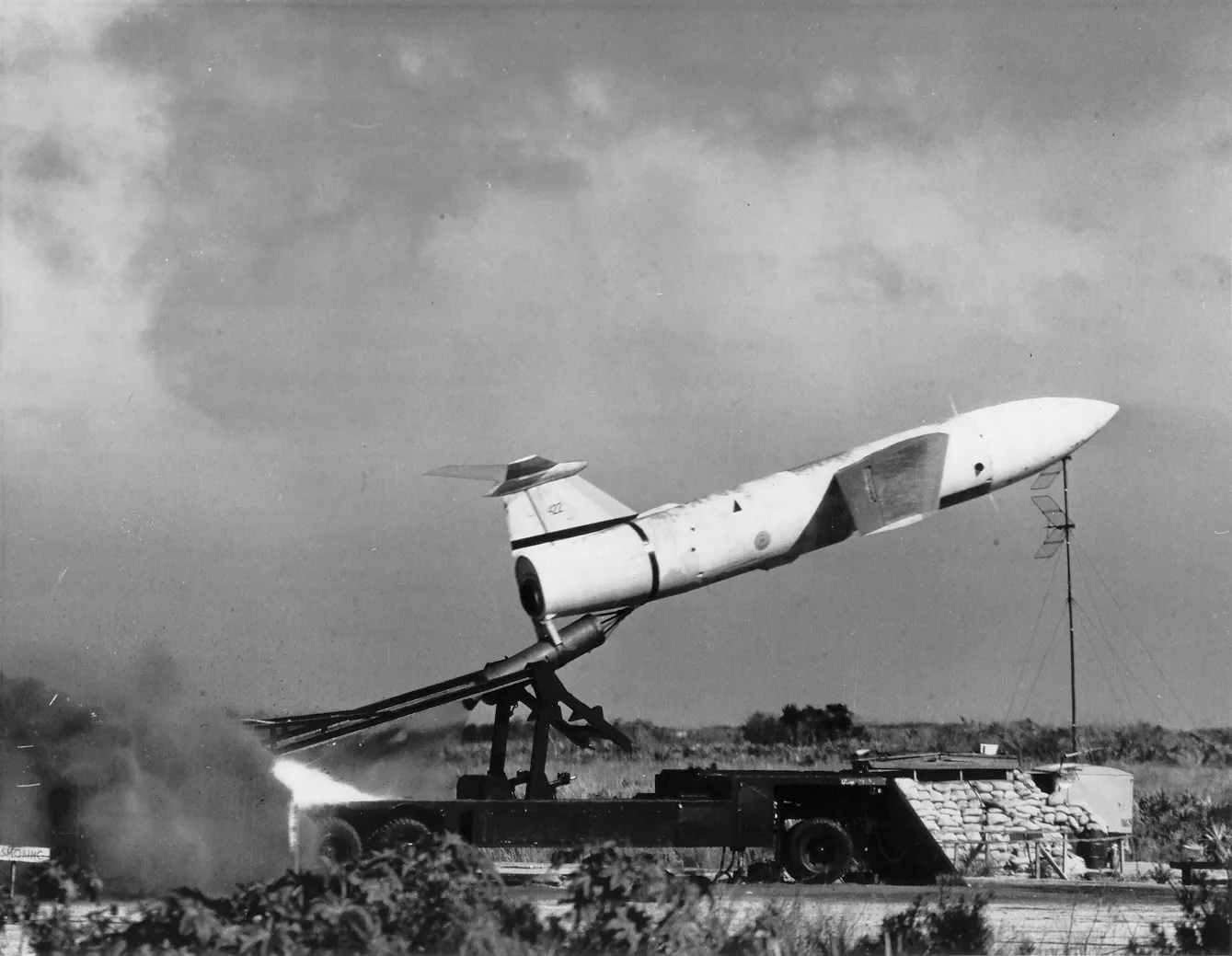
- Side
- United States

A USAF historical study lists the 868th Tactical Missile Squadron at Tainan during the crisis with 20 TM-61 Matadors in an atomic offensive role; no source found shows a combat launch.
The Martin MGM-1 Matador was an early U.S. surface-to-surface cruise missile developed under the postwar MX-771 project and fielded in Cold War nuclear strike posture. Designation-Systems describes it as the first operational surface-to-surface cruise missile of the U.S. armed forces, and a USAF historical study lists TM-61 Matadors at Tainan during the 1958 Second Taiwan Strait Crisis in an atomic offensive role.
A USAF historical study lists the 868th Tactical Missile Squadron at Tainan during the crisis with 20 TM-61 Matadors in an atomic offensive role; no source found shows a combat launch.
Designation-Systems describes the B-61A/TM-61A as a missile tracked by AN/MSQ-1 radar stations and steered by radio command link, a method limited by line-of-sight range and jamming risk.
The TM-61C added Shanicle, using ground-based microwave emitters to create hyperbolic range and azimuth grids that let the missile use its longer flight range.
The USAF museum describes TM-61A launch from a mobile 40-foot trailer, with a solid booster accelerating the missile before jet-powered flight toward the target.
Matador designation changes reflect shifting U.S. guided-missile naming systems and one development branch that became the separate Mace missile.
| Variant | Configuration | Designation notes |
|---|---|---|
| SSM-A-1 / XSSM-A-1 / YSSM-A-1 | Early project and test designations | MX-771 began under the SSM-A-1 designation, with XSSM-A-1 and YSSM-A-1 used for early airframe and guidance test missiles. Sources: Martin MGM-1 Matador |
| B-61A / TM-61A | First production Matador | The Air Force first classified the production missile as a pilotless bomber, then redesignated it TM-61A when tactical-missile nomenclature replaced the bomber label. Sources: Martin MGM-1 Matador, Martin TM-61A Matador |
 | Development branch into Mace | The heavily changed Matador B line became the separate TM-76/MGM-13/CGM-13 Mace cruise missile family. Sources: Martin MGM-1 Matador, Martin CGM-13B Mace, Martin MGM/CGM-13 Mace |
| YTM-61C / TM-61C / MGM-1C | Shanicle-guided Matador | The interim TM-61C added Shanicle guidance, became operational in 1957, and received the MGM-1C designation after active Matador service had ended. Sources: Martin MGM-1 Matador, Matador | National Air and Space Museum |
The closest linked catalog relationship is developmental rather than operational: Mace grew out of the Matador improvement path and replaced Matador units as the Air Force moved to newer guidance and launch arrangements.
| Compatible item | Item type | Compatibility evidence |
|---|---|---|
| Surface-launched cruise missile | The USAF museum identifies Mace as the replacement for the TM-61A Matador, and Designation-Systems traces it from the TM-61B Matador B development branch into the TM-76 and MGM/CGM-13 series. Sources: Martin CGM-13B Mace, Martin MGM/CGM-13 Mace |
The National Museum of the U.S. Air Force dates Matador development to August 1945, after wartime experience with pilotless-bomber concepts.
Sources: Martin TM-61A Matador
Designation-Systems records the first real XSSM-A-1 Matador flight at White Sands Missile Range on January 20, 1949.
Sources: Martin MGM-1 Matador
The B-61A Matador production missile entered the operational squadron phase at the end of 1953, before later TM-61 redesignations.
Sources: Martin MGM-1 Matador
The USAF museum records the first overseas TM-61 deployment to West Germany in March 1954 to reinforce NATO posture.
Sources: Martin TM-61A Matador
A Foreign Relations of the United States telegram records U.S. planning for a Matador missile flight on Taiwan and describes the proposed unit as a deterrent and counter-attack asset.
Sources: FRUS Taiwan Matador deployment telegram
The TM-61C with Shanicle guidance became operational in 1957 and replaced the earlier TM-61A version.
Sources: Martin MGM-1 Matador
A USAF historical study lists the 868th Tactical Missile Squadron at Tainan with 20 TM-61 Matadors in an atomic offensive role during the 1958 Taiwan crisis posture.
Sources: Air Operations in the Taiwan Crisis of 1958
The National Museum of the U.S. Air Force says Matador phase-out began in 1959 in favor of the more advanced Martin Mace.
Sources: Martin TM-61A Matador
Designation-Systems notes that the last Matadors had been removed from active service by 1962, before the MGM-1C redesignation.
Sources: Martin MGM-1 Matador
The public record supports overseas fielding and deterrence context, not documented combat firing. USAF museum material places Matador units in West Germany, Korea, and Taiwan; a 1956 State Department telegram records planning for a Matador flight on Taiwan; and a USAF historical study lists 20 TM-61 Matadors at Tainan in an atomic offensive posture during the 1958 Taiwan Strait crisis.