- Side
- Coalition forces

U.S. Army sources and CSIS identify Operation Desert Storm in the 1990 Gulf War as ATACMS's entry into combat service after late-1980s testing.
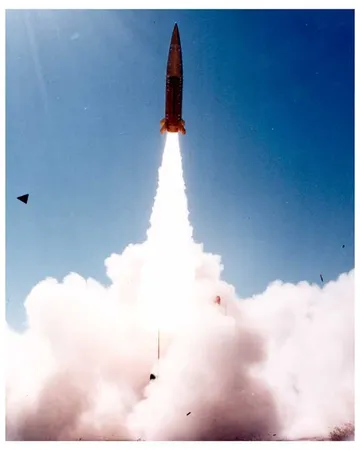
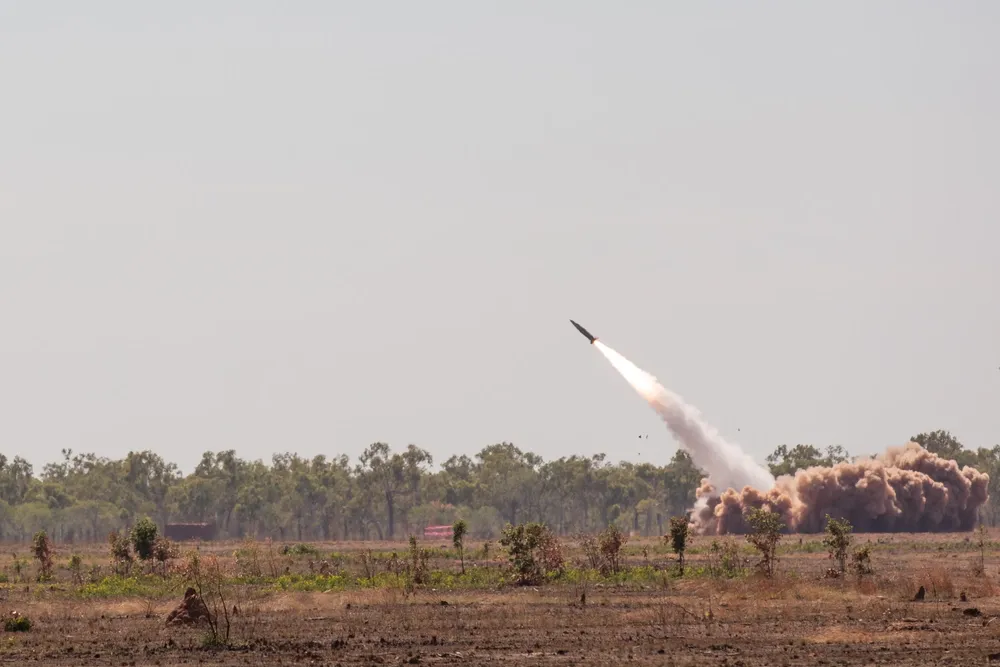
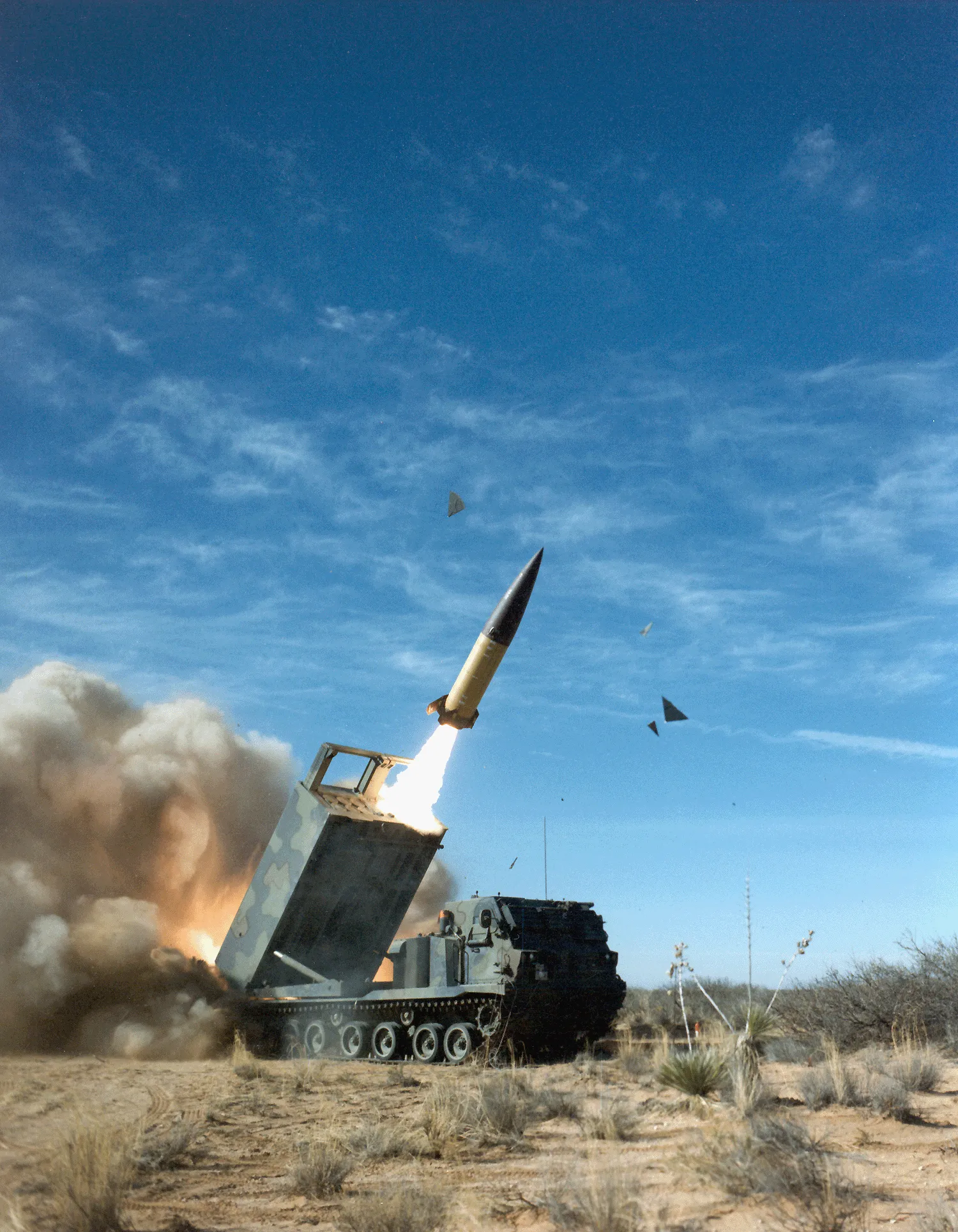
Role detailsThe Army Tactical Missile System, commonly known as ATACMS, is a U.S. solid-fuel short-range ballistic missile fired from M270 MLRS and M142 HIMARS launchers. Its family spans M39/Block I cluster-warhead missiles, extended-range Block IA rounds, and later unitary-warhead variants, with documented combat use by U.S. forces in the 1990 Gulf War and 2003 Iraq War, transfer to Ukraine for long-range strikes, and later U.S. maritime-strike use during Operation Epic Fury.
U.S. Army sources and CSIS identify Operation Desert Storm in the 1990 Gulf War as ATACMS's entry into combat service after late-1980s testing.
Role detailsLockheed Martin's reliability reporting says ATACMS missiles were fired in Operation Iraqi Freedom, with hundreds of combat firings across the Iraq campaign.
Role detailsUkraine first used U.S.-supplied ATACMS in October 2023 against Russian-occupied airfields; AP described the initial missiles as shorter-range cluster-warhead rounds, while monitoring and specialist sources identify the transfer as M39 Block I with M74 submunitions. U.S. officials later confirmed longer-range ATACMS deliveries and use in April 2024.
Role detailsU.S. Army and Marine artillery launched ATACMS during Operation Epic Fury from outside Iran; reporting citing Gen. Dan Caine said Army ATACMS were used to sink multiple Iranian ships, including a submarine.
The M39, also known as MGM-140A or ATACMS Block I, is the baseline cluster-warhead branch of the family. It is a solid-fuel, inertially guided surface-to-surface missile fired from M270 MLRS and M142 HIMARS launchers.
About 950 M74 antipersonnel and antimateriel submunitions in a 560 kg class warhead.
About 165 km for the Block I/M39 configuration.
Inertial guidance; GPS-aided guidance belongs to Block IA and later family branches.
ATACMS is best read as a missile family rather than a single round. The most visible split is between early area-effects submunition missiles and later unitary-warhead missiles for point targets.
| Family | Payload pattern | Reader note |
|---|---|---|
| M39 / M39A1 | M74 submunitions | Early Block I and Block IA missiles trade payload count, guidance, and range across the cluster-warhead branch. |
| MGM-140E / M57 | Unitary high explosive | Later unitary variants focus ATACMS on precision point targets rather than wide-area submunition effects. |
| M57E1 | Modernized unitary missile | Life-extension work reuses selected older Block I components, removes bomblets from retired warheads, and keeps the ATACMS inventory useful while PrSM enters service. |
ATACMS designations separate early cluster-warhead Block I and Block IA missiles from later quick-reaction and unitary-warhead missiles, while M57E1 denotes a life-extension and modernization path for older rounds.
| Variant | Configuration | Designation notes |
|---|---|---|
| M39 / MGM-140A Block I | Cluster-warhead baseline missile | The early Block I configuration, known in U.S. Army service as M39, used inertial guidance and carried about 950 M74 antipersonnel and antimateriel submunitions to a maximum range of about 165 km. Sources: MGM-140 Army Tactical Missile System (ATACMS), Lockheed Martin (LTV) MGM-140 ATACMS |
| M39A1 / MGM-140B Block IA | Extended-range cluster-warhead missile | Block IA reduced the submunition payload and added GPS-aided inertial guidance for longer range. |
| Block IA Unitary / MGM-140E | Unitary-warhead missile | The Block IA unitary branch replaced the submunition payload with a high-explosive warhead for point targets; MGM-164A refers instead to the separate Block II/BAT lineage. Sources: MGM-140 Army Tactical Missile System (ATACMS), Lockheed Martin (LTV) MGM-140 ATACMS |
| M57 / MGM-168A | Unitary-warhead missile | The M57 family is a later unitary-warhead ATACMS configuration used for precision strike missions. |
| M57E1 | Life-extended modernized missile | The M57E1 modernization recapitalizes older inventory with updated components and a unitary warhead configuration. Sources: First Modernized TACMS Missile Successfully Engages Target |
ATACMS is fired from launchers that can also handle guided rocket pods, giving the missile a road-mobile deep-strike role.
| Firing weapon | Weapon type | Firing evidence |
|---|---|---|
 | Tracked launcher | CSIS and U.S. Army sources describe ATACMS Block I/M39 as fired from modified M270 MLRS launch vehicles. Sources: MGM-140 Army Tactical Missile System (ATACMS), Fort Sill Battalion Test Fires High-Tech Missile |
 | Wheeled launcher | CSIS says a single ATACMS can be carried by M142 HIMARS, and a U.S. Army live-fire article documents an M39 Block I launch from HIMARS. Sources: MGM-140 Army Tactical Missile System (ATACMS), Fort Sill Battalion Test Fires High-Tech Missile |
CSIS says ATACMS testing wrapped in 1989, setting up the missile's 1991 entry into U.S. service.
Sources: MGM-140 Army Tactical Missile System (ATACMS)
CSIS says ATACMS entered service in 1991 for use in the Persian 1990 Gulf War after testing wrapped in 1989.
Sources: MGM-140 Army Tactical Missile System (ATACMS)
Lockheed Martin described Operation Iraqi Freedom as the missile family's largest combat-use period, with hundreds of ATACMS fired.
Sources: ATACMS Long-Term Reliability Validation
Lockheed Martin announced a successful modernized TACMS flight test as part of recapitalizing older ATACMS inventory.
Sources: First Modernized TACMS Missile Successfully Engages Target
Ukraine publicly confirmed using U.S.-provided ATACMS after strikes on Russian-occupied airfields; AP described the initial missiles as shorter-range cluster-warhead ATACMS and later monitoring identified M39 Block I transfers.
Sources: Ukraine Confirms Use of US-Provided ATACMS, Ukraine Uses US-Provided ATACMS Against Russian Forces, United States Cluster Munition Ban Policy
AP reported that Ukraine used longer-range ATACMS secretly provided by the United States against Russian-held areas.
Sources: Ukraine Uses Long-Range Missiles Secretly Provided by US
Business Insider and The War Zone reported ATACMS use during Operation Epic Fury against Iranian naval targets.
Sources: US Troops Used ATACMS Missile to Sink Iranian Ships, Submarine, U.S. Striking Iranian Navy Ships With Ballistic Missiles
ATACMS remained operational through testing, reliability work, and recapitalization of older rounds. U.S. Army coverage frames Precision Strike Missile as the next-generation replacement for ATACMS, while the older missile family continues to appear in combat and security-assistance reporting.