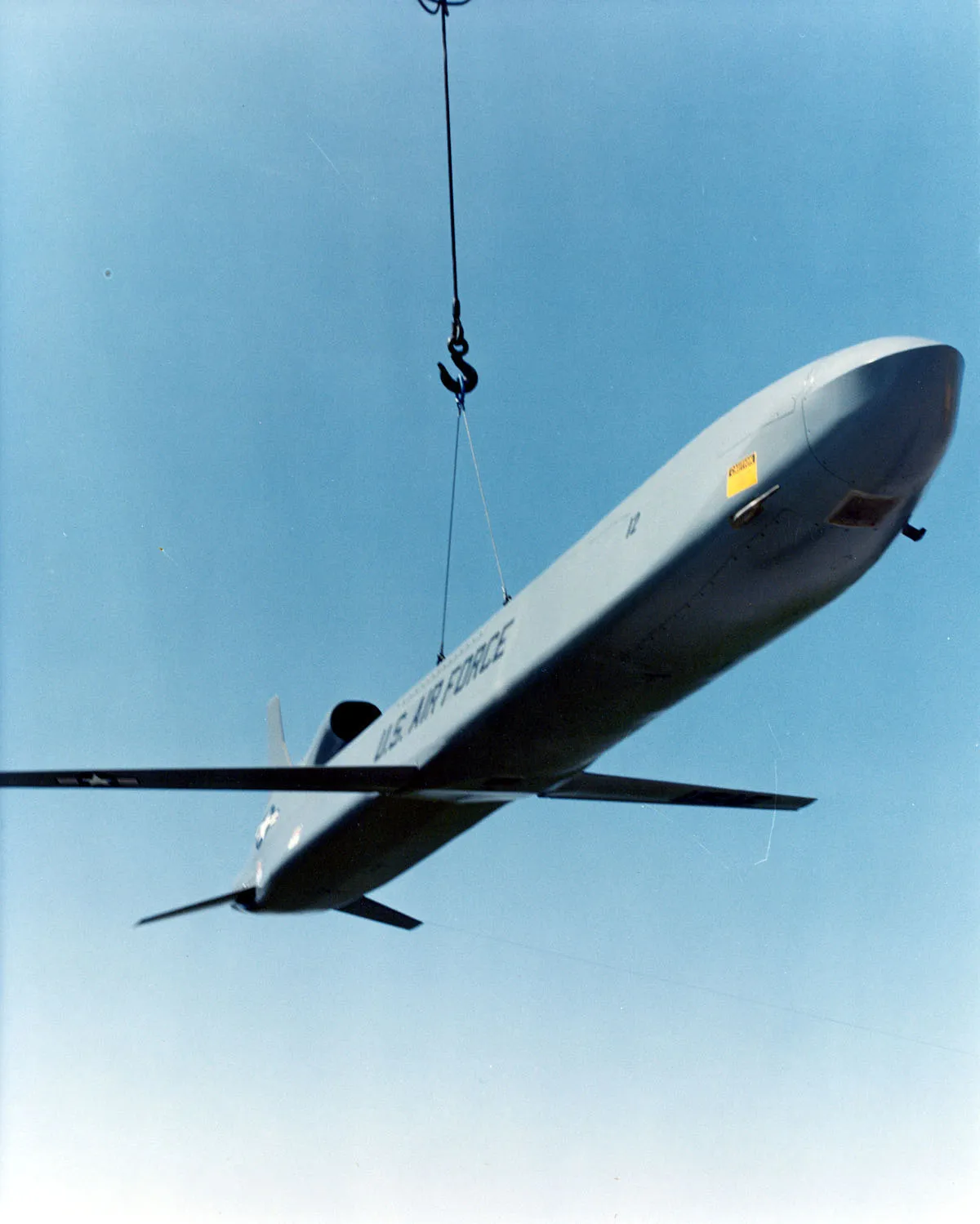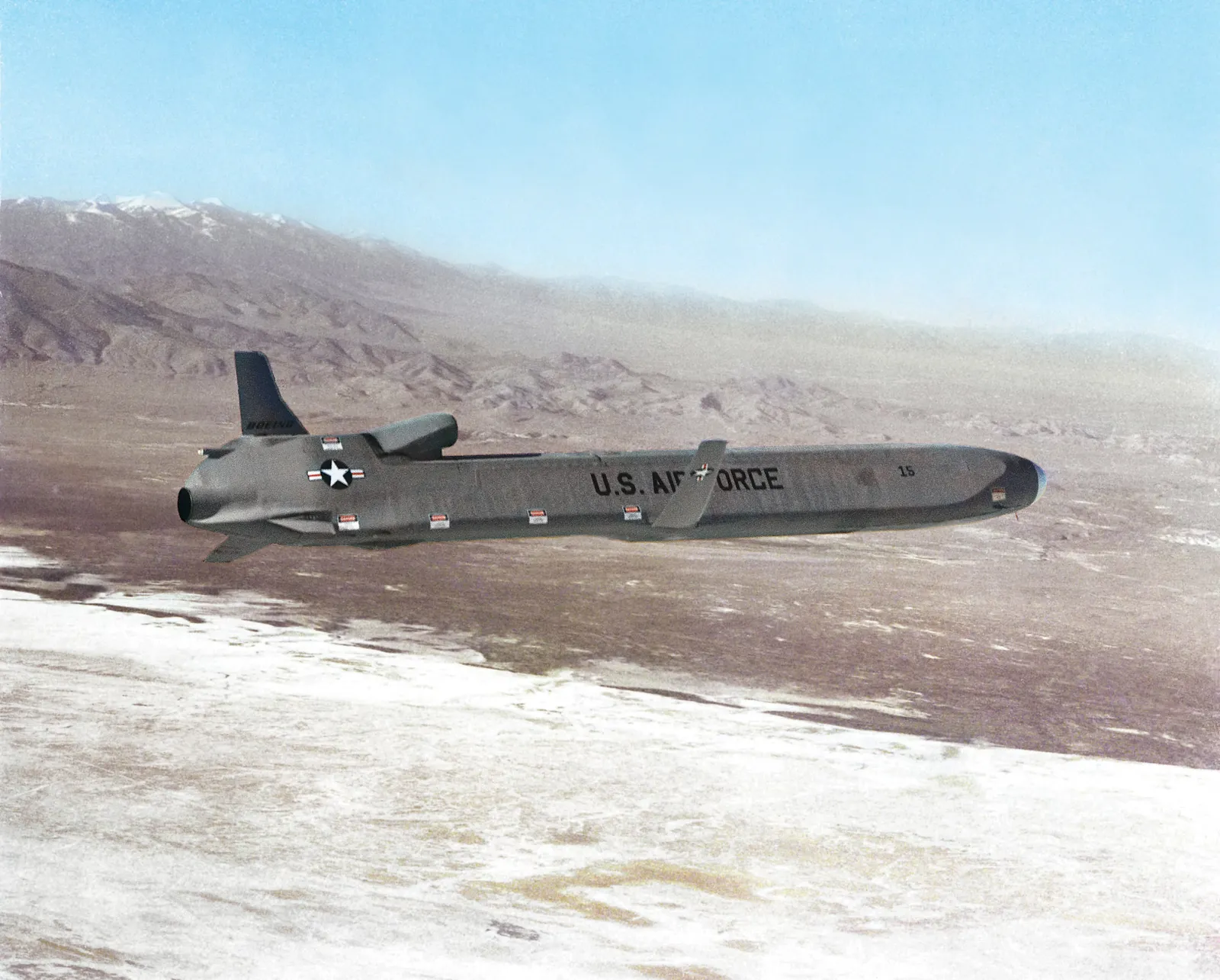
- Side
- Coalition forces

Seven B-52s from Barksdale launched 35 AGM-86C CALCMs at Iraqi targets during the opening phase of Operation Desert Storm.
Role detailsThe AGM-86B/C/D missiles are Boeing-built U.S. air-launched cruise missiles developed for B-52 bomber standoff strike. The AGM-86A prototype did not enter production; the longer-range AGM-86B became the nuclear ALCM, while the AGM-86C and AGM-86D CALCM conversions replaced the nuclear payload with conventional blast/fragmentation or penetrating warheads. Air Force material lists AGM-86B as the remaining active-force variant and says the C/D stockpile was demilitarized by October 2022.
Seven B-52s from Barksdale launched 35 AGM-86C CALCMs at Iraqi targets during the opening phase of Operation Desert Storm.
Role detailsNATO Operation Allied Force used AGM-86C CALCMs from B-52s operating from forward bases in England against long-range strategic targets.
Air Force service material lists the CALCM among weapons employed in Operation Enduring Freedom.
Role detailsAir Combat Command material says AGM-86C and AGM-86D CALCMs were successfully used in Operation Iraqi Freedom.
Role detailsThe family moved from the unproduced AGM-86A prototype to the AGM-86B nuclear ALCM, then to conventional AGM-86C/D CALCM conversions of excess ALCM inventory.
| Variant | Configuration | Designation notes |
|---|---|---|
| AGM-86A | Prototype air-launched cruise missile | Solicited for development and flight test in February 1974; the A model was slightly smaller than the later B, C and D models and did not enter production. Sources: AGM-86B/C/D Missiles | U.S. Air Force, Air-Launched Cruise Missile (AGM-86) | Air Force Nuclear Weapons Center |
| AGM-86B | Nuclear ALCM | Full-scale development began in January 1977; the missile uses terrain-contour-matching updates and entered operational service in December 1982. |
| AGM-86C CALCM | Conventional blast/fragmentation CALCM | Converted from AGM-86B inventory beginning in 1986 with GPS-aided inertial navigation; Block 0 carried a 2,000-pound-class warhead and Block I a 3,000-pound-class warhead. Sources: AGM-86B/C/D Missiles | U.S. Air Force, Air-Launched Cruise Missile (AGM-86) | Air Force Nuclear Weapons Center |
| AGM-86D CALCM | Conventional penetrating-warhead CALCM | Small-inventory CALCM variant with a 1,200-pound-class advanced unitary penetrating warhead; Air Force data lists deployment in November 2001. Sources: AGM-86B/C/D Missiles | U.S. Air Force, U.S. Air Force Successfully Tests Boeing AGM-86D CALCM |
The Air Force fact sheet identifies the B-52H Stratofortress as the carrier aircraft for the AGM-86B/C/D family.
| Carrier | Carrier type | Carriage evidence |
|---|---|---|
 | Long-range heavy bomber | The fact sheet says B-52H bombers carry six AGM-86B/C/D missiles on each of two externally mounted pylons and eight internally on a rotary launcher, for a maximum of 20 missiles per aircraft. |
In February 1974, the Air Force solicited development and flight-test proposals for a prototype AGM-86A.
Sources: AGM-86B/C/D Missiles | U.S. Air Force
The Air Force started full-scale development of the longer-range AGM-86B after the unproduced AGM-86A prototype effort.
Sources: AGM-86B/C/D Missiles | U.S. Air Force
Production of the initial 225 AGM-86B missiles began in fiscal year 1980.
Sources: AGM-86B/C/D Missiles | U.S. Air Force
The AGM-86B entered operational service with the 416th Bombardment Wing at Griffiss Air Force Base in December 1982.
Sources: AGM-86B/C/D Missiles | U.S. Air Force
In June 1986, the Air Force retrofitted a limited number of AGM-86B missiles with a high-explosive blast/fragmentation warhead and GPS-aided inertial navigation, creating the AGM-86C CALCM.
Sources: AGM-86B/C/D Missiles | U.S. Air Force
The Air Force fact sheet lists 1,715 AGM-86B missiles completed by October 1986.
Sources: AGM-86B/C/D Missiles | U.S. Air Force
The conventional AGM-86C variant became operational in January 1991.
Sources: AGM-86B/C/D Missiles | U.S. Air Force
From 1996 through 2001, the Air Force contracted conversion of excess ALCM inventory to produce 200 additional CALCMs, including Block I upgrades and a small AGM-86D penetrating-warhead inventory.
Sources: AGM-86B/C/D Missiles | U.S. Air Force, Air-Launched Cruise Missile (AGM-86) | Air Force Nuclear Weapons Center
Air Force data lists AGM-86D deployment in November 2001, and Boeing reported a B-52-launched AGM-86D test against a hardened buried target complex that month.
Sources: AGM-86B/C/D Missiles | U.S. Air Force, U.S. Air Force Successfully Tests Boeing AGM-86D CALCM
Air Force Global Strike Command retired the CALCM weapon system in early spring 2019.
Sources: AGM-86B/C/D Missiles | U.S. Air Force, Air-Launched Cruise Missile (AGM-86) | Air Force Nuclear Weapons Center
The Air Force Nuclear Weapons Center says the retired AGM-86C/D missiles formerly based at Fairchild, Andersen and Barksdale were demilitarized as of October 2022.
Sources: Air-Launched Cruise Missile (AGM-86) | Air Force Nuclear Weapons Center