Aircraft & UAVs

F-35C Lightning II

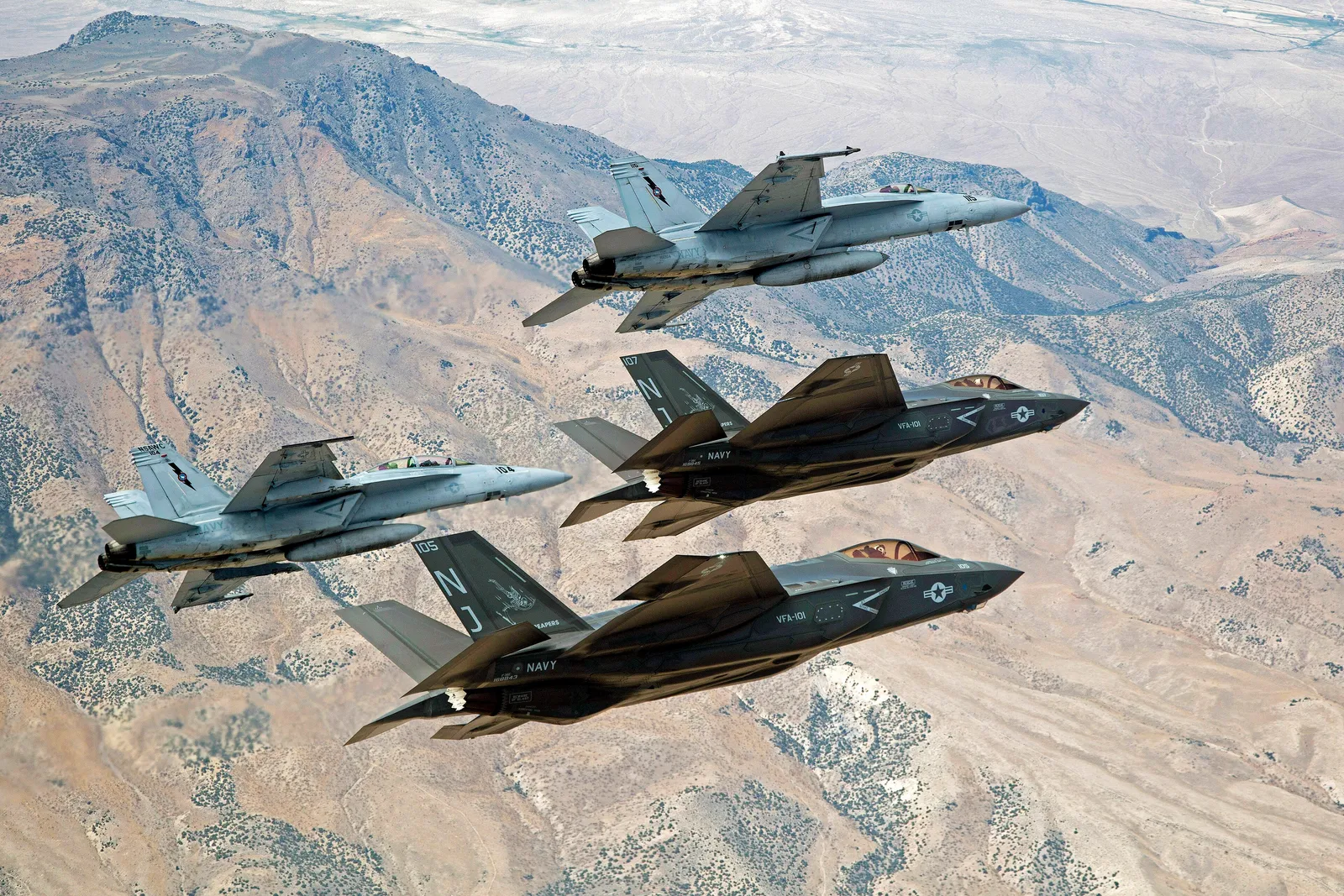
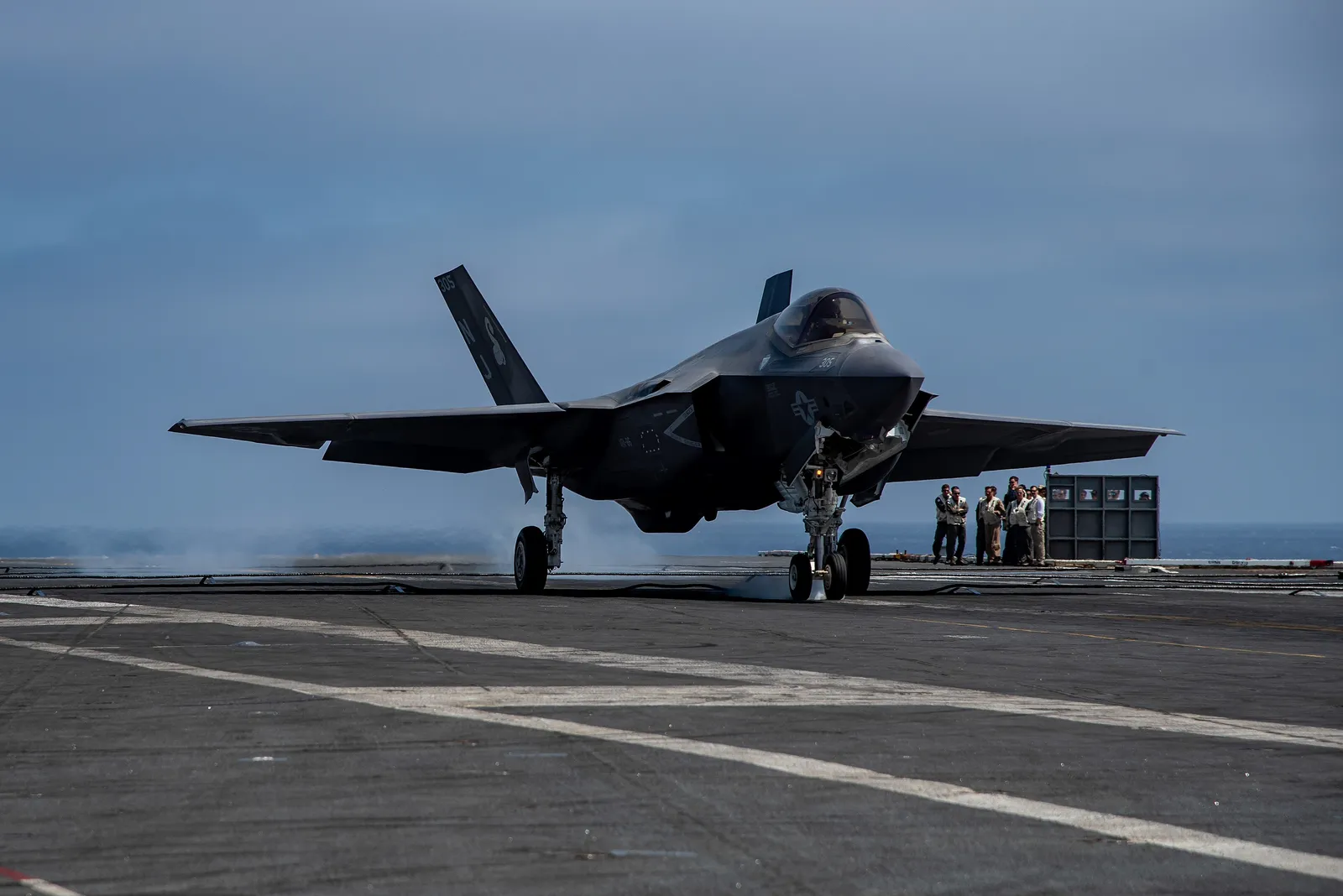
The F-35C Lightning II is the carrier variant of the Joint Strike Fighter, built for catapult launches and arrested landings with larger wings, folding wingtips, strengthened landing gear, internal fuel for long-range carrier operations, and a sensor suite intended for strike, air-to-air, reconnaissance, and electronic-warfare missions. U.S. Marine Corps F-35Cs made the variant's first documented combat strikes against Houthi targets in Yemen in 2024, and an F-35C was later reported shooting down an Iranian Shahed-139 drone near USS Abraham Lincoln in 2026.

Role in Conflicts

Profile / Specs

Profile

Origin
United States
Type
Carrier-based stealth multirole fighter
Service note
Entered U.S. Navy service in 2019; documented in combat from 2024
Designer
Lockheed Martin
Designed
Joint Strike Fighter program; F-35C carrier variant developed for U.S. Navy CATOBAR operations
Produced
2000s-present
Developed from
Lockheed Martin X-35

Specifications

Crew
1
Variant designation
F-35C carrier variant / CV
Role
Carrier-based stealth multirole fighter for strike, air-to-air combat, reconnaissance, and electronic warfare
Length
51.5 ft / 15.7 m
Wingspan
43 ft / 13.1 m with folding wingtips for carrier deck handling
Combat radius
About 600 nautical miles on internal fuel
Range
Greater than 1,200 nautical miles
Speed
Mach 1.6, about 1,200 mph
Internal fuel
About 19,200-20,000 lb
Weapons payload
More than 5,000 lb internally or more than 18,000 lb combined internal and external load
Sensors
AESA radar, Distributed Aperture System, Electro-Optical Targeting System, and Helmet Mounted Display System
Carrier features
Catapult-assisted takeoff, arrested recovery, reinforced landing gear, and robust tailhook
Carrier Variant Design

The F-35C adapts the Joint Strike Fighter airframe for catapult-assisted takeoff and arrested recovery aboard U.S. Navy aircraft carriers. Its carrier-specific design emphasizes deck handling, recovery loads, fuel endurance, and data sharing with the rest of the carrier air wing.

Deck handling

The F-35C has the family's largest wingspan and folding wingtips, giving it low-speed carrier approach performance while conserving space on crowded flight decks.

Launch and recovery

The carrier model uses strengthened landing gear, a robust tailhook, and structure suited to catapult launches and fly-in arrestments.

Air-wing integration

Navy operational testing emphasized how F-35C sensors and data links pass information to other F-35s, legacy aircraft, carrier air wings, strike groups, and ground forces.

Variants

The F-35C is the carrier variant in the F-35A/B/C Joint Strike Fighter family, distinguished by larger wings, folding wingtips, reinforced landing gear, and carrier launch-and-recovery design.

VariantConfigurationDesignation notes
F-35 Lightning II, Fifth-generation stealth multirole fighter, Aircraft & UAVsF-35 Lightning IIJoint Strike Fighter family page

The F-35 family includes conventional, short-takeoff/vertical-landing, and carrier variants.

Sources: The ABCs of F-35

F-35A Lightning II, Conventional takeoff and landing stealth multirole fighter, Aircraft & UAVsF-35A Lightning IIConventional takeoff and landing variant

The F-35A is the conventional runway variant in the family.

Sources: The ABCs of F-35

F-35B Lightning II, STOVL stealth multirole fighter, Aircraft & UAVsF-35B Lightning IIShort takeoff/vertical landing variant

The F-35B adds short-takeoff and vertical-landing capability for Marine Corps and expeditionary aviation roles.

Sources: The ABCs of F-35

Carried Munitions

The carrier variant's standard internal load includes AIM-120C/D missiles and two 2,000-pound GBU-31 JDAM guided bombs.

Carried itemItem typeCarriage evidence
AGM-154 JSOW, Air-launched guided glide bomb, MunitionsAGM-154 JSOWAir-launched guided glide bomb

The Navy fact file states JSOW has been integrated on the F-35C, which is an explicit compatibility claim for that aircraft.

Sources: AGM-154 Joint Standoff Weapon (JSOW)

AIM-120C/D AMRAAM air-to-air missile, Beyond-visual-range air-to-air missile, MunitionsAIM-120C/D AMRAAM air-to-air missileBeyond-visual-range air-to-air missile

The F-35C Fast Facts sheet lists two AIM-120C/D air-to-air missiles in the carrier variant's standard internal weapons load.

Sources: F-35 Fast Facts - January 2021

Joint Direct Attack Munition (JDAM) guidance kit, GPS/INS guidance tail kit for free-fall bombs, MunitionsJoint Direct Attack Munition (JDAM) guidance kitGuided bomb

The F-35C Fast Facts sheet lists two 2,000-pound GBU-31 JDAM guided bombs in the carrier variant's standard internal weapons load.

Sources: F-35 Fast Facts - January 2021

AIM-9X Sidewinder missile, Short-range air-to-air missile, MunitionsAIM-9X Sidewinder missileShort-range air-to-air missile

UOTT live-fire testing reported two F-35C pilots each launching an AIM-9X-2 missile from the aircraft against a subscale drone.

Sources: UOTT Completes High-Tempo, Joint Testing on F-35

Launched Weapons
Launched itemItem typeLaunch evidence
AIM-9X Sidewinder missile, Short-range air-to-air missile, MunitionsAIM-9X Sidewinder missileShort-range air-to-air missile

UOTT live-fire testing reported two F-35C pilots each launching an AIM-9X-2 missile from the aircraft against a subscale drone.

Sources: UOTT Completes High-Tempo, Joint Testing on F-35

Compatible Weapons
Compatible itemItem typeCompatibility evidence
AGM-158C LRASM, Air-launched stealth anti-ship cruise missile, MunitionsAGM-158C LRASMLong-range anti-ship missile

Lockheed Martin reported the first phase of LRASM flight-science testing on the F-35C, with integration flight tests run from 2024 to 2026.

Sources: Lockheed Martin advances LRASM integration on F-35C after completing first phase of flight science testing

GBU-53/B Small Diameter Bomb II, Air-launched precision-guided bomb, MunitionsGBU-53/B Small Diameter Bomb IIAll-weather precision glide bomb

NAVAIR lists F-35B/C as Department of the Navy threshold platforms for SDB II, and RTX says F-35 integration activities have begun.

Sources: Small Diameter Bomb Increment II (SDB II), StormBreaker Smart Weapon

Timeline

F-35C Lightning II Key Events

  1. First F-35C Flight

    The first carrier-variant F-35C flew from Naval Air Station Fort Worth Joint Reserve Base, opening the carrier model's flight-test program.

    Sources: U.S. Navy Version of Lockheed Martin F-35 Makes First Flight

  2. First Carrier Arrested Landing

    F-35C test aircraft CF-03 made the variant's first arrested landing aboard USS Nimitz during developmental testing.

    Sources: First F-35C Lands Aboard U.S. Navy Aircraft Carrier

  3. Operational Test-1 Aboard USS Abraham Lincoln

    VFA-125 F-35Cs joined carrier air-wing operations aboard USS Abraham Lincoln for suitability, integration, and mission-effectiveness testing.

    Sources: F-35C Lightning II Conducts Operational Test-1 Aboard USS Abraham Lincoln

  4. Initial Operational Capability

    The Navy and Marine Corps announced F-35C initial operational capability after VFA-147 completed carrier qualifications and received Safe-For-Flight certification.

    Sources: F-35C Achieves Initial Operational Capability

  5. First Carrier Strike Group Deployment

    USS Carl Vinson departed with F-35C aircraft and CMV-22B logistics aircraft, marking the first carrier strike group deployment with the new capabilities.

    Sources: USS Carl Vinson Arrives in Yokosuka

  6. First Operational Deployment Completed

    VFA-147 completed its first operational F-35C deployment aboard USS Carl Vinson after Pacific carrier operations.

    Sources: Navy's F-35C Brings Unparalleled Capabilities to USS Carl Vinson Carrier Strike Group

  7. First Combat Strikes

    VMFA-314 F-35C aircraft from USS Abraham Lincoln conducted the platform's first combat strikes against Houthi weapons storage facilities in Yemen.

    Sources: U.S. Marine Squadron Conduct First Combat Strikes Using F-35C Platform Against Houthi Targets in Yemen

  8. Reported Drone Intercept

    USNI News reported that an F-35C operating from USS Abraham Lincoln shot down an Iranian Shahed-139 drone approaching the carrier in the Arabian Sea.

    Sources: Marine F-35C Downs Iranian Drone Near Carrier Lincoln

Media

F-35C Lightning II Images

Related Weapon Systems
F-35A Lightning II, Conventional takeoff and landing stealth multirole fighter, Aircraft & UAVsAircraft & UAVsF-35A Lightning IIConventional takeoff and landing stealth multirole fighterThe F-35A Lightning II is the conventional takeoff and landing branch of the Joint Strike Fighter family, built for land-based air forces that need stealth strike, air-to-air, sensor-fusion, and suppression-of-enemy-air-defense missions. U.S. Air Force F-35As have directly documented combat use in Iraq against ISIS, in U.S. strikes on Houthi targets in Yemen, and in the June 2025 Operation Midnight Hammer strike package against Iranian nuclear sites.
F-35B Lightning II, STOVL stealth multirole fighter, Aircraft & UAVsAircraft & UAVsF-35B Lightning IISTOVL stealth multirole fighterThe F-35B Lightning II is the short takeoff and vertical landing variant of the Joint Strike Fighter, pairing stealth sensors and internal weapons carriage with a lift-fan propulsion system for amphibious ships and austere sites. Marine and allied F-35Bs have been documented in Afghanistan combat strikes, anti-Daesh missions from HMS Queen Elizabeth, and U.S. 5th Fleet flight operations during the 2026 phase of the 2020 United States-Iran Conflict.
F-35I Adir, Israeli F-35A-derived stealth multirole fighter, Aircraft & UAVsAircraft & UAVsF-35I AdirIsraeli F-35A-derived stealth multirole fighterThe F-35I Adir is Israel's locally designated F-35 Lightning II variant, a single-seat stealth multirole fighter operated from Nevatim Air Base and adapted for Israeli Air Force command, sustainment, and weapons-integration needs. Israeli F-35I aircraft have directly documented combat use in Syria, Gaza-war air defense, Lebanon-related Hezbollah operations, and the Israel-Iran conflict, including an official 2026 IDF account of an Adir shooting down an Iranian Yak-130 over Tehran.
EA-18G Growler, Carrier-capable airborne electronic attack aircraft, Electronic WarfareElectronic WarfareEA-18G GrowlerCarrier-capable airborne electronic attack aircraftThe EA-18G Growler is a Boeing-built electronic attack derivative of the two-seat F/A-18F Super Hornet, fielded to jam, detect, and attack hostile radars, communications, and air-defense networks while retaining missile carriage for suppression missions. U.S. Navy and Australian Growlers provide carrier or land-based electronic warfare support, with early combat deployment in Iraq and Libya in 2010-2011 and later documented use in 2014 Operation Inherent Resolve, Red Sea operations against Houthi forces, and the U.S.-Iran strike context.
F/A-18 Hornet (Tactical), Carrier-capable multirole strike fighter, Aircraft & UAVsAircraft & UAVsF/A-18 Hornet (Tactical)Carrier-capable multirole strike fighterThe F/A-18 Hornet (Tactical) is the National Naval Aviation Museum's label for the original McDonnell Douglas F/A-18 A-D Hornet family, a twin-engine carrier-capable strike fighter that entered Marine Corps service in 1983 and U.S. Navy service in 1984. NAVAIR describes the Hornet as the nation's first all-weather fighter and attack aircraft; its documented combat record spans Libya, Desert Storm, Kosovo, Afghanistan, Iraq, and later coalition campaigns.
F/A-18E/F Super Hornet, Carrier-capable multirole strike fighter, Aircraft & UAVsAircraft & UAVsF/A-18E/F Super HornetCarrier-capable multirole strike fighterBoeing's F/A-18E/F Super Hornet is a U.S. Navy carrier-capable multirole strike fighter developed from the Hornet family for fleet air defense, escort, interdiction, close air support, aerial refueling, suppression of enemy air defenses, and day/night precision strike. The single-seat F/A-18E and two-seat F/A-18F anchor carrier air wings through Block II and Block III upgrades, with documented U.S. Navy use in Afghanistan drawdown support, Operation Inherent Resolve, the Red Sea crisis, Somalia strikes, and U.S. operations against Iran.

Sources