Munitions

AGM-62 Walleye

Also known as
  • Walleye
  • AGM-62A
  • Guided Weapon MK 1
  • Walleye I
  • Walleye II
  • ERDL Walleye

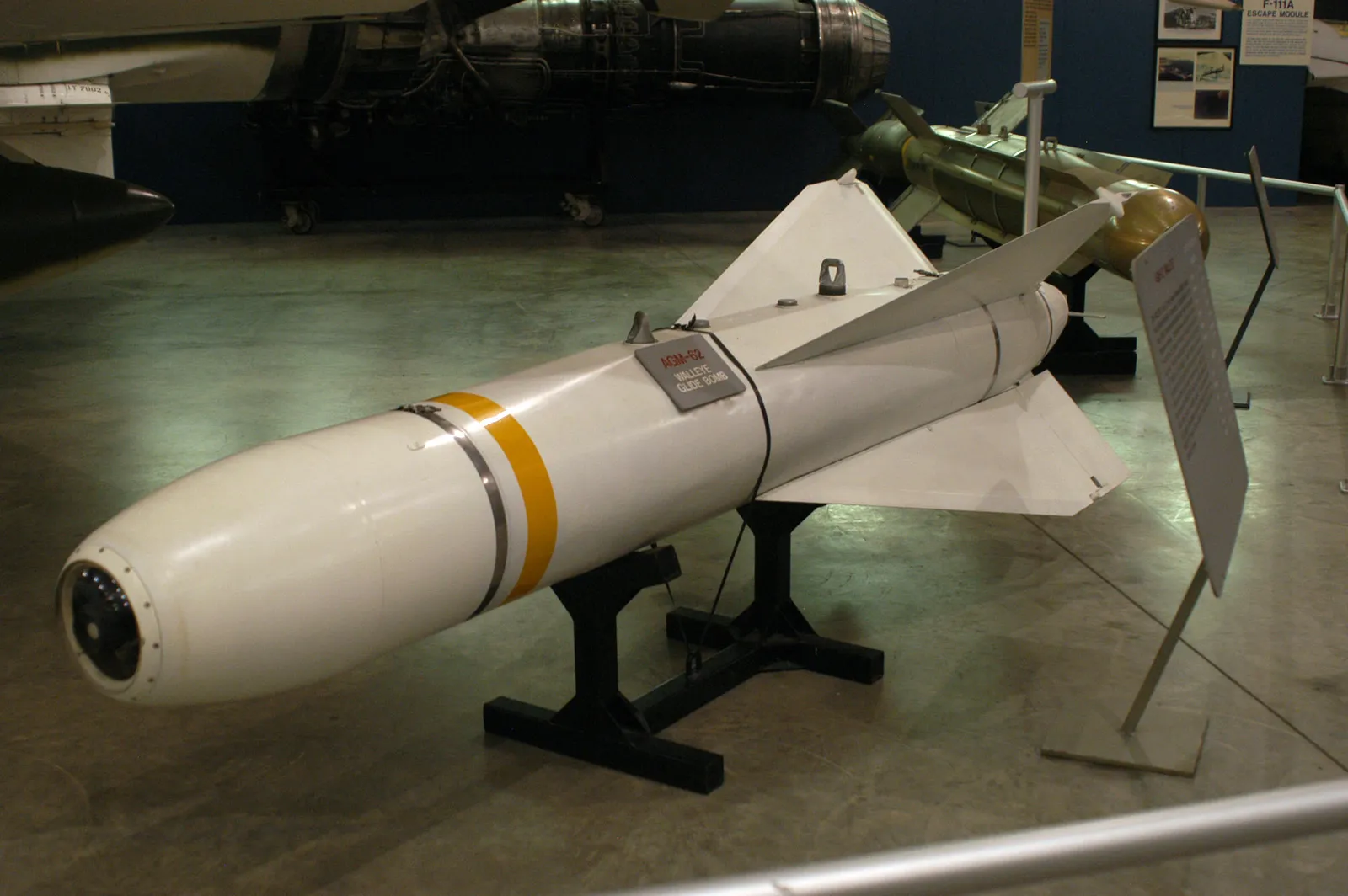
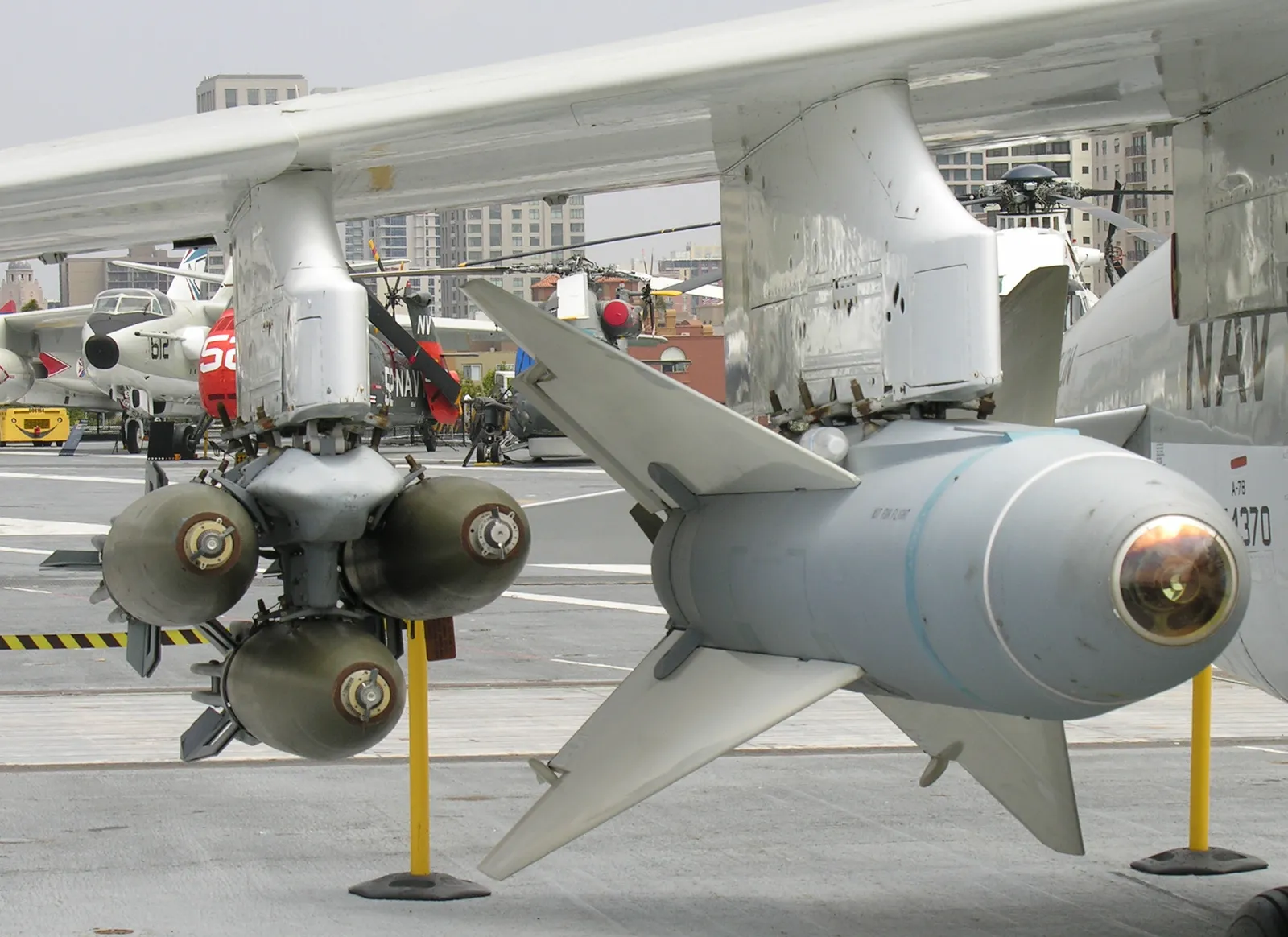
The AGM-62 Walleye is a U.S. TV-guided glide bomb family developed at China Lake by the Naval Ordnance Test Station and later produced by Martin Marietta, with Walleye II built by Hughes under subcontract. The unpowered weapon used a nose-mounted television camera for lock-on guidance, entered Navy service in 1967, and later evolved into larger, extended-range, and data-link versions.

Profile / Specs

Specifications

Guidance
Nose-mounted television camera with image lock-on; later data-link variants
Length
3.45 m (136 in) for Walleye I; 4.04 m (159 in) for Walleye II
Wingspan
1.15 m (45.5 in) for Walleye I; 1.30 m (51 in) for Walleye II
Diameter
0.318 m (12.5 in) for Walleye I; 0.457 m (18 in) for Walleye II
Weight
510 kg (1,125 lb) for Walleye I; 1,060 kg (2,340 lb) for Walleye II
Range
30 km (16 nm) for Walleye I; 45 km (24 nm) for Walleye II; about 60 km (32 nm) for Walleye II ERDL
Warhead
374 kg (825 lb) MK 58 linear shaped-charge for Walleye I; 900 kg (2,000 lb) MK 87 linear shaped-charge for Walleye II
Propulsion
None
Variants
  • Walleye I MK 1
  • Walleye I ER MK 3
  • Walleye I ERDL MK 21
  • Walleye II MK 5
  • Walleye II ERDL MK 23
  • Walleye I ERDL / DPSK MK 29
  • Walleye II ERDL / DPSK MK 30
Carrier Aircraft

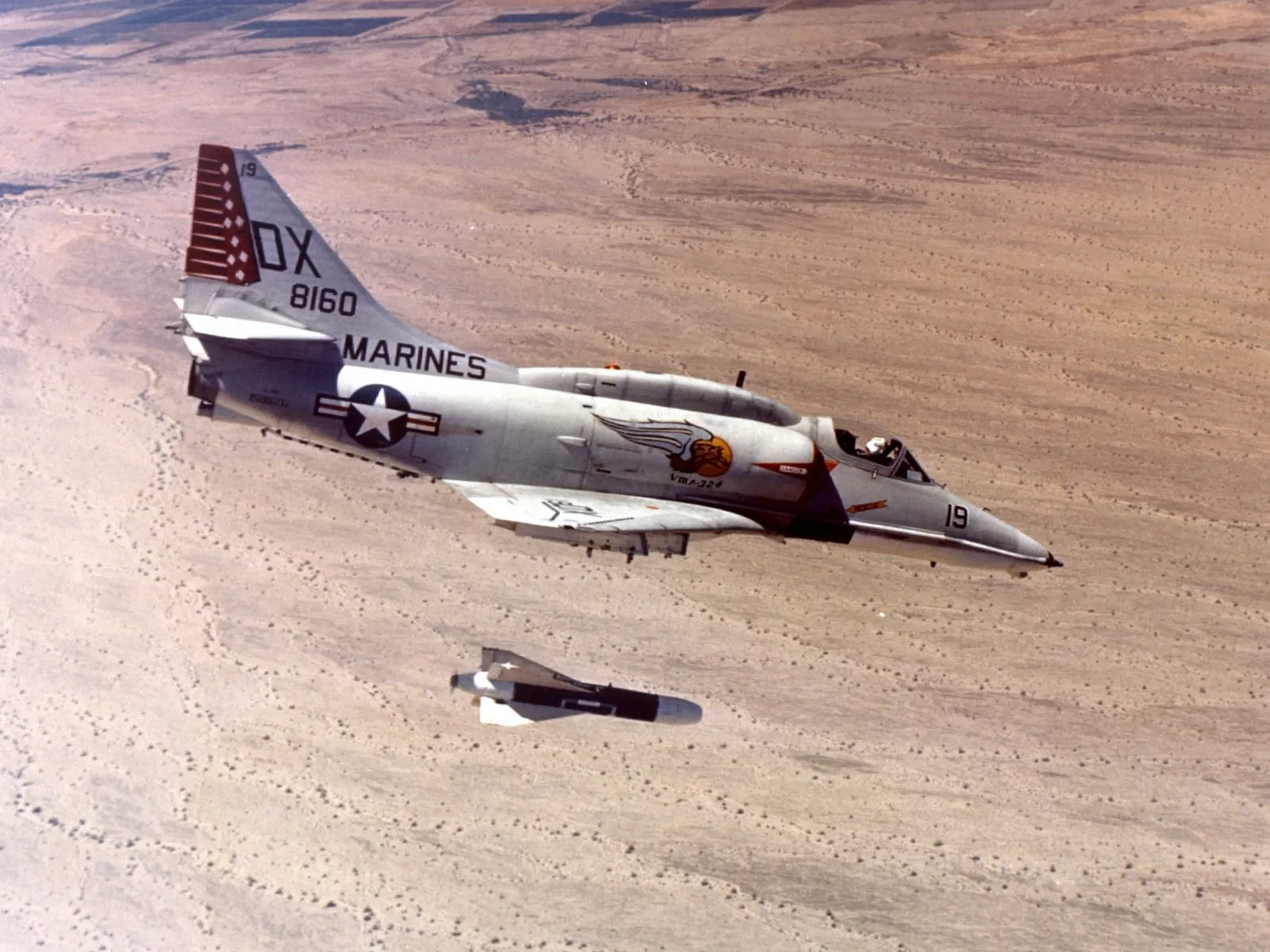
Skyhawk ordnance coverage lists AGM-62 Walleye among the A-4's smart weapons and names Walleye-capable Skyhawk variants.

CarrierCarrier typeCarriage evidence
A-4 Skyhawk, Carrier-based light attack aircraft, Aircraft & UAVsA-4 SkyhawkCarrier-based attack aircraft

The Skyhawk ordnance page lists AGM-62 Walleye among the A-4's smart weapons and names Walleye-provisioned A-4 variants.

Sources: Skyhawk Ordnance | The Skyhawk Association

Major Marks

The Walleye family began as a nose-camera glide bomb and later expanded into larger and longer-range marks with data-link control.

MarkTypeDistinguishing note
Walleye I MK 1 MOD 0Baseline TV-guided glide bombOriginal 1,100-pound version with a 374-kilogram warhead.
Walleye I ER MK 3Extended-range Walleye IUsed larger wings for more glide range.
Walleye II MK 5Heavy TV-guided glide bombLarger 2,000-pound warhead and body for harder targets.
Walleye II ERDL / DPSKData-link extended-range versionAdded two-way data-link control for beyond-visual-range attacks.
Timeline

AGM-62 Walleye Key Events

  1. Development begins

    The Naval Ordnance Test Station at China Lake began development of the unpowered television-guided glide bomb in 1963.

    Sources: Martin Marietta AGM-62 Walleye - Designation-Systems.Net

  2. Production contract

    Martin received the Walleye production contract in January 1966 after the guidance-system competition.

    Sources: Martin Marietta AGM-62 Walleye - Designation-Systems.Net

  3. Navy service begins

    The Walleye entered service with the U.S. Navy in 1967.

    Sources: Martin Marietta AGM-62 Walleye - Designation-Systems.Net, Martin Marietta AGM-62 Walleye I - National Museum of the USAF

  4. Walleye II enters service

    The larger Walleye II entered U.S. Navy service in January 1974.

    Sources: Martin Marietta AGM-62 Walleye - Designation-Systems.Net

  5. ERDL production ends

    Production of the ERDL Walleye variants ended in 1976.

    Sources: Martin Marietta AGM-62 Walleye - Designation-Systems.Net

  6. Desert Storm use

    The Walleye returned to combat in Operation Desert Storm in 1991 before later retirement.

    Sources: Martin Marietta AGM-62 Walleye - Designation-Systems.Net, Martin Marietta AGM-62 Walleye I - National Museum of the USAF

  7. Active-service retirement

    The Walleye was removed from active service in the mid-1990s after the post-Desert Storm retirement of its main launch platform.

    Sources: Martin Marietta AGM-62 Walleye - Designation-Systems.Net

Service And Conflict Use

Service History

In service
Entered U.S. Navy service in 1967; Walleye II entered service in 1974 and the family was retired from active service in the mid-1990s.
Used by
United States Navy, United States Air Force, United States Marine Corps
Media
Related Weapon Systems

Sources