Aircraft & UAVs

20mm M197 rotary cannon

Also known as
  • 20mm M197
  • M197
  • M-197
  • M197 20mm Automatic Gun
  • 20mm M-197 Gatling Gun
  • M197 Gatling gun
  • M197 electric cannon
  • M197 20mm cannon

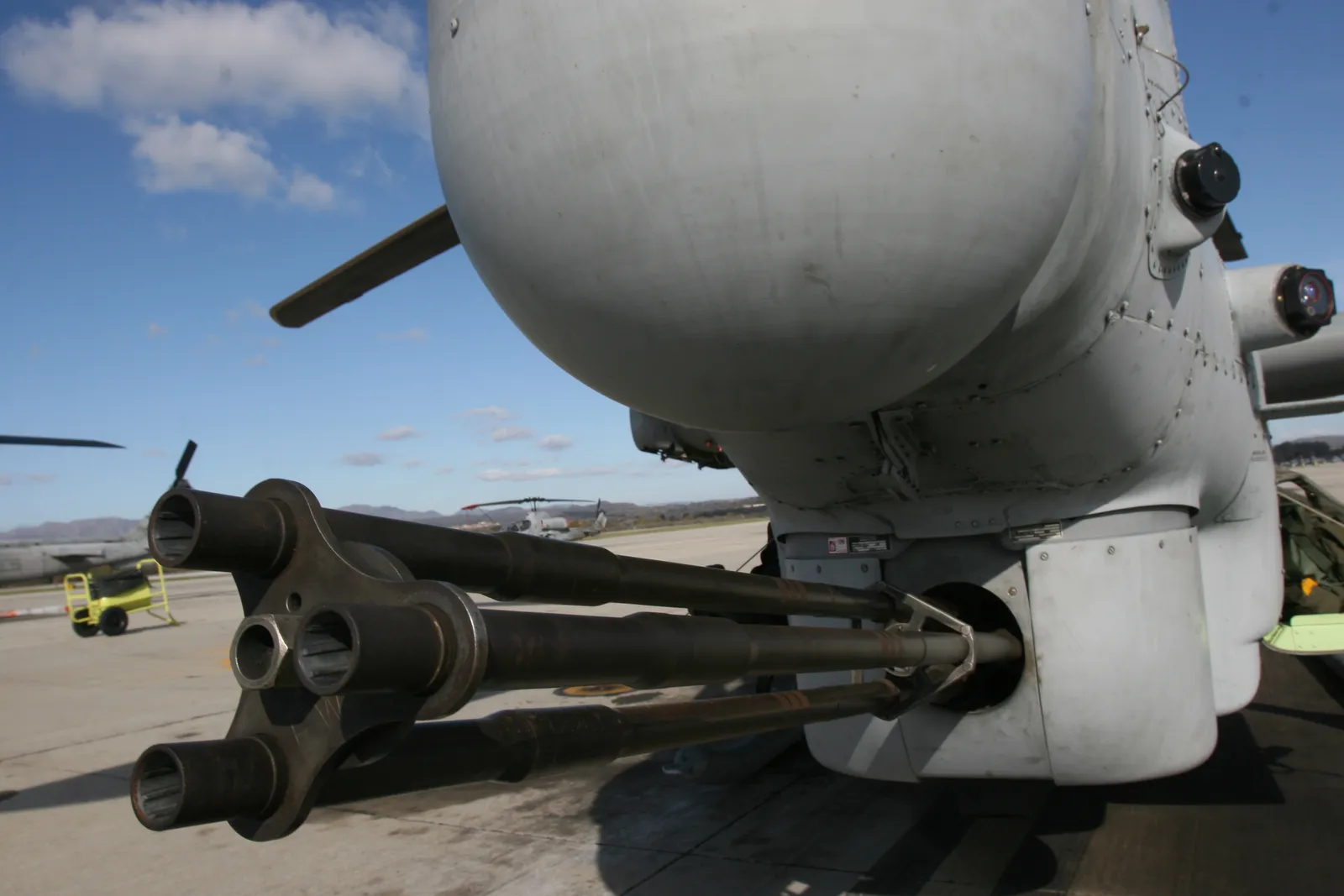
The 20mm M197 is a lightweight three-barrel Gatling aircraft cannon derived from the M61A1 Vulcan family for helicopter, light-aircraft, naval, turret, pod, and pintle installations. General Dynamics Ordnance and Tactical Systems markets the current M-197 and lists it on Marine Corps AH-1J, AH-1T, AH-1W, and AH-1Z aircraft, while FAS, DVIDS, Defense Media Network, and official Navy history sources document M197-equipped AH-1W and MH-60S context across Gulf War, Afghanistan, Iraq, and Operation Inherent Resolve service.

Role in Conflicts

FAS describes the AH-1W as armed with one M197 three-barrel 20 mm nose gun and says 48 Marine AH-1Ws deployed to Southwest Asia during Operation Desert Shield/Desert Storm, where the helicopters destroyed Iraqi tanks, armored vehicles, bunkers, and antiaircraft artillery sites.

Profile / Specs

Profile

Origin
United States
Type
20 mm three-barrel externally powered Gatling aircraft cannon
Service note
Cold War / modern
Produced
Current production/marketing by General Dynamics Ordnance and Tactical Systems; original M197 production start not confirmed in the cited sources.
Developed from
M61A1 Vulcan cannon

Specifications

Gun type
Three-barrel, 20 mm, externally powered Gatling gun
Weight
132 lb / 60 kg
Length
71.9 in / 1,827 mm
Rate of fire
Up to 1,500 shots per minute; FAS reports an AH-1 practical rate of 730 +/- 50 spm and GPU-2/A selectable 750 or 1,500 rpm
Muzzle velocity
3,380 ft/s / about 1,030 m/s
Dispersion
8.0 milliradians diameter, 80 percent circle with M50 ammunition
Average recoil force
1,300 lb / 5.8 kN
Drive system
Hydraulic, electric, or pneumatic
Feed system
Linked or linkless
AH-1 ammunition capacity
700 linked M50 or PGU-series 20 mm electrically primed rounds in the AH-1 installation
GPU-2/A ammunition capacity
300 linkless 20 mm rounds in the self-contained GPU-2/A gun pod
Documented applications
Marine Corps AH-1J, AH-1T, AH-1W, AH-1Z, and GPU-2/A gun pod
Carrier Aircraft

GD-OTS lists the M-197 on Marine Corps AH-1J, AH-1T, AH-1W, and AH-1Z aircraft and also identifies the GPU-2/A gun pod as an M-197 application.

CarrierCarrier typeCarriage evidence
AH-1W Super Cobra, Marine attack helicopter, Aircraft & UAVsAH-1W Super CobraAttack helicopter

DVIDS identifies the AH-1W Super Cobra's GPU-A2 nose installation in Afghanistan as directing a three-barrel M197 20 mm cannon, and GD-OTS lists the AH-1W among current Marine Corps M-197 applications.

Sources: DVIDS 3rd MAW Afghanistan M197, GD-OTS M-197 Gatling Gun

AH-1Z Viper attack helicopter, Attack helicopter, Aircraft & UAVsAH-1Z Viper attack helicopterAttack helicopter

GD-OTS lists the AH-1Z as a Marine Corps aircraft armed with the M-197; a Marine Corps public-domain photo separately shows an AH-1Z M197 barrel installation during deployed maintenance.

Sources: GD-OTS M-197 Gatling Gun, Marine Corps AH-1Z M197 Photo

Compatible Ammunition

GD-OTS describes the M940 MPT-SD as compatible with 20x102 mm gun systems that include the M197.

Compatible itemItem typeCompatibility evidence
M940 MPT-SD cartridge, 20 mm multi-purpose tracer self-destruct cartridge, MunitionsM940 MPT-SD cartridge20x102 mm multipurpose tracer-self-destruct cartridge

The GD-OTS M940 datasheet lists all M197 gun systems among compatible 20x102 mm systems and support equipment.

Sources: GD-OTS M940 MPT-SD

Installation And Feed Context

The M197 is the cannon element inside several installations rather than a single aircraft-specific weapon package. In AH-1 service, FAS describes the gun as attached to the A/A49E-7 turret assembly and fed from linked 20 mm ammunition; in the GPU-2/A pod, the same cannon is paired with a self-contained linkless ammunition system.

AH-1 installation

M197 cannon in an A/A49E-7 turret with 700 rounds of linked M50 or PGU-series electrically primed ammunition.

GPU-2/A pod

Self-contained M197 gun pod with 300 linkless rounds and selectable 750 or 1,500 round-per-minute firing rates.

Feed options

GD-OTS lists the M-197 as adaptable to linked or linkless feed systems for turret, pod, pintle, or internal installations.

Timeline

20mm M197 rotary cannon Key Events

  1. M197-armed AH-1Ws deploy for Desert Shield and Desert Storm

    FAS states that Marine Corps AH-1Ws armed with an M197 three-barrel 20 mm nose gun deployed to Southwest Asia during Operation Desert Shield and Operation Desert Storm.

    Sources: FAS AH-1W Super Cobra

  2. FAS summarizes AH-1 and GPU-2/A installations

    FAS described the AH-1 M197 as a lightweight short-barreled three-barrel Gatling gun and identified the GPU-2/A as a self-contained pod using the same cannon with a 300-round linkless ammunition system.

    Sources: FAS M197 Automatic Gun

  3. M197 documented in Afghanistan AH-1W service

    DVIDS reported AH-1W Super Cobras at Camp Leatherneck and Forward Operating Base Dwyer in Afghanistan and described the GPU-A2 nose installation directing the three-barrel M197 cannon at threats.

    Sources: DVIDS 3rd MAW Afghanistan M197

  4. Iraq AH-1W M197 account published

    Defense Media Network published a naval-aviation account of Marine AH-1W Super Cobra operations in Iraq that names the M197 20 mm cannon in the aircraft's chin turret.

    Sources: Defense Media Network Marine Cobras in Iraq

  5. AH-1Z M197 barrel maintenance photographed

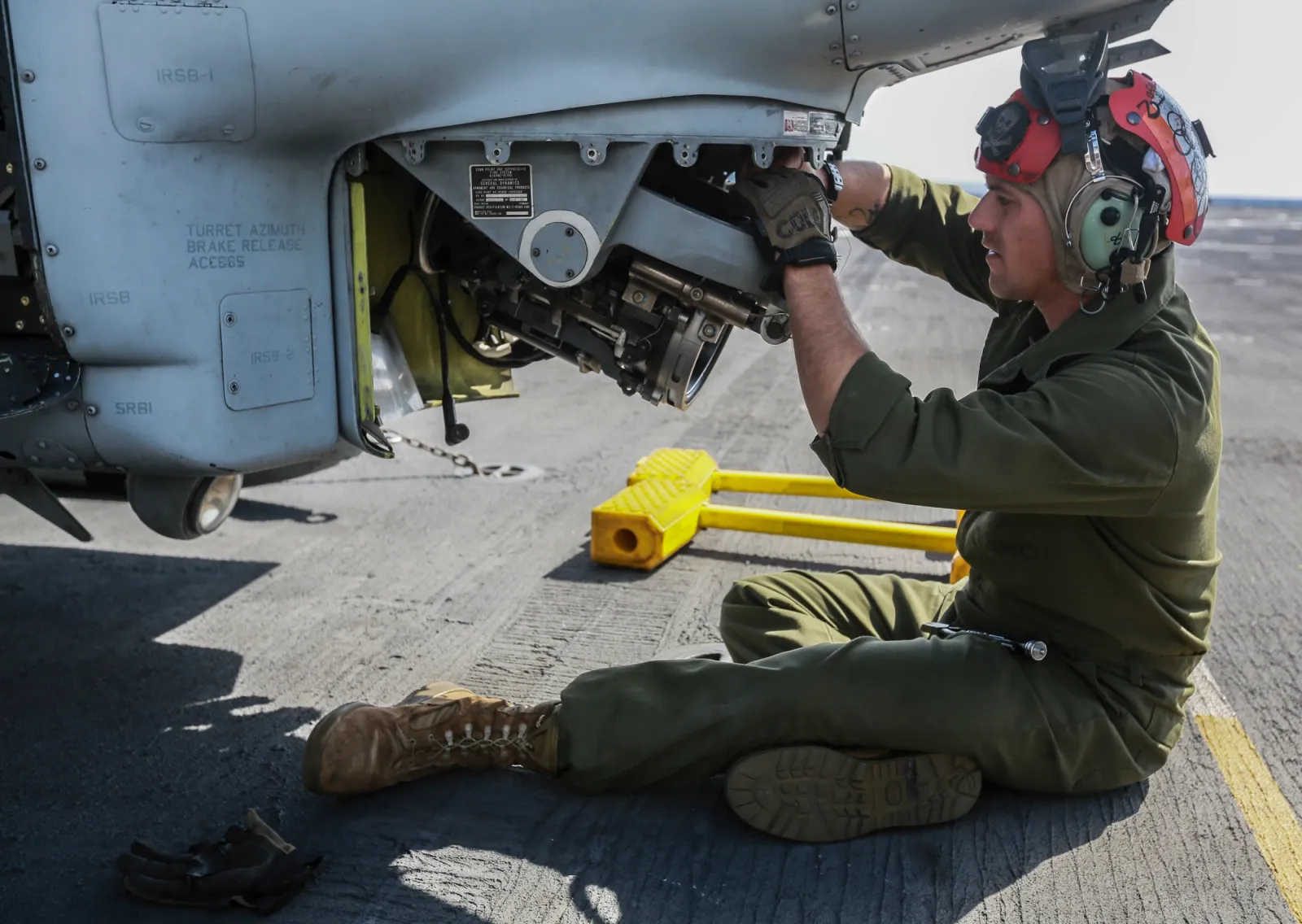
    A Marine Corps photo showed an aviation ordnance technician mounting an M197 20 mm automatic Gatling gun barrel on an AH-1Z Viper aboard USS Anchorage.

    Sources: Marine Corps AH-1Z M197 Photo

  6. HSC-9 notes M197 integration during OIR deployments

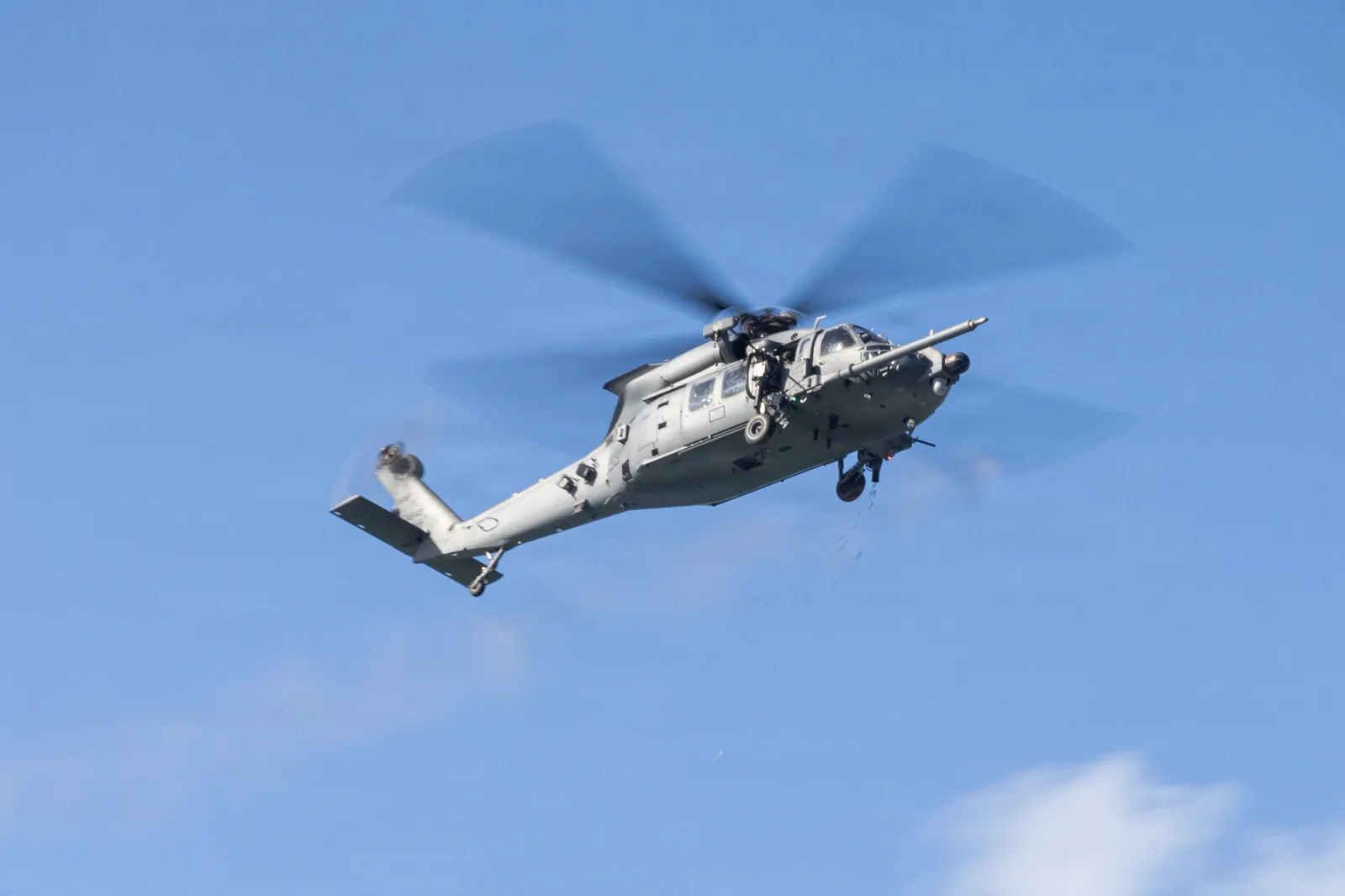
    The HSC-9 command history says the squadron's 2014 and 2017 USS George H.W. Bush deployments in support of Operation Inherent Resolve saw integration of the M197 20 mm Gatling gun and APKWS on MH-60S Seahawks.

    Sources: HSC-9 Command History

Media
Related Weapon Systems
M61A1 Vulcan cannon, 20mm aircraft cannon, Aircraft & UAVsAircraft & UAVsM61A1 Vulcan cannon20mm aircraft cannonThe M61A1 Vulcan cannon is a U.S.-origin six-barrel 20 mm Gatling aircraft gun developed from the Project Vulcan line and originally associated with General Electric. Official Air Force material describes the M61A1 as a high-rate rotary cannon driven by electrical, hydraulic, or ram-air systems, museum and DVIDS-hosted Air Force history sources document M61/M61A1 use by F-105 Thunderchiefs during the Vietnam War, and UNITED24 Media reported Ukrainian F-16 gunfire against Russian cruise missiles in 2024. General Dynamics material presents the related M61A2 as a lighter M61A1-family version for weight-critical aircraft installations.
AH-1W Super Cobra attack helicopter, Marine attack helicopter, Aircraft & UAVsAircraft & UAVsAH-1W Super Cobra attack helicopterMarine attack helicopterThe Bell AH-1W Super Cobra was the U.S. Marine Corps' twin-engine attack helicopter between the mid-1980s and 2020, bridging the AH-1T SeaCobra and the AH-1Z Viper. NAVAIR lists Bell as contractor and describes the type as an HMLA aircraft with T700 engines, a night targeting system, and a 14,750 lb maximum gross weight, while official Marine and Navy sources document AH-1W combat use from Desert Storm and Iraq to Afghanistan and Operation Odyssey Lightning in Libya.
AH-1W Super Cobra, Marine attack helicopter, Aircraft & UAVsAircraft & UAVsAH-1W Super CobraMarine attack helicopterThe Bell AH-1W Super Cobra was the U.S. Marine Corps' twin-engine attack helicopter between the mid-1980s and 2020, bridging the AH-1T SeaCobra and the AH-1Z Viper. NAVAIR identifies Bell as contractor and describes the type as an HMLA aircraft with T700 engines, a night targeting system, and a 14,750 lb maximum gross weight, while official Marine and Navy sources document AH-1W combat use from Desert Storm and Iraq to Afghanistan and Operation Odyssey Lightning in Libya.
AH-1Z Viper attack helicopter, Attack helicopter, Aircraft & UAVsAircraft & UAVsAH-1Z Viper attack helicopterAttack helicopterThe Bell AH-1Z Viper is a two-seat U.S. Marine Corps attack helicopter developed from the AH-1W Super Cobra for the H-1 upgrade program. NAVAIR describes it as the AH-1W replacement, with a four-bladed composite rotor, integrated fire-control system, six wing stores stations, and 85 percent parts commonality with the UH-1Y; official Marine Corps and Navy sources place AH-1Z-equipped elements in the 2016 Operation Inherent Resolve deployment.

Sources