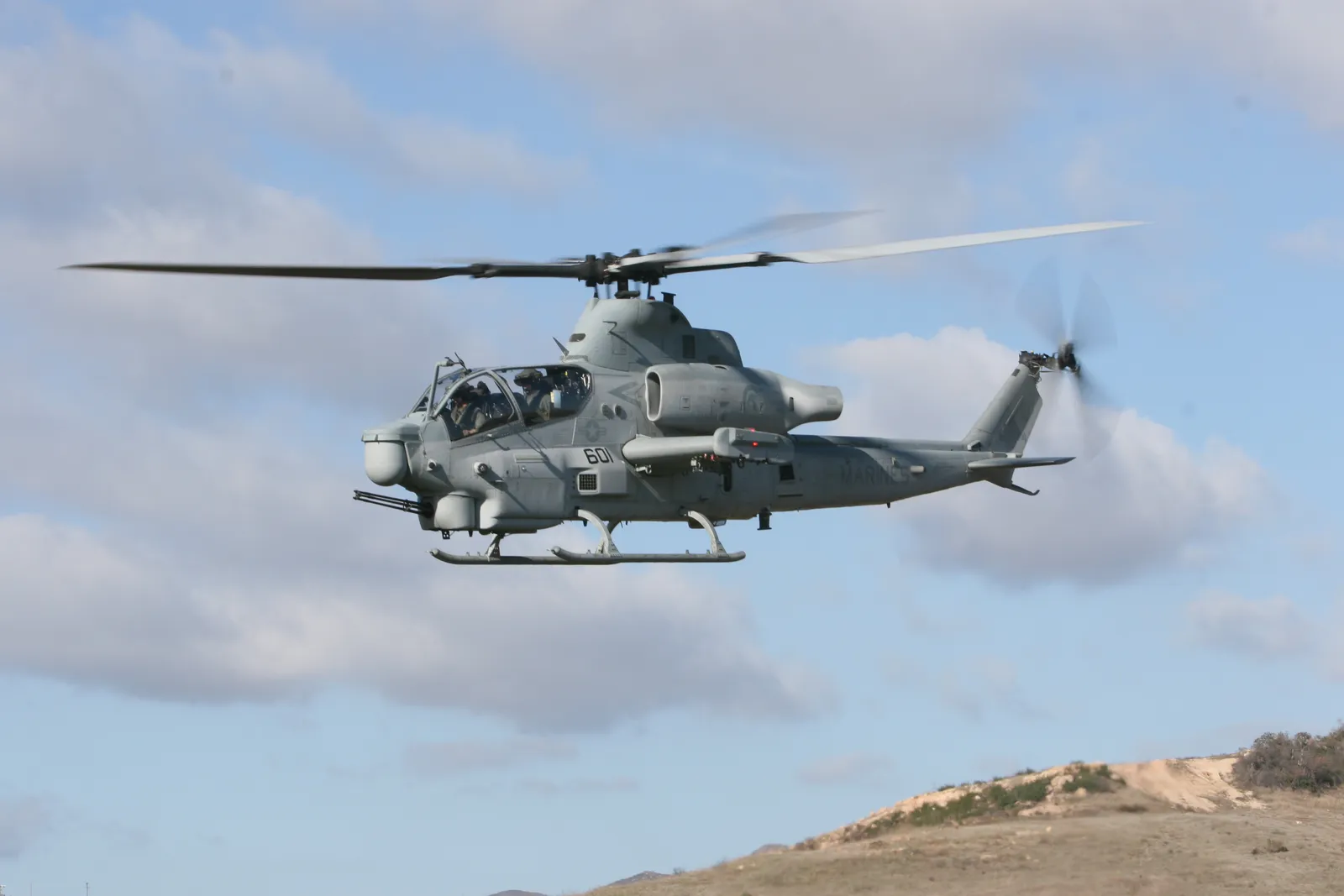

Official Marine Corps and Navy sources place AH-1Z-equipped HMLA-267 and 13th MEU/Boxer ARG elements in the 2016 Operation Inherent Resolve deployment, including AH-1Z patrol and flight-deck operations during the 5th Fleet support period.
Role detailsAircraft & UAVs
AH-1Z Viper attack helicopter
Also known as
- Bell AH-1Z
- AH-1Z
- Viper
- Zulu Cobra
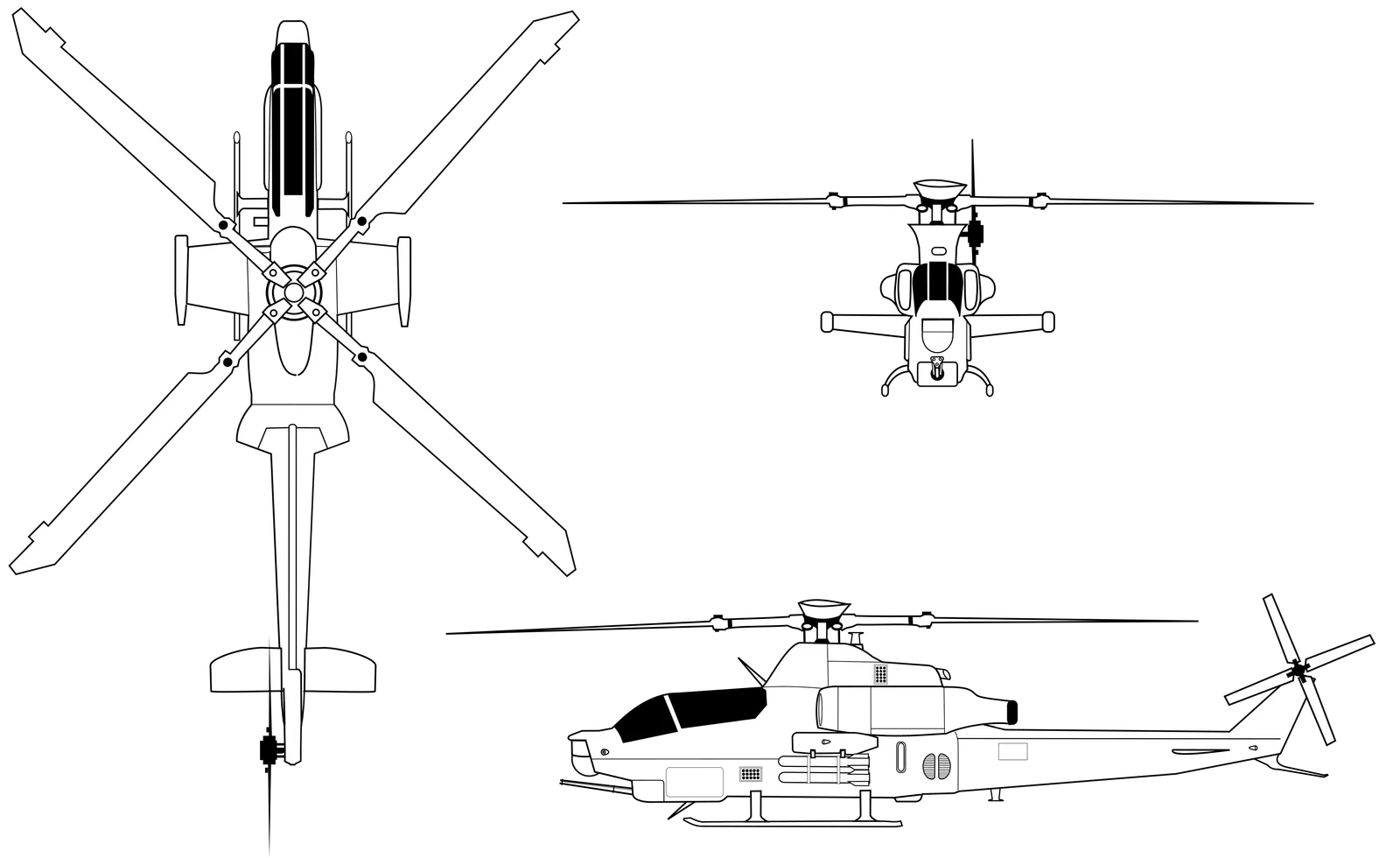
The Bell AH-1Z Viper is a two-seat U.S. Marine Corps attack helicopter developed from the AH-1W Super Cobra for the H-1 upgrade program. NAVAIR describes it as the AH-1W replacement, with a four-bladed composite rotor, integrated fire-control system, six wing stores stations, and 85 percent parts commonality with the UH-1Y; official Marine Corps and Navy sources place AH-1Z-equipped elements in the 2016 Operation Inherent Resolve deployment.
Role in Conflicts
Profile / Specs
Profile
- Origin
- United States
- Built by
- Bell
- Type
- Attack helicopter
- Service note
- 2010s-present
- Produced
- 2000-present
- Number built
- 189 delivered for the U.S. Marine Corps program of record
- Developed from
- AH-1W Super Cobra
Specifications
- Crew
- 2
- Power plant
- Two General Electric T700-GE-401C turboshaft engines
- Maximum speed
- 200 KIAS
- Combat radius
- 131 nm
- Maximum range
- 310 nm
- Overall length
- 58 ft 3 in
- Height
- 14 ft 4 in
- Maximum takeoff weight
- 18,500 lb
- Weapon stations
- 6
- Rotor system
- Four-bladed all-composite rotor
- Commonality
- About 85% commonality with the UH-1Y
- Armament
- 2 AIM-9 Sidewinders, 16 air-to-ground missiles, and weapons-system-guided rockets
H-1 Upgrade Lineage
NAVAIR frames the AH-1Z as the Marine Corps replacement for the AH-1W Super Cobra and the largest upgrade to the H-1 attack-helicopter line, built around a four-bladed all-composite rotor, upgraded powertrain, digital cockpit, greater payload capacity, and crash-worthy seating.
Predecessor
AH-1W Super Cobra attack helicopter
NAVAIR describes the AH-1Z as replacing the two-bladed AH-1W.
H-1 commonality
About 85 percent parts commonality with the UH-1Y.
NAVAIR and Bell both tie the commonality claim to lower logistics, maintenance, and training burden.
Variants
This entry treats the AH-1Z as the attack-helicopter member of the Marine Corps H-1 upgrade family, with the AH-1W predecessor linked where a public catalog record exists.
| Variant | Configuration | Designation notes |
|---|---|---|
 | Immediate Marine Corps predecessor | NAVAIR says the Marine Corps replaced the two-bladed AH-1W Super Cobra with the AH-1Z Viper, while Bell says retired AH-1W airframes were remanufactured into AH-1Z Vipers. Sources: AH-1Z Viper | NAVAIR, United States Marines Retire Bell AH-1W After 34 Years of Service |
| UH-1Y Venom | H-1 utility-helicopter companion design | NAVAIR and Bell describe the AH-1Z and UH-1Y as sharing about 85 percent commonality to reduce logistics, maintenance, and training burden across the H-1 fleet. Sources: AH-1Z Viper | NAVAIR, Bell H1 Aircraft: AH-1Z Attack and UH-1Y Utility Helicopter |
Carried Munitions
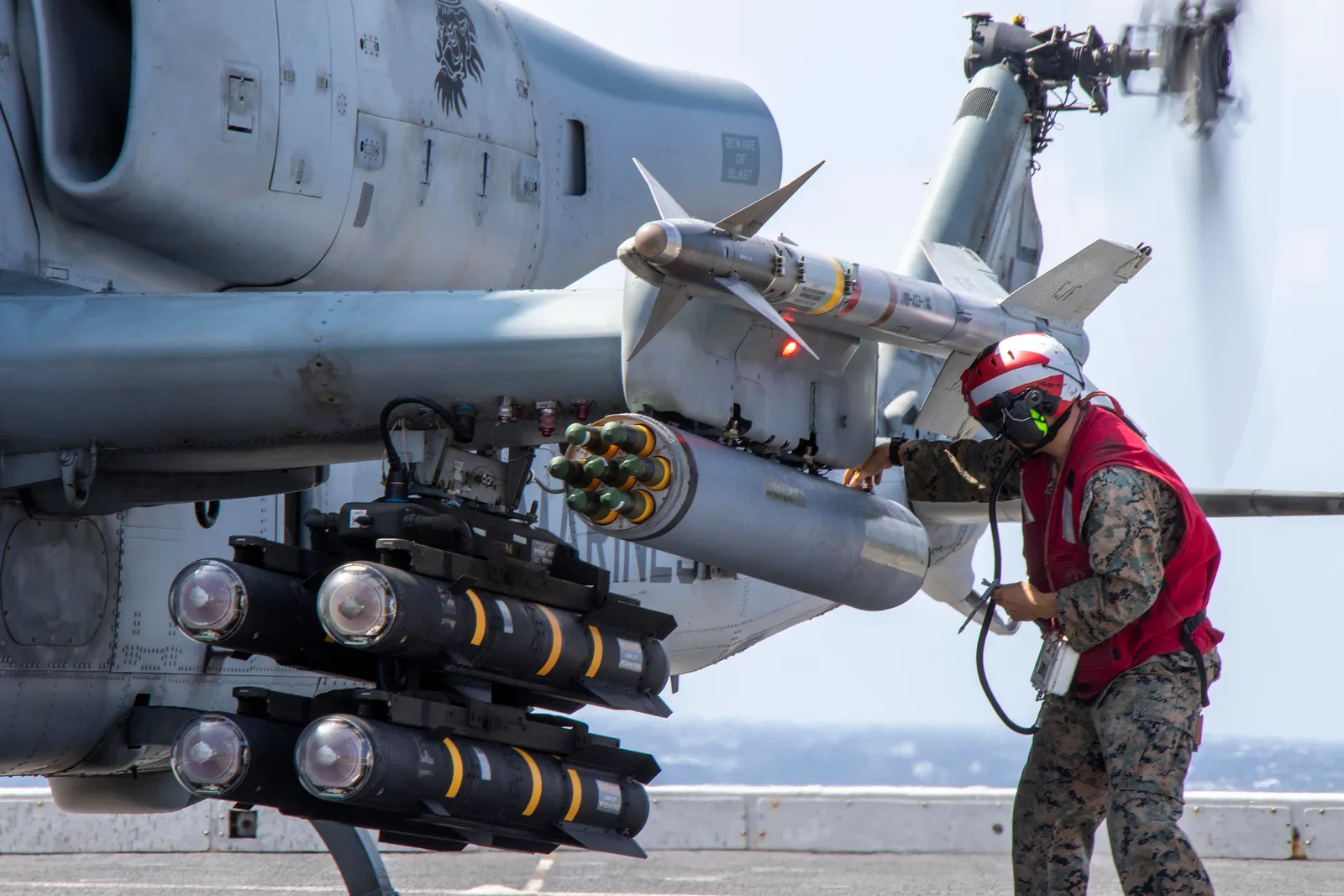
Bell and NAVAIR describe the AH-1Z as an attack-and-reconnaissance helicopter with air-to-ground missiles, air-to-air missiles, guided or unguided 70 mm rockets, and six wing stores stations.
| Carried item | Item type | Carriage evidence |
|---|---|---|
 | Air-to-surface precision-guided missile | The Navy reported that the Marine Corps declared JAGM initial operational capability on the AH-1Z and that AH-1Z pilots tested the missile in November and December 2021. |
 | Air-to-surface missile family | Bell lists an AH-1Z performance assumption with eight Hellfire missiles, and Lockheed Martin describes Hellfire as part of the same M299 launcher missile family later shared with JAGM. |
 | Short-range air-to-air missile | Bell says the AH-1Z has fully integrated air-to-air missile capability and lists two Sidewinder air-to-air missiles in its weapons-system feature description. Sources: Bell AH-1Z Viper |
 | Unguided 70 mm rocket family | Bell lists fourteen 70 mm rockets in an AH-1Z performance assumption and identifies those rockets as unguided or APKWS-equipped. Sources: Bell AH-1Z Viper |
 | Laser-guided 2.75-inch rocket family | Bell lists the AH-1Z rocket load as 70 mm rockets that may be unguided or APKWS guided, linking the aircraft to the cataloged 2.75-inch guided rocket family. Sources: Bell AH-1Z Viper |
Missile Launcher Compatibility
The JAGM/Hellfire relationship is tied to the M299 launcher family rather than a separate AH-1Z-specific launcher record.
| Compatible item | Item type | Compatibility evidence |
|---|---|---|
 | Reusable missile launcher | Lockheed Martin describes the M299 as a multi-platform launcher for Hellfire and JAGM, while AH-1Z sources document the aircraft carrying those missile families. Sources: M299 Launcher | Lockheed Martin, Bell AH-1Z Viper, Marine Corps JAGM Initial Operational Capability |
Documented Weapons Fit
Bell describes the AH-1Z weapons fit in terms of two Sidewinder air-to-air missiles, sixteen air-to-ground missiles, and weapons-system-guided rockets. Its performance assumptions list eight Hellfire missiles, fourteen 70 mm rockets that may be unguided or APKWS guided, 650 rounds of 20 mm ammunition, and 120 expendable countermeasures.
Air-to-ground missiles
AGM-179A JAGM and AGM-114 Hellfire missile family.
JAGM IOC on AH-1Z is documented by the U.S. Navy; Bell lists Hellfire in its AH-1Z load assumption.
Rockets
Hydra-70 rocket system and 2.75-inch guided rockets.
Bell identifies the 70 mm rocket load as unguided or APKWS-capable.
Timeline
AH-1Z Viper attack helicopter Key Events
AH-1Z reaches initial operational capability
NAVAIR lists February 2011 as the AH-1Z initial operational capability date.
Sources: AH-1Z Viper | NAVAIR
Full operational capability listed by NAVAIR
NAVAIR lists full operational capability in 2020 for the AH-1Z program.
Sources: AH-1Z Viper | NAVAIR
Marine Corps declares JAGM IOC on AH-1Z
The U.S. Navy reported that the Marine Corps declared Joint Air-to-Ground Missile initial operational capability on the AH-1Z after AH-1Z pilot testing in late 2021.
Sources: Marine Corps JAGM Initial Operational Capability
Marine Corps program of record completed
Bell delivered the 189th AH-1Z to the Marine Corps, completing the domestic AH-1Z program of record.
Sources: Bell Completes U.S. Marine Corps AH-1Z Program of Record
Media
AH-1Z Viper attack helicopter Videos
AH-1Z Viper attack helicopter Images
Related Weapon Systems


Sources
Bell AH-1Z ViperPublisher: Bell | Note: Supports manufacturer background, baseline AH-1Z specifications, fully integrated air-to-air missile capability, Sidewinder and air-to-ground missile load description, Hellfire/70 mm/APKWS/20 mm performance assumptions, Smart TSS, and commonality with UH-1Y. | Accessed: 2026-07-01Four Ways the Bell AH-1Z Viper Is Shaping the Future of FlightPublisher: Bell | Note: Supports AH-1Z mission roles, the six-weapon-station configuration, and Bell's described load options. | Accessed: 2026-06-23Bell H1 Aircraft: AH-1Z Attack and UH-1Y Utility HelicopterPublisher: Bell | Note: Supports AH-1Z and UH-1Y H-1 family background, marinization, weapons-system, infrared sensor, Smart TSS, AIM-9, and 85 percent commonality context. | Accessed: 2026-07-01AH-1Z Viper | NAVAIRPublisher: Naval Air Systems Command | Note: Supports the AH-1Z replacement of the AH-1W Super Cobra, mission role, integrated fire-control system, four-bladed rotor, six wing stores stations, 16 PGM capacity, H-1 commonality, inventory, IOC, and FOC dates. | Accessed: 2026-07-01Navy AH-1Z and UH-1Y Fact FilePublisher: United States Navy | Note: Supports AH-1Z mission roles, AH-1W replacement context, HMLA fielding, Marine Expeditionary Unit deployment context, and Bahrain/Czech partner context. | Accessed: 2026-07-01Bell Completes U.S. Marine Corps AH-1Z Program of RecordPublisher: Bell | Note: Supports AH-1Z service-entry context, 189-aircraft Marine Corps program of record, first combined Viper/Venom MEU deployment, foreign military sales continuation, and Bell's production background. | Accessed: 2026-07-01Marine Corps JAGM Initial Operational CapabilityPublisher: United States Navy | Note: Supports the AH-1Z role in Marine Corps JAGM initial operational capability and AH-1Z pilot testing in November and December 2021. | Accessed: 2026-07-01Marine Light Attack Helicopter Squadron 267Publisher: 3rd Marine Aircraft Wing | Note: Supports 2014 War Against the Islamic State direct conflict use under Operation Inherent Resolve: Supports 2014 Operation Inherent Resolve conflict use by documenting HMLA-267's transition to the upgraded AH-1Z/UH-1Y and the squadron's June-July 2016 participation in Operation Inherent Resolve in Iraq and Syria. | Accessed: 2026-07-01DVIDS BOXARG13MEU16 AH-1Z Flight DeckPublisher: DVIDS | Note: Supports 2014 War Against the Islamic State direct conflict use under Operation Inherent Resolve: Supports 2014 Operation Inherent Resolve conflict use by identifying an AH-1Z assigned to the 13th MEU aboard USS Boxer during the Boxer ARG/13th MEU deployment in support of Operation Inherent Resolve. | Accessed: 2026-07-01Boxer ARG Departs US 5th FleetPublisher: U.S. Naval Forces Central Command | Note: Supports 2014 War Against the Islamic State direct conflict use under Operation Inherent Resolve: Supports 2014 Operation Inherent Resolve conflict use by describing the Boxer ARG/13th MEU 5th Fleet deployment in support of OIR and identifying an AH-1Z patrol near USS Boxer during that deployment. | Accessed: 2026-07-01AH-1Z Viper (USMC) Pendleton 107.jpgPublisher: Wikimedia Commons | Note: Image provenance page for the primary AH-1Z Viper photo, a public-domain U.S. Marine Corps image. | Accessed: 2026-06-23AH-1Z Viper Armament.jpgPublisher: Wikimedia Commons | Note: Image provenance page for a public-domain U.S. Navy photo showing AH-1Z armament loading. | Accessed: 2026-06-23Bell AH-1Z Viper Line Drawing.svgPublisher: Wikimedia Commons | Note: Image provenance page for a CC BY 3.0 three-view line drawing of the AH-1Z Viper. | Accessed: 2026-06-23United States Marines Retire Bell AH-1W After 34 Years of ServicePublisher: Bell | Note: Supports AH-1W retirement and Bell statement that retired AH-1W airframes were remanufactured into AH-1Z Vipers. | Accessed: 2026-07-01M299 Launcher | Lockheed MartinPublisher: Lockheed Martin | Note: Supports M299 launcher compatibility with the HELLFIRE and JAGM missile families. | Accessed: 2026-07-01