Aircraft & UAVs

AH-1W Super Cobra

Also known as
  • AH-1W
  • AH-1W Super Cobra attack helicopter
  • Bell AH-1W Super Cobra
  • Bell AH-1W SuperCobra
  • AH-1W SuperCobra
  • Super Cobra
  • SuperCobra
  • Whiskey Cobra
  • Whisky Cobra
  • AH-1T+
  • AH-1T+/T700

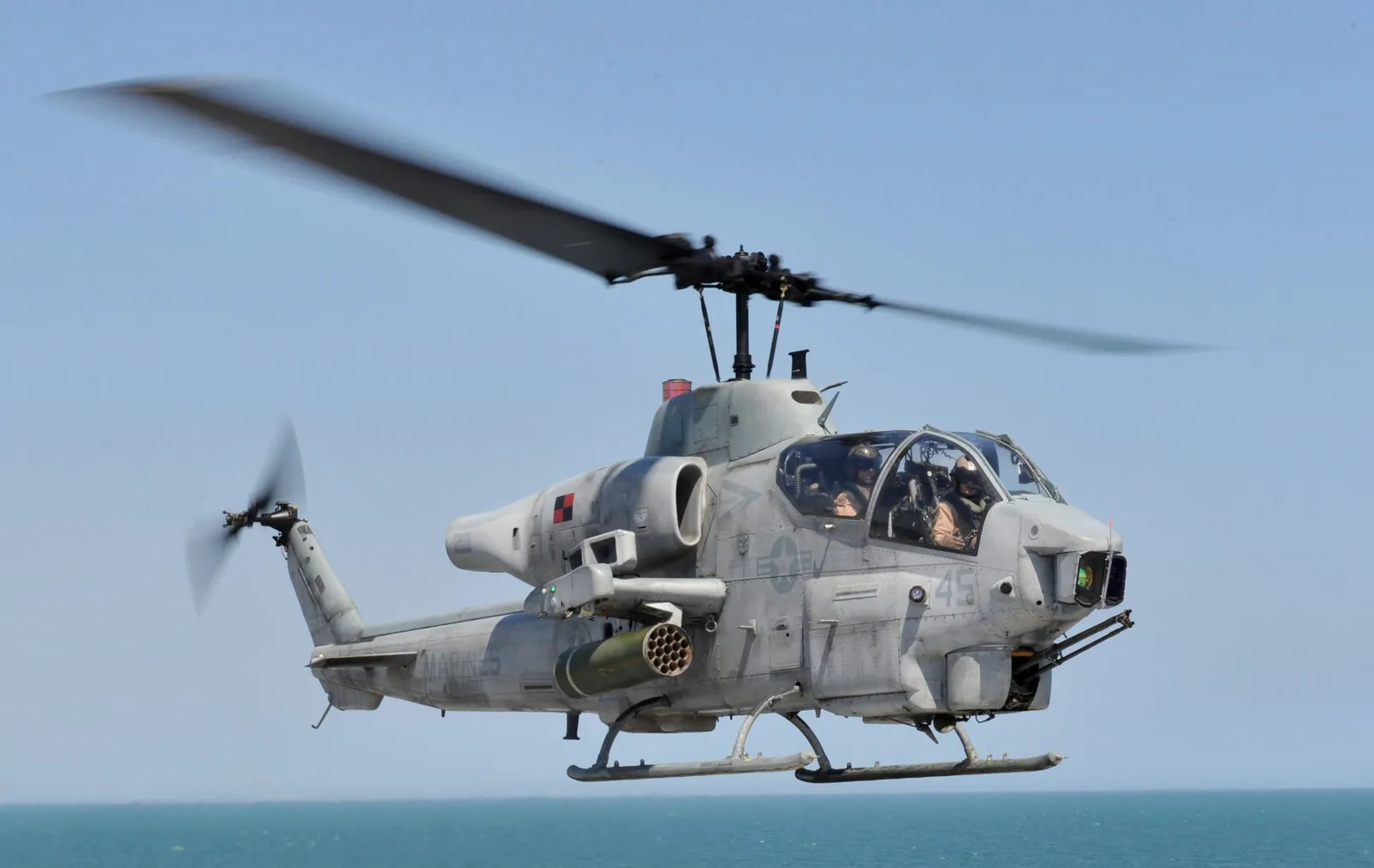
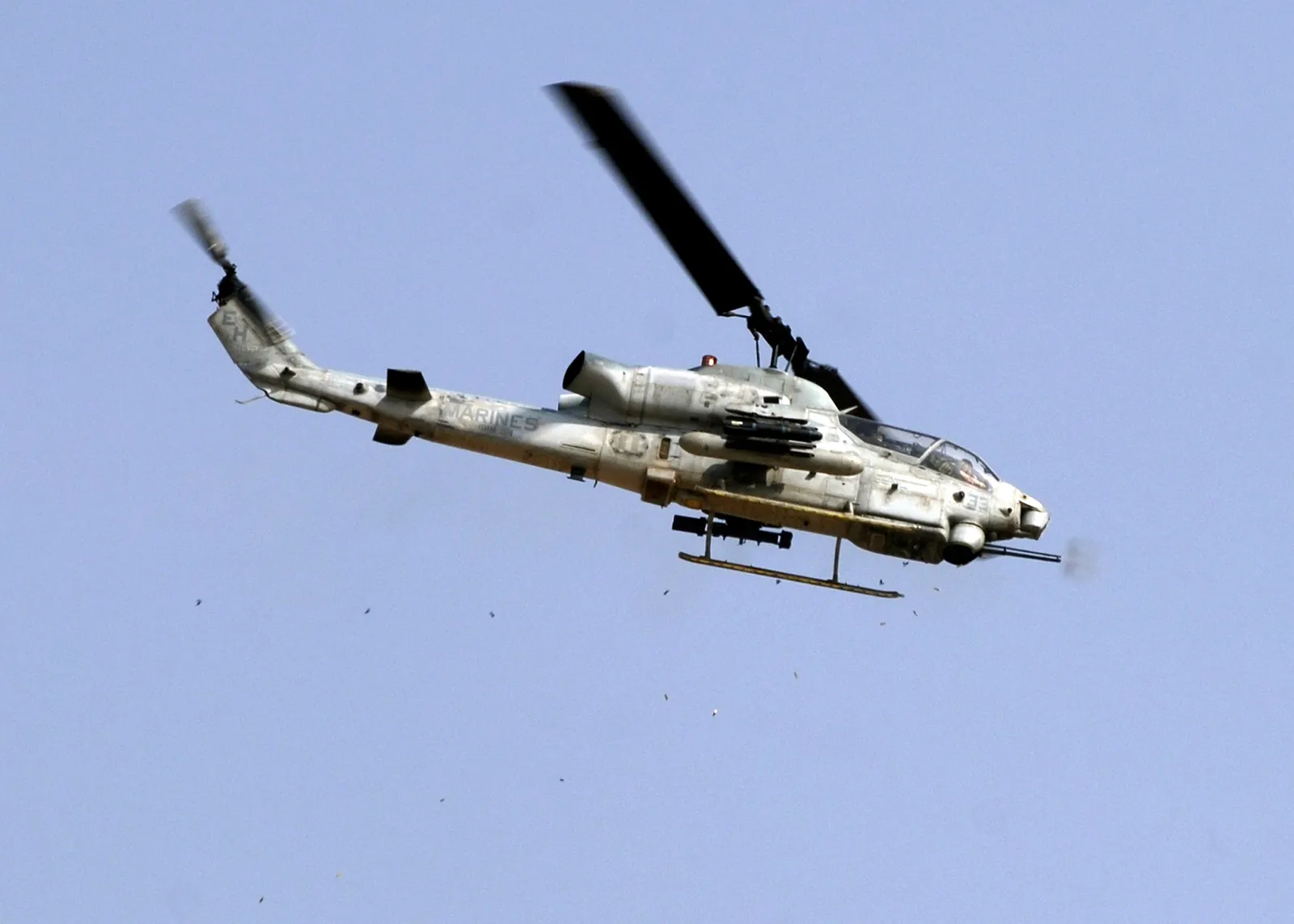
The Bell AH-1W Super Cobra was the U.S. Marine Corps' twin-engine attack helicopter between the mid-1980s and 2020, bridging the AH-1T SeaCobra and the AH-1Z Viper. NAVAIR identifies Bell as contractor and describes the type as an HMLA aircraft with T700 engines, a night targeting system, and a 14,750 lb maximum gross weight, while official Marine and Navy sources document AH-1W combat use from Desert Storm and Iraq to Afghanistan and Operation Odyssey Lightning in Libya.

Role in Conflicts

Side
United States and Libyan Government of National Accord

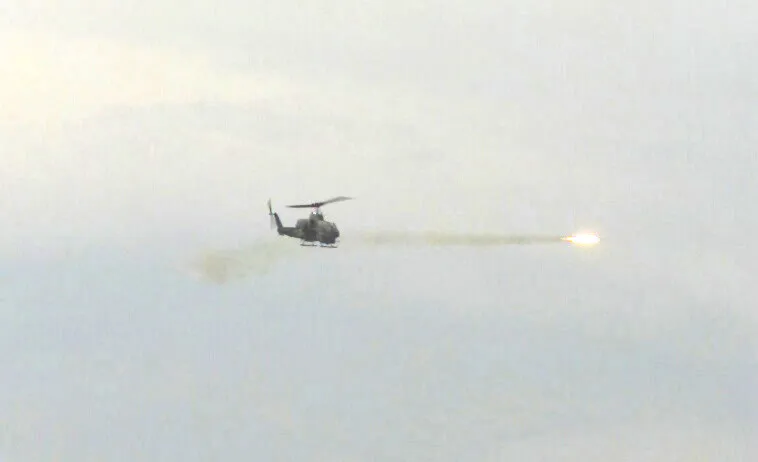
During Operation Odyssey Lightning, Marine AH-1W Super Cobras conducted ship-launched precision strikes in support of GNA-aligned forces fighting ISIS in Sirte; HMLA-269 history says its detachment fired 164 AGM-114 Hellfire missiles during the operation.

Profile / Specs

Profile

Origin
United States
Built by
Bell
Type
Marine attack helicopter
Service note
1980s-2020
Produced
1986-1998
Number built
179 new-build U.S. aircraft plus 43 AH-1T upgrades reported by Pima; NAVAIR separately reported 195 production AH-1Ws.
Developed from
AH-1T Cobra
Developed into
AH-1Z Viper

Specifications

Crew
2
Engines
Two General Electric T700 turboshafts, 1,680 hp each
Maximum speed
218 mph
Range
317 miles
Loaded weight
14,750 lb
Rotor diameter
48 ft
Armament
Hellfire, Sidearm, Sidewinder, 2.75-inch rockets, and a 20-mm M197 cannon
Variants

The AH-1W sits in the Marine twin-engine Cobra line after the AH-1J Sea Cobra and AH-1T Improved Sea Cobra. It began as the AH-1T+/T700 re-engining effort and was succeeded in Marine service by the four-bladed AH-1Z Viper.

VariantConfigurationDesignation notes
AH-1J Sea CobraEarly Marine twin-engine Cobra

Pima describes the AH-1J as the Marine Corps' two-engine Cobra ordered in 1968 and entering service in the early 1970s.

Sources: Bell AH-1W - Pima Air & Space

AH-1T Improved Sea CobraLengthened AH-1J development

Pima describes the AH-1T as a lengthened Sea Cobra with improved transmission and more powerful engines; NAVAIR's AH-1W anniversary article says the AH-1W grew from installing T700 engines in an AH-1T.

Sources: Bell AH-1W - Pima Air & Space, Marines' AH-1W Super Cobra turns 20 | NAVAIR

AH-1Z Viper attack helicopter, Attack helicopter, Aircraft & UAVsAH-1Z Viper attack helicopterFour-bladed successor

NAVAIR says the Marine Corps replaced the AH-1W with the AH-1Z Viper, and Bell says remanufactured AH-1Ws continued the platform line as AH-1Zs.

Sources: AH-1W Super Cobra | NAVAIR, United States Marines Retire Bell AH-1W After 34 Years of Service

Carried Munitions

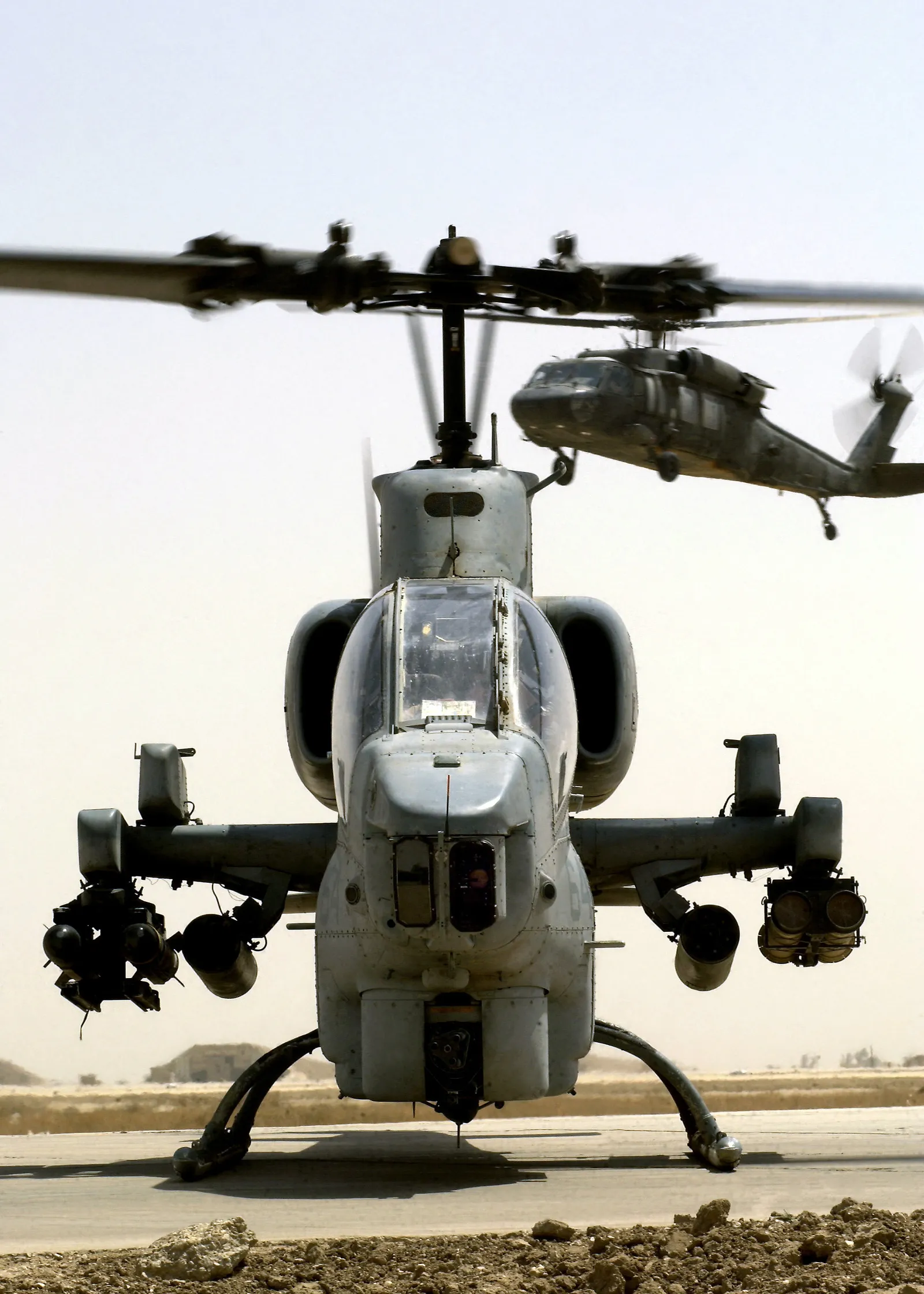
NAVAIR describes the AH-1W Super Cobra weapons fit as including TOW, Hellfire, Sidearm, Sidewinder, 2.75-inch rockets, a 20-mm gun, and other precision-guided munitions.

Carried itemItem typeCarriage evidence
AGM-114 Hellfire missile family, Air-to-surface missile family, MunitionsAGM-114 Hellfire missile familyAir-to-surface missile family

NAVAIR listed Hellfire in the AH-1W weapons fit, and Redstone Arsenal history lists the Navy AH-1W as a HELLFIRE launch platform.

Sources: Marines' AH-1W Super Cobra turns 20 | NAVAIR, HELLFIRE History | Redstone Arsenal

Hydra-70 rocket system, 2.75-inch air-launched rocket family, MunitionsHydra-70 rocket system2.75-inch rocket system

NAVAIR listed 2.75-inch rockets in the AH-1W weapons fit, and General Dynamics describes Hydra-70 as a 2.75-inch rocket family mountable on Cobra aircraft.

Sources: Marines' AH-1W Super Cobra turns 20 | NAVAIR, HYDRA-70 Rocket | General Dynamics Ordnance and Tactical Systems

APKWS / WGU-59 guided rockets, Guided rocket munition family, MunitionsAPKWS / WGU-59 guided rocketsLaser-guided 2.75-inch rocket

NAVAIR describes APKWS II as a guided conversion of the Hydra 2.75-inch rocket and says initial operational capability was declared on AH-1W and UH-1Y helicopters in 2012.

Sources: APKWS | NAVAIR

AIM-9 Sidewinder missile, Short-range air-to-air missile family, MunitionsAIM-9 Sidewinder missileShort-range air-to-air missile

NAVAIR listed Sidewinder in the AH-1W weapons fit, and its AIM-9M page identifies Sidewinder employment on Navy and Marine AH-1 aircraft.

Sources: Marines' AH-1W Super Cobra turns 20 | NAVAIR, AIM-9M Sidewinder | NAVAIR

BGM-71 TOW, Heavy anti-tank guided missile, Infantry WeaponsBGM-71 TOWAnti-tank guided missile

NAVAIR listed TOW among the AH-1W's weapons after the re-engined AH-1T development effort.

Sources: Marines' AH-1W Super Cobra turns 20 | NAVAIR

20mm M197 rotary cannon, 20 mm three-barrel externally powered Gatling aircraft cannon, Aircraft & UAVs20mm M197 rotary cannon20 mm rotary cannon

NAVAIR listed the 20-mm gun in the AH-1W weapons fit, and the M197 catalog entry covers the Cobra-family three-barrel cannon.

Sources: Marines' AH-1W Super Cobra turns 20 | NAVAIR

Timeline

AH-1W Super Cobra Key Events

  1. Re-engined AH-1T first flight

    Bell says the AH-1T+ prototype that became the AH-1W first flew at Bell's Arlington, Texas, flight research center.

    Sources: United States Marines Retire Bell AH-1W After 34 Years of Service

  2. First AH-1W delivery

    Bell says it delivered the first AH-1Ws to the Marine Corps on March 27, 1986.

    Sources: United States Marines Retire Bell AH-1W After 34 Years of Service

  3. SuperCobras enter Desert Storm combat

    Marine AH-1 SuperCobra helicopters from HMLA-369 launched on the first day of Desert Storm and engaged Iraqi observation posts and later armored or support targets near al-Khafji.

    Sources: The Desert War | Marine Corps University

  4. Last AH-1W delivered

    NAVAIR states that Bell followed the prototype with production AH-1Ws and delivered the last aircraft in July 1998.

    Sources: Marines' AH-1W Super Cobra turns 20 | NAVAIR

  5. AH-1Z replacement starts

    NAVAIR says AH-1W replacement by the AH-1Z began in 2006 as part of a remanufacture program.

    Sources: AH-1W Super Cobra | NAVAIR

  6. Operation Odyssey Lightning Hellfire loading

    DVIDS documented Marines loading AGM-114 Hellfire missiles onto an AH-1W Super Cobra aboard USS San Antonio during Operation Odyssey Lightning.

    Sources: Operation Odyssey Lightning AH-1W Hellfire loading

  7. Final Marine AH-1W flight

    Marines.mil says the AH-1W Whiskey Super Cobra flew its last flight over New Orleans after 933,614 flight hours, passing the mission to the AH-1Z Viper.

    Sources: AH-1W Whiskey Sundown | Marines.mil

Media
Related Weapon Systems
AH-1W Super Cobra attack helicopter, Marine attack helicopter, Aircraft & UAVsAircraft & UAVsAH-1W Super Cobra attack helicopterMarine attack helicopterThe Bell AH-1W Super Cobra was the U.S. Marine Corps' twin-engine attack helicopter between the mid-1980s and 2020, bridging the AH-1T SeaCobra and the AH-1Z Viper. NAVAIR lists Bell as contractor and describes the type as an HMLA aircraft with T700 engines, a night targeting system, and a 14,750 lb maximum gross weight, while official Marine and Navy sources document AH-1W combat use from Desert Storm and Iraq to Afghanistan and Operation Odyssey Lightning in Libya.
AH-1Z Viper attack helicopter, Attack helicopter, Aircraft & UAVsAircraft & UAVsAH-1Z Viper attack helicopterAttack helicopterThe Bell AH-1Z Viper is a two-seat U.S. Marine Corps attack helicopter developed from the AH-1W Super Cobra for the H-1 upgrade program. NAVAIR describes it as the AH-1W replacement, with a four-bladed composite rotor, integrated fire-control system, six wing stores stations, and 85 percent parts commonality with the UH-1Y; official Marine Corps and Navy sources place AH-1Z-equipped elements in the 2016 Operation Inherent Resolve deployment.
AH-64 Apache attack helicopter, Twin-engine attack helicopter, Aircraft & UAVsAircraft & UAVsAH-64 Apache attack helicopterTwin-engine attack helicopterThe AH-64 Apache is a U.S. twin-engine attack helicopter family designed by Hughes Helicopters and continued through McDonnell Douglas and Boeing production. Built around a two-person crew, nose-mounted sensors, a 30 mm chain gun, rockets, and guided missiles, it has direct source-backed combat use from Desert Storm and Iraq to Afghanistan, Sinai, Yemen, Gaza, Lebanon, anti-ISIS operations, and recent U.S. operations against Iran.
20mm M197 rotary cannon, 20 mm three-barrel externally powered Gatling aircraft cannon, Aircraft & UAVsAircraft & UAVs20mm M197 rotary cannon20 mm three-barrel externally powered Gatling aircraft cannonThe 20mm M197 is a lightweight three-barrel Gatling aircraft cannon derived from the M61A1 Vulcan family for helicopter, light-aircraft, naval, turret, pod, and pintle installations. General Dynamics Ordnance and Tactical Systems markets the current M-197 and lists it on Marine Corps AH-1J, AH-1T, AH-1W, and AH-1Z aircraft, while FAS, DVIDS, Defense Media Network, and official Navy history sources document M197-equipped AH-1W and MH-60S context across Gulf War, Afghanistan, Iraq, and Operation Inherent Resolve service.
AH-64E Apache attack helicopter, Twin-engine attack helicopter, Aircraft & UAVsAircraft & UAVsAH-64E Apache attack helicopterTwin-engine attack helicopterThe AH-64E Apache is Boeing's Echo-model Apache variant, developed from the AH-64D Block III remanufacture program and built around improved engines, sensors, networking, and a two-person attack-helicopter weapons station. Direct source-backed conflict records place AH-64E aircraft with U.S. Army units in Operation Inherent Resolve, the 2001 War in Afghanistan's Operation Freedom's Sentinel phase, and Operation Epic Fury during the 2020 United States-Iran Conflict.
F/A-18 Hornet (Tactical), Carrier-capable multirole strike fighter, Aircraft & UAVsAircraft & UAVsF/A-18 Hornet (Tactical)Carrier-capable multirole strike fighterThe F/A-18 Hornet (Tactical) is the National Naval Aviation Museum's label for the original McDonnell Douglas F/A-18 A-D Hornet family, a twin-engine carrier-capable strike fighter that entered Marine Corps service in 1983 and U.S. Navy service in 1984. NAVAIR describes the Hornet as the nation's first all-weather fighter and attack aircraft; its documented combat record spans Libya, Desert Storm, Kosovo, Afghanistan, Iraq, and later coalition campaigns.
MH-60S Sea Hawk helicopter, Multi-mission maritime helicopter, Aircraft & UAVsAircraft & UAVsMH-60S Sea Hawk helicopterMulti-mission maritime helicopterThe MH-60S Sea Hawk is a U.S. Navy multi-mission helicopter derived from the Black Hawk/Seahawk family for shipboard logistics, search and rescue, special warfare support, mine-countermeasures, and armed maritime missions. NAVAIR describes the aircraft as sharing the MH-60R common cockpit while replacing legacy H-46D, H-3, and HH-1N roles; during Operation Epic Fury in the 2020 United States-Iran Conflict, MH-60S aircraft were documented aboard USS Abraham Lincoln handling flight-deck movements, cargo transport, and at-sea support.

Sources