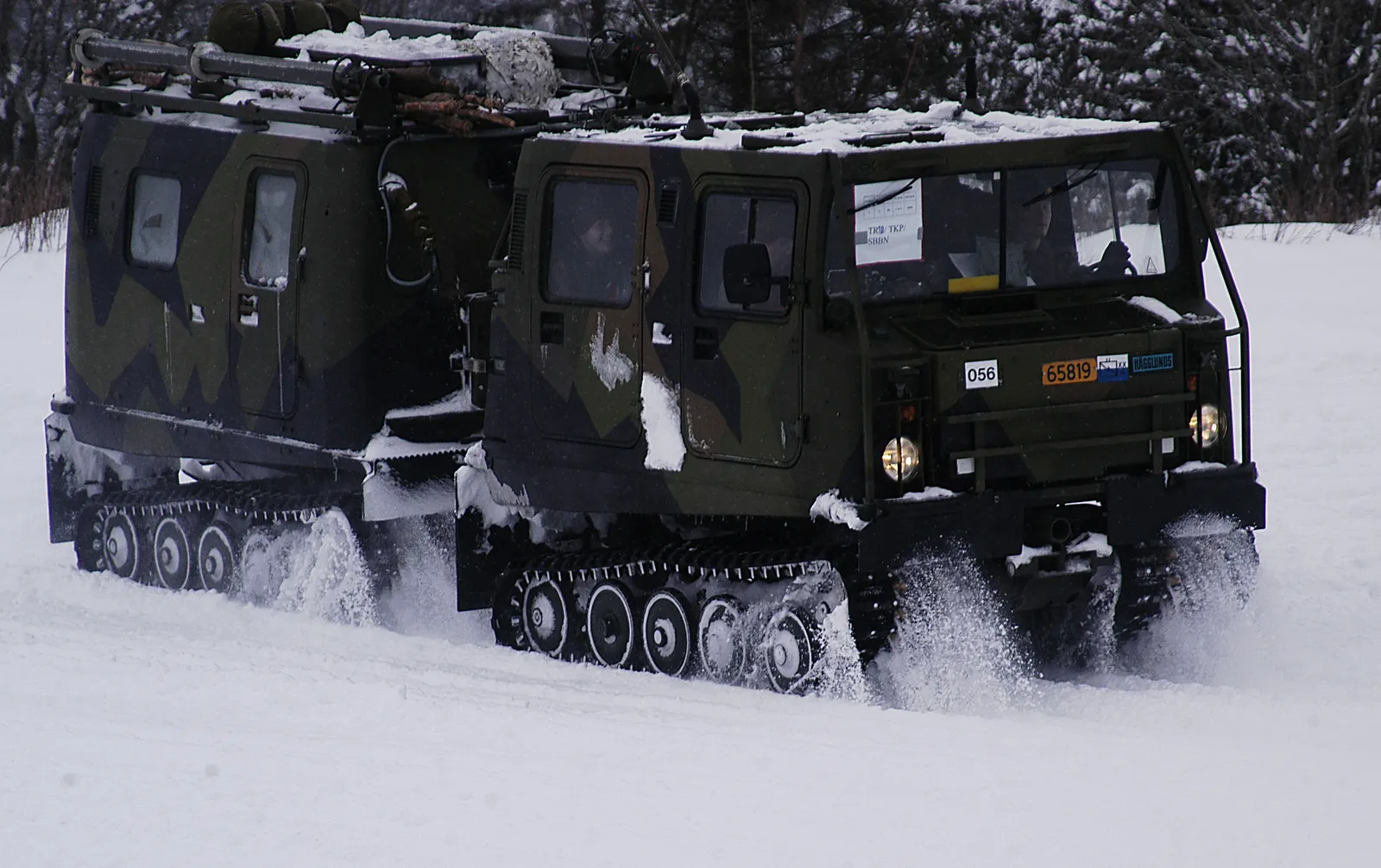


Canadian Defence Review says Canadian Army BV 206 carriers were first used in combat during Operation Anaconda in March 2002.
Role detailsArmored Vehicles
Bandvagn 206
Also known as
- BV 206
- BV206
- Bandvagn 206
- Small Unit Support Vehicle
- SUSV
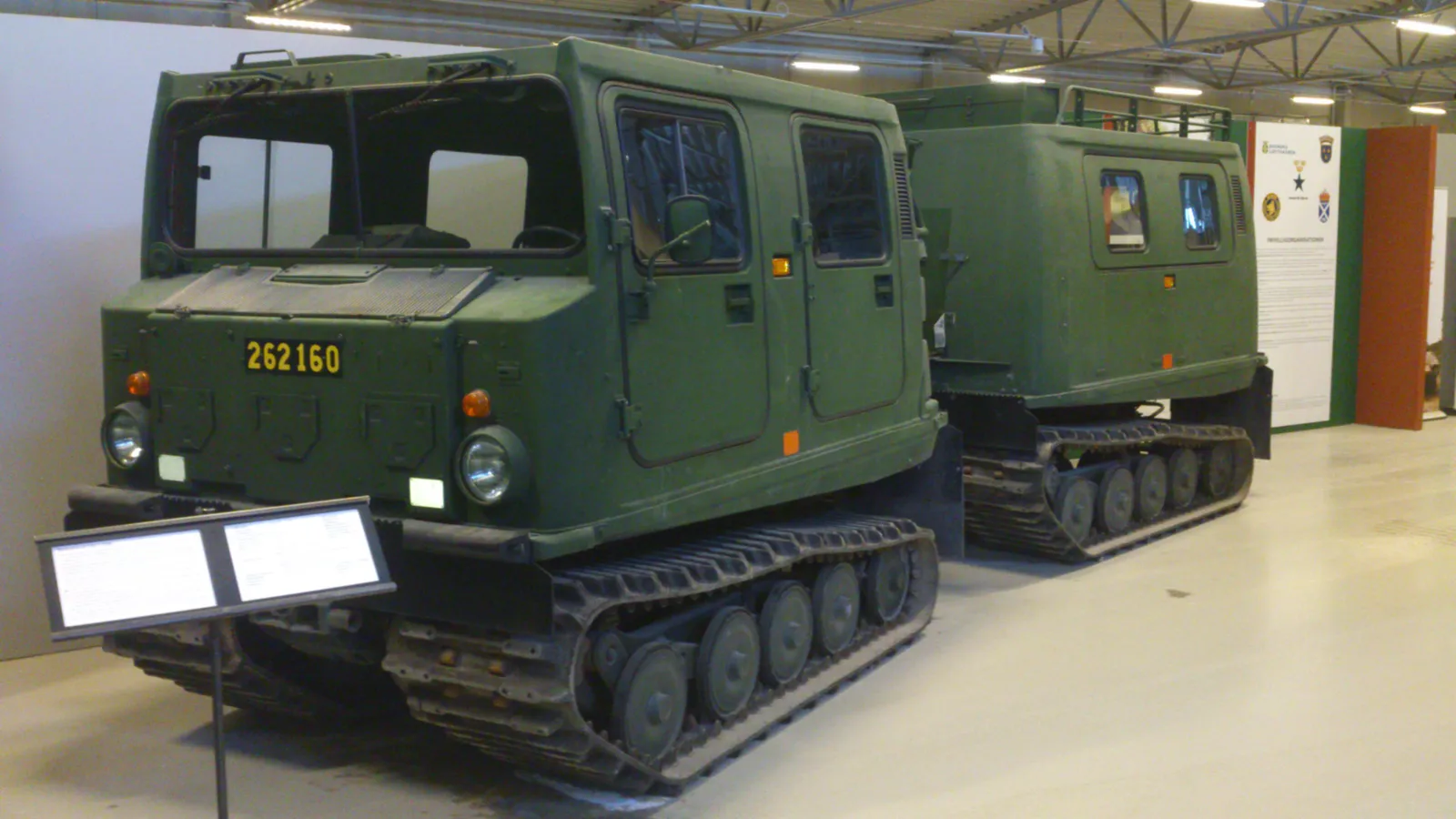
The Bandvagn 206 is a Swedish articulated tracked all-terrain carrier designed by Hagglunds in the 1970s. Its two-unit, four-track layout and amphibious mobility made it useful for snow, soft ground, and support roles, with documented Canadian combat use in Afghanistan, Royal Marines footage from Iraq, and later German-supplied vehicles for Ukraine.
Role in Conflicts
Imperial War Museums footage from Operation Telic documents BV206 tracked vehicles with 40 Commando Royal Marines near Abu Al-Khasib and Basra.
Role details- Side
- Ukraine

Germany's Ukraine aid list includes 78 Bandvagn 206 tracked multirole vehicles, and John Cockerill said BV-206s were being converted into medical vehicles for evacuation missions in Ukraine.
Role detailsDocumented Roles
The same articulated carrier appears in source-backed roles ranging from Arctic transport to casualty evacuation, but the published conflict evidence describes mobility and support rather than a direct-fire fighting role.
Winter and Arctic movement
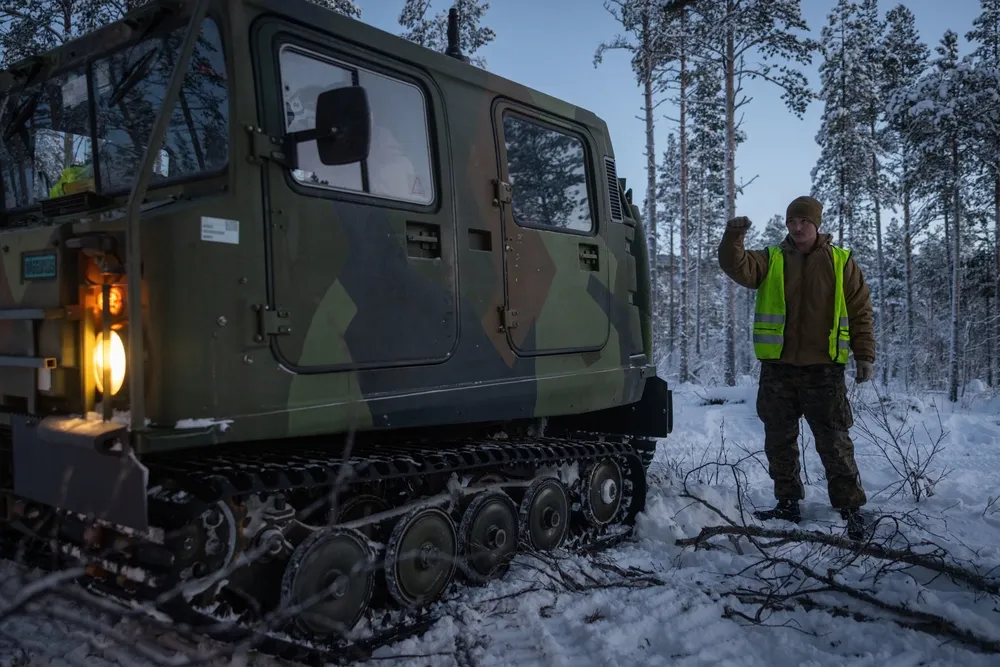
The Canadian Army describes the BV 206 as an all-terrain, amphibious carrier used for domestic operations and collective training in winter and Arctic conditions.
Source: BV 206 Tracked Carrier.
Afghanistan combat lift
Canadian Defence Review says Canadian Army BV 206 carriers were first used in combat during Operation Anaconda in March 2002.
Source: Bandvagn BV-206.
Iraq mobility support
Imperial War Museums records BV206 vehicles with 40 Commando Royal Marines during Operation Telic movement near Abu Al-Khasib and Basra.
Source: Royal Marines Advance on Abu Al-Khasib.
Ukraine evacuation conversion
John Cockerill says Ukraine-bound BV-206s were being modernized with medical kits, upgraded engines, and interiors suited to wounded-soldier evacuation.
Source: John Cockerill is to modernize dozens of BV-206 vehicles for Ukraine.
Profile / Specs
Profile
- Origin
- Sweden
- Built by
- BAE Systems Hagglunds
- Type
- Articulated tracked all-terrain carrier
- Service note
- Cold War-era design still in service
- Designer
- Hagglunds
- Designed
- 1970s
- Produced
- 1980s-present
- Number built
- More than 11,000 Bv206 vehicles
- Developed from
- Bv 202 / Bv 203 replacement requirement
Specifications
- Crew and passengers
- 5 personnel in the front car and 11 passengers in the rear car
- Weight
- 4,440 kg basic weight; 6,340 kg combat load
- Dimensions
- 6.809 m long, 1.85 m wide, 2.4 m high
- Mobility
- 50 km/h road speed and 330 km range; amphibious with four driven tracks
- Terrain role
- Designed for deep snow, soft ground, winter, and Arctic movement
- Grade and side slope
- 31% maximum grade and 35% side slope
- Fuel
- F-54 Diesel DF-2, 160 L capacity
Variants
The BV 206 family uses the same articulated tracked carrier layout across command, ambulance, cargo, protected, and anti-tank configurations.
| Variant | Configuration | Designation notes |
|---|---|---|
| BV 206A /T | Base Swedish tracked carrier | Kalix Line Museum describes the BV 206A /T as the tracked carrier that followed the Swedish military's search for a Bv 202/203 replacement, with Hägglunds winning the contract. Sources: BV 206A /T - Kalix Line Museum |
| BV 206 command post vehicle | Command and control configuration | The Canadian Army and Canadian Defence Review identify command-post vehicles among BV 206 configurations. Sources: BV 206 Tracked Carrier, Bandvagn BV-206 |
| BV 206 ambulance variant | Medical evacuation configuration | Canadian Army equipment notes and Canadian Defence Review list ambulance variants, while John Cockerill later described Ukraine-bound BV-206s being modernized for medical evacuation. Sources: BV 206 Tracked Carrier, Bandvagn BV-206, John Cockerill is to modernize dozens of BV-206 vehicles for Ukraine |
| BV 206 cargo vehicle | Troop and cargo carrier | The Canadian Army describes the BV 206 as an all-terrain transport vehicle, and Canadian Defence Review lists cargo vehicles among the variants. Sources: BV 206 Tracked Carrier, Bandvagn BV-206 |
| Bv206S protected variant | Protected family member | BAE Systems' 2006 annual report notes a Swedish order for 52 Bv206S vehicles. Sources: Annual Report 2006 BAE Systems |
| STRFORBPLBV 2069A | Combat first-aid tracked vehicle | Kalix Line Museum describes the 2069A as a Bandvagn 206 medical-post variant developed for subarctic operations, with only four units built. |
| Pansarvarnsrobotbandvagn 2063 | Anti-tank missile carrier | Kalix Line Museum identifies PVRBBV 2063A as an anti-tank missile carrier variant of the Bandvagn 206, while European Security & Defence describes the Bv 2063 variant as fitted with TOW and BILL anti-tank weapon systems. |
Mounted Missiles
The Bv 2063 variant was described as a Bandvagn 206 fitted with TOW and BILL weapon systems for anti-tank defence.
| Carried item | Item type | Carriage evidence |
|---|---|---|
 | Anti-tank guided missile | Security & Defence European describes the Pansarvärnsrobotbandvagn 2063 as a Bandvagn 206 variant equipped with the TOW weapon system for anti-tank defence. Sources: Mounted Missiles |
 | Anti-tank guided missile | Security & Defence European describes the Pansarvärnsrobotbandvagn 2063 as a Bandvagn 206 variant equipped with the TOW and BILL weapon systems for anti-tank defence. Sources: Mounted Missiles |
Timeline
Bandvagn 206 Key Events
Design work begins
BAE says the BV206 was designed in the 1970s, before it entered broad military service.
Sources: BAE Systems All-Terrain Vehicle debuting in North America at U.S. National Guard Conference
Enters service
BAE says the vehicle has been in service since the early 1980s and became known in the United States as the SUSV.
Sources: BAE Systems All-Terrain Vehicle debuting in North America at U.S. National Guard Conference
Canadian combat use in Afghanistan
Canadian Defence Review says Canadian Army BV 206 carriers were first used in combat during Operation Anaconda in March 2002.
Sources: Bandvagn BV-206
Royal Marines footage in Iraq
Imperial War Museums footage from Operation Telic documents BV206 tracked vehicles with 40 Commando Royal Marines near Abu Al-Khasib and Basra.
Sources: Royal Marines Advance on Abu Al-Khasib
Swedish order and scale milestone
BAE Systems' 2006 annual report says Sweden ordered 52 Bv206S vehicles and that more than 11,000 Bv206-family vehicles had been built.
Sources: Annual Report 2006 BAE Systems
Dutch fleet upgrade signed
BAE Systems Hagglunds and the Netherlands Ministry of Defence signed a mid-life upgrade contract for 95 Bv206 vehicles.
Sources: Mid-Life Upgrades to Netherlands Bv206 fleet
Ukraine medical conversions announced
John Cockerill said BV-206 vehicles were being modernized into medical vehicles for evacuation missions for wounded soldiers in Ukraine.
Sources: John Cockerill is to modernize dozens of BV-206 vehicles for Ukraine
Family Notes
BAE and museum material present the BV206 as a compact Nordic utility vehicle that became a large international fleet, then remained relevant through protected variants, medical variants, and life-extension work.
Replacement origin
Kalix Line Museum says Sweden looked for a Bv 202/203 replacement in the 1970s, and Hägglunds won the contract that produced the BV 206A /T.
Source: BV 206A /T - Kalix Line Museum.
U.S. designation
BAE says the BV206 is known in United States service as the Small Unit Support Vehicle, or SUSV.
Source: BAE Systems All-Terrain Vehicle debuting in North America at U.S. National Guard Conference.
Production scale
BAE's 2006 annual report says more than 11,000 BV206 vehicles had been built and sold to nearly 40 countries.
Source: Annual Report 2006 BAE Systems.
Protected family branch
The same annual report records a Swedish order for 52 Bv206S vehicles, showing the protected branch of the family beyond the original carrier.
Source: Annual Report 2006 BAE Systems.
Medical-post branch
Kalix Line Museum describes the STRFORBPLBV 2069A as a small mobile field-hospital variant of the Bandvagn 206 for subarctic operations.
Source: STRFORBPLBV 2069A MT - Kalix Line Museum.
Fleet continuity
BAE's Netherlands notice describes a mid-life upgrade contract for 95 Bv206 vehicles, supporting continued fleet sustainment after original production.
Source: Mid-Life Upgrades to Netherlands Bv206 fleet.
Related Weapon Systems


Sources
The arms and military equipment Germany is sending to UkrainePublisher: Federal Government of Germany | Note: Supports the 2014 Russia-Ukraine War conflict-use claim by listing 78 Bandvagn 206 tracked multirole vehicles among Germany's Ukraine military aid. | Accessed: 2026-07-06BV 206 Tracked CarrierPublisher: Canadian Army | Note: Supports the vehicle's all-terrain, amphibious, articulated layout, variants, crew, dimensions, mobility, grade, fuel, and Arctic service context. | Accessed: 2026-07-06Bandvagn BV-206Publisher: Canadian Defence Review | Note: Supports the 2001 War in Afghanistan conflict-use claim by stating that Canadian Army BV 206 carriers were first used in combat during Operation Anaconda in March 2002; also supports Canadian fleet and variant context. | Accessed: 2026-07-06Royal Marines Advance on Abu Al-KhasibPublisher: Imperial War Museums | Note: Supports the 2003 Iraq War conflict-use claim by documenting BV206 tracked vehicles with 40 Commando Royal Marines during Operation Telic near Abu Al-Khasib and Basra. | Accessed: 2026-07-0640 Commando Royal Marines Brigade Reconnaissance Force in ActionPublisher: Imperial War Museums | Note: Supports the 2003 Iraq War conflict-use claim by documenting a line of BV206 tracked vehicles travelling toward Basra with 40 Commando Royal Marines during Operation Telic. | Accessed: 2026-07-06BAE Systems All-Terrain Vehicle debuting in North America at U.S. National Guard ConferencePublisher: BAE Systems | Note: Supports the 1970s design date, early-1980s service history, and the U.S. Small Unit Support Vehicle (SUSV) name. | Accessed: 2026-07-06Annual Report 2006 BAE SystemsPublisher: BAE Systems | Note: Supports the reported more-than-11,000 production figure and the Swedish order for 52 Bv206S vehicles. | Accessed: 2026-07-06Mid-Life Upgrades to Netherlands Bv206 fleetPublisher: BAE Systems | Note: Supports the Netherlands mid-life upgrade contract for 95 Bv206 vehicles and the family-life-extension context. | Accessed: 2026-07-06John Cockerill is to modernize dozens of BV-206 vehicles for UkrainePublisher: John Cockerill | Note: Supports the 2014 Russia-Ukraine War conflict-use claim for BV-206 medical-evacuation conversion work in Ukraine. | Accessed: 2026-07-06Mounted MissilesPublisher: European Security & Defence | Note: Supports the Bv 2063 carrier relationship by describing a Bv 206 variant fitted with TOW and BILL weapon systems for anti-tank defence. | Accessed: 2026-07-06BV 206A /T - Kalix Line MuseumPublisher: Kalix Line Museum | Note: Supports the Bv 202/203 replacement context, Hägglunds contract attribution, base BV 206A /T variant, amphibious all-track layout, and Swedish service details. | Accessed: 2026-07-06PVRBBV 2063A - Kalix Line MuseumPublisher: Kalix Line Museum | Note: Supports PVRBBV 2063A as an anti-tank missile carrier variant of the Bandvagn 206 and identifies Hägglunds as manufacturer. | Accessed: 2026-07-06STRFORBPLBV 2069A MT - Kalix Line MuseumPublisher: Kalix Line Museum | Note: Supports the STRFORBPLBV 2069A combat first-aid tracked vehicle as a Bandvagn 206 medical-post variant developed for subarctic operations. | Accessed: 2026-07-06Norwegian BV-206.jpgPublisher: Wikimedia Commons | Note: Image provenance source; Commons identifies the photograph as a U.S. Marine Corps public-domain image. | Accessed: 2026-07-06Bandvagn 206 02.jpgPublisher: Wikimedia Commons | Note: Image provenance source; Commons lists the file as CC BY-SA 3.0 Unported. | Accessed: 2026-07-06Bandvagn 206 ObstaclesPublisher: DVIDS | Note: Image provenance source; DVIDS identifies the photo as a U.S. Marine Corps public-domain image of a Bandvagn 206 during Arctic vehicle training in Norway. | Accessed: 2026-07-06