Infantry Weapons

MILAN

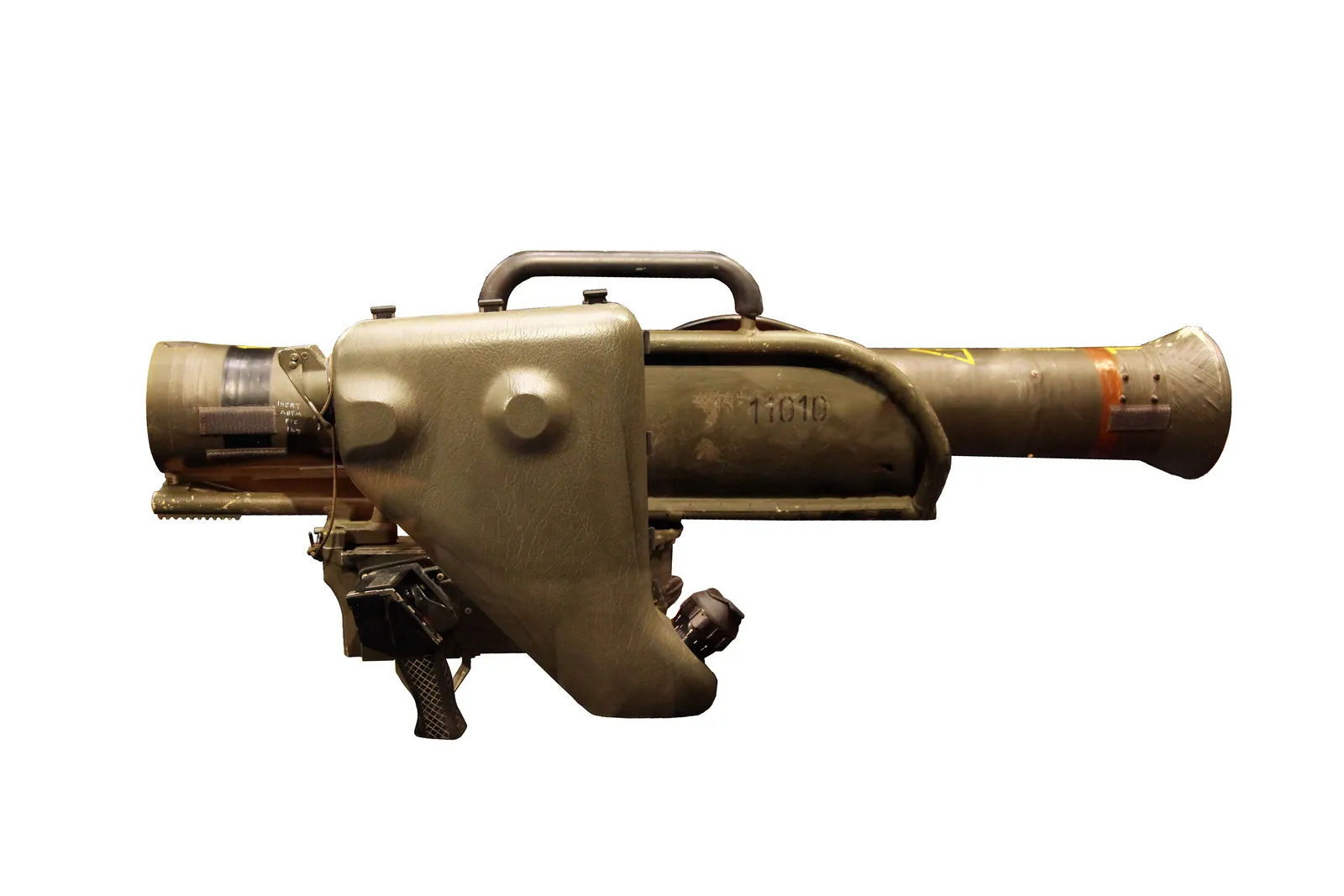
MILAN is a Franco-German, wire-guided anti-tank guided missile built around a reusable launch post and disposable missile round. Designed for infantry anti-armor teams, the SACLOS system requires the operator to keep the sight on target while guidance commands travel through a wire link. France has documented MILAN systems among the anti-tank weapons delivered to Ukraine for the Russia-Ukraine War.

Conflict side
Ukraine
Built by
EuromissileMBDA
Built in
FranceGermany
MILAN, Man-portable anti-tank guided missile, Infantry Weapons

Profile

Type
Man-portable anti-tank guided missile
Conflict side
Ukraine
Origin
France / Germany
Service note
Cold War design, in service from 1972 into the Russia-Ukraine War

Service History

In service
Entered service in 1972
Used by
Ukrainian Armed Forces, French Army, German Army
Wars
Russia-Ukraine War

Production History

Designer
Euromissile
Designed
1960s-early 1970s
Built by
EuromissileMBDA
Built in
FranceGermany
Unit cost
Not consistently published
Produced
1972-present
Number built
About 350,000 missiles and 10,000 launch posts reported in reference sources
Variants
MILAN 1, MILAN 2, MILAN 2T, MILAN 3, MILAN ER

Specifications

Guidance
Semi-automatic command to line of sight (SACLOS), wire-guided
Range
About 200 m to 2,000 m for common MILAN variants; MILAN ER extends to about 3,000 m
Warhead
HEAT or tandem HEAT anti-armor warhead depending on variant
Missile length
About 0.75-0.77 m for MILAN 1/2/2T; ER references list a longer missile and tube assembly
Missile speed
About 200 m/s
Launch platform
Tripod infantry launch post or vehicle mount

Conflict Usage

Russia-Ukraine War
Side: Ukraine

French Ministry of Armed Forces delivery reporting lists MILAN systems, with missile quantities withheld, among equipment supplied to Ukraine after Russia's full-scale invasion.

Related Weapon Systems

BGM-71 TOW, Heavy anti-tank guided missile, Infantry WeaponsInfantry WeaponsBGM-71 TOWHeavy anti-tank guided missileThe BGM-71 TOW is a U.S. heavy anti-tank guided missile built around tube launch, optical tracking, and command guidance through a wire or later radio-frequency link. Developed by Hughes and now produced and upgraded by Raytheon, it can be fired from dismounted launchers, HMMWVs, Bradley and Stryker vehicles, light armored vehicles, and helicopters, giving infantry and vehicle crews a long-range precision anti-armor weapon. In the Russia-Ukraine War, U.S. security assistance packages sent TOW missiles to Ukraine as part of the anti-armor mix used to offset Russian armored forces.
9K115 Metis, Man-portable anti-tank guided missile system, Infantry WeaponsInfantry Weapons9K115 MetisMan-portable anti-tank guided missile systemThe 9K115 Metis is a Soviet/Russian man-portable, wire-guided anti-tank guided missile family developed for company-level infantry anti-armor fire. The original AT-7 Saxhorn system emphasized a light launcher and short-range portability, while the later 9K115-2 Metis-M and Metis-M1 variants use larger 130 mm missiles, tandem HEAT or thermobaric warheads, and ranges up to 2 km. In the Russia-Ukraine War, Russian forces have been documented using the upgraded AT-13 Saxhorn-2 / Metis-M variant against Ukrainian armor.

Sources