Munitions

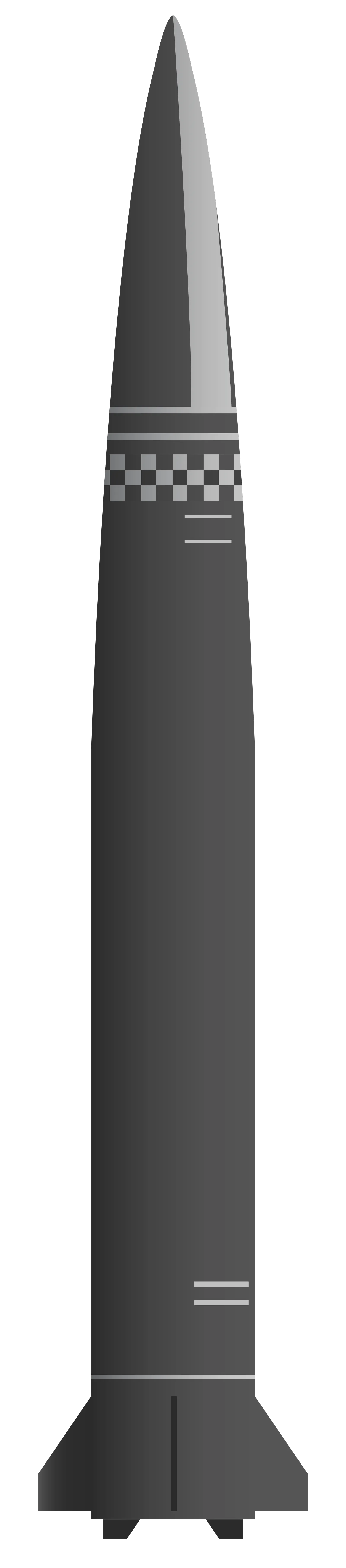
Hwasong-11C tactical ballistic missile

Also known as
  • KN-23A
  • KN-23B
  • Hwasong-11C
  • Hwasong-11Da
  • Hwasongpho-11Da
  • Hwasongpho-11Da-2.5
  • Hwasongpho-11Da-4.5
  • Hwasong-11C-4.5
  • HS-11C

The Hwasong-11C is a larger North Korean Hwasong-11 family short-range ballistic missile associated in external reporting with the KN-23A and KN-23B labels. Open sources place it in the road-mobile, solid-fuel branch derived from the Hwasong-11A / KN-23, with North Korean reporting claiming a heavy 2.5-ton payload in 2021 and a later 4.5-ton-class warhead test series in 2024. Later analysis describes the Hwasong-11E hypersonic-glide-vehicle branch as using the larger Hwasong-11C booster and launcher base, but no source-backed direct combat use for this exact Hwasong-11C variant was found.

Designation Boundaries

The larger Hwasong-11 branch uses overlapping North Korean and external names. This record keeps Hwasong-11C / Hwasongpho-11Da as the principal identity, while KN-23A and KN-23B remain aliases because public sources use those external labels inconsistently.

Named branch

Hwasong-11C / Hwasongpho-11Da refers to the larger Hwasong-11A-derived missile branch reported from the 2021 parade and March 2021 flight test.

External labels

KN-23A and KN-23B are retained as search aliases for larger Hwasong-11C configurations rather than treated as separate public records.

Combat-use limit

Reviewed Ukraine-war sources document Hwasong-11-series, Hwasong-11A / KN-23, or Hwasong-11B / KN-24 use, but not direct combat use of this exact Hwasong-11C branch.
Profile / Specs

Profile

Origin
North Korea
Type
Road-mobile solid-fuel short-range ballistic missile
Service note
Displayed in 2021; flight-tested from March 2021 with later 4.5-ton-warhead testing reported in 2024
Designer
North Korean state missile design organizations
Designed
Publicly displayed in January 2021 and first flight-tested in March 2021
Produced
2021 onward; production scale not publicly disclosed
Number built
Not publicly disclosed
Developed from
Hwasong-11A / KN-23

Specifications

Class
Short-range ballistic missile
Propulsion
Single-stage solid propellant
Basing
Road-mobile transporter-erector-launcher system; open parade analysis associates the larger branch with a five-axle launcher
Family relationship
Larger Hwasong-11A / KN-23-derived branch
Reported 2021 test range
North Korean reporting claimed 600 km for the March 2021 test; outside assessments treated the claim with caution
Claimed baseline payload
North Korean reporting claimed a 2.5-ton payload for the 2021 system
Reported 4.5-ton branch
July and September 2024 reporting described tests of a new tactical ballistic missile with a simulated 4.5-ton-class warhead
Later derivative context
38 North assessed the 2025 Hwasong-11E as using the larger Hwasong-11C booster and five-axle launcher base with a hypersonic glide vehicle
Operational status
Documented in North Korean tests and parades; direct combat use has not been verified in the reviewed sources
Variants

Open sources describe Hwasong-11C as the larger Hwasong-11A-derived branch. KN-23A and KN-23B are external labels rather than stable North Korean public names, so they are retained as aliases while the catalog title uses the Hwasong-11C family designation.

VariantConfigurationDesignation notes
North Korean KN-23 / KN-24, Road-mobile short-range ballistic missile family, ArtilleryNorth Korean KN-23 / KN-24Adjacent Hwasong-11A/B family page

The catalog's public KN-23 / KN-24 record covers the baseline Hwasong-11A and Hwasong-11B family, while this record isolates the larger Hwasong-11C branch associated with the KN-23A label.

Sources: North Korean Short Range Systems, Missile Defense Project: KN-23

Hwasong-11D tactical ballistic missile, Small solid-propellant tactical ballistic missile, MunitionsHwasong-11D tactical ballistic missileSmaller Hwasong-11 family branch

Hwasong-11D is treated as a separate smaller branch, while Hwasong-11C remains the larger heavy-warhead branch associated with the KN-23A and KN-23B external labels.

Sources: North Korean Short Range Systems

Hwasong-11EHypersonic-glide-vehicle derivative

38 North assessed the Hwasong-11E shown in 2025 as a new KN-23-family variant that apparently uses the booster and five-axle launcher of the larger Hwasong-11C branch.

Sources: It Is Autumn in North Korea, and the Missiles Are Changing

Hwasong-11 Family Context

Hwasong-11C sits between the public KN-23 / KN-24 family page and later small Hwasong-11D coverage in the catalog. The relationship is useful for navigation, but it does not itself prove operational use.

Catalog recordRelationshipUse in this entry
North Korean KN-23 / KN-24, Road-mobile short-range ballistic missile family, ArtilleryNorth Korean KN-23 / KN-24Baseline Hwasong-11A/B family record.Provides the adjacent public family context for readers who searched the KN-23 name.
Hwasong-11D tactical ballistic missile, Small solid-propellant tactical ballistic missile, MunitionsHwasong-11D tactical ballistic missileSmaller later Hwasong-11 family member.Shows that the catalog treats narrow Hwasong-11 branches as separate records when evidence supports distinct public identities.
Timeline

Hwasong-11C tactical ballistic missile Key Events

  1. Larger Hwasong-11 family missile displayed

    Open Nuclear Network's parade viewbook and UN reporting identify a larger Hwasong-11A-derived short-range ballistic missile displayed during North Korea's January 2021 military parade.

    Sources: DPRK Military Parade Viewbook 2022, United Nations Panel of Experts report S/2021/777

  2. First flight test reported

    North Korea announced a new-type tactical guided projectile test and claimed a 600 km range with a heavy payload; outside analysts used the launch to assess the larger Hwasong-11C branch while cautioning against treating the payload claim as independently verified.

    Sources: Academy of Defence Science Test-fires New-type Tactical Guided Projectile, Initial Analysis of North Korea's March 25 SRBM Launches, ONN Korean Peninsula Risk Assessment, March 2021

  3. Parade display reinforces launcher context

    Open Nuclear Network's April 2022 parade analysis documented the larger missile branch in North Korean parade context and associated it with road-mobile launchers.

    Sources: 25 April 2022 DPRK Parade

  4. 4.5-ton-warhead test claim reported

    Reuters and Yonhap reported North Korea's claim that it tested a new tactical ballistic missile capable of carrying a simulated 4.5-ton-class warhead, while South Korean officials challenged aspects of the launch account.

    Sources: North Korea says it tested ballistic missile capable of carrying super-large warhead, (2nd LD) N. Korea says it test-fired new tactical ballistic missile capable of carrying super-large warhead

  5. Further 4.5-ton-warhead reporting

    KCNA and Sejong Institute reporting in September 2024 continued to frame the heavy-warhead missile as part of the Hwasong-11C / Hwasongpho-11Da branch, with Sejong distinguishing 2.5-ton and 4.5-ton naming.

    Sources: DPRK Missile Administration and Academy of Defence Sciences Make Public Important Scientific Research Achievements, [Sejong Focus] Analysis of North Korea's Test Launch of Missile with 4.5-Ton Super-Large Warhead

  6. Hwasong-11E derivative assessed

    38 North assessed the Hwasong-11E hypersonic-glide-vehicle variant as using the booster and five-axle launcher base of the larger Hwasong-11C branch, while cautioning that October 2025 launch evidence did not confirm an Hwasong-11E flight test.

    Sources: It Is Autumn in North Korea, and the Missiles Are Changing

Related Weapon Systems
North Korean KN-23 / KN-24, Road-mobile short-range ballistic missile family, ArtilleryArtilleryNorth Korean KN-23 / KN-24Road-mobile short-range ballistic missile familyThe KN-23 and KN-24 are North Korean solid-fuel short-range ballistic missiles in the Hwasong-11 family. The KN-23 is a road-mobile, quasi-ballistic SRBM with an estimated maximum range of about 690 km, while the KN-24 is a smaller ATACMS-like tactical ballistic missile assessed at roughly 410 km. Recovered debris, official U.S. and Ukrainian analysis, UN-panel inspection work, and independent component tracing tie transferred DPRK missiles to Russian strikes in the 2014 Russia-Ukraine War.
South Korean unnamed reconnaissance, attack, and long-range explosive drones, Unmanned aerial vehicle family, Aircraft & UAVsAircraft & UAVsSouth Korean unnamed reconnaissance, attack, and long-range explosive dronesUnmanned aerial vehicle familySouth Korean unnamed reconnaissance, attack, and long-range explosive drones are a South Korean military UAV family and force-development program built around mass operator training, short-range reconnaissance drones, small loitering munitions, and the K-LUCAS long-range one-way attack concept. The June 2026 policy links these drones to service-wide surveillance and strike missions, rapid acquisition of expendable systems, Korean-made training-drone procurement, and a response to North Korean unmanned threats rather than a single publicly named airframe.

Sources
