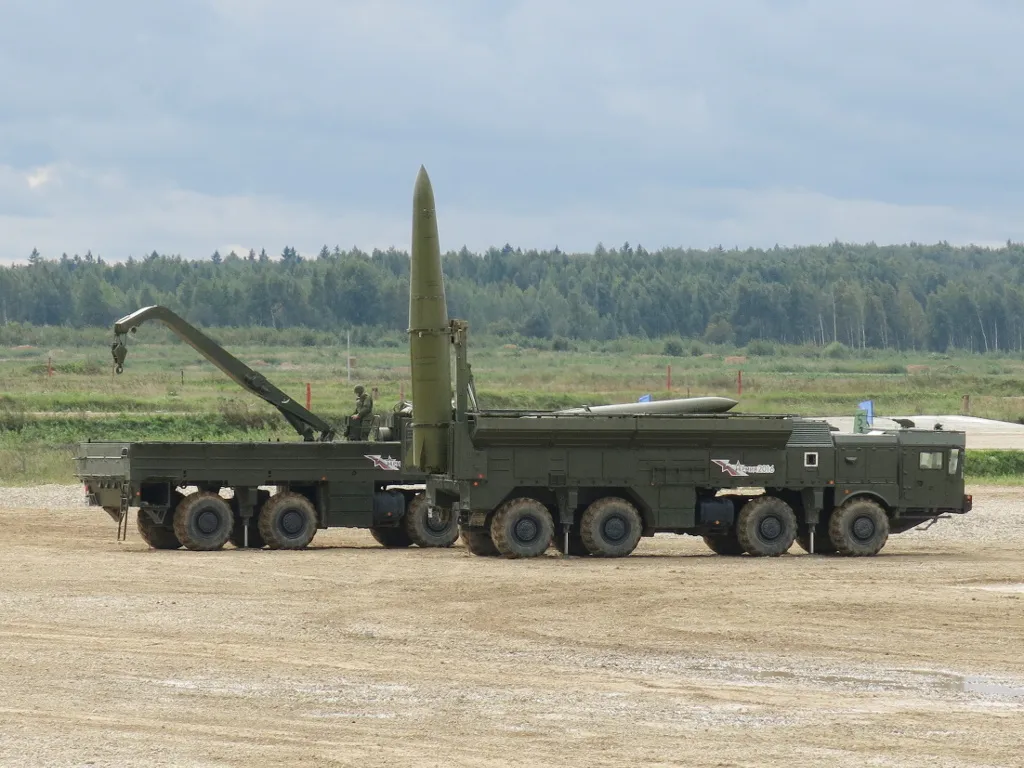
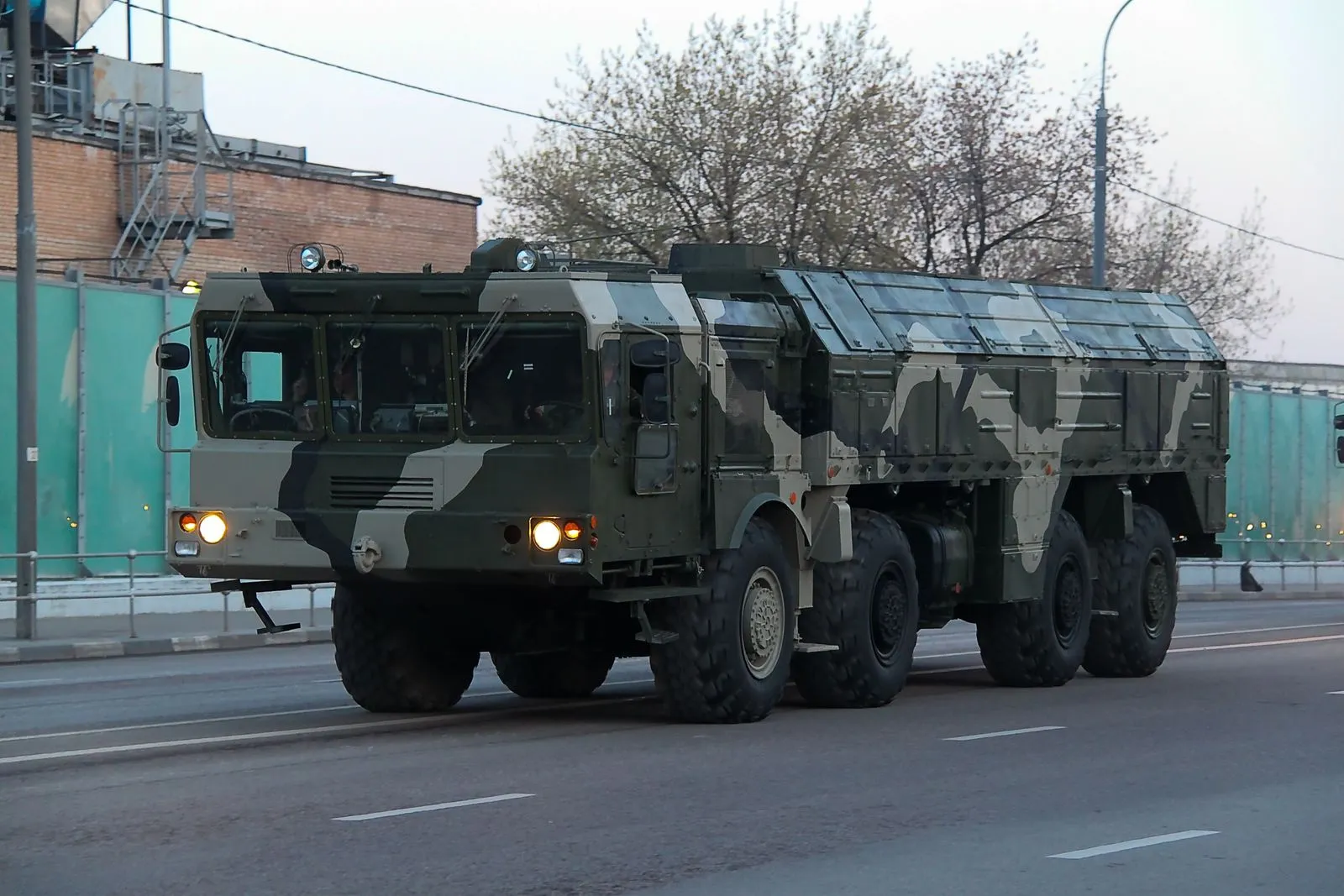
The 9M723 is the ballistic missile fired by Russia's Iskander-M system, a road-mobile short-range strike weapon associated with conventional, cluster, and nuclear-capable payload options. Its combat record spans Russian use in Ukraine, Syria, and Georgia, plus disputed Armenian use around Shusha in the 2020 Nagorno-Karabakh fighting.
Russian forces have used 9M723-series Iskander-M ballistic missiles against Ukrainian targets; Bellingcat and OSMP documented 9M723/9M723K1 cluster-munition evidence in early 2022, RUSI later described modified Iskander-M attacks against Ukrainian air defenses, and Ukrinform relayed a June 2026 Ukrainian Air Force report of 33 Iskander-M ballistic missiles in one overnight attack.
Russian officials said the Iskander-M short-range ballistic missile had been used and had proven effective in Syria, placing the missile with Russia's military support to the Syrian government side.
Postwar reporting cited missile-fragment markings and impact locations around Shusha as evidence that Armenian forces fired Iskander-family ballistic missiles during the 2020 fighting, while the use claim remained politically disputed.
Investigations into the 12 August 2008 strike on Gori found that a Russian Iskander missile carrying cluster submunitions struck the city during the 2008 Russo-Georgian War.
Open sources separate the Iskander family into a launcher system, ballistic missiles, and cruise-missile configurations. The 9M723 designation here refers to the ballistic missile carried by Iskander-M launch vehicles.
Element
Catalog meaning
Source-backed note
9M723
Ballistic missile
Russian-service short-range ballistic missile associated with Iskander-M and reported ranges up to about 500 km.
9M723-1
Updated missile
CSIS reports the updated missile was tested in 2010 and accepted into Russian service in 2012.
9M723K1
Cluster-payload designation
OSMP catalogs 9M723K1 Iskander observations in Ukraine, and Bellingcat documented 9M723 cluster-variant remnants in March 2022.
9M720 / Iskander-E
Export missile
Export Iskander-E ballistic missiles are described with reduced range and payload compared with Russian-service Iskander-M missiles.
Road-mobile launcher and support-vehicle system that fires the 9M723 ballistic missile and, in Iskander-K form, separate cruise missiles.
Sources: 9K720 Iskander (SS-26); The Iskander-M and Iskander-K: A Technical Profile; 9M723K1 Iskander; These Are The Cluster Munitions Documented By Ukrainian Civilians.
TimelineShowHide
9M723 Iskander ballistic missile Key Events
Family development begins
CSIS traces Iskander development to late Soviet work that replaced earlier Oka-family missile capability.
Sources: 9K720 Iskander (SS-26)
Gori strike investigated
Dutch and human-rights investigations attributed the deadly Gori strike during the 2008 Russo-Georgian War to a Russian Iskander missile carrying cluster submunitions.
Sources: ECHR: Georgia, Russia Violated Rights of Dutch Journalist Killed in 2008 War, Up in Flames
Updated missile enters service
CSIS reports that Russia accepted the updated 9M723-1 missile into service after a 2010 test program.
Sources: 9K720 Iskander (SS-26)
Russian official confirms Syria use
Russian Deputy Prime Minister Yury Borisov said the Iskander-M had proven effective in Syria, according to CSIS Missile Threat reporting.
Sources: Russian MoD Confirms Use of Iskander-M SRBM in Syria
Shusha missile-fragment evidence emerges
Postwar evidence around Shusha connected Iskander-family ballistic missiles to Armenian use claims in the 2020 Nagorno-Karabakh fighting.
Sources: Contrary to Previous Claims, Evidence Shows Iskander Missiles in the Second Nagorno-Karabakh War, Urban Warfare Project Case Study #15: Battle of Shusha
9M723 cluster remnants documented in Ukraine
Bellingcat reported civilian-documented remnants from 9M723-series cluster munitions during the opening phase of Russia's full-scale invasion of Ukraine.
Sources: These Are The Cluster Munitions Documented By Ukrainian Civilians
Modified missiles challenge Ukrainian defenses
RUSI reported that Russian Iskander-M missiles had been modified in ways that complicated Ukrainian interception efforts.
Sources: Iskander Improved: Russian Missile Tests Ukraine's Air Defence
Large Ukraine strike includes Iskander-M missiles
Ukrinform, citing the Ukrainian Air Force, reported that Russia launched 33 Iskander-M ballistic missiles during a large overnight attack that began on 1 June 2026.
Sources: Ukraine downs 40 missiles, 602 drones during Russia's large-scale air assault