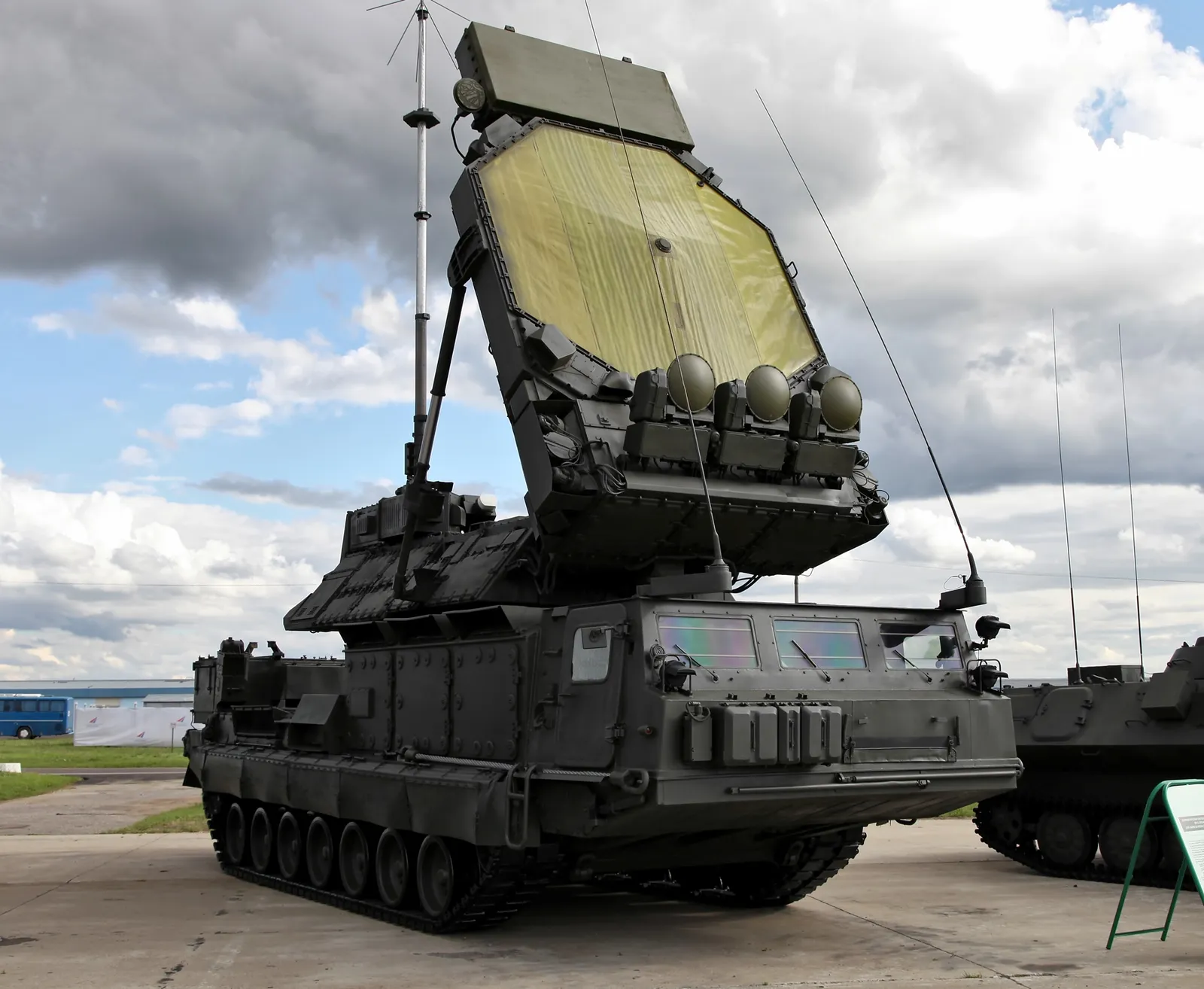


Documented on both sides of the war: Ukrainian 412th Nemesis Brigade operators struck a Russian 9S32M1 radar in Donetsk region on January 5, 2026, while Oryx separately lists a Ukrainian 9S32-1 radar for the 9K81-1 S-300V1 among visually documented Ukrainian equipment losses.
Role detailsAir Defense
9S32M1 missile guidance radar
Also known as
- 9S32M1
- 9S32
- 9S32-1
- 9S32M
- 9S32M-1E
- 9S32ME
- 9C32
- 9C32M
- Grill Pan
- S-300V engagement radar
- S-300V missile guidance station
- 9C32M1
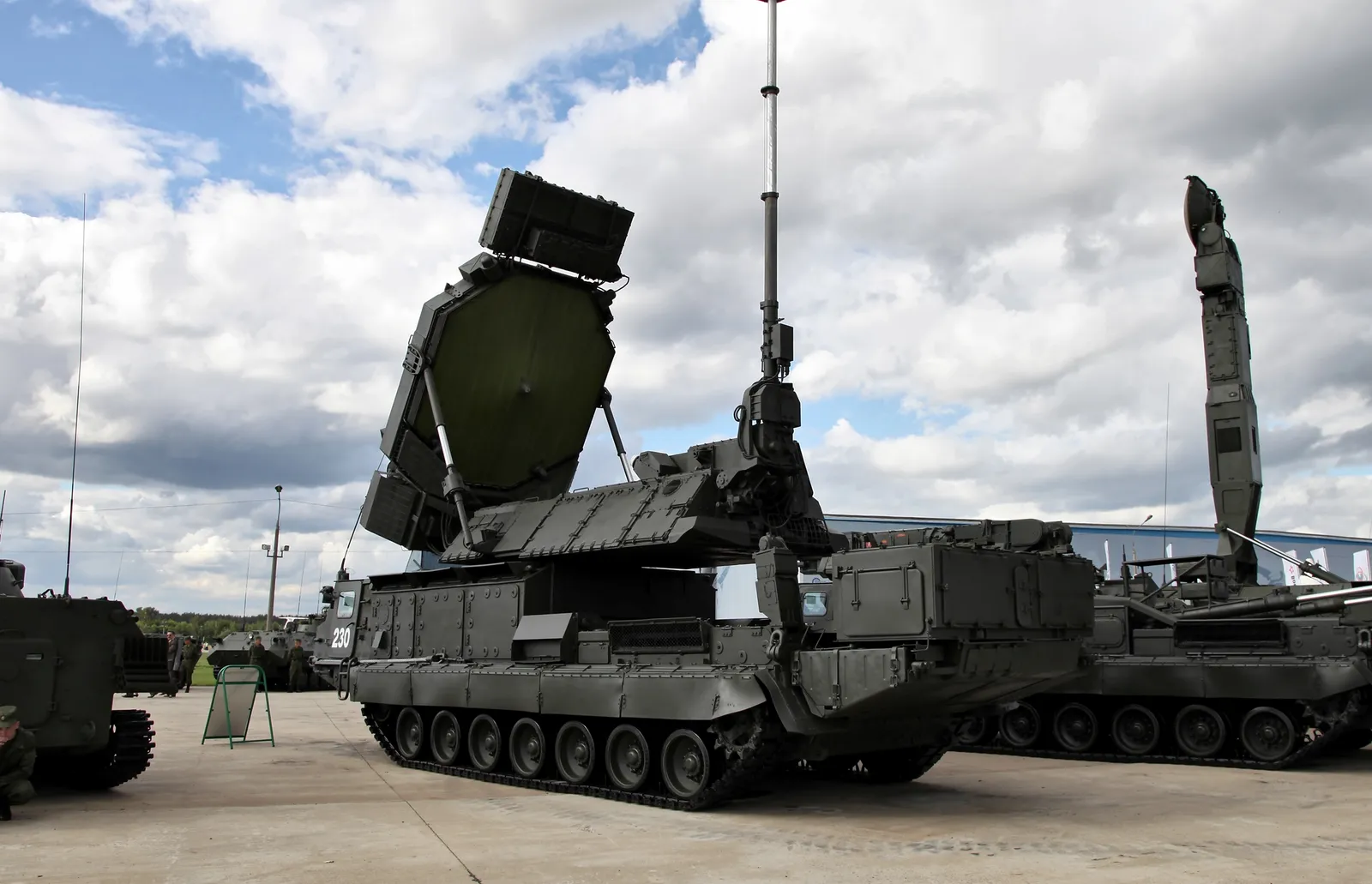
The 9S32M1 is a tracked multi-channel missile guidance radar in the S-300V air-defense family, descended from the 9S32 engagement-radar line used at battery level. It tracks assigned targets, coordinates with S-300V launch vehicles and command elements, and provides the radar channel needed to guide missiles against aircraft, cruise missiles, drones, and selected ballistic threats. Ukrainian reporting in January 2026 documented a Russian 9S32M1 being struck in Donetsk region during the Russia-Ukraine War.
Role in Conflicts
Profile / Specs
Profile
- Origin
- Soviet Union / Russia
- Built by
- Almaz-Antey
- Type
- Tracked missile guidance radar
- Service note
- Late Cold War S-300V family, modernized in S-300VM and S-300V4 service
- Designer
- Electromechanical Research Institute (NEMI / NIEMI) and Antey design lineage
Specifications
- Role
- Multi-channel missile guidance and engagement radar for S-300V-family batteries
- Radar type
- Three-coordinate centimeter-band phased-array radar, as described in January 2026 reporting
- Platform
- Tracked self-propelled S-300V-family vehicle
- Chassis
- Tracked self-propelled Object 833 chassis in the baseline 9S32 component reference
- Combat weight
- 44 tons for the baseline 9S32 station
- Crew
- Six-person crew for the baseline 9S32 station
- Tracked targets
- Up to 12 targets tracked simultaneously in the baseline 9S32 component reference
- Guidance capacity
- Reportedly guides up to 12 surface-to-air missiles against six airborne targets
- Detection range
- Missilery.info cites fighter detection at 150 km above 5 km altitude, and autonomous fighter detection up to 140 km
- Supported system
- S-300V / S-300VM tracked long-range air-defense and anti-ballistic missile family
- Targets supported by parent system
- Aircraft, helicopters, drones, cruise missiles, and selected ballistic threats depending on S-300V variant and missile load
- Operational dependency
- Works with S-300V command, surveillance, launcher, and reload vehicles rather than as a standalone weapon
- Battery position
- One 9S32-family engagement radar per S-300V firing battery in open system-composition references
- Battery vehicles
- Works with 9S457 command, 9S15/9S19 radar, 9A82/9A83 launcher, and 9A84/9A85 reload-launch vehicle families depending on S-300V configuration
Variants
Open sources use several closely related 9S32 designations across the S-300V family. This entry is centered on the 9S32M1 designation reported in Russian S-300V/S-300V4 service, while the broader line includes the baseline 9S32 engagement radar and export or upgraded 9S32ME forms for S-300VM / Antey-2500.
| Variant | Configuration | Designation notes |
|---|---|---|
| 9S32 | Baseline S-300V engagement radar | The 1988 S-300V composition lists a 9S32 engagement radar at battery level, paired with tracked launch and reload vehicles. Sources: S-300V WeaponSystems, S-300V Missile System |
| 9S32-1 | S-300V1 engagement radar designation | Oryx lists a Ukrainian 9S32-1 radar for the 9K81-1 S-300V1 among visually documented Ukrainian equipment losses in the Russian invasion of Ukraine. Sources: Oryx Ukrainian Equipment Losses |
| 9S32M | Improved S-300VM engagement radar line | Technical references describe 9S32M as the improved engagement-radar branch used with modernized S-300VM / Antey-2500 family components. Sources: Air Power Australia Giant Gladiator, S-300V Missile System |
| 9S32M1 | Modernized Russian S-300V guidance radar | January 2026 reporting identifies the 9S32M1 as the three-coordinate, multi-channel missile guidance radar struck in Donetsk region. Sources: UNITED24 9S32M1 Radar Strike, Defense Express 9S32 Strike |
| 9S32ME | Export S-300VM / Antey-2500 guidance radar designation | S-300VM / Antey-2500 references identify 9S32ME as the export/upgraded multi-channel missile guidance radar used with the modernized tracked branch. Sources: S-300V Air and Missile Defense System, Air Power Australia Giant Gladiator |
| 9S32M-1E | Antey-4000 export guidance-station designation | Rosoboronexport's Antey-4000 page lists the 9S32M-1E multichannel missile guidance station as the system element responsible for search, detection, lock-on, automatic tracking, and target-parameter transfer to launchers. Sources: Rosoboronexport Antey-4000 |
Parent Air-Defense System
The radar is not a standalone launcher; its battlefield value comes from acting as the S-300V-family battery engagement radar while command, surveillance, launcher, and reload vehicles provide the rest of the firing chain.
| Compatible item | Item type | Compatibility evidence |
|---|---|---|
 | Long-range surface-to-air missile family | The catalog's S-300 family page covers the broader S-300V branch; open system references place 9S32-family engagement radars alongside tracked launch, reload, command, and surveillance vehicles in that branch. Sources: S-300 Missile Threat, S-300V Missile System, S-300V WeaponSystems |
Radar Role In The Battery
The 9S32-family vehicle is the engagement and missile-guidance node for S-300V batteries, working with command, surveillance, launch, and reload vehicles rather than firing missiles by itself.
Battery position
Open S-300V architecture references place one 9S32 engagement radar in each firing battery, alongside launch vehicles and reload-launch vehicles.
Sources: S-300V WeaponSystems; S-300V Missile System.
Guidance function
Defense Express and UNITED24 describe the radar as able to guide up to 12 missiles against six airborne targets.
Sources: Defense Express 9S32 Strike; UNITED24 9S32M1 Radar Strike.
System branch
S-300V is the tracked army air-defense branch of the S-300 family, with anti-aircraft and anti-ballistic missile roles.
Sources: S-300 Missile Threat; S-300V Air and Missile Defense System.
Loss effect
When the engagement radar is disabled, the remaining launch and support vehicles lose the central radar channel needed for normal battery combat work until a replacement is available.
Source: Defense Express 9S32 Strike.
Timeline
9S32M1 missile guidance radar Key Events
S-300V system reaches full deployment
CSIS places full deployment of the S-300V system in 1988, after phased introduction of S-300V elements in the 1980s.
Sources: S-300 Missile Threat
S-300V enters intended 1988 composition
WeaponSystems.net and Missilery.info describe the mature S-300V composition as including the 9S32 engagement radar with 9S457 command, 9S15/9S19 radar, launcher, and reload vehicles.
Sources: S-300V WeaponSystems, S-300V Missile System
Russian S-300VM systems enter service with improved radar technology
Missile Defense Advocacy Alliance's S-300V timeline identifies 2014 as the year Russia was outfitted with its first S-300VM systems with improved radar technology.
Sources: S-300V Air and Missile Defense System
Russian 9S32M1 struck in Donetsk region
Ukrainian and defense reporting said operators from the 412th Nemesis Brigade struck a Russian 9S32M1 radar belonging to an S-300V system in Donetsk region.
Sources: UNITED24 9S32M1 Radar Strike, Defense Express 9S32 Strike, Oryx Russian Equipment Losses
Media
9S32M1 missile guidance radar Videos
9S32M1 missile guidance radar Images
Related Weapon Systems


Sources
UNITED24 9S32M1 Radar StrikePublisher: UNITED24 Media | Note: Supports 2014 Russia-Ukraine War direct used by Russia context for a Russian 9S32M1 radar struck in Donetsk region on January 5, 2026, and supports 9S32M1 role, radar type, phased-array description, and missile-guidance capacity. | Accessed: 2026-07-03Defense Express 9S32 StrikePublisher: Defense Express | Note: Supports 2014 Russia-Ukraine War direct used by Russia context for the Ukrainian drone strike on a Russian S-300V 9S32 radar in Donetsk region, and supports the radar's target-tracking and missile-guidance role within the battery. | Accessed: 2026-07-03S-300 Missile ThreatPublisher: CSIS Missile Threat | Note: Supports S-300 and S-300V family background, S-300V development timeline, S-300V role, basing, missiles, and relationship to the broader S-300 family. | Accessed: 2026-07-03S-300V Missile SystemPublisher: Missilery.info | Note: Supports S-300V / S-300VM composition, including the 9S32-family multi-channel missile guidance station, command post, radars, launchers, reload vehicles, tracked chassis, and battery organization. | Accessed: 2026-07-039S32 Guidance StationPublisher: Missilery.info | Note: Supports baseline 9S32 component role, radar type, target search/tracking and launcher-transfer functions, target and missile channel counts, detection ranges, tracked Object 833 chassis, 44-ton weight, and six-person crew. | Accessed: 2026-07-03S-300V WeaponSystemsPublisher: WeaponSystems.net | Note: Supports S-300V family architecture, 9S32 battery engagement-radar role, 1983/1988 service-composition context, tracked mobility, and associated command, radar, launcher, and reload vehicles. | Accessed: 2026-07-03Rosoboronexport Antey-4000Publisher: Rosoboronexport | Note: Official export-system page supporting the later 9S32M-1E multichannel missile guidance station designation and its search, detection, lock-on, automatic tracking, low-flying target scan, and launcher-parameter transfer functions. | Accessed: 2026-07-03Air Power Australia Giant GladiatorPublisher: Air Power Australia | Note: Supports S-300V/S-300VM component and designation context, including 9S32/9S32M engagement-radar lineage, tracked vehicle family, Grill Pan identification, and 9S32M/ME modernization context. | Accessed: 2026-07-03Oryx Russian Equipment LossesPublisher: Oryx | Note: Supports 2014 Russia-Ukraine War direct used by Russia context by listing visually documented Russian 9S32M1 radars for S-300V as damaged during the Russian invasion of Ukraine. | Accessed: 2026-07-03Oryx Ukrainian Equipment LossesPublisher: Oryx | Note: Supports 2014 Russia-Ukraine War direct used by Ukraine context by listing a visually documented Ukrainian 9S32-1 radar for the 9K81-1 S-300V1 as destroyed during the Russian invasion of Ukraine. | Accessed: 2026-07-03S-300V Air and Missile Defense SystemPublisher: Missile Defense Advocacy Alliance | Note: Supports S-300V / S-300VM role, Almaz-Antey producer context, variant names, sensor and target context, timeline milestones, and export-service background. | Accessed: 2026-07-03File:S-300V - 9S32 engagement radar.jpgPublisher: Wikimedia Commons | Note: Image provenance and license page for the 9S32 engagement radar photograph used as the entry image. Licensed CC BY-SA 4.0. | Accessed: 2026-07-03File:S-300V - 9S32 engagement radar - rear view.jpgPublisher: Wikimedia Commons | Note: Image provenance and license page for the rear-view 9S32 engagement radar photograph used in the gallery. Licensed CC BY-SA 4.0. | Accessed: 2026-07-03