Air Defense

55Zh6U Nebo-U

Also known as
  • Nebo-U
  • 55Zh6U
  • 55Zh6U Nebo U
  • 55G6U
  • 55Ж6У Небо-У
  • РЛС 55Ж6У Небо-У
  • Nebo-UE
  • 55Zh6UE
  • 55Ж6УЕ Небо-УЕ
  • Tall Rack
  • Sky-U

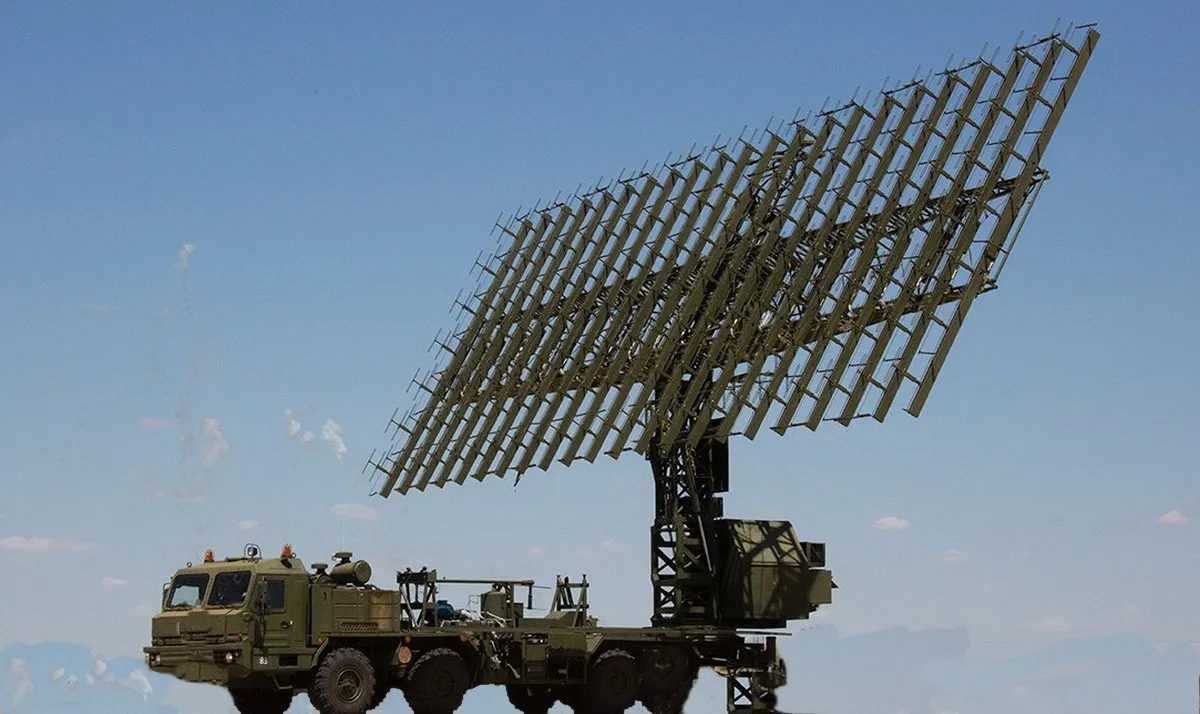
The 55Zh6U Nebo-U is a Russian meter-band, three-coordinate radar for medium- and high-altitude air surveillance, target-coordinate reporting, and support to automated air-defense command systems. Developed by NNIIRT as a deep modernization of the earlier 55Zh6 Nebo, it uses a large cross-shaped phased-array antenna and has been documented in Russian service during the Russia-Ukraine war through reported Ukrainian strikes on Nebo-U radars in occupied Crimea.

Role in Conflicts

Profile / Specs

Profile

Origin
Soviet Union / Russia
Built in
Russia
Type
Transportable VHF three-coordinate air-surveillance radar
Service note
1990s-present
Designer
Gorky/Nizhny Novgorod Research Institute of Radio Engineering (GNIIRT/NNIIRT); chief designer Alexander Zachepitsky in open reporting
Designed
Developed from 1986 to 1992 as a deep modernization of the 55Zh6 Nebo family
Unit cost
Ukrainian General Staff-sourced 2026 reporting cited an estimated value near $100 million for a Russian 55Zh6U Nebo-U radar
Produced
Accepted into Russian service in 1995; production at NNIIRT in 1995 and at NITEL from 2011 according to the Great Russian Encyclopedia
Developed from
55Zh6 Nebo
Developed into
55Zh6UM Nebo-UM / Niobium and later Nebo family radars

Specifications

Radar band
Meter band / VHF
Radar type
Transportable three-coordinate medium- and high-altitude surveillance radar
Primary function
Detection, coordinate measurement, tracking, and reporting of aerodynamic and ballistic targets to air-defense command systems or autonomous users
Antenna
Cross-shaped phased-array antenna with rangefinder and height-finder arrays
Antenna height
43 m in the Great Russian Encyclopedia specification table
Azimuth coverage
360 degrees
Elevation coverage
Up to 16 degrees
Altitude coverage
Up to 70 km
Instrumented range
Up to 600 km in the Great Russian Encyclopedia specification table
Transmitter power
500 kW peak and 5 kW average in the Great Russian Encyclopedia specification table
Power consumption
100 kW
Deployment time
Up to 22 hours
Crew
3 personnel per shift
Transport units
6 transport units after modernization from the earlier 55Zh6 layout
Remote-control distance
Up to 1,000 m from the radar set
Mean time between failures
250 hours in the Great Russian Encyclopedia specification table
Mean time to repair
1 hour in the Great Russian Encyclopedia specification table
Radar Role And Configuration

The 55Zh6U Nebo-U is a large transportable sensor for the air-defense radar layer, not a self-contained interceptor. Russian reference material describes it as a meter-band, three-coordinate station that can operate autonomously or feed automated air-defense command systems with range, azimuth, and height data.

Radar band

Meter band / VHF.

Antenna layout

Cross-shaped phased-array antenna with separate rangefinder and height-finder arrays mounted on three semitrailers.

Control element

The set includes an equipment cabin, diesel power station, and remote-control unit that can operate up to 1,000 m from the radar.

Reported wartime role

Ukraine-war reports treat Nebo-U as a Russian long-range surveillance and air-defense radar target in occupied Crimea.

Family distinction

Nebo-U should be separated from Nebo-SV, Nebo-SVU, Nebo-M, and Niobium-SV reports unless the source names 55Zh6U or Nebo-U directly.

Variants

Nebo-U sits in the Soviet/Russian Nebo meter-band radar family: a deep modernization of the original 55Zh6 Nebo, distinct from the more mobile ground-forces Nebo-SV/SVU branch and from later Nebo-UM/Niobium and Nebo-M systems.

VariantConfigurationDesignation notes
55Zh6 NeboEarlier three-coordinate VHF radar

The Great Russian Encyclopedia describes Nebo-U as a deep modernization of the earlier 55Zh6 Nebo radar.

Sources: Great Russian Encyclopedia Nebo-U Entry

55Zh6UE Nebo-UEExport designation

Open reference material uses Nebo-UE / 55Zh6UE for the export form of the Nebo-U radar.

Sources: GlobalSecurity Nebo-U Profile

55Zh6UM Nebo-UM / NiobiumLater modernization path

GlobalSecurity describes the 55Zh6UM / Niobium line as a later Nebo-family modernization, with development work launched from the Sky-U base in 2010.

Sources: GlobalSecurity Nebo-U Profile

55Zh6M Nebo-MLater multi-band radar complex

Open family references distinguish Nebo-M as a later multi-band radar complex rather than a simple 55Zh6U variant.

Sources: Radartutorial 55Zh6U Nebo-U Profile

1L13-3 Nebo-SV, Mobile VHF two-coordinate air-surveillance radar, Air Defense1L13-3 Nebo-SVGround-forces mobile Nebo branch

The Nebo family also includes the mobile ground-forces Nebo-SV branch; it is a related family member rather than the same radar.

Sources: GlobalSecurity Nebo-U Profile

1L119 Nebo-SVU, VHF air-surveillance radar, Air Defense1L119 Nebo-SVULater mobile VHF derivative

The Nebo-SVU is a separate mobile derivative in the same VHF radar family and should not be collapsed with 55Zh6U Nebo-U conflict reporting.

Sources: GlobalSecurity Nebo-U Profile

1L125 Niobium-SV, Mobile VHF three-coordinate air-defense surveillance radar, Air Defense1L125 Niobium-SVLater ground-forces Niobium branch

Niobium-SV belongs to a later Nebo/Niobium development path; open sources distinguish it from the large Nebo-U radar.

Sources: GlobalSecurity Nebo-U Profile

Timeline

55Zh6U Nebo-U Key Events

  1. Nebo-U development begins

    Open reference material traces the 55Zh6U Nebo-U development program to NNIIRT work that began in 1986.

    Sources: GlobalSecurity Nebo-U Profile

  2. Testing reported at Kapustin Yar

    GlobalSecurity reports that the 55Zh6U radar was tested at Kapustin Yar in 1992.

    Sources: GlobalSecurity Nebo-U Profile

  3. Accepted into Russian service

    The Great Russian Encyclopedia lists 1995 as the Nebo-U service-adoption year and says initial serial production began at NNIIRT.

    Sources: Great Russian Encyclopedia Nebo-U Entry

  4. NITEL production listed

    The Great Russian Encyclopedia says serial production at Nizhny Novgorod Television Plant began in 2011.

    Sources: Great Russian Encyclopedia Nebo-U Entry

  5. HUR releases Crimea strike footage

    Kyiv Post reported a Ukrainian military-intelligence claim and drone footage showing a strike on the antenna of a Russian 55Zh6U Nebo-U radar in occupied Crimea.

    Sources: Kyiv Post Crimea Nebo-U Strike

  6. Yevpatoriia radar strike reported

    Ukrainian Pravda, citing Ukraine's General Staff, reported that Ukrainian forces hit a Russian 55Zh6U Nebo-U radar near occupied Yevpatoriia in Crimea.

    Sources: Ukrainian Pravda Yevpatoriia Nebo-U Strike

  7. Feodosia radar strike confirmed in reporting

    UNN and The New Voice of Ukraine reported a Ukrainian General Staff confirmation that Ukrainian forces struck a Nebo-U radar at occupied Feodosia in Crimea.

    Sources: UNN Feodosia Nebo-U Strike, NV Feodosia Nebo-U Strike

Related Weapon Systems
1L125 Niobium-SV, Mobile VHF three-coordinate air-defense surveillance radar, Air DefenseAir Defense1L125 Niobium-SVMobile VHF three-coordinate air-defense surveillance radarThe 1L125 Niobium-SV is a Russian mobile VHF/meter-band, three-coordinate radar built for ground-forces air defense and developed by NNIIRT within the Almaz-Antey group. Rosoboronexport's 1L125E export profile describes a 5-500 km, 360-degree surveillance radar for detecting, tracking, identifying, and reporting aerodynamic and ballistic targets, including low-observable aircraft; Ukrainian and sanctions-derived records identify Niobium-SV radars in Russian service during the Russia-Ukraine war.
1L13-3 Nebo-SV, Mobile VHF two-coordinate air-surveillance radar, Air DefenseAir Defense1L13-3 Nebo-SVMobile VHF two-coordinate air-surveillance radarThe 1L13-3 Nebo-SV is a Soviet/Russian mobile meter-band radar for ground-forces air defense, built to search for aircraft, helicopters, UAVs, and other air targets and pass range-and-bearing data to command posts or missile batteries. It is a two-coordinate predecessor to the 1L119 Nebo-SVU: sources describe it with a 72-element VHF antenna array, separate IFF interrogator, six-person crew, and fighter-target detection figures reaching roughly 350 km at high altitude.
48Ya6-K1 Podlet-K1, Mobile three-coordinate low-altitude air-surveillance radar, Air DefenseAir Defense48Ya6-K1 Podlet-K1Mobile three-coordinate low-altitude air-surveillance radarThe 48Ya6-K1 Podlet-K1 is a Russian mobile three-coordinate radar complex built to detect and track low-altitude air targets for air-defense units. Public reporting describes the system as a multi-vehicle package with a radar/antenna vehicle, command or operator-control vehicle, and power-support vehicle on KamAZ chassis, while Rosoboronexport markets the export Podlet-K1KE for automated detection, tracking, identification, and flight-information tasks in air-defense and air-force radio-engineering units. Ukraine-war reporting documents Russian Podlet-K1 losses and strikes tied to the S-300 and S-400 air-defense network.
50N6A multifunction radar, Mobile multifunction radar for the S-350 Vityaz air-defense system, Air DefenseAir Defense50N6A multifunction radarMobile multifunction radar for the S-350 Vityaz air-defense systemThe 50N6A is a Russian mobile multifunction radar associated with the 50R6A/S-350 Vityaz air-defense system. It provides search, target tracking, fire-control, and missile-guidance support for Vityaz batteries, while official export data for the S-350E family gives the multifunction radar 150 km circular-scan and 230 km fixed-sector air-target detection modes. WarSpotting documented a Russian 50N6A radar destroyed in Donetsk oblast on January 1, 2026, making the component directly visible in the 2014 Russia-Ukraine War rather than only through its parent S-350 system.
5N84A Oborona-14, Transportable VHF two-coordinate early-warning radar, Air DefenseAir Defense5N84A Oborona-14Transportable VHF two-coordinate early-warning radarThe 5N84A Oborona-14 is a Soviet/Russian VHF early-warning radar in the P-14 Tall King family, built around a very large folding antenna for long-range detection of airborne targets. Open technical references describe it as a two-coordinate station that measures range and azimuth for air-defense command systems or autonomous users, while 2026 reporting documented a Russian Oborona-14 radar destroyed by Ukrainian Special Operations Forces in occupied Crimea.

Sources