Air Defense

48Ya6-K1 Podlet-K1

Also known as
  • 48Ya6-K1
  • Podlet-K1
  • Podlet K1
  • Podlet-1K
  • Podlet-1K Radar
  • 48Ya6-K1 Podlet K1
  • 48Я6-К1 Подлет-К1
  • Podlet-K1KE
  • 48Ya6-K1KE
  • Podlet-K1 command vehicle
  • Podlet-K1 operator control station
  • Podlet-K1 mobile command post

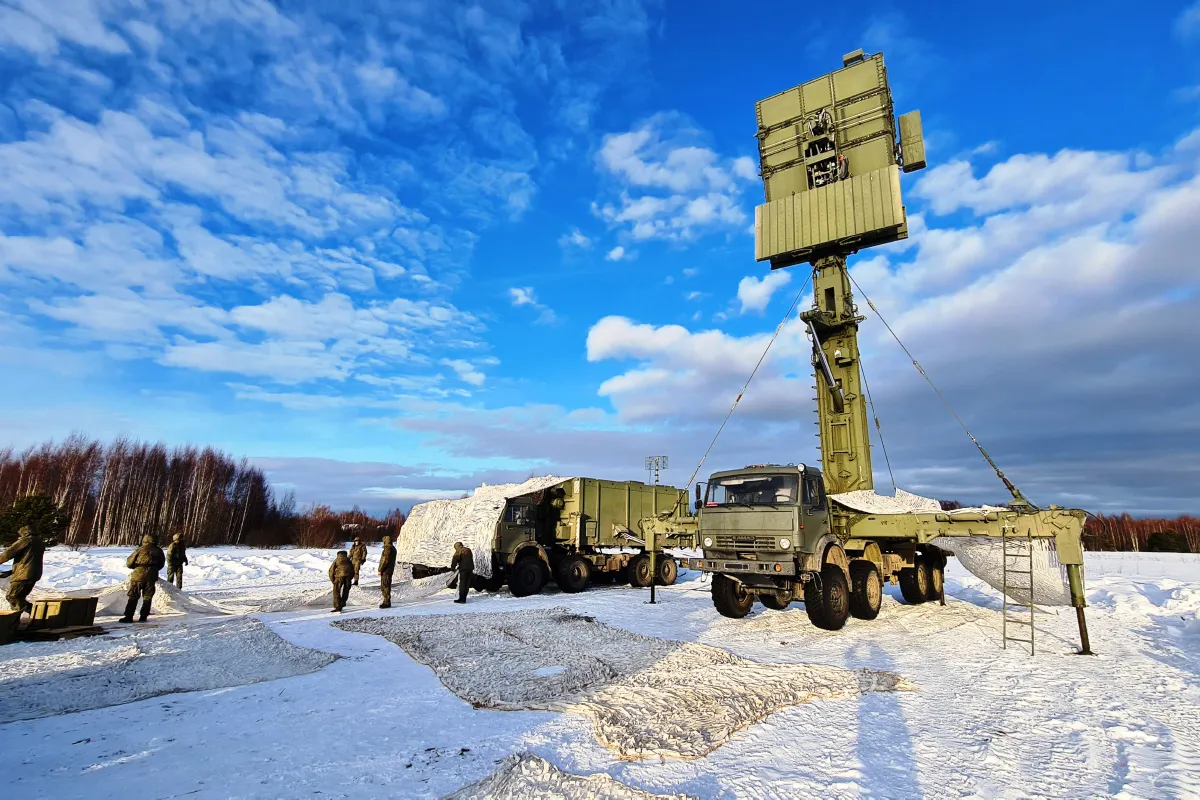
The 48Ya6-K1 Podlet-K1 is a Russian mobile three-coordinate radar complex built to detect and track low-altitude air targets for air-defense units. Public reporting describes the system as a multi-vehicle package with a radar/antenna vehicle, command or operator-control vehicle, and power-support vehicle on KamAZ chassis, while Rosoboronexport markets the export Podlet-K1KE for automated detection, tracking, identification, and flight-information tasks in air-defense and air-force radio-engineering units. Ukraine-war reporting documents Russian Podlet-K1 losses and strikes tied to the S-300 and S-400 air-defense network.

Role in Conflicts

Side
Russia

Ukrainian military-intelligence reporting and subsequent press coverage document Russian 48Ya6-K1 Podlet radar stations being struck, damaged, or destroyed during the war, including a November 2023 strike near Krasnaya Polyana in Belgorod region, an April 2024 strike on a Podlet-K1 antenna post and diesel generator, and February 2025 reporting on a drone strike that hit a mobile command post near Cape Tarkhankut and reportedly damaged a Podlet-K1 radar station. Ukrainian reporting described the system as feeding target coordinates to Russian S-300 and S-400 air-defense systems.

Role details
Profile / Specs

Profile

Origin
Russia
Built by
Almaz-Antey
Type
Mobile three-coordinate low-altitude air-surveillance radar
Service note
Russian service and export promotion from the mid-2010s onward
Designer
Almaz-Antey
Designed
State testing reported from 2010; service deliveries reported from 2015
Unit cost
Reported by Ukrainian sources at about $5 million per system
Produced
Reported Russian deliveries from 2015; Podlet-K1KE export promotion active by the 2020s

Specifications

Radar role
Mobile three-coordinate low-altitude air-target detection and tracking radar
Radar band
S-band / E-F band in specialist radar references
Coverage
360-degree azimuth coverage; elevation from -2 to 25 degrees in Rosoboronexport export data
Instrumented range modes
2-200 km, 2-300 km, or 2-80 km depending on operating mode
Radial target speed
50 to 4,400 km/h
Surveillance period
5 +/- 0.5 seconds or 10 +/- 0.5 seconds
System vehicles
Radar/antenna vehicle, command or operator-control vehicle, and mobile power generator on separate KamAZ wheeled chassis in public reporting
Mobility
Mobile multi-vehicle system; radar vehicle shown on KamAZ-6350 8x8 chassis in reporting
Known role with SAM systems
Target detection and coordinate support for S-300 and S-400 air-defense systems in Ukraine-war reporting
Radar Role And System Layout

Podlet-K1 is a low-altitude air-target detection radar for the sensor layer of an air-defense network, not a fire unit. Public export material describes automated or semi-automated detection, coordinate measurement, tracking, nationality determination, flight-information collection, and recognition of low-altitude air-attack weapons.

Operating envelope

Rosoboronexport lists range modes from 2-200 km, 2-300 km, or 2-80 km, with 360-degree azimuth coverage and elevation from -2 to 25 degrees, with additional support up to 45 degrees.

Target set

The export description emphasizes air objects and advanced low-altitude air-attack weapons in active, passive, and combined interference conditions.

Vehicle package

Public reporting describes the complete Podlet-K1 as a three-vehicle package on KamAZ chassis: the radar or antenna vehicle, a command or operator-control vehicle, and a mobile power-support vehicle.

Command vehicle function

The command/control vehicle is treated here as part of the Podlet-K1 radar complex because available sources identify it as the operator or command element of the radar package rather than a separately named weapon system.

Variants

Public sources use Podlet-K1, Podlet-1K, and 48Ya6-K1 for the Russian-service radar and Podlet-K1KE / 48Ya6-K1KE for the export-marketed configuration. The sources available here support treating them as a closely related designation family rather than separate catalog records.

VariantConfigurationDesignation notes
48Ya6-K1KE Podlet-K1KEExport-marketed configuration

Rosoboronexport lists the Podlet-K1KE as an automated transportable solid-state low-altitude radar for air-target detection in air-defense and air-force units.

Sources: Rosoboronexport Podlet-K1KE

Air-Defense Systems Cued

Podlet-K1 is a sensor rather than a missile launcher; its operational value comes from extending the low-altitude air picture and passing target data into larger Russian air-defense formations.

Compatible itemItem typeCompatibility evidence
S-300, Long-range surface-to-air missile system, Air DefenseS-300Long-range surface-to-air missile family

Ukrainian and defense reporting describe Podlet-K1 as providing target coordinates or support to Russian S-300-family air-defense systems.

Sources: Kyiv Independent Podlet Strike April 2024, TWZ Podlet Captured In Syria

S-400 Triumf, Long-range mobile surface-to-air missile system, Air DefenseS-400 TriumfLong-range surface-to-air missile system

Reporting on the radar's Ukraine-war use and Syria capture describes Podlet-K1 as operating with or supporting S-400 air-defense systems.

Sources: Kyiv Independent Podlet Strike April 2024, TWZ Podlet Captured In Syria

Timeline

48Ya6-K1 Podlet-K1 Key Events

  1. State testing reported

    Ukrainian defense reporting says state testing of the Podlet radar started in 2010 before later deliveries to Russian forces.

    Sources: Espreso Podlet Overview

  2. Russian deliveries reported

    Kyiv Independent reporting cited HUR saying the Podlet radar was a relatively new Russian development that began reaching Russia's army in 2015.

    Sources: Kyiv Independent Podlet Strike April 2024

  3. HUR reports Belgorod-region strike

    Ukraine's Defence Intelligence reported that Ukrainian intelligence, special-operations, and brigade elements discovered and destroyed a Russian 48Ya6-K1 Podlet radar near Krasnaya Polyana in Belgorod region.

    Sources: HUR Podlet Strike November 2023

  4. April 2024 strike reported

    The Kyiv Independent reported HUR's statement that Ukrainian units hit a Russian Podlet-K1 radar station, including its antenna post and diesel generator.

    Sources: Kyiv Independent Podlet Strike April 2024

  5. Captured vehicle reported in Syria

    TWZ reported that anti-Assad forces had captured at least the antenna vehicle of a Podlet-K1 radar during the Syrian rebel advance, while noting uncertainty over the exact location and ownership.

    Sources: TWZ Podlet Captured In Syria

  6. Crimea command-post strike reported

    United24 Media reported that a Ukrainian drone struck a mobile command post near Olenivka, close to Cape Tarkhankut, and that the attack reportedly damaged a mobile radar station identified in earlier reporting as a 48Ya6-K1 Podlet-K1.

    Sources: United24 Podlet Command Post Strike

Related Weapon Systems
P-35/P-37 Bar Lock radar, Transportable 2D air-surveillance and GCI radar, Electronic WarfareElectronic WarfareP-35/P-37 Bar Lock radarTransportable 2D air-surveillance and GCI radarThe P-35/P-37 Bar Lock family is a Soviet transportable two-coordinate radar line used for air surveillance, fighter guidance, and target assignment to air-defense missile systems. The family links the 1RL110 P-35 Saturn and later 1RL139 P-37 Mech designations, with documented use from North Vietnam's air-defense network, Syria's T4 airbase, and Iraq's 1991 IADS to Russian and Ukrainian radar losses or targeting in the 2014 Russia-Ukraine War; open air-defense references also place P-35M/Bar Lock search radar in S-200/SA-5 site architecture.
9K33 Osa, Short-range self-propelled surface-to-air missile system, Air DefenseAir Defense9K33 OsaShort-range self-propelled surface-to-air missile systemThe 9K33 Osa, NATO reporting name SA-8 Gecko, is a Soviet short-range self-propelled surface-to-air missile system that combines search radar, tracking radar, command guidance, and ready-to-fire missiles on a single amphibious 6x6 TELAR. Cataloged conflict records show the system across several generations of air-defense use: Syrian Osa-AK vehicles in Lebanon in 1982, Iraqi SA-8s in the Gulf War air-defense network, captured Georgian systems in 2008, rebel-held examples in Syria, Armenian and Ukrainian battlefield use, and Indian OSA-AK service during Operation Sindoor.
MT-LB with ZU-23 anti-aircraft gun, Improvised tracked self-propelled anti-aircraft gun, Air DefenseAir DefenseMT-LB with ZU-23 anti-aircraft gunImprovised tracked self-propelled anti-aircraft gunThe MT-LB with ZU-23 anti-aircraft gun is an improvised tracked fire-support and short-range air-defense vehicle that combines the Soviet MT-LB multipurpose armored tractor with a twin 23 mm ZU-23 gun mount. Public records show the configuration in Iraqi, Russian, Ukrainian, Syrian, and Armenian or Artsakh service contexts, with documented examples ranging from an Iraqi wreck in Baghdad to vehicles destroyed, damaged, or captured in later wars.
92N6A engagement radar, Mobile engagement and missile-guidance radar, Air DefenseAir Defense92N6A engagement radarMobile engagement and missile-guidance radarThe 92N6A is a Russian 92N6-family engagement radar associated with the S-400 Triumf air-defense system. Public sources describe the 92N6/92N6E Grave Stone as the multifunction radar that acquires and tracks targets, prepares launches, guides missiles, and exchanges fire-control data with the S-400 command system; conflict rows are limited to sources that directly name the 92N6 or 92N6E family rather than generic S-400 deployments.
FPV drones, First-person-view small UAV / one-way attack drone, Aircraft & UAVsAircraft & UAVsFPV dronesFirst-person-view small UAV / one-way attack droneFPV drones are small first-person-view UAVs adapted from racing-drone and commercial quadcopter technology into tactical reconnaissance and one-way attack systems. Russia and Ukraine turned them into mass battlefield consumables, while later reporting from Lebanon, Mali, Myanmar, Syria, Sudan, and Mexico shows the same control-link, payload, and low-cost adaptation pattern spreading to state forces, insurgents, and organized armed groups.

Sources