Air Defense

MARS-L

Also known as
  • Mars-L
  • RLS MARS-L
  • Mobile radar MARS-L
  • Mobile radar MARS L

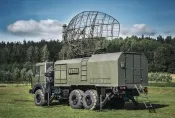
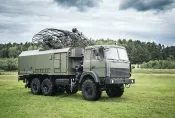
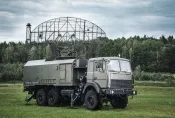
MARS-L is Altimus-Tech's mobile L-band radar that combines primary-surveillance and secondary-surveillance channels on a one-vehicle system. The manufacturer markets it for aircraft detection, interrogation, track generation, radar-data distribution, and air-defense support, including use as a low-altitude surveillance radar, radar-field gap filler, and target-acquisition sensor for upgraded Soviet-legacy surface-to-air missile packages.

Profile / Specs

Profile

Origin
Lithuania / Poland
Built by
Altimus-Tech
Type
Mobile combined PSR/SSR L-band air-surveillance radar
Service note
Publicly marketed by Altimus-Tech as a mobile L-band primary and secondary surveillance radar for air-defense, air-traffic-control, radar-gap-filler, and target-acquisition roles.
Designer
Altimus-Tech

Specifications

Radar channels
Combined primary surveillance radar and secondary surveillance radar channels
Operating frequency
PSR channel 1250-1350 MHz; SSR interrogation 1030 MHz and response 1090 MHz for RBS mode
Coverage
360-degree azimuth coverage, with published range values of 110 km for the PSR channel and 200 km for the SSR channel
Elevation coverage
Manufacturer lists 0.5-28 degrees elevation coverage for both PSR and SSR channels
Deployment
One vehicle with a manufacturer-listed deployment or teardown time of 10 minutes
Start-up time
3 minutes from mains power or 4-5 minutes from power plants
Power
8 kW power consumption
Data protocol
ASTERIX CAT 001 and CAT 002 listed for data acquisition and output
Track capacity
100 tracks listed in the manufacturer performance table
Mobility
Manufacturer lists 25-40 km/h travel speed on unpaved roads and 40-60 km/h on highways
Radar Mission And Processing

MARS-L combines a primary radar picture with secondary-radar interrogation so the operator can correlate detected aircraft with transponder replies and flight data. Altimus-Tech presents the system for air-defense coverage, terminal-area flight assurance, radar-troop gap filling, and target-acquisition support for anti-aircraft missile units.

Jamming response

The manufacturer lists automatic jamming monitoring, PSR frequency shifting across 250 steps, digital signal processing, and passive-interference rejection through digital MTI and adaptive clutter mapping.

Radar networking

The system can acquire and process air-situation data from another radar, build multi-radar tracks, distribute the air picture, and record radar data.

Mobility

Altimus-Tech lists a one-vehicle configuration, ten-minute deployment or teardown by qualified personnel, and road speeds of 25-40 km/h off road and 40-60 km/h on highways.
Supported Radar And Air-Defense Systems

Altimus-Tech markets MARS-L as a surveillance and target-acquisition radar that can work with height-finder equipment and upgraded Soviet-legacy surface-to-air missile packages.

Compatible itemItem typeCompatibility evidence
PRV-16ML, Modernized mobile height-finder radar, Air DefensePRV-16MLMobile height-finder radar

Altimus-Tech says PRV-16ML can interface with MARS-L, and its 3D radar-complex page presents MARS-L and PRV-16ML as elements of a mobile complex.

Sources: Altimus-Tech PRV-16ML Product Page, Altimus-Tech 3D Radar Complex

2K12 Kub / Kvadrat / SA-6 Gainful, Tracked medium-range surface-to-air missile system, Air Defense2K12 Kub / Kvadrat / SA-6 GainfulMedium-range surface-to-air missile system

Altimus-Tech lists MARS-L among radar support systems for its upgraded 2K12-ML / Kvadrat-ML package; the linked catalog record covers the broader Kub/Kvadrat family.

Sources: Altimus-Tech 2K12-ML Product Page

S-125 Neva/Pechora / SA-3 Goa, Short- to medium-range surface-to-air missile system, Air DefenseS-125 Neva/Pechora / SA-3 GoaSurface-to-air missile system

Altimus-Tech says its upgraded S-125-ML / Pechora-ML package may include MARS-L as an upgraded target-acquisition radar; the linked catalog record covers the broader S-125 family.

Sources: Altimus-Tech S-125-ML Product Page

S-75 Dvina / SA-2 Guideline, High-altitude surface-to-air missile system, Air DefenseS-75 Dvina / SA-2 GuidelineSurface-to-air missile system

Altimus-Tech lists MARS-L among target-acquisition radars for its upgraded S-75M3-ML / Volga-ML package; the linked catalog record covers the broader S-75 family.

Sources: Altimus-Tech S-75M3-ML Product Page

Timeline

MARS-L Key Events

  1. MSPO 2017 display

    Army Recognition reported Altimus-Tech displaying the RLS MARS-L radar vehicle at MSPO 2017 in Kielce, Poland.

  2. Reported Turkey delivery

    Defence Turkey, citing Ukrainian press, reported delivery of two MARS-L radars to SSTEK in late December 2019 as part of a package that also included two P-180U radars.

Media
Related Weapon Systems
AMBER-1800, Mobile VHF-band air surveillance radar, Air DefenseAir DefenseAMBER-1800Mobile VHF-band air surveillance radarAMBER-1800 is a mobile VHF-band air surveillance radar associated with the LiTak-Tak and Altimus-Tech industrial lineage. The two-vehicle system uses a deployable antenna and solid-state transmitter/receiver equipment to detect and track air targets, then distribute radar data to air-defense users. RUSI identifies Ukraine's related Burshtyn-1800 radar in service during the 2022 full-scale phase, while Lithuania committed funding for six AMBER-1800-family mobile air-surveillance radars for Ukraine under Germany's Immediate Action on Air Defence initiative in 2024.
48Ya6-K1 Podlet-K1, Mobile three-coordinate low-altitude air-surveillance radar, Air DefenseAir Defense48Ya6-K1 Podlet-K1Mobile three-coordinate low-altitude air-surveillance radarThe 48Ya6-K1 Podlet-K1 is a Russian mobile three-coordinate radar complex built to detect and track low-altitude air targets for air-defense units. Public reporting describes the system as a multi-vehicle package with a radar/antenna vehicle, command or operator-control vehicle, and power-support vehicle on KamAZ chassis, while Rosoboronexport markets the export Podlet-K1KE for automated detection, tracking, identification, and flight-information tasks in air-defense and air-force radio-engineering units. Ukraine-war reporting documents Russian Podlet-K1 losses and strikes tied to the S-300 and S-400 air-defense network.
36D6 / ST-68U surveillance radar, Mobile three-coordinate air-surveillance radar, Air DefenseAir Defense36D6 / ST-68U surveillance radarMobile three-coordinate air-surveillance radarThe 36D6 / ST-68U Tin Shield family is a mobile Soviet-legacy three-coordinate surveillance radar used to detect and track low-, medium-, and high-altitude air targets for air-defense command posts, SAM units, and air-traffic-control tasks. Ukrainian sources identify Iskra as the enterprise behind ST-68U/19Zh6 development history and later 35D6/36D6M modernization, while open technical references describe the 36D6 as an S-band radar with 360-degree azimuth coverage, four beams, 350 kW peak transmitter power, and target-data output to automated air-defense users. In the 2014 Russia-Ukraine War, visually documented loss lists, WarSpotting entries, and General Staff-derived reporting place 36D6/ST-68U radars on both Russian and Ukrainian sides of the air-defense fight, including repeated Russian radar losses in occupied Crimea.
5N84A Oborona-14, Transportable VHF two-coordinate early-warning radar, Air DefenseAir Defense5N84A Oborona-14Transportable VHF two-coordinate early-warning radarThe 5N84A Oborona-14 is a Soviet/Russian VHF early-warning radar in the P-14 Tall King family, built around a very large folding antenna for long-range detection of airborne targets. Open technical references describe it as a two-coordinate station that measures range and azimuth for air-defense command systems or autonomous users, while 2026 reporting documented a Russian Oborona-14 radar destroyed by Ukrainian Special Operations Forces in occupied Crimea.
35N6 Kasta surveillance radar, Mobile low-altitude air-surveillance radar, Air DefenseAir Defense35N6 Kasta surveillance radarMobile low-altitude air-surveillance radarThe 35N6 Kasta is a mobile UHF-band low-altitude surveillance radar associated with the Kasta-2-1/Kasta-2E1 branch of Russia's air-defense sensor network. Open radar references describe the 51U6/Kasta-2E1 as a two-coordinate low-altitude radar with separate antenna and operator or command-post elements; Janes identified a two-vehicle KamAZ-43114 system near Buhaivka, and Oryx plus WarSpotting list destroyed Russian Kasta command-post and antenna vehicles in the 2014 Russia-Ukraine War.

Sources