Electronic Warfare

1L111 Fara-1

Also known as
  • Fara
  • Fara-1
  • 1L111
  • 1Л111
  • SBR-5
  • Fara-PV
  • Fara-VR
  • 1L111M

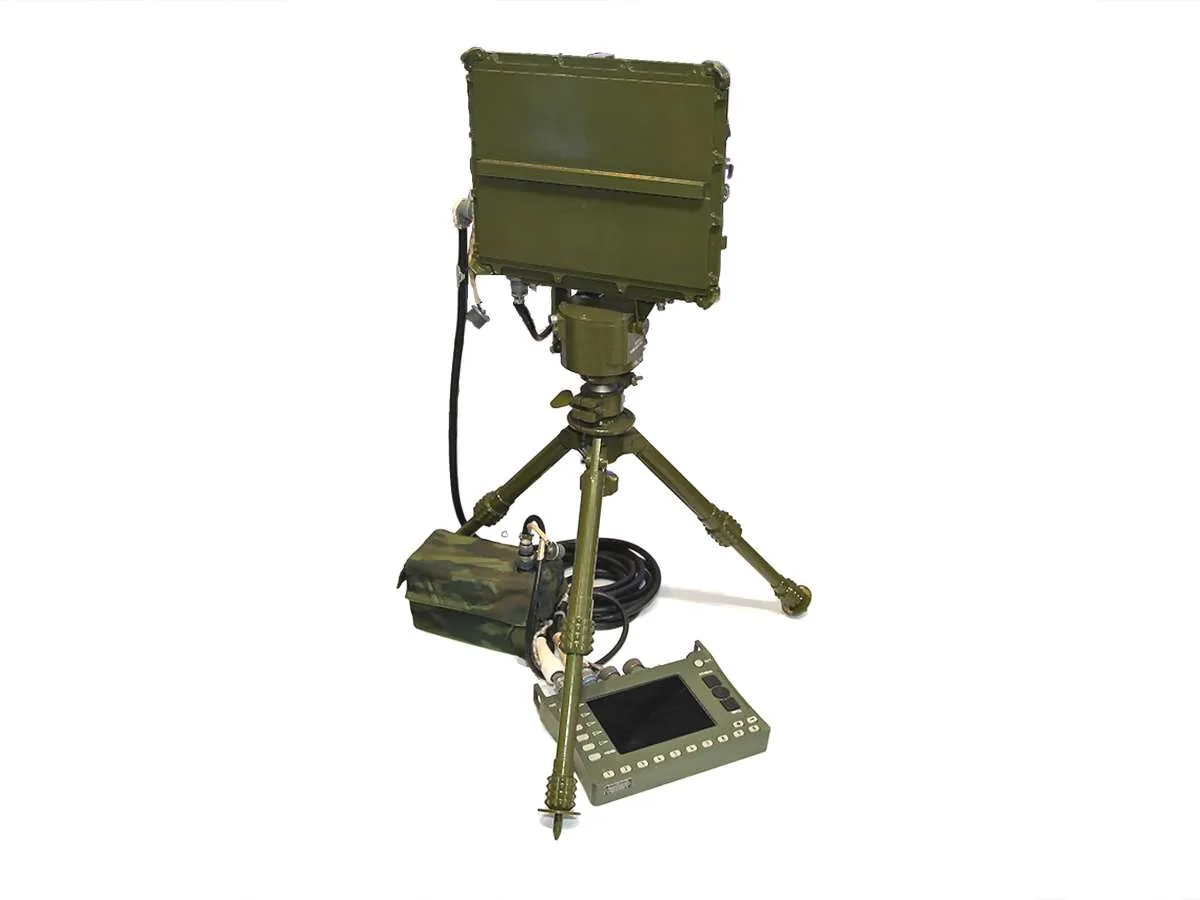
The 1L111 Fara-1 is a Russian man-portable battlefield surveillance and weapon-guidance radar developed by NPO Strela for detecting moving personnel and vehicles and cueing weapons such as automatic grenade launchers or machine guns. Later export and upgraded Fara-PV and Fara-VR variants keep the same short-range ground reconnaissance role while adding panoramic display, target-track, and lighter manpack features.

Role in Conflicts

Profile / Specs

Profile

Origin
Russia
Built by
Almaz-Antey
Type
Man-portable ground surveillance radar
Service note
Late 1990s to present Russian ground reconnaissance radar family
Designer
NPO Strela, Tula
Designed
1990s
Produced
Adopted by Russian forces in 1999; later Fara-PV and Fara-VR variants marketed for export

Specifications

Radar role
Man-portable moving-target surveillance and weapon-guidance radar
Frequency band
Ku band for Fara-PV; J band for Fara-VR / 1L111M
Fara-1 detection range
At least 2 km for a man and 4 km for a tank
Fara-PV detection range
3 km for a man and 6 km for an automobile
Fara-VR detection range
4 km for a single soldier, 8 km for a tank, and 10 km for a truck
Scan sector
24 to 180 degrees on Fara-PV and Fara-VR; 24, 45, 90, or 120 degrees on Fara-1
System weight
16.5 kg for Fara-1; 21.5 kg Fara-PV manpack set; 12 kg Fara-VR manpack
Emplacement time
Up to 3 minutes for Fara-PV and Fara-VR
Power endurance
Fara-PV up to 6 hours under normal battery conditions; Fara-VR 12 hours from a standard battery pack
Radar Family Notes

Fara-family records describe small battlefield radars built around short-range moving-target detection rather than air-search coverage. The original Fara-1 profile emphasizes weapon cueing for AGS-17, Pecheneg, and Kord-class weapons, while the later Rosoboronexport Fara-PV and Fara-VR pages emphasize panoramic-display surveillance, target tracks, and all-weather ground reconnaissance.

Fara-1 range class

GunRF lists not-less-than detection ranges of 2 km for a person and 4 km for a tank.

Fara-PV range class

Rosoboronexport lists moving-target detection ranges of 3 km for a man and 6 km for an automobile.

Fara-VR range class

Rosoboronexport lists a 10 km instrumented range, with moving target detection at 4 km for a single soldier, 8 km for a tank, and 10 km for a truck.
Variants

Open sources use Fara-1 for the 1L111 radar sight and Fara-PV or Fara-VR for later short-range panoramic-display ground-surveillance variants.

VariantConfigurationDesignation notes
Fara-PVPortable short-range surveillance radar with panoramic display

Rosoboronexport describes Fara-PV as a tripod-mounted transceiver and console set for border surveillance and ground reconnaissance in low-visibility conditions.

Sources: Rosoboronexport Fara-PV

Fara-VR / 1L111MUpgraded man-portable battlefield surveillance radar

Rosoboronexport lists Fara-VR as an upgraded man-portable radar that can detect people and vehicles, track at least three targets, and transmit target data to external users.

Sources: Rosoboronexport Fara-VR, Radartutorial Fara-VR

Related Russian Ground Radars

Fara-1 sits in the same Russian small-unit ground-reconnaissance radar lane as later NPO Strela / Almaz-Antey portable and artillery-reconnaissance systems.

Compatible itemItem typeCompatibility evidence
1L271 Aistyonok, Portable mortar locating reconnaissance radar, Electronic Warfare1L271 AistyonokPortable artillery reconnaissance radar

The cataloged Aistyonok is another Russian NPO Strela / Almaz-Antey portable radar, but its role is mortar locating and artillery fire correction rather than Fara's short-range personnel and vehicle surveillance.

Sources: Rosoboronexport Fara-VR, GunRF Fara-1 profile

1L277 Sobolyatnik, Portable ground reconnaissance radar, Electronic Warfare1L277 SobolyatnikPortable ground reconnaissance radar

The cataloged Sobolyatnik covers the newer portable ground-reconnaissance radar layer; Fara-VR is a lighter short-range member of the same broad battlefield surveillance category.

Sources: Rosoboronexport Fara-VR, Radartutorial Fara-VR

Timeline

1L111 Fara-1 Key Events

  1. Fara-1 adopted

    GunRF reports that the 1L111 Fara-1 portable multiple-target surveillance and weapon-guidance radar entered Russian service in 1999.

    Sources: GunRF Fara-1 profile

  2. Captured Fara reported in Ukraine

    Militarnyi reported that Ukrainian special operations personnel had seized a Russian Fara portable radar during the full-scale invasion phase of the Russia-Ukraine war.

    Sources: Militarnyi captured Fara report

Related Weapon Systems
1L271 Aistyonok, Portable mortar locating reconnaissance radar, Electronic WarfareElectronic Warfare1L271 AistyonokPortable mortar locating reconnaissance radarThe 1L271 Aistyonok is a Russian portable mortar-locating and artillery-reconnaissance radar built for battalion-to-brigade fire support. Rosoboronexport describes the export system as a modular radar for detecting 81-120 mm mortar positions, tracking shell bursts for artillery correction, and observing moving ground targets out to 20 km; specialist radar references describe a 135 kg J-band set, while open-source conflict reporting documents Russian-linked use in Syria and Ukraine plus Armenian/Artsakh wartime fielding problems in the 2020 Nagorno-Karabakh conflict.
1V1003 command-observation vehicle, Artillery command-observation vehicle, Support EquipmentSupport Equipment1V1003 command-observation vehicleArtillery command-observation vehicleThe 1V1003 is the BTR-80-based command-observation vehicle in Russia's 1V198 Kanonada automated artillery fire-control system, used to help detect targets and automate fire missions for artillery batteries. Rostec says the 1V198 package was developed and produced by VNII Signal and includes 1V1003 vehicles with 1V1004 command-staff vehicles; open-source loss tracking and Ukrainian reporting documented at least one Russian 1V1003 captured during the 2022 phase of the Russia-Ukraine War.
1V119 Reostat, Airborne artillery reconnaissance and fire-control vehicle, Support EquipmentSupport Equipment1V119 ReostatAirborne artillery reconnaissance and fire-control vehicleThe 1V119 Reostat is a Soviet airborne, amphibious tracked artillery reconnaissance and fire-control vehicle based on the BTR-D chassis. Developed in the late 1970s for Soviet airborne artillery units, it combined observation, navigation, communications, and ballistic fire-control equipment to support self-propelled artillery formations, especially 2S9 Nona batteries. OSCE monitoring and Ukrainian reporting document Ukrainian 1V119s in the Donbas phase of the 2014 Russia-Ukraine War, while visual-loss records and defense reporting document Russian examples destroyed or captured after the 2022 full-scale invasion.
1V14 battery command and forward observer vehicle, Artillery battery command and forward observer vehicle, Support EquipmentSupport Equipment1V14 battery command and forward observer vehicleArtillery battery command and forward observer vehicleThe 1V14 is the battery commander's mobile observation and fire-control vehicle in the Soviet 1V12 Mashina-S artillery command system. Built on the MT-LBu tracked chassis, it carries observation, navigation, rangefinding, communications, and fire-control equipment so a battery commander can reconnoiter targets, correct artillery fire, and coordinate with supported maneuver units from a protected forward position. Russian and Ukrainian 1V14 vehicles are documented in the 2014 Russia-Ukraine War through visually confirmed loss and capture records.
1V15 command and forward observer vehicle, Artillery battalion command and forward observer vehicle, Support EquipmentSupport Equipment1V15 command and forward observer vehicleArtillery battalion command and forward observer vehicleThe 1V15 is the battalion commander's mobile command-observation vehicle in the Soviet 1V12 Mashina-S artillery fire-control family. Built on the MT-LBu tracked chassis, it combines observation, rangefinding, navigation, communications, and fire-control equipment so an artillery battalion commander can reconnoiter targets, coordinate with supported maneuver units, and direct battalion fire from a protected forward post. Russian and Ukrainian 1V15-family vehicles are documented in the 2014 Russia-Ukraine War through visually confirmed loss and capture records.

Sources