Artillery

82 mm 2B9 Vasilek automatic mortar

Also known as
  • 2B9 Vasilek
  • 2B9M Vasilek
  • Vasilyek
  • Vasiliyok
  • Cornflower
  • AM 2B9
  • AM 289

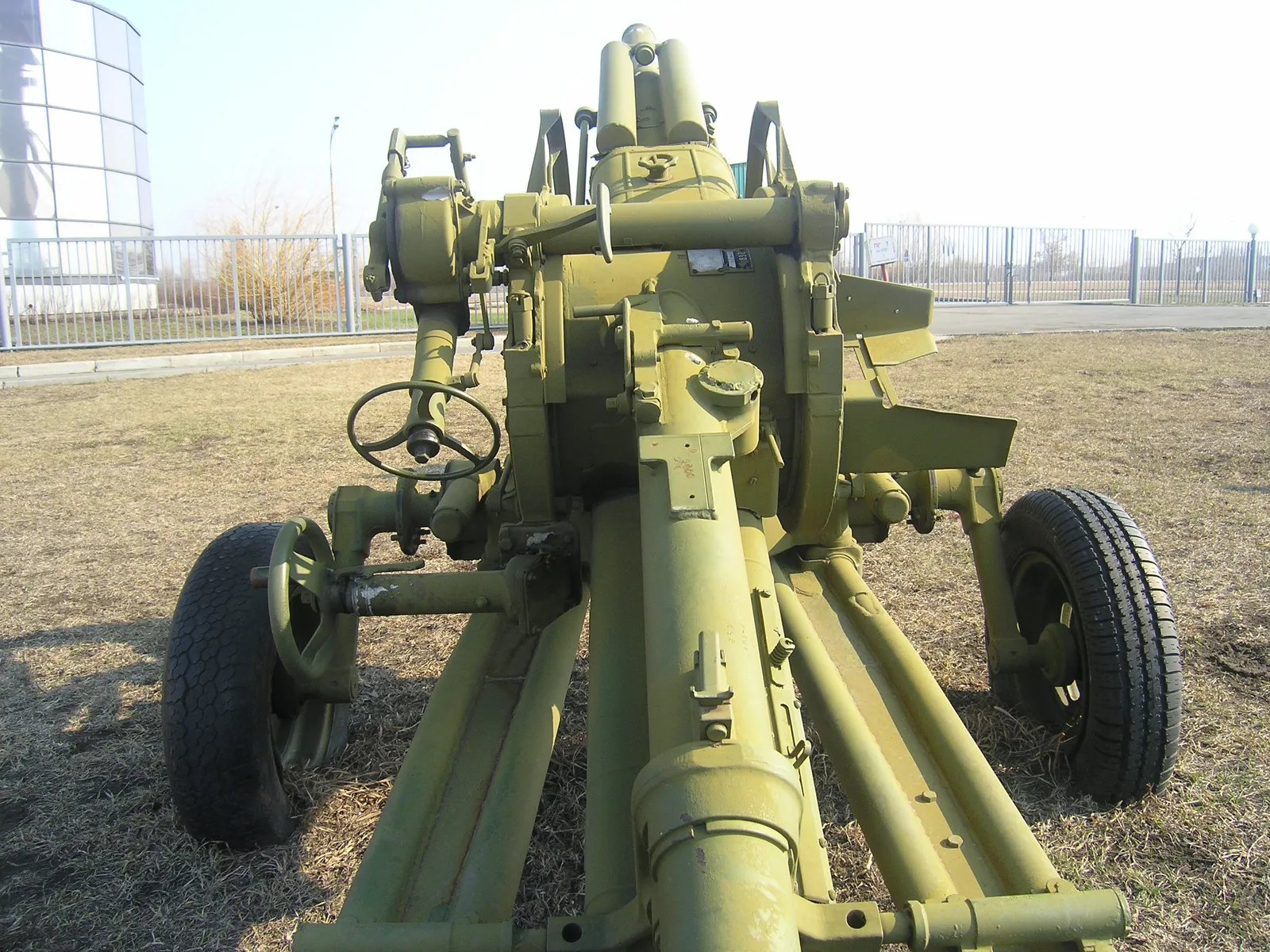
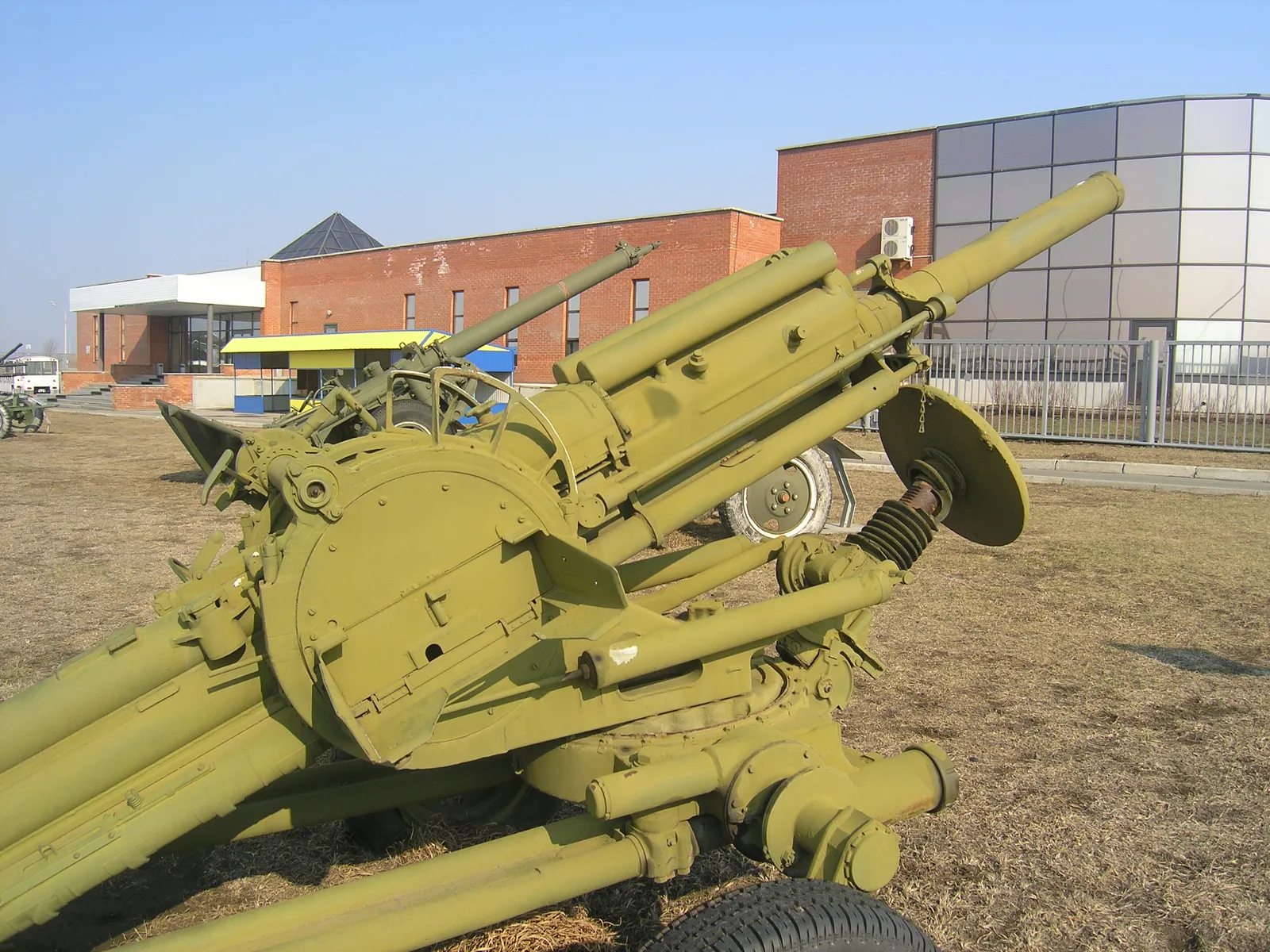
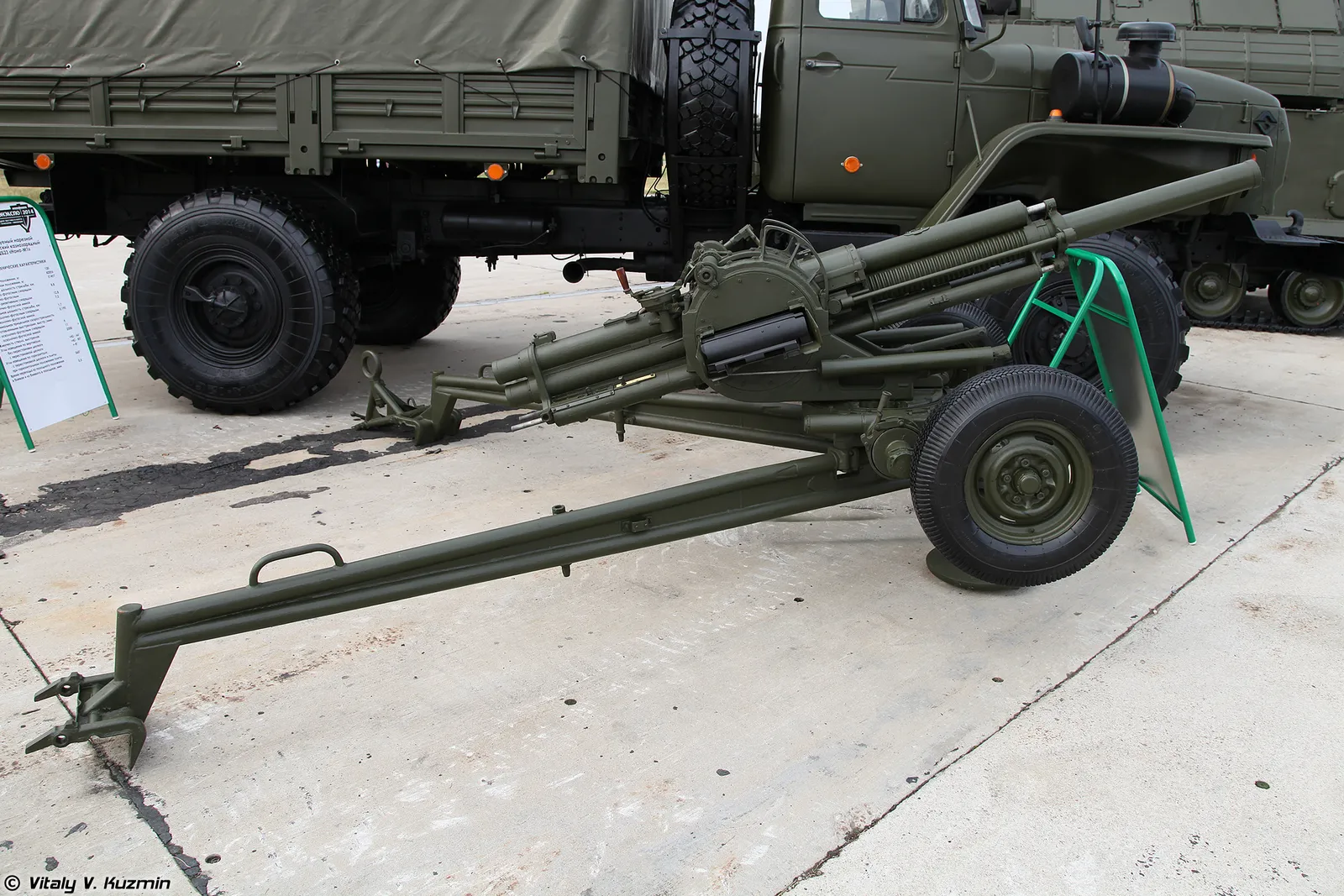
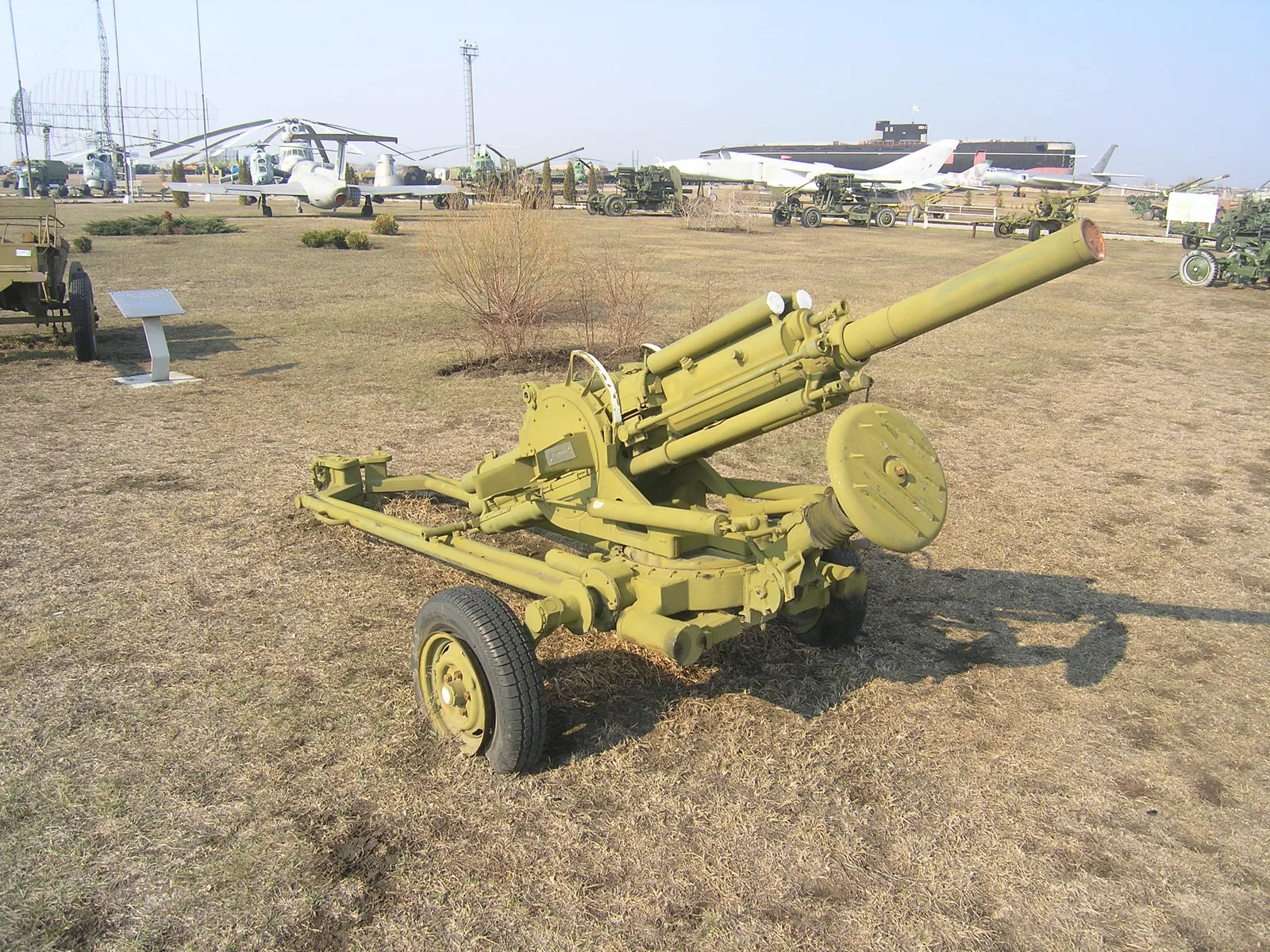
The 82 mm 2B9 Vasilek is a Soviet automatic gun-mortar that combines mortar trajectories with clip-fed rapid fire from a wheeled carriage. Source-backed conflict records place the family in Soviet-Afghan fire-support accounts, Syrian government and opposition use, Russian-side use in Ukraine, and captured Armenian equipment in the 2020 Nagorno-Karabakh fighting.

Role in Conflicts

Side
Soviet Union and Afghan government forces

A U.S. government-hosted FMSO translation of Soviet tactical accounts identifies Vasilek automatic mortars in Soviet/Afghan-government force groupings, including two mortars supporting an April operation and six in a reduced regiment.

Profile / Specs

Specifications

Caliber
82 mm
Combat weight
About 632 kg
Feed
Single mortar bombs or four-round clips
Rate of fire
Approximately 100-120 rounds per minute practical sustained fire
Maximum range
About 4,270 m
Elevation
-1 to +85 degrees
Transport
Towed on a wheeled carriage or carried by vehicles such as GAZ-66 trucks
Automatic Mortar Design

The Vasilek family is unusual because it combines mortar high-angle fire with a recoil-operated automatic loading cycle. ARES describes the 2B9M as able to fire standard 82 mm Eastern Bloc mortar projectiles from four-round clips, while single smoke or illumination rounds can be loaded individually from the muzzle.

Clip feed

Four-round en bloc clips feed from right to left; ARES says one clip can be fired in about two seconds.

Fire modes

The 2B9M can be used at mortar elevations or in direct-fire mode, with ARES giving about 1,000 m effective direct-fire range and up to 4,270 m indirect range.

Mobility adaptations

ARES describes normal carriage by GAZ-66 trucks, MT-LB adaptations, Hungarian BMP/AMB experiments, and a U.S. HMMWV Scorpion trial.
Variants

The 2B9 family splits mainly between the original Soviet water-cooled weapon, the Hungarian-refined air-cooled 2B9M line, Hungary's later DE-82 export modification, and China's Type W99 copy.

VariantConfigurationDesignation notes
2B9M VasilekAir-cooled modernization

ARES describes the 2B9M as an air-cooled modernization of the water-cooled 2B9, introduced after Hungarian modifications in 1982 and adopted in 1983.

Sources: Soviet 2B9M Vasilek self-loading mortar

DE-82Hungarian export modification

ARES says DIGÉP pursued a further modification programme in 1987 for hot, sandy export environments, with the modified version designated DE-82.

Sources: Soviet 2B9M Vasilek self-loading mortar

Type W99Chinese copy/export system

Forecast International describes the 82 mm Type W99 as a close copy of the Russian AM 2B9 Vasilek and says NORINCO offers a Type W99-based mortar system for export.

Sources: Mortars International Forecast

Ammunition Fired

ARES says the 2B9M Vasilek can fire Hungary's BEKM-82 HEAT projectile in direct-fire mode, and HTI says the round was designed for automatic and conventional mortars. ARES also notes that the 2B9M can fire standard 82 mm Eastern Bloc mortar projectiles in four-round clips or as single smoke and illumination rounds.

AmmunitionAmmunition typeFiring evidence
BEKM-82 cumulative mine, 82 mm HEAT-fragmentation mortar projectile, MunitionsBEKM-82 cumulative mine82 mm HEAT mortar projectile

ARES identifies the 2B9M Vasilek as using the BEKM-82 HEAT projectile for direct fire, and HTI says the round can be fired from automatic and conventional mortars.

Sources: Soviet 2B9M Vasilek self-loading mortar, 82 mm repesz-kumulatív aknagránát

Mortar bombs, 82 mm, 82 mm high-explosive mortar bomb, MunitionsMortar bombs, 82 mm82 mm mortar-bomb family

The 2B9M Vasilek is documented as able to fire standard 82 mm Eastern Bloc mortar projectiles in four-round clips, with single smoke and illumination rounds also loadable individually.

Sources: Soviet 2B9M Vasilek self-loading mortar, 82 mm repesz-kumulatív aknagránát

Vehicle Mounts

The Vasilek is a towed mortar but has repeatedly appeared on truck and armored-vehicle mounts. ARES describes MT-LB adaptations in addition to normal GAZ-66 carriage, and Oryx lists Russian MT-LB vehicles fitted with the 82 mm automatic mortar during the full-scale Russia-Ukraine War.

Compatible itemItem typeCompatibility evidence
MT-LB, Amphibious tracked armored personnel carrier and artillery tractor, Armored VehiclesMT-LBTracked armored carrier and weapons platform

ARES identifies MT-LB adaptations of the 2B9M Vasilek, while Oryx documents Russian MT-LB vehicles fitted with 82 mm automatic mortar 2B9 Vasilek as losses in Ukraine.

Sources: Soviet 2B9M Vasilek self-loading mortar, Oryx Russian Equipment Losses Ukraine

Timeline

82 mm 2B9 Vasilek automatic mortar Key Events

  1. Soviet adoption

    ARES traces 2B9 development to the late 1960s from the F-82 automatic mortar and identifies 1970 as the Soviet Army adoption year.

    Sources: Soviet 2B9M Vasilek self-loading mortar

  2. 2B9M modernization classified

    Hungarian modifications led to the modernized 2B9M, which ARES says was type-classified in 1982 and adopted in 1983.

    Sources: Soviet 2B9M Vasilek self-loading mortar

  3. DE-82 export modification

    DIGÉP continued modification work in 1987, producing the DE-82 export-oriented version for hot, sandy operating environments.

    Sources: Soviet 2B9M Vasilek self-loading mortar

  4. ARES documents Syrian opposition use

    ARES reported Ansar al-Sham fighters firing a 2B9M automatic mortar near Mount Chalma in Syria's Kesab district.

    Sources: ARES Ansar al-Sham Vasilek in Syria

  5. Syrian government Vasilek receipt reported

    VPK.name, carrying Rossiyskaya Gazeta reporting, said Syrian Armed Forces had received 82 mm Vasilek automatic mortars and cited a photograph of one being moved toward Idlib.

    Sources: Syrian Army Receives Vasilek Mortars

  6. Captured in Nagorno-Karabakh fighting

    Oryx listed two 82 mm 2B9 Vasilek mortars among Armenian equipment captured during the 2020 Nagorno-Karabakh war.

    Sources: The Fight For Nagorno-Karabakh: Documenting Losses On The Sides Of Armenia And Azerbaijan

  7. Russian-side mortar destroyed in Donetsk region

    Ukraine's Ministry of Internal Affairs reported that Ukrainian border guards and artillery destroyed a Russian-occupation 82 mm 2B9 Vasilek mortar position in Donetsk region.

    Sources: Ukraine MVS Border Guards Destroy Vasilek

Media
Related Weapon Systems
MT-LB with 82-mm automatic mortar 2B9 Vasilek, Tracked self-propelled automatic mortar conversion, ArtilleryArtilleryMT-LB with 82-mm automatic mortar 2B9 VasilekTracked self-propelled automatic mortar conversionThe MT-LB with 82-mm automatic mortar 2B9 Vasilek is a field fire-support conversion that places the Soviet clip-fed 2B9 or 2B9M automatic mortar on the rear deck of the MT-LB tracked armored carrier. General technical sources document the 2B9's rapid four-round clip feed and the MT-LB's recurring use as a carrier for heavy infantry weapons, while Russian equipment-loss documentation from Ukraine records destroyed and damaged examples of this specific MT-LB/Vasilek configuration.
82 mm M69 mortar, 82 mm smoothbore infantry mortar, ArtilleryArtillery82 mm M69 mortar82 mm smoothbore infantry mortarThe 82 mm M69 is a Yugoslav-designed smoothbore infantry mortar family that remains in Serbian and former Yugoslav production and service channels, with the M69A variant using a four-person crew, NSB-3 sight, and high-angle fire out to roughly 4.9-6.25 km depending on ammunition. Direct open-source documentation links the family to Afghan government losses in 2021, Syrian opposition use near Aleppo, Armenian and Artsakh losses in Nagorno-Karabakh, and Ukrainian wartime receipt of BNT-marked M69A mortars.
60 mm M57 mortar, 60 mm light infantry mortar, ArtilleryArtillery60 mm M57 mortar60 mm light infantry mortarThe 60 mm M57 is a Yugoslav-pattern smoothbore light infantry mortar now listed by Serbian manufacturer PPT Namenska and in Yugoimport export material. Its official sheets describe a high-angle fire-support weapon built around barrel, base plate, bipod, sight, tools, spares, and accessories; post-Yugoslav records also show Serbian surplus stocks and Balkan export activity. In the 2020 Nagorno-Karabakh Conflict, open-source loss documentation recorded M57 mortars captured from Armenian forces.
152 mm D-1 gun-howitzer, Towed 152 mm howitzer, ArtilleryArtillery152 mm D-1 gun-howitzerTowed 152 mm howitzerThe 152 mm D-1 gun-howitzer is a Soviet towed heavy howitzer that put a short 152.4 mm ordnance on a lighter split-trail carriage. Its modern record is mostly residual-use evidence: Russia drew D-1 guns from stocks during the full-scale phase of the 2014 Russia-Ukraine War, while open loss records tie the same World War II-era system to Armenian/Artsakh equipment in 2020 Nagorno-Karabakh and Syrian government artillery losses in the 2011 Syrian Civil War.
2S34 Chosta, 120 mm tracked self-propelled gun-mortar, ArtilleryArtillery2S34 Chosta120 mm tracked self-propelled gun-mortarThe 2S34 Chosta is a Russian 120 mm tracked self-propelled gun-mortar that rebuilds the 2S1 Gvozdika chassis around the 2A80-1 weapon, an automatic loading system, and updated fire-control equipment. It gives Russian artillery units a compact turreted vehicle able to fire mortar-style high-angle missions, direct fire, and some guided 120 mm ammunition, but public reporting suggests only a small fleet reached service before examples appeared in Ukraine.

Sources