Munitions

BEKM-82 cumulative mine

Also known as
  • BEKM
  • BEKM-82
  • 82 mm repesz-kumulatív aknagránát
  • 82 mm HEAT mortar projectile

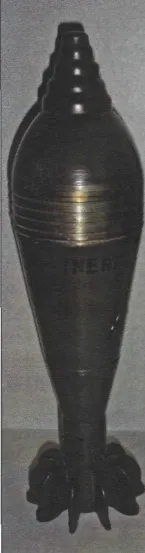
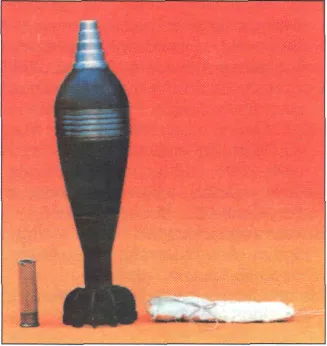
The BEKM-82 is a Hungarian 82 mm HEAT-fragmentation mortar projectile developed for automatic and conventional 82 mm mortars. HM Haditechnikai Intézet describes it as a dual-purpose anti-armor and fragmentation round: a 3.1 kg projectile with a shaped-charge effect rated for 100 mm of armor penetration. The page remains relationship-only because the public sources identify design, compatibility, and later Iraqi transfer context, but not direct BEKM-82 firing in a named conflict.

Profile / Specs

Specifications

Caliber
82 mm
Projectile class
HEAT-fragmentation mortar projectile
Complete round weight
3.1 kg
Armor penetration
100 mm
Target effects
Shaped-charge effect against light armor plus fragmentation against personnel
Compatible launchers
Automatic and conventional 82 mm mortars
Documented firing mode
ARES identifies BEKM-82 with Hungary's 2B9M Vasilek direct-fire role
Designation basis
BEKM from the developers' surnames
Firing Weapons

ARES identifies the BEKM-82 as the HEAT projectile used by Hungary's 2B9M Vasilek direct-fire configuration, and HTI says the round was built for automatic and conventional mortars.

Firing weaponWeapon typeFiring evidence
82 mm 2B9 Vasilek automatic mortar, 82 mm automatic gun-mortar, Artillery82 mm 2B9 Vasilek automatic mortar82 mm automatic mortar

ARES says Hungary's 2B9M Vasilek uses the BEKM-82 HEAT projectile for direct fire, and HTI says the round can be fired from automatic and conventional mortars.

Sources: Soviet 2B9M Vasilek self-loading mortar, 82 mm repesz-kumulatív aknagránát

Source-Backed Scope

The strongest public evidence treats BEKM-82 as a Hungarian component munition, not as an independently documented conflict-use entry. The useful record is the round's design role, mortar compatibility, and limited transfer trail.

ScopeSource-backed contextCatalog treatment
Design roleHTI describes an 82 mm fragmentation-cumulative mortar projectile with shaped-charge armor effect and fragmentation effect against personnel.Specs and summary identify BEKM-82 as a HEAT-fragmentation mortar projectile rather than a general mortar bomb.
Launcher compatibilityHTI says the round was made for automatic and conventional mortars, and ARES ties it to Hungary's 2B9M Vasilek direct-fire configuration.The relationship section links the 2B9 Vasilek page without copying the mortar's conflict record onto this munition.
Iraq transfer contextHTI says remaining BEKM-82 stocks were sent to Iraq in 2014; Hungarian government reporting separately documents the 2014 ammunition-aid shipment.The service note records transfer context, but no conflict-use row is added without a source documenting BEKM-82 firing or fielding in a specific conflict.
English-language identificationJMU CISR's Iraq ordnance guide lists a Hungarian 82 mm HEAT mortar projectile identified as BEKM-82.The alias and source list preserve the English identification trail for researchers.

Sources: 82 mm repesz-kumulatív aknagránát; Soviet 2B9M Vasilek self-loading mortar; Iraq Ordnance Identification Guide; Hungary to send ammunition to Iraq.

Timeline

BEKM-82 cumulative mine Key Events

  1. Hungarian development work

    HTI says the development team began work on an 82 mm fragmentation-cumulative mortar projectile for existing mortars and the automatic mortar role.

  2. Surplus transfer to Iraq

    HTI identifies remaining BEKM-82 stocks among ammunition later sent to Iraq, while Hungarian government reporting describes the 2014 ammunition aid shipment.

Media

BEKM-82 cumulative mine Images

Related Weapon Systems
Mortar bombs, 82 mm, 82 mm high-explosive mortar bomb, MunitionsMunitionsMortar bombs, 82 mm82 mm high-explosive mortar bombThis entry covers the 82 mm mortar-bomb caliber class rather than a single factory model. Sources document the class in insurgent and paramilitary materiel from Boko Haram-linked forces in the Lake Chad Basin, Islamic State stocks in Syria and Iraq, and RSF-associated PP87 mortar ammunition in Sudan, while manufacturer and ordnance references show that model-specific weight, filling, fuze, and range figures vary across O-832, PP87, HE, smoke, illumination, and extended-range families.
D-442 FUG, Amphibious armored reconnaissance vehicle, Armored VehiclesArmored VehiclesD-442 FUGAmphibious armored reconnaissance vehicleThe D-442 FUG was a Hungarian amphibious armored reconnaissance vehicle developed after a 1960 requirement to restore domestic armored-vehicle development. HTI ties the program to Haditechnikai Intézet preliminary plans, a May 1961 design team drawn mainly from Járműfejlesztési Intézet and Csepel Autógyár constructors, and Győr industrial production before 1963 introduction. Hungarian defense reporting and reference sources describe a 2,300-vehicle 4x4 scout-car line with water-jet propulsion, auxiliary belly wheels, and command, NBC-reconnaissance, engineering, and Czechoslovak OT-65 derivatives.
PG-7VM rocket-propelled grenade, RPG-7 HEAT rocket-propelled grenade round, MunitionsMunitionsPG-7VM rocket-propelled grenadeRPG-7 HEAT rocket-propelled grenade roundThe PG-7VM is an RPG-7-compatible high-explosive anti-tank round built around the smaller PG-7M-class shaped-charge grenade. VMZ Sopot and STV Group publish closely aligned data for a roughly 1.97 kg round with a 300 m direct-fire range, 500 m sighting range, and about 300 mm armor penetration; conflict evidence documents the round in PKK, Islamic State, and Iraqi insurgent stocks, usually as seized or photographed ammunition rather than a named firing incident.
82 mm M69 mortar, 82 mm smoothbore infantry mortar, ArtilleryArtillery82 mm M69 mortar82 mm smoothbore infantry mortarThe 82 mm M69 is a Yugoslav-designed smoothbore infantry mortar family that remains in Serbian and former Yugoslav production and service channels, with the M69A variant using a four-person crew, NSB-3 sight, and high-angle fire out to roughly 4.9-6.25 km depending on ammunition. Direct open-source documentation links the family to Afghan government losses in 2021, Syrian opposition use near Aleppo, Armenian and Artsakh losses in Nagorno-Karabakh, and Ukrainian wartime receipt of BNT-marked M69A mortars.
D-944 PSZH, Wheeled armored personnel carrier, Armored VehiclesArmored VehiclesD-944 PSZHWheeled armored personnel carrierThe D-944 PSZH was a Hungarian 4x4 amphibious armored personnel carrier developed from the D-442 FUG vehicle line for motor-rifle troop transport, force protection, and border-security roles. HTI ties the program to 1964 Ministry of Defence requirements, FUG-based redesign work, prototype and troop trials in 1966-1967, and Rába serial production from 1970 to 1979. Public sources support Hungarian, East German, Iraqi, and South Yemeni service or transfer context, but open conflict-use evidence is too thin for a separate conflict row.

Sources