Armored Vehicles

D-442 FUG

Also known as
  • FUG
  • FÚG
  • D.442.00
  • D-442.00 FÚG
  • D-442 felderítő úszó gépkocsi
  • Felderítő Úszó Gépkocsi
  • OT-65
  • OT-65 Otter

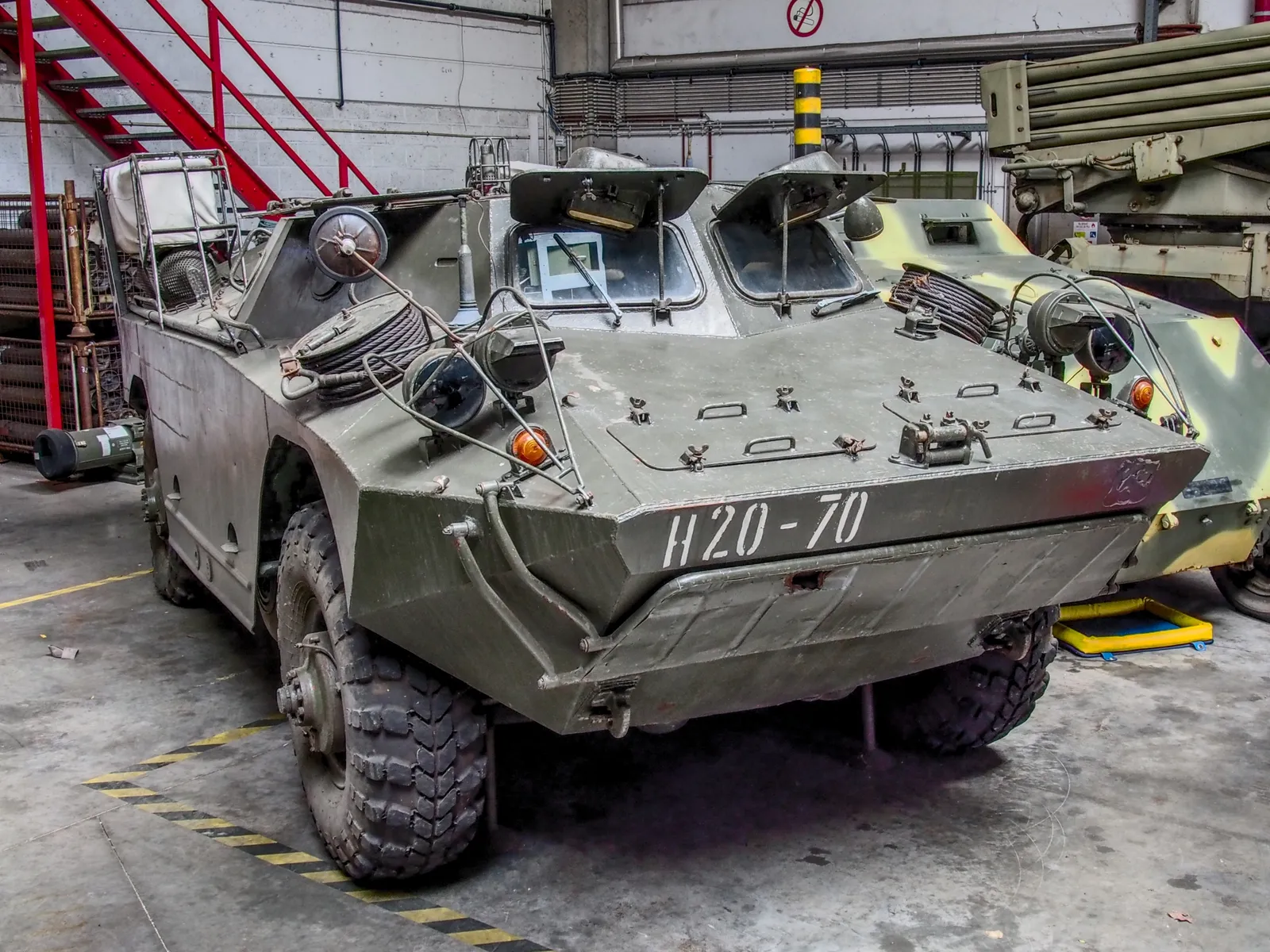
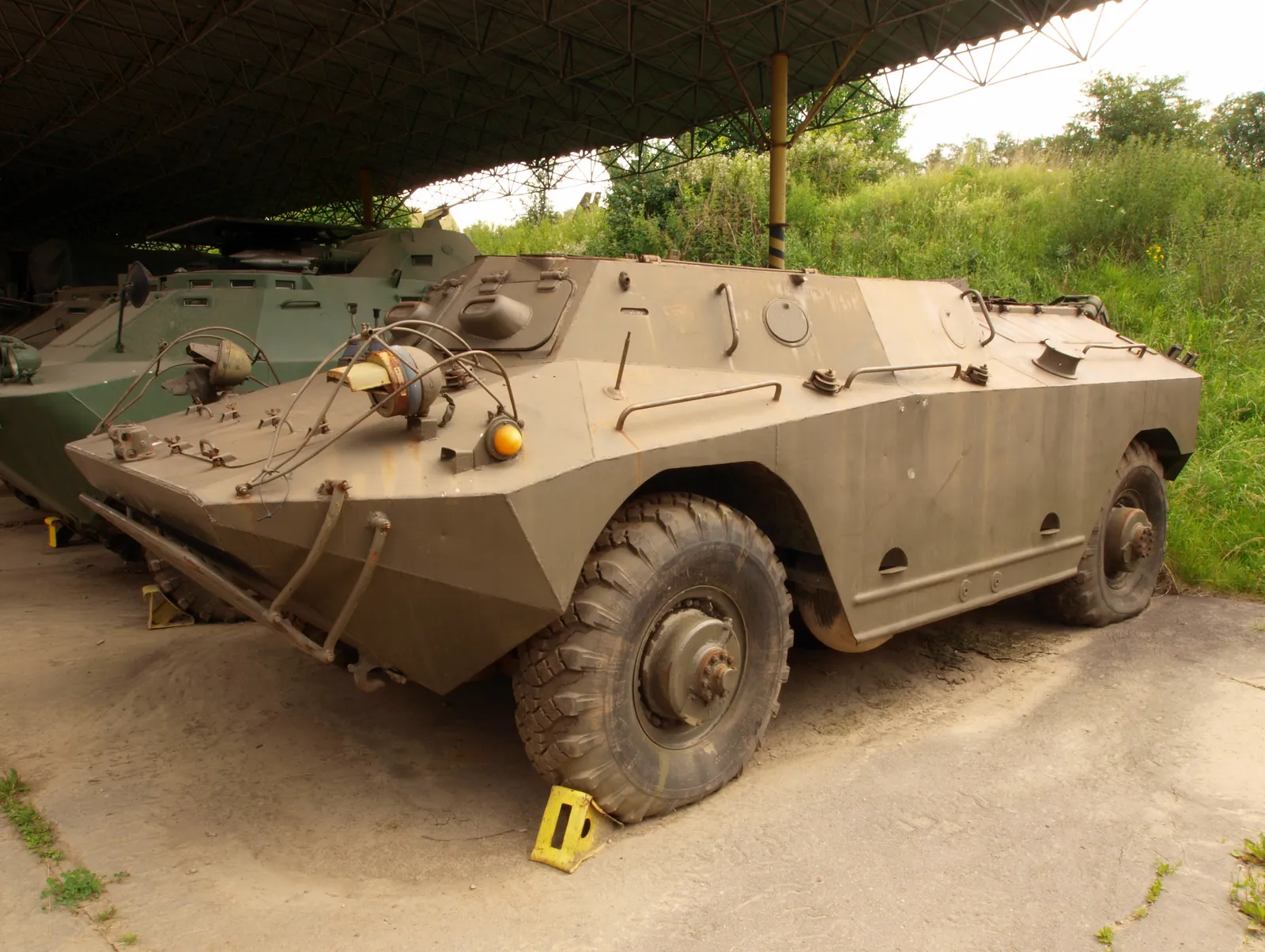
The D-442 FUG was a Hungarian amphibious armored reconnaissance vehicle developed after a 1960 requirement to restore domestic armored-vehicle development. HTI ties the program to Haditechnikai Intézet preliminary plans, a May 1961 design team drawn mainly from Járműfejlesztési Intézet and Csepel Autógyár constructors, and Győr industrial production before 1963 introduction. Hungarian defense reporting and reference sources describe a 2,300-vehicle 4x4 scout-car line with water-jet propulsion, auxiliary belly wheels, and command, NBC-reconnaissance, engineering, and Czechoslovak OT-65 derivatives.

Profile / Specs

Profile

Origin
Hungary
Type
Amphibious armored reconnaissance vehicle
Service note
1960s Hungarian development
Designer
HM Haditechnikai Intézet preliminary plans; Járműfejlesztési Intézet and Csepel Autógyár constructors in the design team
Designed
1960-1963
Produced
1963-1979
Number built
2,300 D-442 FUG vehicles according to Honvédelem and GlobalSecurity
Developed into
D-944 PSZH armored personnel carrier family

Specifications

Vehicle class
Amphibious armored reconnaissance vehicle
Mission
Reconnaissance of unknown tactical terrain, enemy forces, and radiological contamination
Crew
2 crew plus 4 scouts
Development start
1960 requirement; May 1961 design team
Design basis
HTI preliminary plans with Hungarian vehicle-industry participation
Production assignment
Győr Szerszámgyár, later combined with W. Pick Vagon és Gépgyár
Production quantity
2,300 vehicles
Engine
Csepel D414.44 4-cylinder 5.5 L diesel, 101 hp
Combat weight
6.3 tonnes
Dimensions
5.79 m length, 2.5 m width, 1.91 m hull-top height
Road/water speed
87 km/h road speed, 45 km/h cross-country speed, and 9 km/h in water
Range
600 km
Mobility features
Central tire-pressure system, retractable auxiliary belly wheels, winch, front trim vane, and twin rear water jets
Protection
Welded steel armor; 13 mm maximum and 7 mm sides in GlobalSecurity's specification table
Armament
Basic Hungarian vehicle could mount a 7.62 mm UK Model 59 machine gun; armament varied by derivative
Design Features

The FUG sits between a small reconnaissance carrier and a specialist scout vehicle. Its relationship-only status reflects the lack of strong public, conflict-specific evidence for a named-war use row, but the available sources still support a useful technical profile.

Amphibious layout

Reference sources describe twin rear water jets, a front trim vane, and a water speed around 9 km/h.

Sources: D-442/D-944 Specifications; D-442 FUG Armoured Scout Car.

Cross-country aids

The vehicle combined central tire-pressure control, a self-recovery winch, and four retractable auxiliary belly wheels for obstacles and gaps.

Sources: Honvédelem D-442 FUG; OT-65 Otter Scout Car.

Role spread

Documented derivatives covered command, NBC reconnaissance, forward air control, engineering reconnaissance, and Czechoslovak OT-65 configurations.

Sources: D-442 FUG Armoured Scout Car; TankNutDave D-442 FUG.

Variants

The FUG family used Hungarian D-442 designations for scout, command, NBC-reconnaissance, forward-air-control, and engineering roles, while Czechoslovak service used OT-65 designations. The later D-944 PSZH was a related armored-personnel-carrier development from the same Hungarian vehicle line.

VariantConfigurationDesignation notes
D-442.00 FÚGBasic scout car

Baseline turretless Hungarian reconnaissance vehicle, listed with R-113 or R-114 radio equipment in secondary variant summaries.

Sources: D-442 FUG Armoured Scout Car

D-442.01 PK-FÚGCommand vehicle

Command configuration with additional radio equipment for platoon, company, or higher command use.

Sources: D-442 FUG Armoured Scout Car, TankNutDave D-442 FUG

D-442.03 VS-FÚGNBC reconnaissance vehicle

Chemical, biological, and radiological reconnaissance derivative with detection equipment and flag dispensers for marking contaminated areas.

Sources: D-442 FUG Armoured Scout Car, TankNutDave D-442 FUG

D-442.01 MRP-FÚGForward air-control post

Forward air-control derivative based on the command FUG and described with R-114 and R-159 radios.

Sources: D-442 FUG Armoured Scout Car, TankNutDave D-442 FUG

D-442.02 MÜ-FÚGEngineer reconnaissance vehicle

Engineering reconnaissance derivative listed among the Hungarian FUG configurations.

Sources: D-442 FUG Armoured Scout Car, TankNutDave D-442 FUG

OT-65Czechoslovak designation

Czechoslovak service designation for the D-442 FUG scout-car line, with OT-65A Vydra and specialist variants documented in secondary summaries.

Sources: D-442 FUG Armoured Scout Car, TankNutDave D-442 FUG, Vojsko.net OT-65 FÚG

D-944 PSZH, Wheeled armored personnel carrier, Armored VehiclesD-944 PSZHRelated armored personnel carrier

HTI's PSZH history describes the later D-944 program as a FUG-derived armored personnel carrier path driven by the earlier vehicle's limitations and Hungarian motor-rifle requirements.

Sources: D-944 páncélozott szállító harcjármű (PSZH)

Timeline

D-442 FUG Key Events

  1. Armored reconnaissance requirement

    HTI's FUG page says the domestic vehicle industry received a new armored-vehicle development task in 1960 after a roughly fifteen-year gap.

  2. Design team formed

    The same HTI page says a design team was formed in May 1961, mainly from Járműfejlesztési Intézet and Csepel Autógyár constructors, using Haditechnikai Intézet preliminary plans.

  3. D-442 introduced

    HTI says the FUG could be introduced in August 1963, after which further variants were sought.

  4. Hungarian service entry reported

    Secondary reference sources place Hungarian service entry around 1964 and describe the FUG as a Warsaw Pact-era reconnaissance and command platform.

  5. Czechoslovak OT-65 designation appears

    Secondary references describe the Czechoslovak OT-65 as the local service designation for the D-442 FUG scout-car line.

  6. Production period endpoint

    GlobalSecurity lists the D-442 production period as 1963-1979, and Honvédelem reports 2,300 FUG combat vehicles built.

Media
Related Weapon Systems
D-944 PSZH, Wheeled armored personnel carrier, Armored VehiclesArmored VehiclesD-944 PSZHWheeled armored personnel carrierThe D-944 PSZH was a Hungarian 4x4 amphibious armored personnel carrier developed from the D-442 FUG vehicle line for motor-rifle troop transport, force protection, and border-security roles. HTI ties the program to 1964 Ministry of Defence requirements, FUG-based redesign work, prototype and troop trials in 1966-1967, and Rába serial production from 1970 to 1979. Public sources support Hungarian, East German, Iraqi, and South Yemeni service or transfer context, but open conflict-use evidence is too thin for a separate conflict row.
ZU-23-2, Towed twin 23 mm anti-aircraft autocannon, Air DefenseAir DefenseZU-23-2Towed twin 23 mm anti-aircraft autocannonThe ZU-23-2 is a Soviet twin 23 mm towed anti-aircraft autocannon built around two 2A14 guns on a light carriage. Its manual sighting, rapid emplacement, and high volume of fire make it a close-range air-defense weapon against low-flying aircraft, helicopters, and drones, while many operators also use it for direct fire against light vehicles and infantry positions. Ukrainian forces have used ZU-23-2 guns in mobile and positional air-defense teams during the 2014 Russia-Ukraine War, Armenian-side losses in the 2020 Nagorno-Karabakh fighting included towed and vehicle-mounted ZU-23 guns, and conflict monitors documented ZU-23 or ZU-23-2-pattern use in Yemen, Tigray, and northern Mali.
BRDM-2, Amphibious armored scout car, Armored VehiclesArmored VehiclesBRDM-2Amphibious armored scout carThe BRDM-2 is a Soviet amphibious armored scout car built for reconnaissance, patrol, liaison, and specialist battlefield-support tasks. Its family includes radiological and chemical reconnaissance versions such as BRDM-2RKh and BRDM-2RKhb, which add contamination-detection and marking equipment to the scout-car chassis. Oryx loss records keep both base and chemical reconnaissance variants visible in the Russia-Ukraine War, while older export fleets appear in Nagorno-Karabakh, Yemen, and other post-Soviet or Soviet-supplied conflicts despite the vehicle's light armor.
Walid armored personnel carrier, 4x4 wheeled armored personnel carrier, Armored VehiclesArmored VehiclesWalid armored personnel carrier4x4 wheeled armored personnel carrierThe Walid, also rendered Al Walid or Waleed, is an Egyptian 4x4 armored personnel carrier produced by Kader Factory for Developed Industries. Open sources describe it as a BTR-40-like open-topped APC using a German Magirus-Deutz/UNIMOG-derived truck chassis made under licence in Egypt with a locally produced armored body, two crew, space for about ten troops, a pintle 7.62 mm machine gun, central tire-pressure regulation, and no amphibious, NBC, or night-vision equipment. It first saw combat in the 1967 Arab-Israeli war, later appeared in captured Israeli service, and was followed in Egyptian production by the Fahd APC family.

Sources