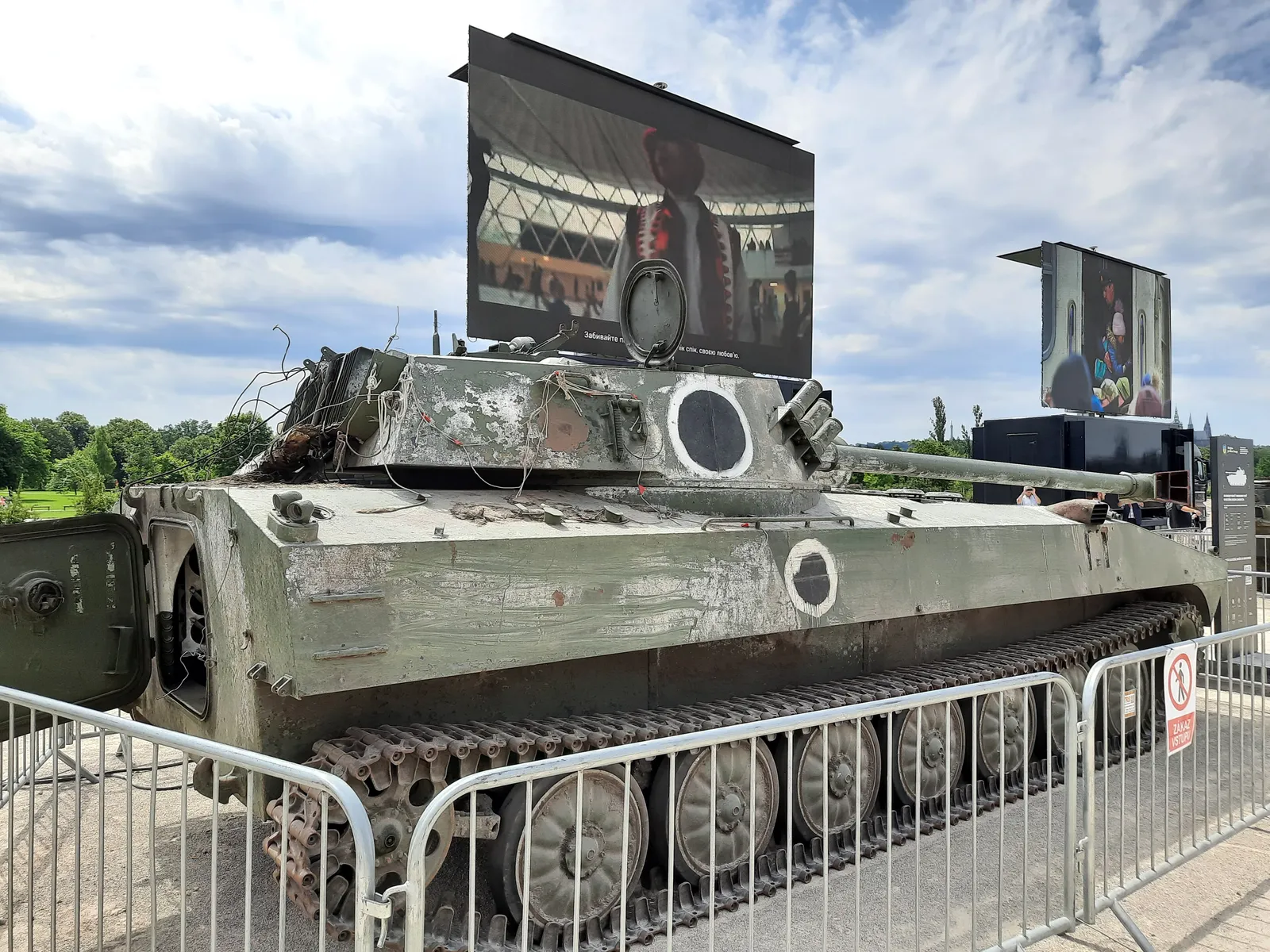


Russian forces fielded the 2S34 during the full-scale invasion; Ukrainian reporting documented a 2024 FPV-drone destruction in Donetsk Oblast, while separate reporting and open-license imagery identify Ukrainian-captured examples displayed after spring 2022 captures.
Role detailsArtillery
2S34 Chosta
Also known as
- 2S34 Khosta
- 2S34 Hosta
- 2S34 Chosta
- 2С34 Хоста
- Hosta
- Khosta
- Chosta
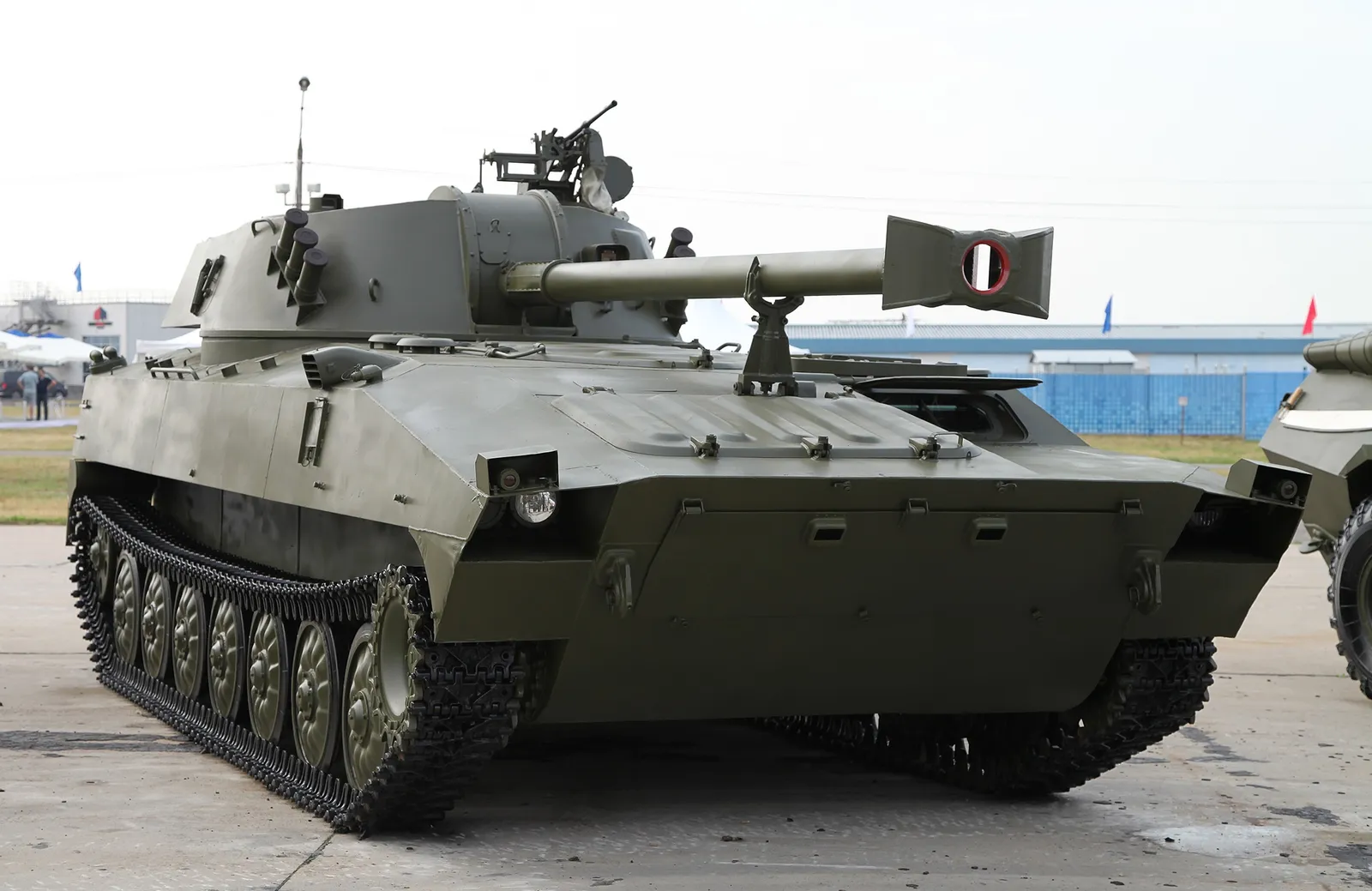
The 2S34 Chosta is a Russian 120 mm tracked self-propelled gun-mortar that rebuilds the 2S1 Gvozdika chassis around the 2A80-1 weapon, an automatic loading system, and updated fire-control equipment. It gives Russian artillery units a compact turreted vehicle able to fire mortar-style high-angle missions, direct fire, and some guided 120 mm ammunition, but public reporting suggests only a small fleet reached service before examples appeared in Ukraine.
Role in Conflicts
Profile / Specs
Profile
- Origin
- Russia
- Built by
- Motovilikha Plant
- Type
- 120 mm tracked self-propelled gun-mortar
- Service note
- Post-Soviet Russian artillery modernization fielded in the 2000s and documented in the full-scale Russia-Ukraine War
- Designer
- Motovilikha Plants Corporation
- Designed
- Adopted by the Russian army in 2008 according to Defense Express reporting; publicly shown at TVM-2014 in Moscow
- Produced
- Low-rate production from the late 2000s; public fleet estimates range from about 30 to 50 vehicles
- Number built
- Small fleet; open references cite roughly 30 in service in 2014 and The Military Balance 2022 is reported as listing 50 before the full-scale invasion
- Developed from
- 2S1 Gvozdika chassis with Nona/Vena-family 120 mm gun-mortar concepts
Specifications
- Crew
- 4
- Main armament
- 120 mm 2A80-1 rifled gun-mortar
- Secondary armament
- 7.62 mm PKTM machine gun and smoke grenade dischargers
- Ammunition carried
- 40 rounds
- Maximum firing range
- 13 km in Army Guide and Defense Express reporting; Army Recognition lists 500 m to 14 km
- Rate of fire
- Up to 10 rounds per minute reported by Defense Express
- Elevation and traverse
- -2 to +80 degrees elevation; 360-degree turret traverse
- Combat weight
- About 16,000 kg in Army Recognition and Army Guide data; Defense Express describes a 17-ton class vehicle
- Mobility
- YaMZ-238N 300 hp diesel; 60 km/h road speed; 500 km road range; amphibious tracked chassis
- Dimensions
- 7.57 m length, 2.85 m width, about 2.83 m height
- Protection
- All-welded steel armor described as protection against small arms and shell splinters
Gun-Mortar Role
The Chosta sits between a conventional self-propelled howitzer and a mortar carrier. Its 120 mm 2A80-1 can work from closed positions like a mortar, use direct fire when needed, and retain the compact amphibious 2S1-style tracked chassis. The tradeoff visible in public sources is scale: the vehicle appears in small numbers compared with older 2S1 Gvozdikas and more common Russian tube-artillery systems.
Weapon
120 mm 2A80-1 rifled gun-mortar with automatic loading and 360-degree turret traverse.
Ammunition
Up to 40 rounds; sources list conventional 120 mm ammunition and Kitolov-2 guided projectile compatibility.
Mobility base
Modernized 2S1-family tracked chassis with a 300 hp YaMZ-238N diesel, 60 km/h road speed, and amphibious capability.
Sources: Army Recognition 2S34 Hosta; Army Guide 2S34 Chosta; Defense Express Avdiivka Hosta.
Chassis And Weapon Family
The Chosta is best understood as a 2S1 rebuild that imports 120 mm gun-mortar features associated with the Nona and Vena family rather than as a new tracked chassis.
| Compatible item | Item type | Compatibility evidence |
|---|---|---|
 | Base tracked howitzer chassis | Army Recognition and Army Guide both describe the 2S34 as a modernization of the 2S1 Gvozdika, replacing the original 122 mm 2A31 gun with a 120 mm 2A80-family weapon. Sources: Army Recognition 2S34 Hosta, Army Guide 2S34 Chosta |
 | Related 120 mm gun-mortar branch | Army Recognition identifies the 2A80-1 as a development of the 2A80 weapon used on the 2S31 Vena, making Vena useful context for the Chosta's hybrid gun-mortar role. Sources: Army Recognition 2S34 Hosta |
Guided Projectile Compatibility
Public technical references describe the 2A80-1 as able to fire conventional 120 mm ammunition and the Kitolov-2 guided projectile family.
| Ammunition | Ammunition type | Firing evidence |
|---|---|---|
 | 120 mm laser-guided projectile | Army Recognition and Army Guide both list Kitolov-2 guided ammunition among the rounds compatible with the 2S34's 120 mm gun-mortar. Sources: Army Recognition 2S34 Hosta, Army Guide 2S34 Chosta |
Timeline
2S34 Chosta Key Events
Russian adoption reported
Defense Express reports that the 2S34 Hosta was adopted by the Russian army in 2008 and that mass production began at the same time; the entry uses January 1 only as a year-level date anchor.
Sources: Defense Express Avdiivka Hosta
Shown at TVM-2014
Army Recognition describes the 2S34 as first revealed at the TVM-2014 Moscow defense exhibition; the entry uses August 1 only as a month-level date anchor.
Sources: Army Recognition 2S34 Hosta
Captured examples reported in Ukraine
Defense Express and NV reported that Ukrainian forces captured Chosta vehicles in spring 2022; a captured example with a Russian invasion marking was later photographed on public display in Prague. The entry uses March 1 only as a month-level date anchor.
Sources: Defense Express Avdiivka Hosta, NV Donetsk Hosta Destruction, Captured 2S34 Khosta Prague image
Donetsk Oblast destruction reported
NV reported that Ukrainian units destroyed a rare Russian 2S34 near Maryinka in Donetsk Oblast, with CyberBoroshno geolocating the destroyed system north of the town.
Sources: NV Donetsk Hosta Destruction
Media
2S34 Chosta Images
Related Weapon Systems


Sources
Army Recognition 2S34 HostaPublisher: Army Recognition | Note: Supports the 2S34 identity, Chosta/Hosta naming, 120 mm self-propelled mortar role, Motovilikha manufacturer attribution, TVM-2014 reveal, 2S1 chassis modernization, 2A80-1 armament, ammunition, fire-control, protection, mobility, dimensions, and direct 2014 Russia-Ukraine War use by stating the Russian army deployed the 2S34 in Ukraine for combat operations. | Accessed: 2026-07-02Army Guide 2S34 ChostaPublisher: Army Guide | Note: Supports Motovilikha Plants Corporation manufacturer attribution, 2S1 modernization background, 120 mm 2A80 replacement, Kitolov-2 compatibility, fire-control and battlefield-observation improvements, ammunition load, range, crew, dimensions, weight, speed, amphibious speed, and road range. | Accessed: 2026-07-02Defense Express Avdiivka HostaPublisher: Defense Express | Note: Supports 2014 Russia-Ukraine War direct-use context by describing a Russian 2S34 hit near Avdiivka, prior Ukrainian trophy captures in spring 2022, reported Russian inventory scale, and basic performance figures. | Accessed: 2026-07-02NV Donetsk Hosta DestructionPublisher: The New Voice of Ukraine | Note: Supports 2014 Russia-Ukraine War direct-use context by reporting the destruction of a Russian 2S34 in Donetsk Oblast, geolocation north of Maryinka, and earlier Ukrainian captures on March 14 and April 2, 2022. | Accessed: 2026-07-02Captured 2S34 Khosta Prague imagePublisher: Wikimedia Commons | Note: Supports image provenance and licensing for the primary image, and supports 2014 Russia-Ukraine War captured-equipment context by directly identifying a captured 2S34 Khosta with a Russian invasion marking on display in Prague in July 2022. | Accessed: 2026-07-022S34 Chosta sideview imagePublisher: Wikimedia Commons | Note: Supports image provenance and licensing for a side-view gallery image of a 2S34 Chosta at the 2014 Engineering Technologies forum. | Accessed: 2026-07-02