Artillery

2S31 Vena

Also known as
  • 2S31
  • Vena
  • 2C31 Vena
  • 2S31 Vena 120mm Automated Self-Propelled Gun
  • 2S31 Vena self-propelled mortar

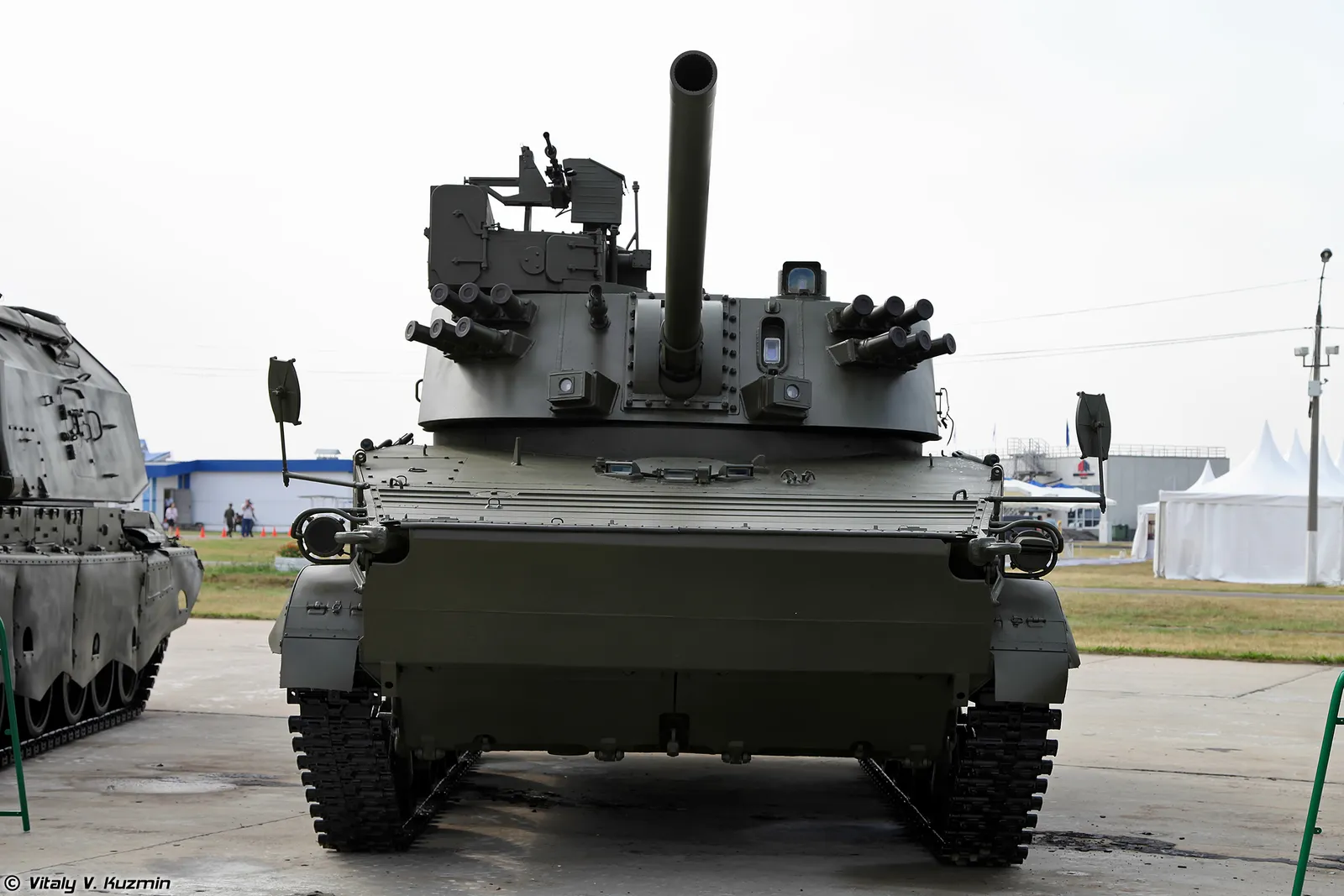
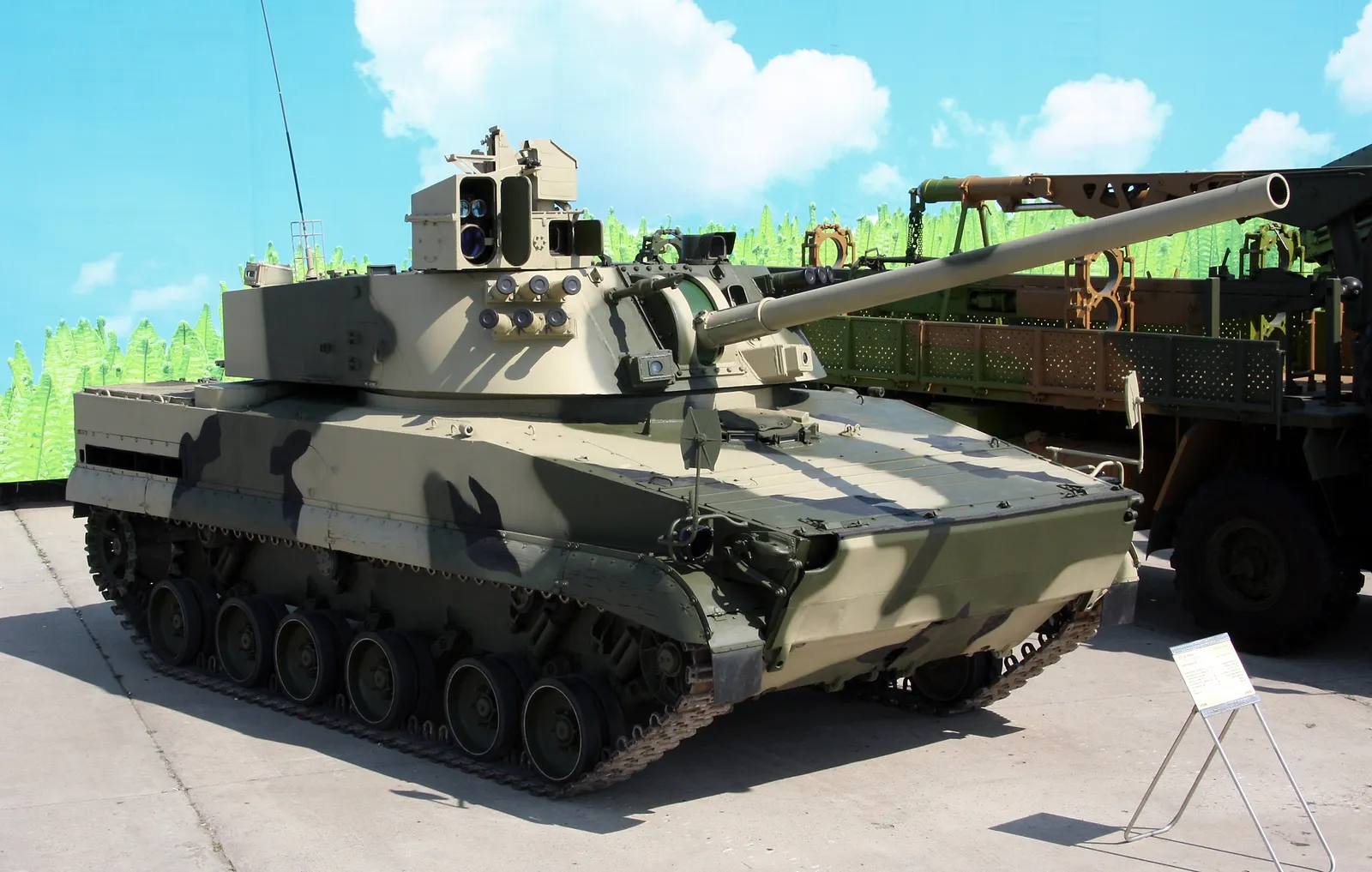
The 2S31 Vena is a Russian 120 mm self-propelled gun-mortar that mounts the semi-automatic 2A80 weapon system on a BMP-3 amphibious tracked chassis. Rosoboronexport markets it as a highly automated direct- and indirect-fire system with a 70-round ammunition load, 360-degree turret traverse, and 600 km cruising range. Its public combat record is limited but source-backed: Azerbaijani examples appeared in the 2020 Nagorno-Karabakh Conflict, while Russian examples were reported near Bakhmut during the 2014 Russia-Ukraine War.

Role in Conflicts

Azerbaijan fielded Russian-made 2S31 Vena vehicles during the 2020 Nagorno-Karabakh fighting; postwar Russian defense reporting described the type as having undergone combat validation in Karabakh and noted Azerbaijan's 18-vehicle fleet.

Side
Russia

Russian forces were reported using 2S31 Vena vehicles near Bakhmut in 2023, with Russian state-television footage and later reporting describing an artillery battalion combat-testing the small Vena fleet in Ukraine.

Role details
Profile / Specs

Profile

Origin
Russia
Type
120 mm tracked self-propelled gun-mortar
Service note
Post-Soviet design; low-rate service and export use from the 2010s
Designer
Motovilikha Plants Corporation and Kurgan Machine Construction Plant
Designed
1980s-2000s development; export material describes the system as developed in 1996
Produced
Low-rate production for Azerbaijan reported in 2013-2014; small Russian test/service fleet reported
Number built
Small fleet; Azerbaijani order reported as 18 vehicles
Developed from
2S9 Nona gun-mortar concept and BMP-3 amphibious tracked chassis

Specifications

Crew
4
Main armament
2A80 120 mm rifled semi-automatic gun-mortar
Secondary armament
7.62 mm PKT/PKTM machine gun reported in secondary references
Ammunition carried
70 rounds
Maximum firing range
13,000 m with HEF projectile; 7,100 m with HEF shell in Rosoboronexport export data
Rate of fire
Up to 10 rounds per minute
Elevation and traverse
-4 to +80 degrees elevation; 360-degree horizontal traverse
Combat weight
19.1 metric tons in Rosoboronexport data; Army Recognition lists 19,500 kg
Mobility
BMP-3-derived amphibious tracked chassis; 70 km/h road speed and 600 km cruising range
Protection
All-welded aluminum armor against small-arms fire and shell splinters
Gun-Mortar Role

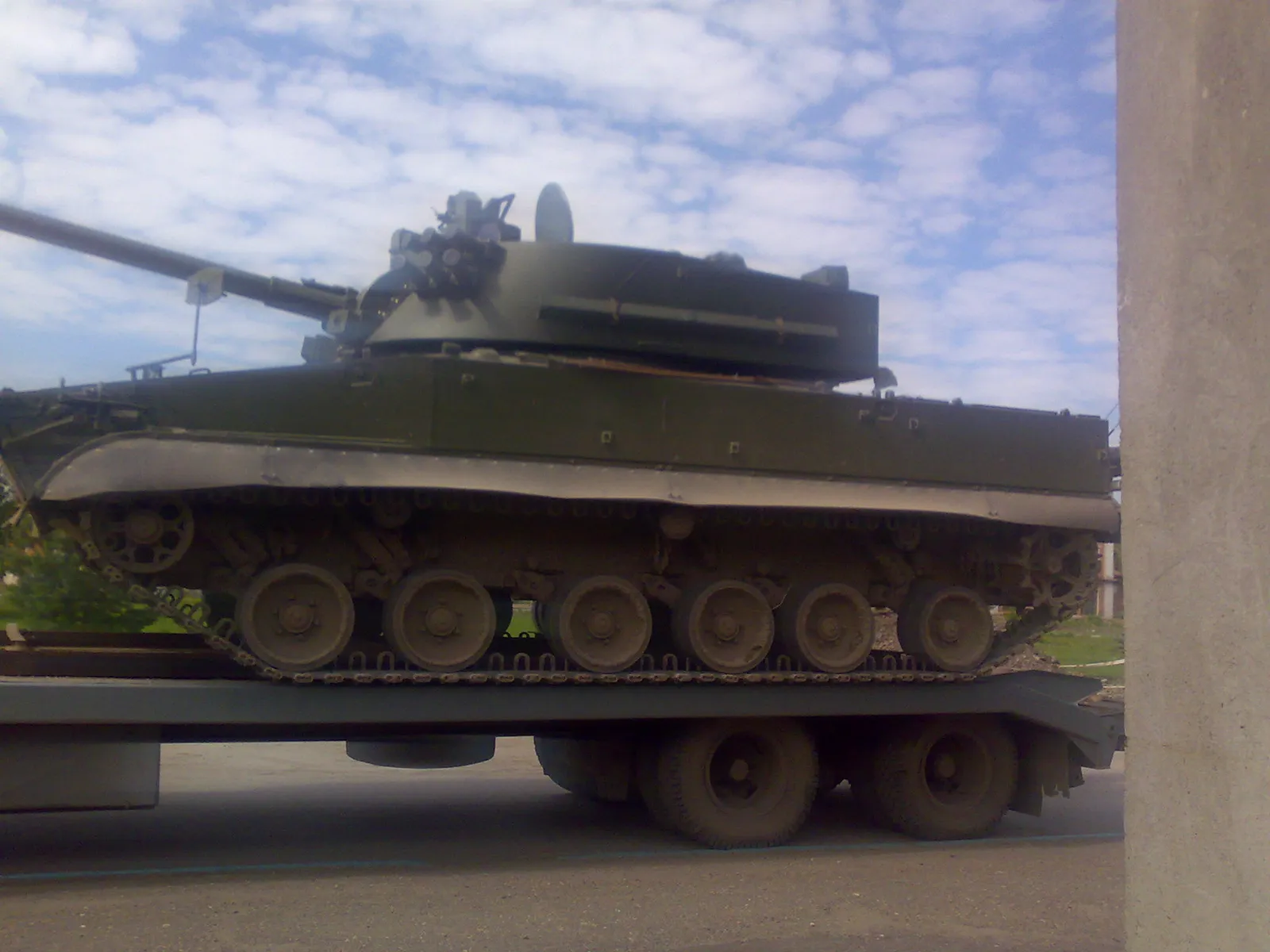
The 2S31 Vena is best read as a hybrid fire-support vehicle rather than as a conventional howitzer or a simple mortar carrier. Its turreted 2A80 120 mm rifled gun-mortar can fire high-angle mortar missions and lower-angle direct-fire missions from the same BMP-3-derived vehicle, while the automated fire-control package is the feature most often emphasized in export material.

Fire system

2A80 120 mm semi-automatic rifled gun-mortar with -4 to +80 degree elevation and full turret traverse.

Mobility base

BMP-3 amphibious tracked platform with a 600 km cruising range in Rosoboronexport's export data.

Public fleet

Azerbaijan's order was reported as 18 vehicles; Russian service use appears limited and episodic in public reporting.

Sources: Rosoboronexport 2S31 Vena; Army Recognition 2S31 Vena; Today.Az Vena Order; Popular Mechanics Ukraine Debut.
Variants

The Vena sits in the Nona-derived Russian 120 mm gun-mortar family, but public sources treat it as a distinct BMP-3-chassis system rather than as a major production branch with named subvariants.

VariantConfigurationDesignation notes
2S9 Nona, Air-droppable 120 mm self-propelled mortar, Artillery2S9 NonaTracked airborne predecessor family

The 2A80 gun-mortar is described as a longer-range development path from the 2A51 weapon used on the 2S9 Nona family.

Sources: Army Recognition 2S31 Vena

2S23 Nona-SVK, 120 mm wheeled self-propelled gun-mortar, Artillery2S23 Nona-SVKWheeled Nona-family branch

The 2S23 is the wheeled Nona-family counterpart already cataloged separately; the Vena applies the later gun-mortar concept to a BMP-3-derived tracked chassis.

Sources: Army Recognition 2S31 Vena, Rosoboronexport 2S31 Vena

Chassis Relationship

The Vena is not a BMP-3 infantry carrier variant in role, but its artillery system is built around the same amphibious tracked platform family.

Compatible itemItem typeCompatibility evidence
BMP-3, Tracked amphibious infantry fighting vehicle, Armored VehiclesBMP-3Tracked amphibious chassis family

Rosoboronexport and Army Recognition both describe the 2S31 Vena as mounted on or based on the BMP-3 armored tracked amphibious platform.

Sources: Rosoboronexport 2S31 Vena, Army Recognition 2S31 Vena

Timeline

2S31 Vena Key Events

  1. Vena development baseline identified

    Army Recognition describes the 2S31 Vena as a Russian self-propelled artillery unit developed in 1996 on the BMP-3 chassis.

    Sources: Army Recognition 2S31 Vena

  2. Azerbaijani order reported

    Today.Az, citing APA, reported that Azerbaijan's 2012 agreement covered 18 Vena self-propelled guns and that Russia expected to complete deliveries by the end of 2014.

    Sources: Today.Az Vena Order

  3. Karabakh combat use reported

    Russian defense reporting stated that Azerbaijani 2S31 Vena vehicles were first used during the 2020 Nagorno-Karabakh fighting.

    Sources: VPK Karabakh Combat Use

  4. Ukraine combat-testing reported

    Popular Mechanics reported that Russian state television showed a 2S31 Vena near Bakhmut and described Russian airborne troops combat-testing the type in an artillery battalion.

    Sources: Popular Mechanics Ukraine Debut

Media
Related Weapon Systems
BM-27 Uragan, 220 mm self-propelled multiple launch rocket system, ArtilleryArtilleryBM-27 Uragan220 mm self-propelled multiple launch rocket systemThe BM-27 Uragan is the Soviet 9K57 220 mm multiple launch rocket system, built around the 16-tube 9P140 launcher and 9T452 transporter-loader on ZIL-135LM-family wheeled chassis. Its rocket family gives heavier payloads than BM-21 Grad-class systems, including high-explosive fragmentation, cluster, incendiary, fuel-air explosive, and mine-scattering rounds. Documented use spans Russia-Ukraine, Syria, Yemen, Nagorno-Karabakh, and the 2008 Russo-Georgian War, with the system still relevant through Ukrainian overhaul work and Bureviy modernization.
BMP-3, Tracked amphibious infantry fighting vehicle, Armored VehiclesArmored VehiclesBMP-3Tracked amphibious infantry fighting vehicleThe BMP-3 is a Soviet-designed, Russian-built tracked amphibious infantry fighting vehicle that combines a 100 mm gun-launcher, 30 mm autocannon, and machine guns in a light armored troop carrier. It has appeared in Russian mechanized formations, Ukrainian captured-vehicle use, Azerbaijani service in Nagorno-Karabakh, and UAE coalition operations in Yemen, while Russia's Ukraine-war production batches have added extra mine and drone protection to address battlefield losses.

Sources