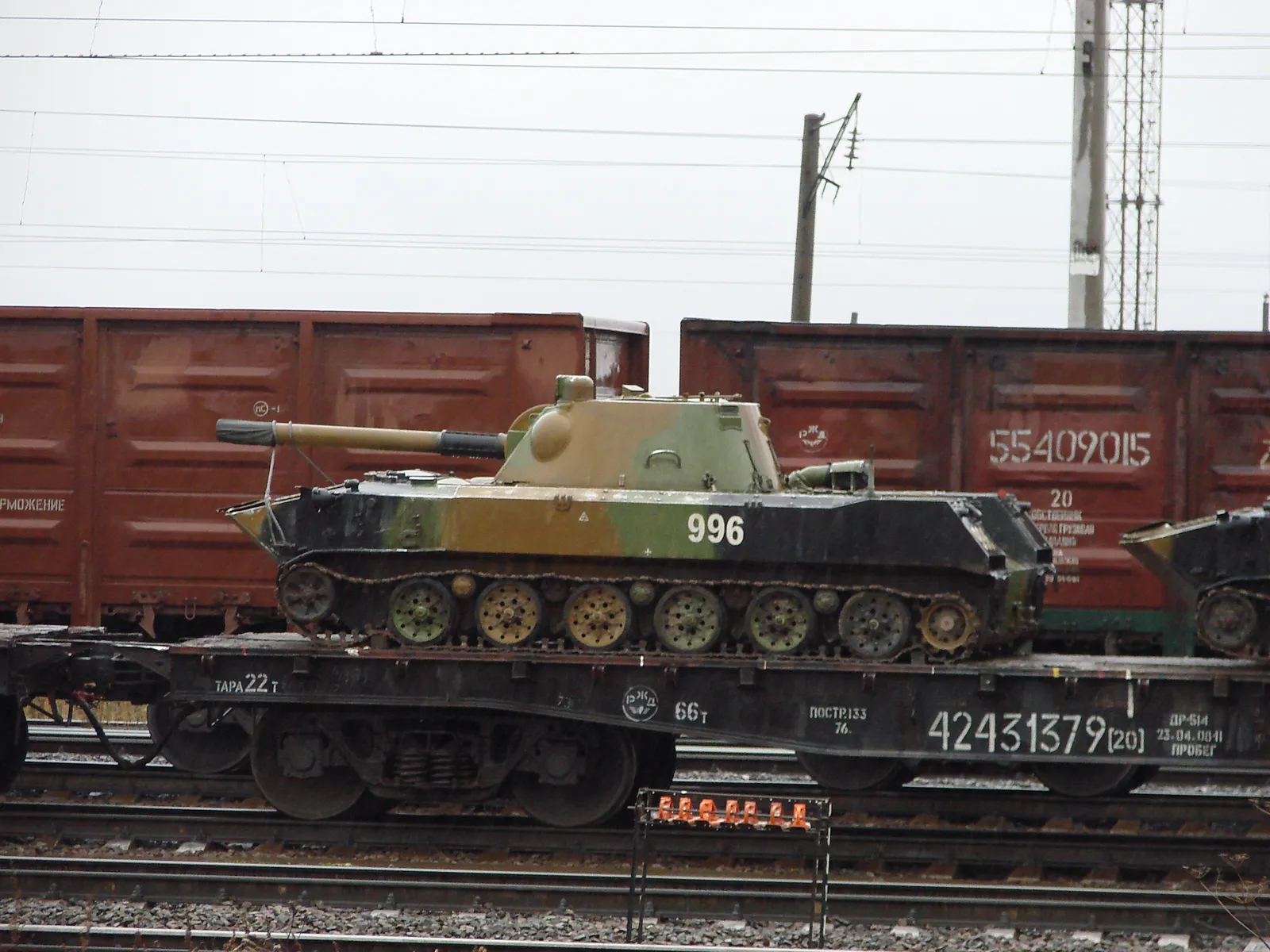
Artillery

2S9 Nona

Also known as
  • 2S9 Nona-S
  • Nona-S
  • SO-120
  • 2C9 Nona-S

The 2S9 Nona is a Soviet airborne self-propelled mortar built around a 120 mm gun-mortar on a tracked amphibious BTR-D-derived chassis. Designed to give airborne and other high-mobility units organic indirect fire, it combines mortar-style high-angle fire, direct-fire HEAT use, and compatibility with several Nona-family rounds. Its conflict record spans Soviet use in Afghanistan, Russian delivery to Syrian government forces, and 2014 Russia-Ukraine War service with both Russian and Ukrainian forces.

Role in Conflicts

Side
Soviet Union and Afghan government forces
Role in conflict
Airborne mortar and artillery support

Soviet airborne artillery units used the 2S9 Nona in Afghanistan after the type entered service; VPK describes the system's first combat employment there in 1982 and Army Recognition identifies Afghanistan as an operational deployment.

Profile / Specs

Profile

Origin
Soviet Union
Type
Air-droppable 120 mm self-propelled mortar
Service note
Cold War design, in service since 1981
Designer
TsNIITochMash
Designed
1970s
Unit cost
Not publicly confirmed
Produced
1981-1989 serial production reported by VPK
Number built
Not publicly confirmed

Specifications

Crew
4
Armament
120 mm 2A51/2A60 gun-mortar family
Weight
8,700 kg
Mobility
Tracked amphibious chassis; 60 km/h maximum road speed and 500 km range
Dimensions
6.02 m long, 2.63 m wide, 2.3 m high
Protection
Welded aluminum hull and turret with protection against small arms fire and shell splinters
Deployment
Designed for airborne units and parachute delivery with BMD-family formations
Maximum range
About 8.8 km with standard HE-fragmentation rounds and about 12-13 km with rocket-assisted projectiles
System Role Notes

The 2S9 is useful as more than a simple mortar carrier because its breech-loaded 120 mm weapon can use purpose-built Nona projectiles and standard 120 mm mortar ammunition while staying light enough for airborne formations.

FeatureReader valueSource support
Air-droppable tracked chassisBTR-D-family mobility lets airborne units move the gun-mortar with BMD formations and retain amphibious movement.2S9 Nona-S; 2S9 Nona-S SO-120
Gun-mortar ammunition setThe system fires HE-fragmentation rounds, rocket-assisted projectiles, HEAT rounds, and ordinary 120 mm mortar bombs.2S9 Nona-S ammunition list; VPK 2S9 Nona-S article
Nona family commonalityThe same weapon concept branches into tracked, wheeled, and towed systems, including the linked 2S23 Nona-SVK.2S9 Nona-S; 2S23 Nona-SVK
Variants

The 2S9 is the tracked airborne member of the Nona 120 mm gun-mortar family; later rows adapt the same weapon concept for naval infantry, wheeled, and towed roles.

VariantConfigurationDesignation notes
2S9-1 SviristelkaNaval infantry version

Army Recognition identifies the 2S9-1 Sviristelka as a naval infantry version with ammunition stowage increased from 25 to 40 rounds and production from 1988.

Sources: 2S9 Nona-S SO-120

2S9-1M Nona-SMModernized tracked version

Army Recognition describes the 2S9-1M Nona-SM as an upgrade with a new fire-control system and satellite navigation, with production from 2007.

Sources: 2S9 Nona-S SO-120

2S23 Nona-SVK, 120 mm wheeled self-propelled gun-mortar, Artillery2S23 Nona-SVKWheeled BTR-80-based Nona family member

Army Guide lists the Nona-SVK as the wheeled armored amphibious Nona system sharing similar ammunition with the 2S9.

Sources: 2S23 Nona-SVK, 2S9 Nona-S

2B16 Nona-KTowed Nona family gun

Army Guide lists the Nona-K as the light towed member of the unified Nona cannon family.

Sources: 2S9 Nona-S

Ammunition Fired

Belspetsvneshtechnika lists rocket-assisted projectile 3OF50 among the ammunition types carried by the 2S9 Nona.

AmmunitionAmmunition typeFiring evidence
3VOF54 / 3OF49 high-explosive fragmentation round, 120 mm rifled gun-mortar HE-fragmentation semi-fixed round and projectile family, Munitions3VOF54 / 3OF49 high-explosive fragmentation round120 mm HE-fragmentation round

Belspetsvneshtechnika lists HE-fragmentation 3OF49 with impact fuze 3V35 and radio fuze AR-5 among the 2S9 Nona's ammunition types, and VPK says the 2S9 can fire 3OF49 shells.

Sources: 2S9 Nona-S ammunition list, VPK 2S9 Nona-S article

3OF50 active-rocket projectile, 120 mm rocket-assisted high-explosive fragmentation projectile, Munitions3OF50 active-rocket projectile120 mm rocket-assisted projectile

Belspetsvneshtechnika lists rocket-assisted projectile 3OF50 in the 2S9 Nona ammunition set, and VPK says the 2S9 fires 3OF50 active-rocket projectiles to extend range to about 12 km.

Sources: 2S9 Nona-S ammunition list, VPK 2S9 Nona-S article

3BK19 high-explosive anti-tank round, 120 mm HEAT-FS-T projectile, Munitions3BK19 high-explosive anti-tank round120 mm HEAT round

VPK says the 2S9 uses cumulative 3BK19 rounds against armored targets in direct fire, making the round part of the Nona family ammunition set for direct engagement of armor.

Sources: VPK 2S9 Nona-S article

Shared Ammunition

Army Guide describes the 2S9 Nona and the 2S23 Nona-SVK as Nona-family systems that use similar ammunition.

Compatible itemItem typeCompatibility evidence
2S23 Nona-SVK, 120 mm wheeled self-propelled gun-mortar, Artillery2S23 Nona-SVK120 mm gun-mortar system

Army Guide describes the Nona family as unified systems that use similar ammunition, which includes the 2S9 Nona and the 2S23 Nona-SVK.

Sources: 2S23 Nona-SVK

Timeline

2S9 Nona Key Events

  1. Prototype appears

    VPK describes the first prototype under the 2S9 index appearing in 1976 before military trials.

    Sources: VPK 2S9 Nona-S article

  2. Accepted for service

    VPK reports that the installation was officially accepted for service on July 1, 1980 after trials at Luga and in Azerbaijan.

    Sources: VPK 2S9 Nona-S article

  3. First combat use in Afghanistan

    VPK says the 2S9 first entered combat in Afghanistan in 1982, supporting stormtroopers and airborne troops.

    Sources: VPK 2S9 Nona-S article

  4. 2S9-1 production begins

    Army Recognition describes the 2S9-1 Sviristelka as a naval infantry version whose production began in 1988.

    Sources: 2S9 Nona-S SO-120

  5. Russian 2S9 deliveries reported in Syria

    Oryx documented Russian delivery of BMP-2s and 2S9 self-propelled mortars to Syrian government forces.

    Sources: Oryx Syria Rearms Russian Deliveries

  6. Documented on both sides in Ukraine

    Oryx loss lists and Defense Express reporting document Russian 2S9 losses and Ukrainian use of captured 2S9 vehicles during the full-scale invasion.

    Sources: Attack On Europe: Documenting Russian Equipment Losses During The Russian Invasion Of Ukraine, Ukraine's Fighters Apply Trophy 2S9 Nona Self-Propelled Artillery Gun to Destroy Russia's Armor

Related Weapon Systems
2S23 Nona-SVK, 120 mm wheeled self-propelled gun-mortar, ArtilleryArtillery2S23 Nona-SVK120 mm wheeled self-propelled gun-mortarThe 2S23 Nona-SVK is a Russian 120 mm self-propelled gun-mortar that adapts the Nona artillery system to a BTR-80 8x8 armored chassis. Its rifled 2A60 weapon can provide direct or indirect fire with mortar bombs, artillery projectiles, and selected guided ammunition, giving motorized units a compact battalion-level fire-support vehicle. The type was reported in Chechnya during Russian service testing and later appeared in 2014 Russia-Ukraine War battlefield reporting, including visually confirmed Russian losses and captured vehicles.
2B16 Nona-K, 120 mm towed gun-mortar, ArtilleryArtillery2B16 Nona-K120 mm towed gun-mortarThe 2B16 Nona-K is the towed member of the Soviet/Russian Nona 120 mm gun-mortar family, combining a rifled breech-loading weapon with a split-trail carriage light enough for air-assault fire support. It shares the Nona ammunition concept with the 2S9 and 2S23, allowing mortar bombs, special 120 mm projectiles, and selected guided rounds from one compact artillery piece. In the 2014 Russia-Ukraine War it has appeared in Russian loss tracking and in Ukrainian service, including captured guns used for infantry and position-defense fire missions.
2S31 Vena, 120 mm tracked self-propelled gun-mortar, ArtilleryArtillery2S31 Vena120 mm tracked self-propelled gun-mortarThe 2S31 Vena is a Russian 120 mm self-propelled gun-mortar that mounts the semi-automatic 2A80 weapon system on a BMP-3 amphibious tracked chassis. Rosoboronexport markets it as a highly automated direct- and indirect-fire system with a 70-round ammunition load, 360-degree turret traverse, and 600 km cruising range. Its public combat record is limited but source-backed: Azerbaijani examples appeared in the 2020 Nagorno-Karabakh Conflict, while Russian examples were reported near Bakhmut during the 2014 Russia-Ukraine War.
1V119 Reostat, Airborne artillery reconnaissance and fire-control vehicle, Support EquipmentSupport Equipment1V119 ReostatAirborne artillery reconnaissance and fire-control vehicleThe 1V119 Reostat is a Soviet airborne, amphibious tracked artillery reconnaissance and fire-control vehicle based on the BTR-D chassis. Developed in the late 1970s for Soviet airborne artillery units, it combined observation, navigation, communications, and ballistic fire-control equipment to support self-propelled artillery formations, especially 2S9 Nona batteries. OSCE monitoring and Ukrainian reporting document Ukrainian 1V119s in the Donbas phase of the 2014 Russia-Ukraine War, while visual-loss records and defense reporting document Russian examples destroyed or captured after the 2022 full-scale invasion.
2S34 Chosta, 120 mm tracked self-propelled gun-mortar, ArtilleryArtillery2S34 Chosta120 mm tracked self-propelled gun-mortarThe 2S34 Chosta is a Russian 120 mm tracked self-propelled gun-mortar that rebuilds the 2S1 Gvozdika chassis around the 2A80-1 weapon, an automatic loading system, and updated fire-control equipment. It gives Russian artillery units a compact turreted vehicle able to fire mortar-style high-angle missions, direct fire, and some guided 120 mm ammunition, but public reporting suggests only a small fleet reached service before examples appeared in Ukraine.
120 mm high-explosive anti-tank ammunition, 120 mm high-explosive anti-tank ammunition for rifled gun-mortars, MunitionsMunitions120 mm high-explosive anti-tank ammunition120 mm high-explosive anti-tank ammunition for rifled gun-mortars120 mm high-explosive anti-tank ammunition is the direct-fire anti-armor round class used by Soviet and Russian rifled gun-mortars in the Nona family. Forecast International identifies the 2S23 Nona-SVK's 2A60 weapon as firing HEAT ammunition for direct-fire applications, while specialist munition references identify the 3VBK14/3BK19 round as a documented 120 mm HEAT-FS-T load for armored-target engagements.
2S40 Floks, 120 mm wheeled self-propelled howitzer/mortar, ArtilleryArtillery2S40 Floks120 mm wheeled self-propelled howitzer/mortarThe 2S40 Floks is a Russian 120 mm wheeled self-propelled gun-mortar developed by Burevestnik under the Nabrosok artillery program and mounted on an armored Ural-4320 6x6 chassis. Open reporting ties it to Russian battlefield use in Ukraine from October 2023, where Ukrainian drone units documented strikes against newly fielded systems while Rostec and defense references describe the platform's combined mortar, howitzer-style indirect-fire, and direct-fire roles.

Sources