Munitions

3OF50 active-rocket projectile

Also known as
  • 3OF50
  • 3ОФ50
  • 3VOF55
  • 3ВОФ55
  • 3VOF55-1
  • 3ВОФ55-1
  • 3OF50 HE-frag RAP
  • 120 mm 3OF50

The 3OF50 active-rocket projectile is a Soviet-origin 120 mm rocket-assisted high-explosive fragmentation projectile for Nona-family gun-mortars. It forms the projectile component of 3VOF55 and 3VOF55-1 semi-fixed rounds, pairing an A-IX-2 filled warhead with a rocket motor and pre-engraved driving band to extend Nona fire support beyond standard 120 mm ammunition.

Profile / Specs

Profile

Origin
Soviet Union
Type
120 mm rocket-assisted high-explosive fragmentation projectile
Service note
Soviet era-present
Produced
Soviet era-present

Specifications

Caliber
120 mm
Munition class
Rocket-assisted high-explosive fragmentation projectile
Complete round family
3VOF55 / 3VOF55-1 semi-fixed rounds
Projectile mass
19.8 kg
Explosive fill
A-IX-2 main filling; about 3.0-3.25 kg in open references
Fuzing
Nose-fuzed; 3V35 fuze cited in Ukraine ammunition-identification references and proximity-fuzed 3VOF55-1 round variant documented by METIS
Projectile length
About 550 mm; about 625 mm with fuze in ammunition-identification references
Documented range
About 12.5 km from the 2S9 Nona; 12.8 km for assisted 2A60/2S23 fire in open references
Distinctive features
Spin-stabilized projectile with separate rocket motor and pre-engraved driving band
Firing Weapons

The 3OF50 active-rocket projectile is documented in Nona-family 120 mm gun-mortar ammunition contexts, where it extends the reach of standard HE-fragmentation fire.

Firing weaponWeapon typeFiring evidence
2S9 Nona, Air-droppable 120 mm self-propelled mortar, Artillery2S9 Nona120 mm self-propelled mortar

Belspetsvneshtechnika lists rocket-assisted projectile 3OF50 in the 2S9 Nona-S ammunition set and gives the rocket-assisted firing-range context for the system.

Sources: Belspetsvneshtechnika 2S9 Nona-S ammunition list, METIS 3OF50 munition profile

2S23 Nona-SVK, 120 mm wheeled self-propelled gun-mortar, Artillery2S23 Nona-SVK120 mm self-propelled gun-mortar

Tank Encyclopedia names 3OF50 as a 3VOF55 rocket-assisted HE-fragmentation round for the 2S23 Nona-SVK, while Forecast International and Weaponsystems.net document the same 12.8 km assisted-round range context.

Sources: Tank Encyclopedia 2S23 Nona-SVK ammunition section, Forecast International 2S23 Nona-SVK report, Weaponsystems.net 2S23 Nona-SVK, METIS 3OF50 munition profile

Nona Ammunition Context

Public references identify 3OF50 chiefly through ammunition and firing-platform contexts. The useful distinction is that 3OF50 is the rocket-assisted HE-fragmentation projectile in the 3VOF55 / 3VOF55-1 round family, while the firing platforms are the 120 mm Nona gun-mortars.

DesignationWhat it describesReader context
3OF50ProjectileFenix Insight identifies the 120 mm HE-frag rocket-assisted projectile with A-IX-2 filling, a rocket motor, and a pre-engraved driving band.
3VOF55 / 3VOF55-1Complete semi-fixed roundsMETIS describes 3VOF55-1 as a proximity-fuzed variant of the 3VOF55 round built around the 3OF50 projectile.
2S9 Nona-STracked firing platformBelspetsvneshtechnika lists 3OF50 in the 2S9 Nona-S ammunition set and gives the longer rocket-assisted range band.
2S23 Nona-SVKWheeled firing platformTank Encyclopedia names 3OF50 in the 2S23 ammunition set; Forecast International and Weaponsystems.net document the 2A60 / 2S23 assisted-round range context.
Media

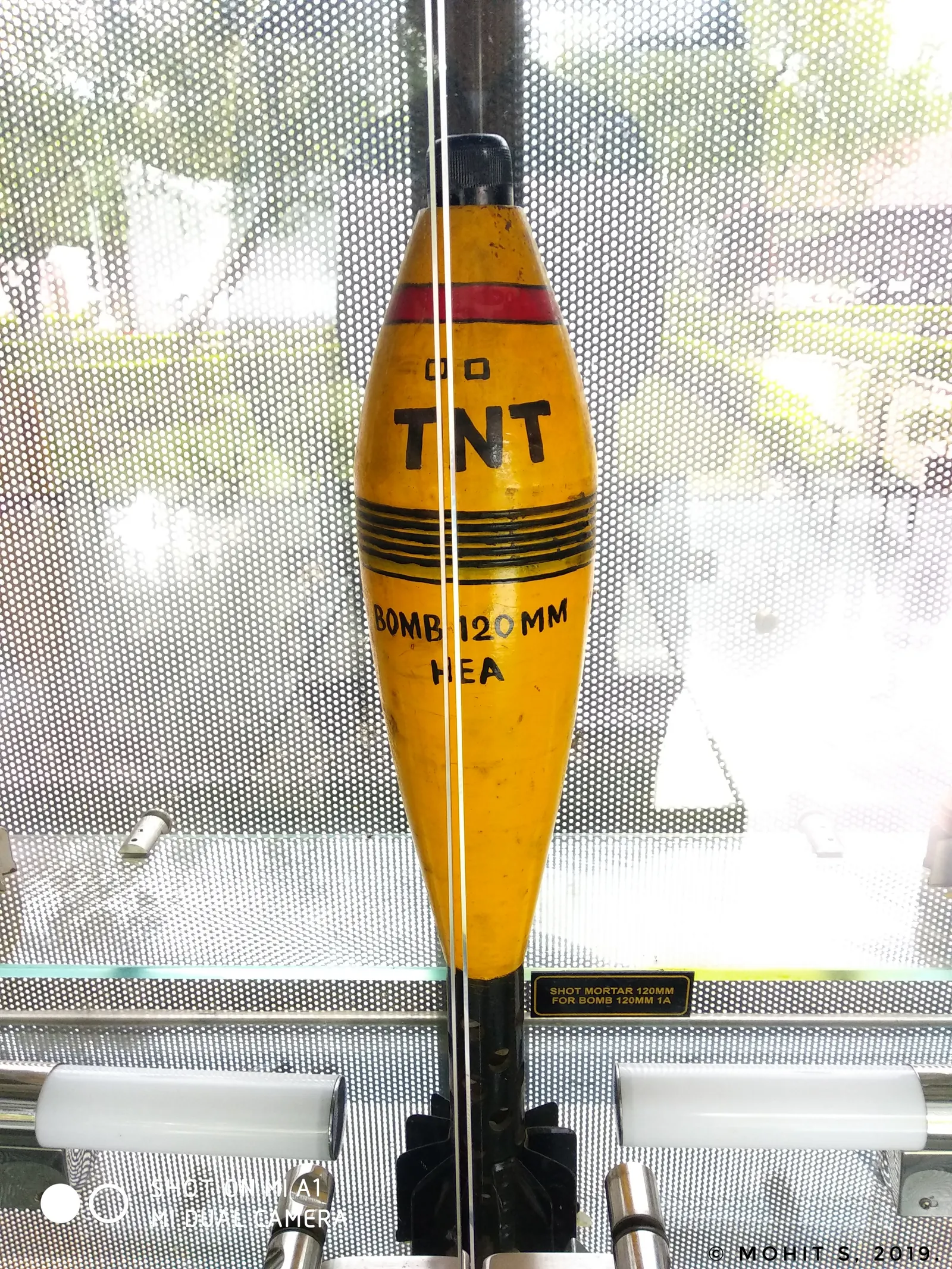
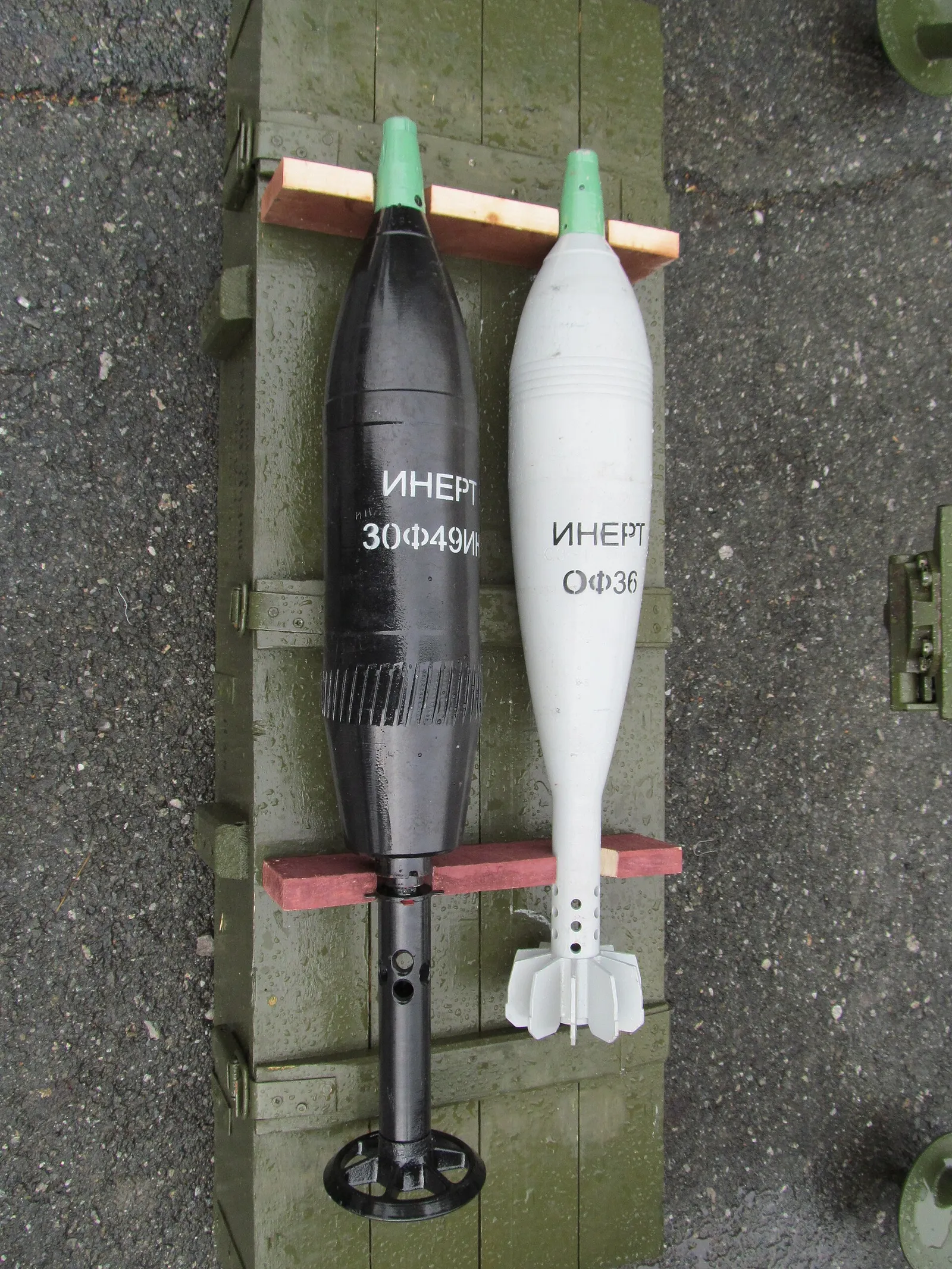
3OF50 active-rocket projectile Images

Related Weapon Systems
3OF50 High-Explosive Fragmentation rocket-assisted projectile, 120 mm rocket-assisted HE-fragmentation projectile, MunitionsMunitions3OF50 High-Explosive Fragmentation rocket-assisted projectile120 mm rocket-assisted HE-fragmentation projectileThe 3OF50 is a Soviet-era 120 mm rocket-assisted high-explosive fragmentation projectile for Nona-family gun-mortars such as the 2S9 Nona and 2S23 Nona-SVK. Specialist ammunition references describe a spin-stabilised, nose-fuzed projectile with an A-IX-2-filled warhead and integral rocket motor, while Ukraine explosive-ordnance identification material lists the round among munitions discovered on Ukrainian territory.
3VOF54 / 3OF49 high-explosive fragmentation round, 120 mm rifled gun-mortar HE-fragmentation semi-fixed round and projectile family, MunitionsMunitions3VOF54 / 3OF49 high-explosive fragmentation round120 mm rifled gun-mortar HE-fragmentation semi-fixed round and projectile familyThe 3OF49 is the HE-fragmentation projectile used in Soviet and Russian Nona-family 120 mm semi-fixed ammunition. METIS distinguishes the projectile from complete rounds: 3VOF54 combines 3OF49 with the 3V35 impact fuze, while 3VOF54-1 uses the AR-5 radio/proximity fuze. Belspetsvneshtechnika lists both fuze configurations for the 2S9 Nona-S, and VPK attributes Nona ammunition development to Basalt.
3OF56 122 mm HE-Frag Projectile, 122 mm high-explosive fragmentation projectile, MunitionsMunitions3OF56 122 mm HE-Frag Projectile122 mm high-explosive fragmentation projectile3OF56 is a Soviet-era 122 mm high-explosive fragmentation artillery projectile for D-30/2A18-family guns and the 2A31 gun of the 2S1 Gvozdika. Public references do not describe the designation consistently: Fenix Insight identifies it as a nose-fuzed, boat-tailed, spin-stabilised HE-frag projectile, while U.S. WEG/FAS tables place a 3OF-56 complete projectile weight in a rocket-assisted ammunition row for the D-30A and 2S1.
120 mm high-explosive anti-tank ammunition, 120 mm high-explosive anti-tank ammunition for rifled gun-mortars, MunitionsMunitions120 mm high-explosive anti-tank ammunition120 mm high-explosive anti-tank ammunition for rifled gun-mortars120 mm high-explosive anti-tank ammunition is the direct-fire anti-armor round class used by Soviet and Russian rifled gun-mortars in the Nona family. Forecast International identifies the 2S23 Nona-SVK's 2A60 weapon as firing HEAT ammunition for direct-fire applications, while specialist munition references identify the 3VBK14/3BK19 round as a documented 120 mm HEAT-FS-T load for armored-target engagements.

Sources