Munitions

3OF44 rocket-assisted high-explosive projectile

Also known as
  • 3ОФ44
  • 3VOF35
  • 3ВОФ35
  • Burevestnik-2
  • Буревестник-2
  • 3OF44 RAP

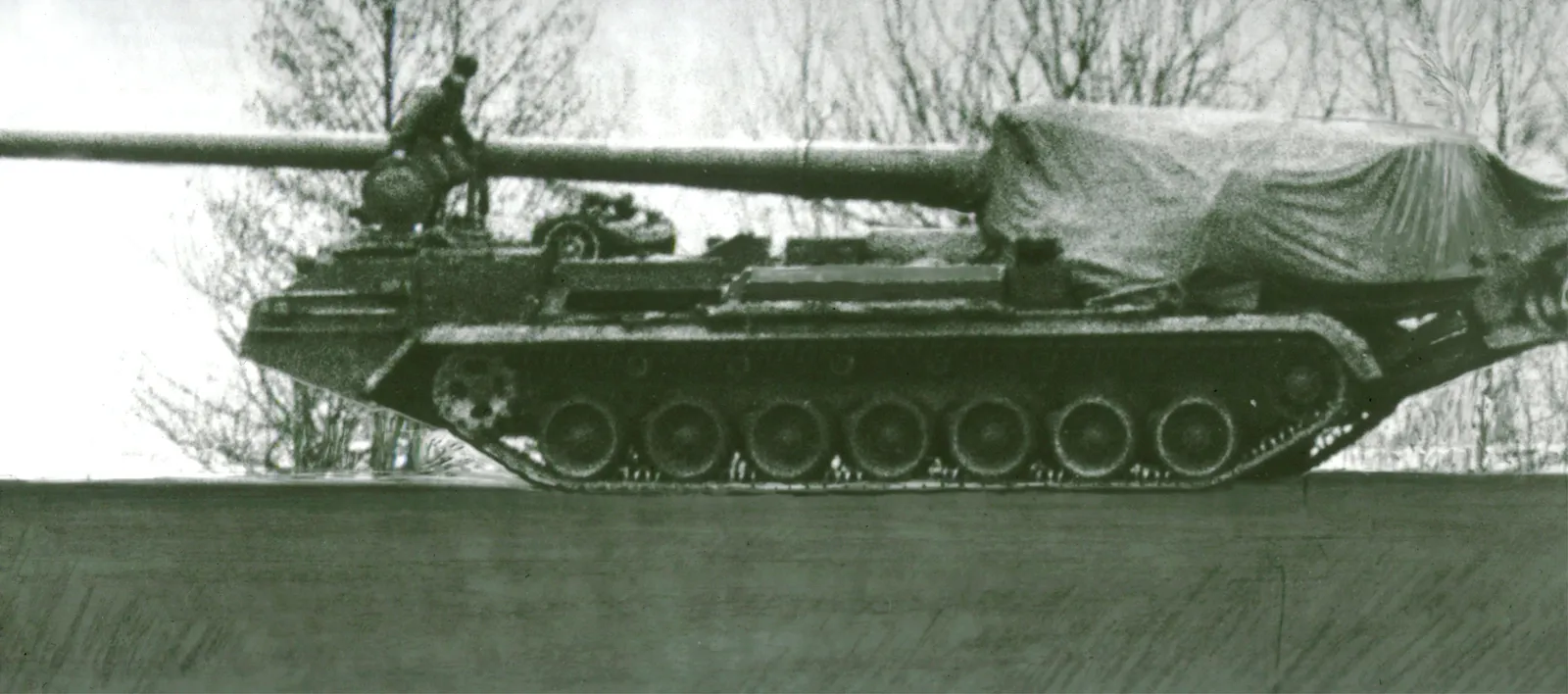
The 3OF44 is a Soviet 203 mm rocket-assisted high-explosive fragmentation projectile for 2S7-family heavy artillery. Sources identify it as the projectile in the separate-loading 3VOF35 Burevestnik-2 round, distinguish its longer 47.5 km range from the standard 3OF43 projectile, and tie the round to the 2S7 Pion and 2S7M Malka rather than to independently documented conflict use.

Profile / Specs

Specifications

Caliber
203 mm
Munition class
Rocket-assisted high-explosive fragmentation projectile
Projectile mass
About 102 kg
Explosive filling
About 13.32 kg of A-IX-2
Propelling charge
Full 4-Z-2 charge, about 43.2 kg
Maximum range
About 47.5 km in the 3VOF35 rocket-assisted round
Fuse
Point detonating V-491
Round components
3OF44 projectile, V-491 fuze, 4-Z-2 full charge, and UT-36 or I-19 tube
Compatible systems
2S7 Pion and 2S7M Malka 203 mm artillery systems
Complete round
3VOF35
Rocket motor component
VIK-2D solid rocket propellant grain with central channel
Service temperature range
About -50 to +50 degrees C
Alternate designation
3ОФ44
Variants

The 3OF44 is the rocket-assisted member of the same 203 mm 2A44 ammunition family represented by the standard 3OF43 high-explosive projectile.

VariantConfigurationDesignation notes
3OF43 high-explosive projectile, 203 mm high-explosive fragmentation projectile, Munitions3OF43 high-explosive projectileStandard 203 mm HE-FRAG projectile

ARES and Russian ammunition references list 3OF43 with a heavier explosive fill and shorter maximum range than the rocket-assisted 3OF44.

Sources: Ukrainian government returns 2S7 Pion self-propelled artillery to service, 203 mm 3OF43 projectile in 3VOF34 and 3VOF42 rounds

Firing Weapons

3OF44 is the rocket-assisted 203 mm HE-FRAG projectile in the 3VOF35 round for the 2S7 family.

Firing weaponWeapon typeFiring evidence
2S7 Pion, 203 mm tracked self-propelled gun, Artillery2S7 Pion203 mm self-propelled gun

Sources describe 3OF44 as the HE-FRAG projectile in the 3VOF35 round for the 2S7 family and document it as a 203 mm projectile available for the 2S7 Pion system.

Sources: 203mm shells for 2A44 howitzer, Ukrainian government returns 2S7 Pion self-propelled artillery to service, 203 mm 3VOF35 round with 3OF44 projectile, 3OF44 | METIS

2S7M Malka, 203 mm tracked self-propelled gun, Artillery2S7M MalkaModernized 203 mm self-propelled gun

The specialist ammunition reference states that the 3VOF35 round with the 3OF44 projectile is used for firing from both the 2S7 Pion and the modernized 2S7M Malka.

Sources: 203 mm 3VOF35 round with 3OF44 projectile

Range Tradeoff

ARES places 3OF44 beside the standard 3OF43 high-explosive projectile for the same 203 mm system. The difference is easy to read: 3OF44 buys more range with a smaller explosive fill.

ProjectileExplosive fillMaximum rangeNotes
3OF43 high-explosive projectile, 203 mm high-explosive fragmentation projectile, Munitions3OF43 high-explosive projectile17.8 kg37.4 kmStandard HE projectile cited by ARES.
3OF44 rocket-assisted HE-FRAG projectile13.32 kg47.5 kmRocket-assisted projectile cited by ARES, Fenix Insight, and the specialist ammunition reference.
Round Composition

The complete 3VOF35 round is separate-loading ammunition built around the 3OF44 projectile and a full propelling charge. The source-backed component list is useful because the projectile designation and complete-round designation are often mixed in shorthand references.

Complete round

3VOF35, also described with the Burevestnik-2 name.

Projectile

3OF44 / 3ОФ44 rocket-assisted high-explosive fragmentation projectile.

Charge and initiation

Full 4-Z-2 charge with V-491 fuze and UT-36 or I-19 tube.

Timeline

3OF44 rocket-assisted high-explosive projectile Key Events

  1. Development begins

    Fenix Insight lists 1970 as the start of 3OF44 development.

    Sources: 3OF44 | METIS

  2. Soviet Army adoption

    Fenix Insight records Soviet Army adoption in 1975, placing the projectile into service during the late Cold War.

    Sources: 3OF44 | METIS

Related Weapon Systems
203 mm shells for 2A44 howitzer, 203 mm separate-loading artillery ammunition family, MunitionsMunitions203 mm shells for 2A44 howitzer203 mm separate-loading artillery ammunition familyThe 203 mm shells for the 2A44 howitzer are the Soviet separate-loading ammunition family for 2S7 Pion and 2S7M Malka heavy guns. Public references distinguish standard 3OF43 high-explosive fragmentation projectiles, 3OF44 rocket-assisted projectiles, 3O14 cluster shells, concrete-piercing and special-shell designs, plus current Russian OF43/OF44 use and Ukrainian 203 mm ammunition use in the Russia-Ukraine War.
3OF50 High-Explosive Fragmentation rocket-assisted projectile, 120 mm rocket-assisted HE-fragmentation projectile, MunitionsMunitions3OF50 High-Explosive Fragmentation rocket-assisted projectile120 mm rocket-assisted HE-fragmentation projectileThe 3OF50 is a Soviet-era 120 mm rocket-assisted high-explosive fragmentation projectile for Nona-family gun-mortars such as the 2S9 Nona and 2S23 Nona-SVK. Specialist ammunition references describe a spin-stabilised, nose-fuzed projectile with an A-IX-2-filled warhead and integral rocket motor, while Ukraine explosive-ordnance identification material lists the round among munitions discovered on Ukrainian territory.
3OF56 122 mm HE-Frag Projectile, 122 mm high-explosive fragmentation projectile, MunitionsMunitions3OF56 122 mm HE-Frag Projectile122 mm high-explosive fragmentation projectile3OF56 is a Soviet-era 122 mm high-explosive fragmentation artillery projectile for D-30/2A18-family guns and the 2A31 gun of the 2S1 Gvozdika. Public references do not describe the designation consistently: Fenix Insight identifies it as a nose-fuzed, boat-tailed, spin-stabilised HE-frag projectile, while U.S. WEG/FAS tables place a 3OF-56 complete projectile weight in a rocket-assisted ammunition row for the D-30A and 2S1.

Sources